

The biggest race in the world? The 24 Hours of Le Mans is this weekend.
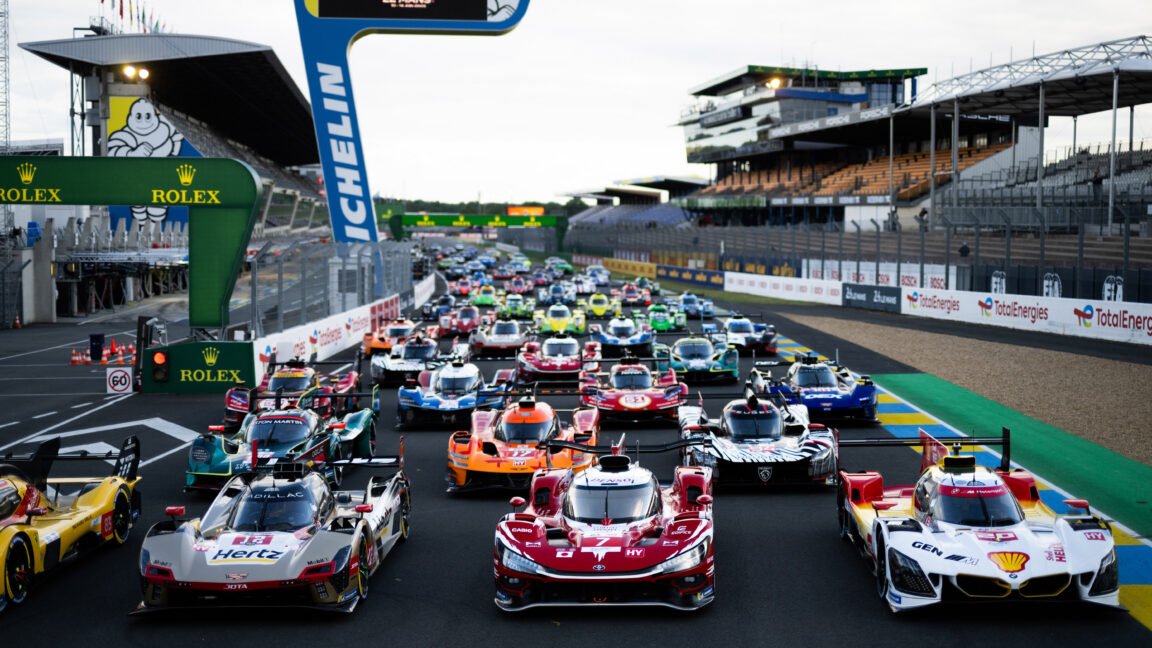
More than 350,000 spectators will watch 62 cars compete, day and night.
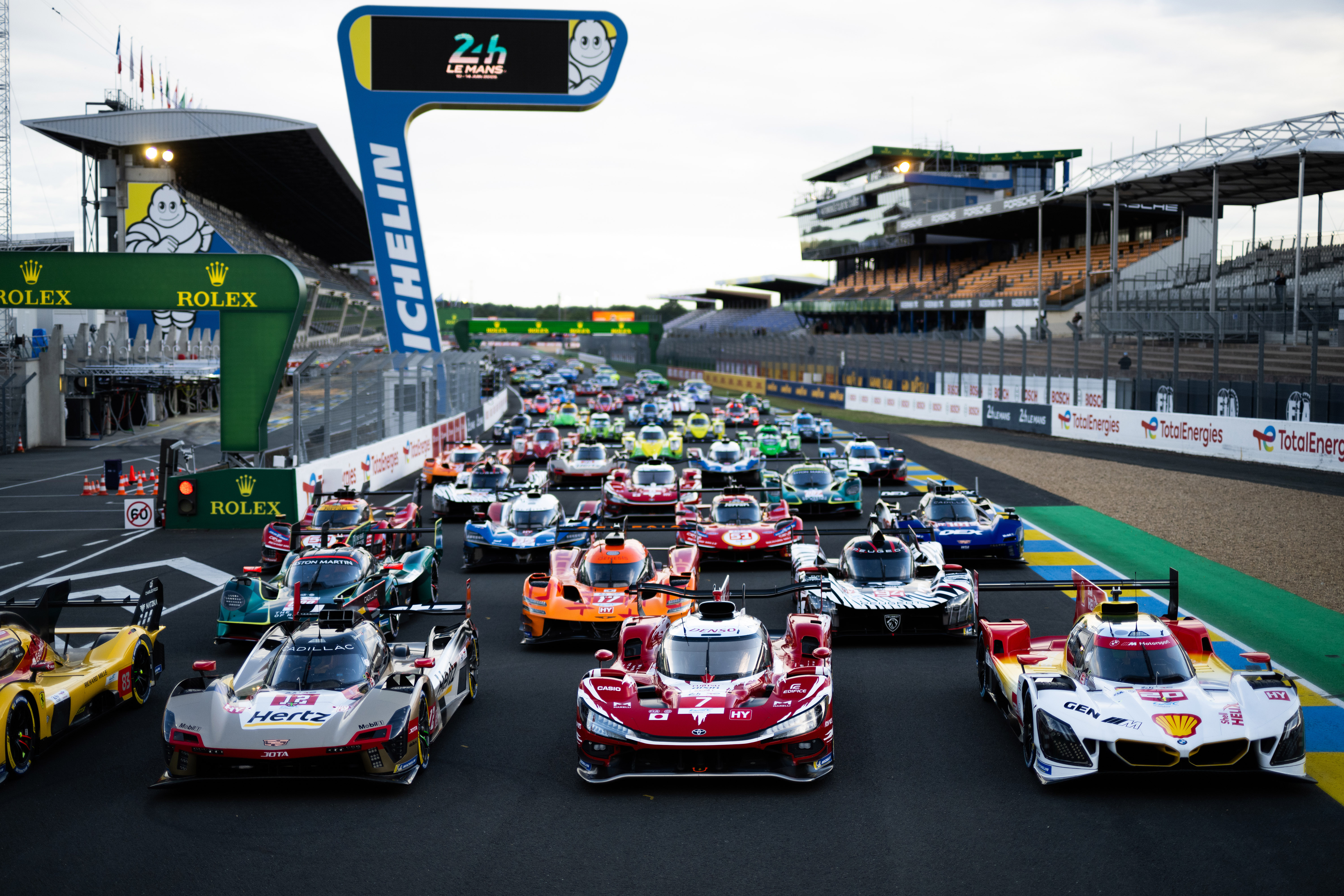
The traditional group photo, with the 2026 entrants. Credit: James Moy Photography/Getty Images
The traditional group photo, with the 2026 entrants. Credit: James Moy Photography/Getty Images
One of motorsport’s three biggest races takes place this weekend in France. It is the annual 24 Hours of Le Mans, an endurance race that, together with the Indianapolis 500 and the Monaco Grand Prix, make up the ‘triple crown,’ an unofficial achievement that only the late Graham Hill can claim to have won. This year, 62 different cars take the start, racing on a mix of permanent race track but also public roads that for the rest of the year are how locals get to the supermarket or the local McDos.
It’s not the oldest race in the world, but it’s up there—it was first held in 1923, and this year will be the 94th running. It was started as a way to give the automotive industry a grueling test for their new machinery and has remained the area of motorsport with the most road relevance. Disc brakes crossed over from aerospace to road cars at Le Mans, and better brakes continue to be tested there today, but it’s also where companies like Porsche and Audi and Toyota proved new hybrid technology, brake-by-wire systems, direct-injection engines, and advanced headlights, to name but a few.
This year, the 62 cars are split across three different classes, each crewed by three drivers who take shifts at the wheel. Some of the drivers are pros—among the world’s very best. But plenty are amateurs; in the past, lots of dentists, oddly enough. But with the cost of racing these days, it’s the tech bros. The Ruby on Rails creator, the co-founder of GitHub, and the co-founder of Crowdstrike are all racing in the LMP2 class. And Valve’s Gabe Newell owns the Aston Martin team that is competing in both Hypercar—with the outrageous-looking and -sounding Valkyrie—as well as in LMGT3, where his son Gray will be one of the drivers.
Hypercar
The top class, with the fastest cars, is called Hypercar, contested by factory teams and all-professional driver lineups. We’ve written about Hypercar quite a lot over the past few years, together with the closely related GTP class that races in IMSA’s WeatherTech series over here. These are closed-roof mid-engined prototypes, most of them hybrids purpose-designed to go racing.
Ferrari, Peugeot, and Toyota each designed their cars completely in-house to a set of regulations called LMH, which allows them to put the electric hybrid motor at the front axle, although the cars can only use this temporary all-wheel drive above 93 mph (150 km/h).
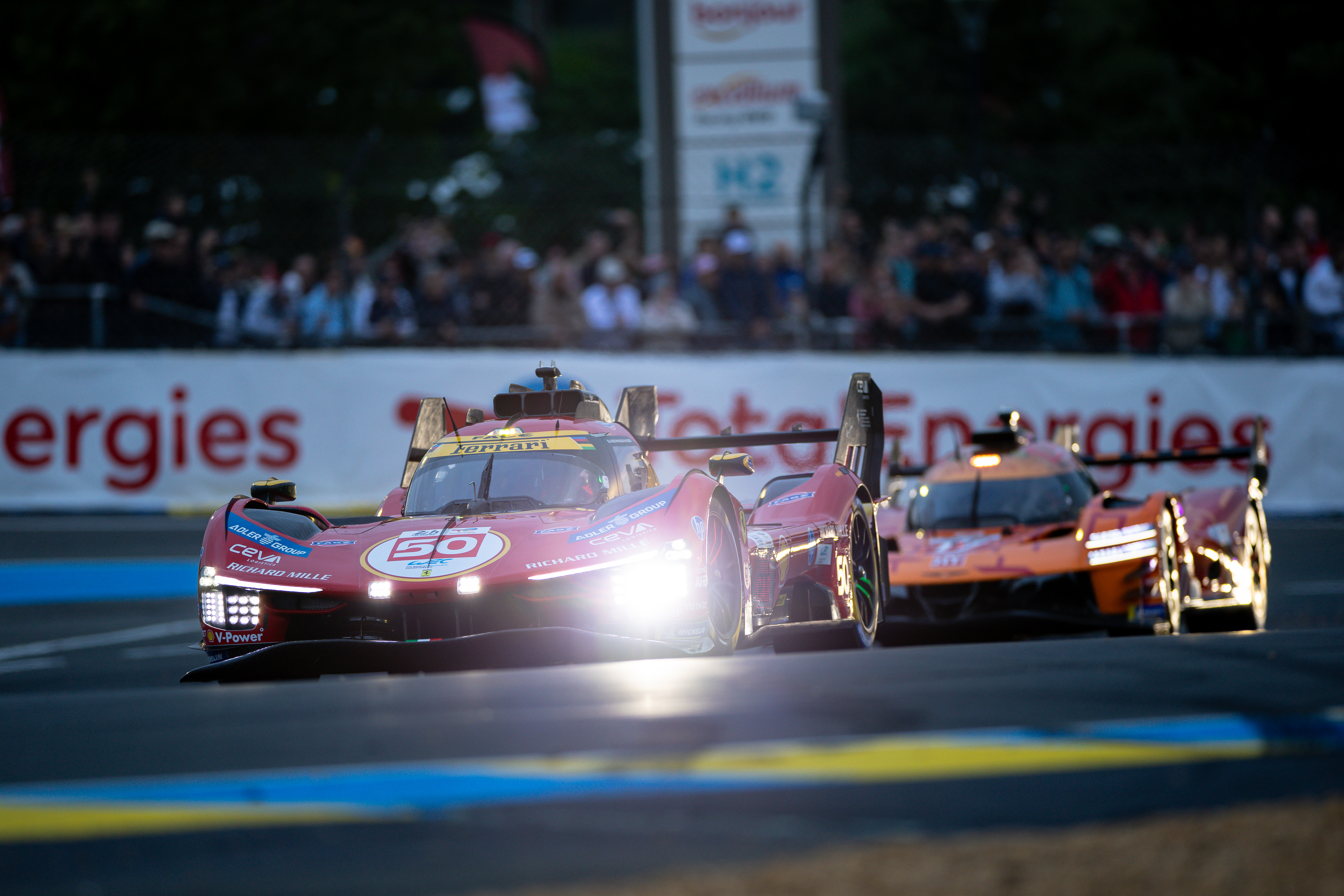
Ferrari might have won every Le Mans since the introduction of Hypercar in 2023, but it hasn’t won a race in the World Endurance Championship since the French race last year. Genesis is a new entrant for 2026.
Credit: Daniele Paglino/NurPhoto via Getty Images
Ferrari might have won every Le Mans since the introduction of Hypercar in 2023, but it hasn’t won a race in the World Endurance Championship since the French race last year. Genesis is a new entrant for 2026. Credit: Daniele Paglino/NurPhoto via Getty Images
Aston Martin also builds its car to LMH, but the Valkyrie started life as a road car, designed by F1 legend Adrian Newey. But it had to lose the road car’s hybrid system and quite a lot of power and aerodynamic downforce in order to comply with the LMH ruleset. Ironically, the Valkyrie is perhaps the truest car competing in the Hypercar class—when the category was first proposed by the Automobile Club de l’Ouest (which organizes the race), the idea was to get racing versions of road-going hypercars like the Valkyrie or Mercedes’ AMG-One. At least until everyone realized how expensive and difficult that might be; only Aston Martin remained up for that challenge.
The bulk of Hypercar—Alpine, BMW, Cadillac, and now Genesis—are cars built to LMDh specifications, imported from IMSA in Daytona Beach, Florida. But those OEMs aren’t responsible for all of the car. The central carbon-fiber chassis or spine comes from one of four different builders (Oreca, Dallara, Multimatic, Ligier), and all LMDh cars must use the same transmission, hybrid motor, and hybrid battery. The automakers then design the bodywork and bring their own engines and software to the party. LMDh is a cheaper approach than LMH, but it’s also notable that during the first three years of the class, which was introduced in 2023, an LMDh car has yet to actually win Le Mans, a fact that almost certainly explains the absence of Porsche from the top category in 2026.
If all that sounds a bit complicated, that’s sportscar racing for you. To keep performance level between all the different cars, the sport uses a process called “balance of performance” to handicap machines into equality, with a maximum power output of 670 hp (500 kW).
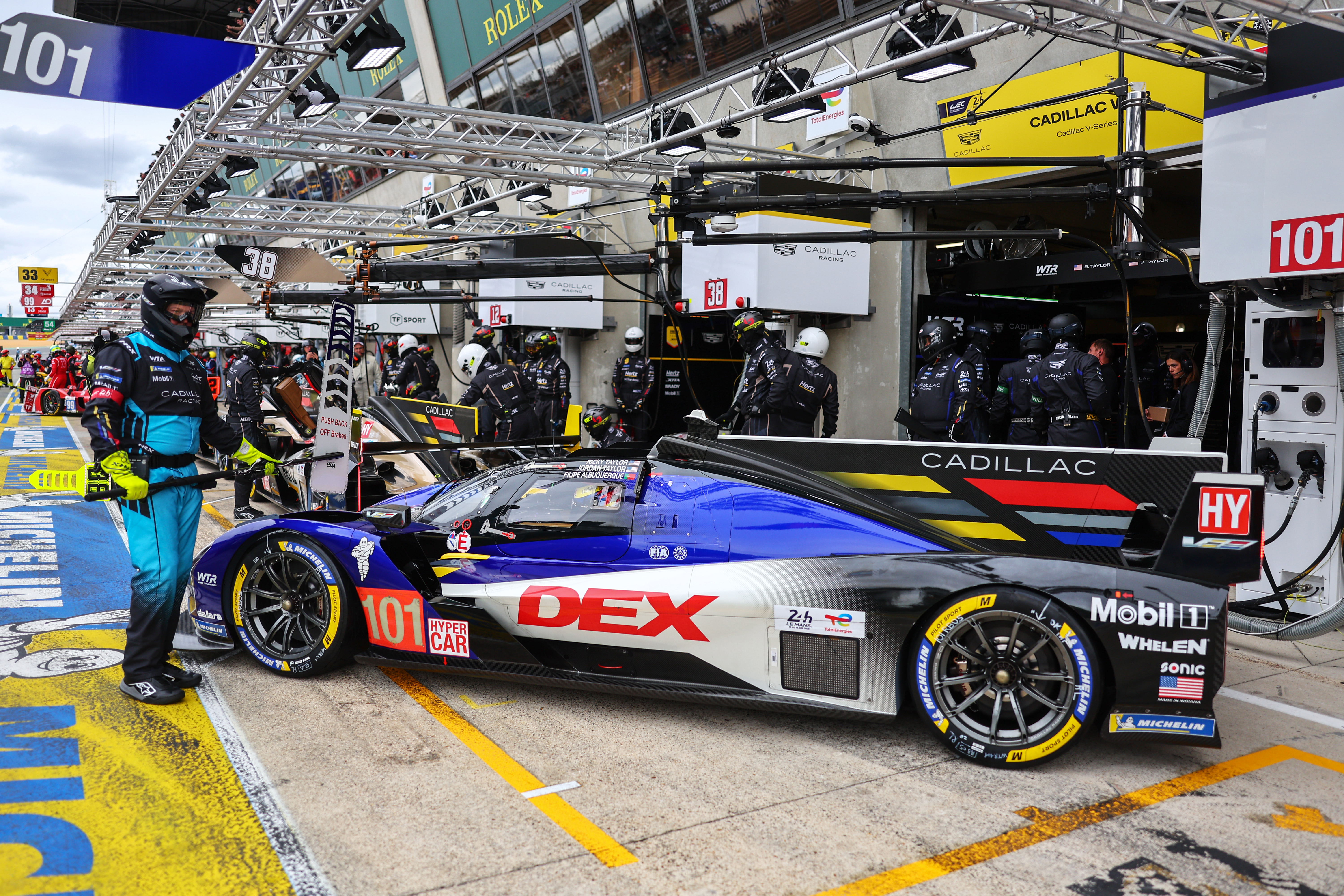
The less time you can spend in pit lane, the higher your chance of victory.
Credit: Colin McMaster/Getty Images
The less time you can spend in pit lane, the higher your chance of victory. Credit: Colin McMaster/Getty Images
Things will get slightly less complicated in 2030, I think. Earlier today the ACO and IMSA, together with the FIA (which is in charge of the World Endurance Championship, along with stuff like F1) announced that in 2030 there will be a unified class for Le Mans, WEC, and the WeatherTech championship. All-wheel drive is out; all cars will have to be rear-wheel drive hybrids. But you can either build the entire thing yourself (like LMH) or use an approved spine and hybrid system as a starting point (like LMDh).
LMP2
LMP2 cars are sports prototypes one step down from the Hypercars. Originally there were four different makes, from the same manufacturers as those LMDh spines—LMDh was developed from what was going to be the LMP2 replacement—but the Oreca 07 proved to be so much better than the other three that no one races a Ligier, Dallara, or Riley-Multimatic anymore. The cars all use the same 4.0 L Gibson V making 600 hp (447 kW), and there’s no hybrid system. These cars also have more aerodynamic downforce than the Hypercars, so they’re more enjoyable to drive, by all accounts.
Nine of the 19 LMP2 teams racing this year have a mix of professional and amateur drivers, and it’s these pro-am teams where we find our Silicon Valley entrants, as well as some other younger drivers who have yet to level up the bronze/silver/gold/platinum ranking system. The other 10 teams have more professional lineups. A standout among them to watch this year will be Doriane Pin, the young French driver who won Formula 1 Academy last year, particularly after a stunning lap during the first qualifying session, held on Wednesday.
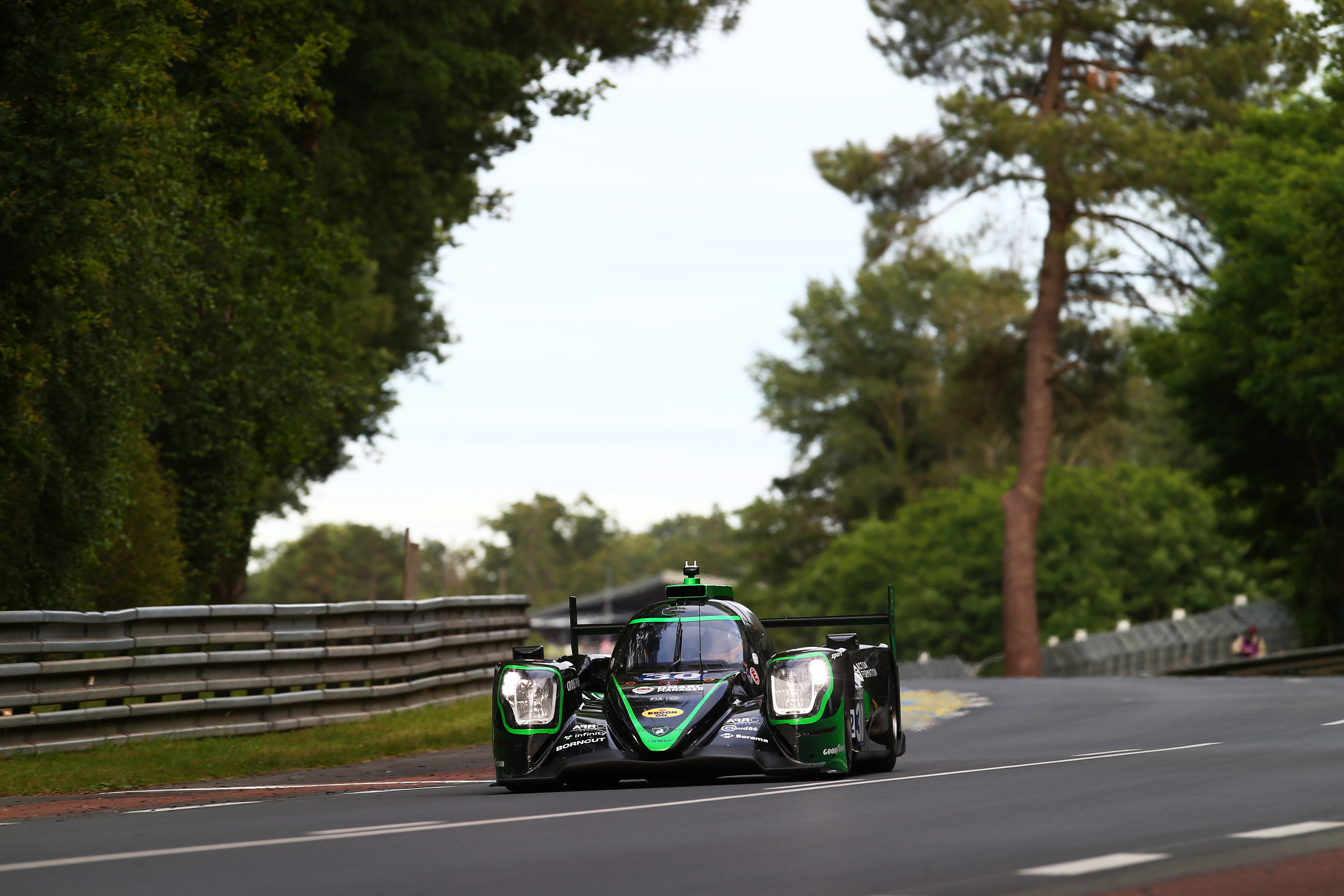
Doriane Pin is one of two women racing at Le Mans this weekend, along with Lilou Wadoux who is in one of the LMGT3 Ferraris. Sadly the Iron Dames team ran out of funding.
Credit: Ker Robertson/Getty Images
Doriane Pin is one of two women racing at Le Mans this weekend, along with Lilou Wadoux who is in one of the LMGT3 Ferraris. Sadly the Iron Dames team ran out of funding. Credit: Ker Robertson/Getty Images
LMGT3
The final category is for cars that started life as true road cars. In the past, Le Mans has had various different flavors of what the sport calls GT cars, some more specialized than others. Eventually the costs became too much for GT1, then GT2 (later called GTE, or GTLM in IMSA), and in 2024 the ACO decided to import the GT3 category, which was created back in 2005 by Stéphane Ratel as a way to make sports car racing less expensive for amateurs. (NB: less expensive is not the same thing as cheap.)
Under the old system (GT1 and GT2), the ACO published a rulebook with acceptable modifications; automakers would build their cars to those rules and then go racing to see who was fastest. But each race can only have one winner, and if one make starts to dominate, their rivals will either start spending more, driving up costs for everyone, or give up and do something else instead. GT3 solved that problem, again with balance of performance.
Each OEM builds their new car, then it’s benchmarked against the class, and the power and weight are adjusted to keep it in the right range. Different cars will make their lap times differently, and some cars will be better at particular tracks than others, but the category has been a worldwide success. And you can race a GT3 car at the Rolex 24 at Daytona or the Spa 24 Hours or the Nurburgring 24, as well as shorter but no less grueling events like the Bathurst 12 hours or the 12 Hours of Sebring, not to mention numerous other series and events. There are 25 LMGT3 cars in this year’s race, all from pro-am teams that must have at least one bronze and one silver driver among the crew.
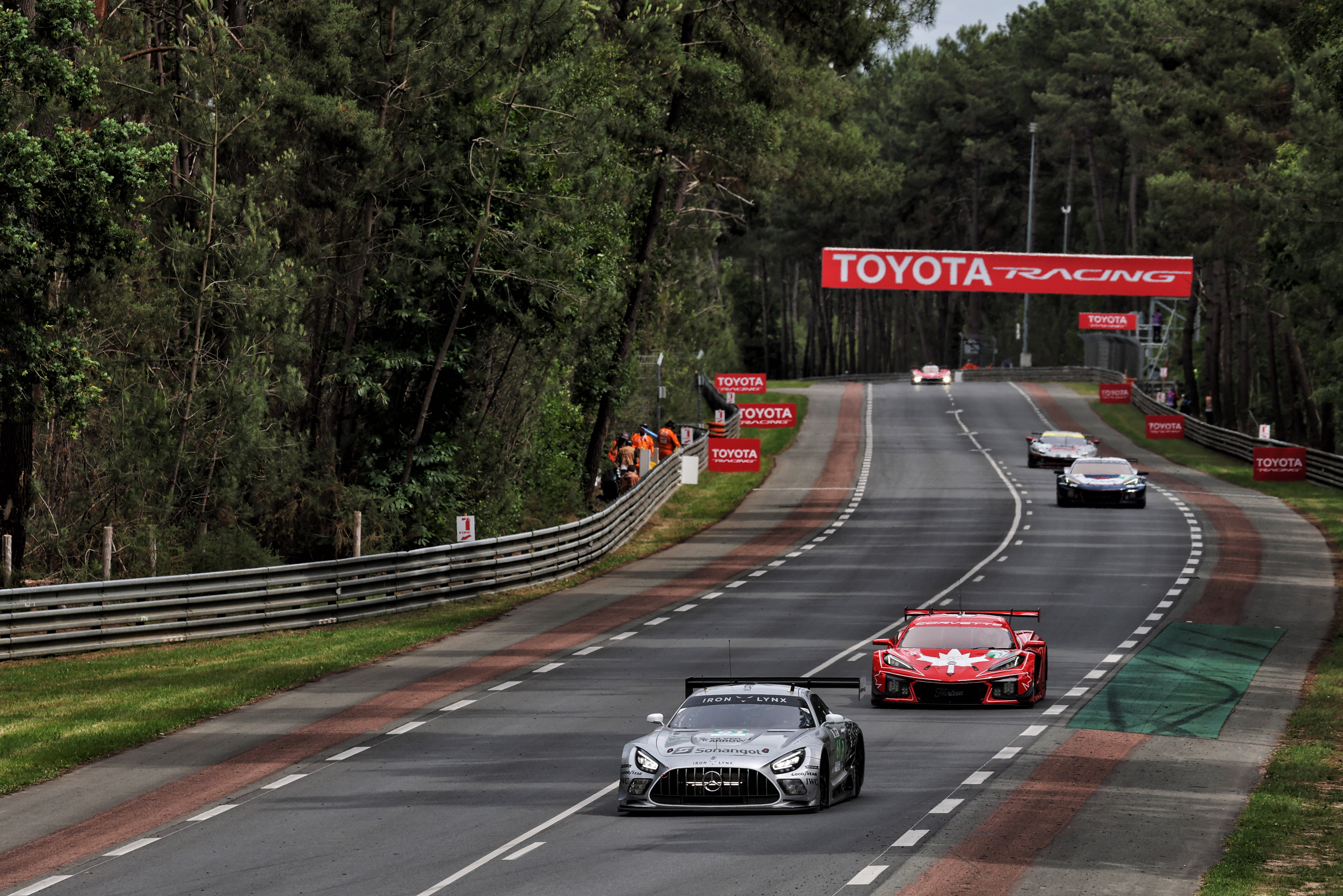
An assortment of GT3 cars during testing.
Credit: Photography/Getty Images
An assortment of GT3 cars during testing. Credit: Photography/Getty Images
Further reading
Millions or perhaps even billions of words have been spent over Le Mans across its 94 runnings, some better than others. I can highly recommend Richard Williams’ recent book 24 Hours, written for the race’s centenary year in 2023.
The race begins at 4 pm local time tomorrow—10 am Eastern, 7 am Pacific—and you can watch it in the US on HBO or Tru, or finally via the FIAWEC+ streaming service, which is no longer geoblocked. There’s also the excellent Radio Le Mans commentary, which is broadcast free online.

Jonathan is the Automotive Editor at Ars Technica. He has a BSc and PhD in Pharmacology. In 2014 he decided to indulge his lifelong passion for the car by leaving the National Human Genome Research Institute and launching Ars Technica's automotive coverage. He lives in Washington, DC.
What's Your Reaction?
 Like
0
Like
0
 Dislike
0
Dislike
0
 Love
0
Love
0
 Funny
0
Funny
0
 Wow
0
Wow
0
 Sad
0
Sad
0
 Angry
0
Angry
0











Comments (0)