Tower Semiconductor has announced a dual-track expansion of its 300mm silicon photonics, silicon germanium, and advanced packaging operations in Japan, committing up to $3 billion net of grants with backing from the country's Ministry of Economy, Trade and Industry (METI). Alongside the announcement, the Israeli specialty foundry raised its 2028 business model to approximately $3.6 billion in revenue and $1.2 billion in net profit, and it says those targets rest entirely on the first of the plan's two tracks: reviving the shuttered Arai fab it inherited from Panasonic and maximizing its running 300mm fab in Uozu, Toyama Prefecture.
Two tracks, one committed
Track One converts the former Arai facility, designated Fab 6, into a 300mm silicon photonics and advanced optical packaging plant while expanding output at Fab 7 in Uozu, with full production readiness expected during the fourth quarter of 2027. The Arai plant ceased operations in July 2022 because it exclusively served Nuvoton Technology Corporation Japan (NTCJ) rather than Tower's foundry customers, according to Tower's SEC filings, leaving an intact fab shell sitting idle for four years.
Track Two calls for constructing a new 300mm fab adjacent to Fab 7, which Tower says would deliver a multi-fold increase in silicon photonics and silicon germanium capacity and become "highly accretive beginning in 2029." The company hasn't signed definitive agreements for it, however, and none of the new 2028 targets depend on it.
A restructuring of the TPSCo joint venture, announced in March 2026, cleared the way for all this. Tower entered Japan in 2014 by buying 51% of Panasonic's three-fab semiconductor manufacturing operation, and Panasonic sold its remaining stake to Nuvoton in 2020. Under the March agreement, Tower takes full ownership of the 300mm Fab 7, while NTCJ absorbs the 200mm operations and pays Tower $25 million, with closing expected on April 1, 2027. Sole ownership of Fab 7 removed the joint-venture structure that would have complicated a $3 billion buildout.
Tower CEO Russell Ellwanger contrasted the approach with greenfield construction and fab acquisitions, which he said typically require years of process development, customer qualification, and financial stabilization while ramping from zero revenue against high fixed costs. Reusing a dormant building next to a qualified, cash-generating photonics fab is why Tower can achieve production readiness roughly 18 months ahead; Rapidus, by comparison, broke ground on its greenfield Chitose site in September 2023 and doesn't expect mass production until 2027.
29% increase in revenue
Tower reported $1.566 billion in revenue and $220 million in net profit for 2025, up from $1.436 billion and $208 million in 2024. The new 2028 model more than doubles 2025 revenue and implies a net margin of around 33%, against roughly 14% today. Measured against the prior 2028 model of $2.8 billion in revenue and $750 million in net profit, which Tower reaffirmed in its Q1 2026 report in May, the new targets add 29% to revenue and 60% to net profit.
Silicon photonics revenue is doing most of the heavy lifting, with Ellwanger telling analysts on the company's Q4 2025 earnings call in February that silicon photonics revenue reached $228 million in 2025, up from $106 million in 2024, and hit a $380 million annualized run rate in the fourth quarter, a figure he noted includes some non-wafer engineering revenue. In May, Tower disclosed $1.3 billion in contracted silicon photonics revenue for 2027 from its largest customers, backed by $290 million in prepayments already collected.
Tower's photonics customer roster includes Innolight, which builds 400G, 800G, and 1.6T optical transceivers on Tower's PH18 platform family, and Marvell, which said in June it had shipped more than five million coherent photonic ICs manufactured with Tower. The company claims more than 50 active silicon photonics customers and supplies foundry capacity for 200 Gb/s-per-lane devices used in 1.6T transceivers.
Tower's forward-looking disclosures flag construction delays, equipment lead times, permitting, and METI grant covenants that "may result in loss of a portion or all of the grant funds." The implied margin expansion also assumes sustained AI and data center optics demand from a concentrated group of very large customers through 2028, a dependency Tower acknowledges.
Tower’s position in the photonics foundry race
GlobalFoundries paid $453 million in cash for Singapore's Advanced Micro Foundry in November 2025, according to its annual report, a deal the company said made it one of the largest silicon photonics manufacturers. TSMC's COUPE co-packaged optics platform is tracking Nvidia's optical interconnect roadmap, with 1.6 Tb/s optical engines arriving in 2026 products.
Tower occupies a different lane from TSMC, as a merchant foundry serving dozens of transceiver makers and chip designers, rather than a packaging platform aligned with one customer's rack-scale plans. GlobalFoundries competes with Tower far more directly, and the two are also in court, with GlobalFoundries pursuing patent infringement claims against Tower.
MarketsandMarkets estimates the silicon photonics market at $2.65 billion in 2025, growing to $9.65 billion by 2030 at a 29.5% compound annual growth rate. Demand for optical data movement in AI clusters underpins those forecasts, as interconnects shift from copper to light at 800G and 1.6T speeds.
METI's support for Tower joins a Japanese subsidy program that has committed up to ¥1.2 trillion to TSMC's JASM fabs in Kumamoto, roughly ¥536 billion to Micron's Hiroshima operations, and around ¥2.9 trillion in planned funding for Rapidus. Tower's award appears to be the program's first at this scale for a dedicated silicon photonics foundry.
Intel agreed to buy Tower for $5.4 billion in 2022, but abandoned the deal in August 2023 after Chinese regulators declined to approve it, paying Tower a $353 million termination fee. The Japan program is the largest capital commitment in Tower's history, well beyond the up-to-$300 million arrangement it struck with Intel in September 2023 for 300mm capacity in New Mexico. Three years after nearly becoming an Intel subsidiary, Tower is building its own flagship instead.


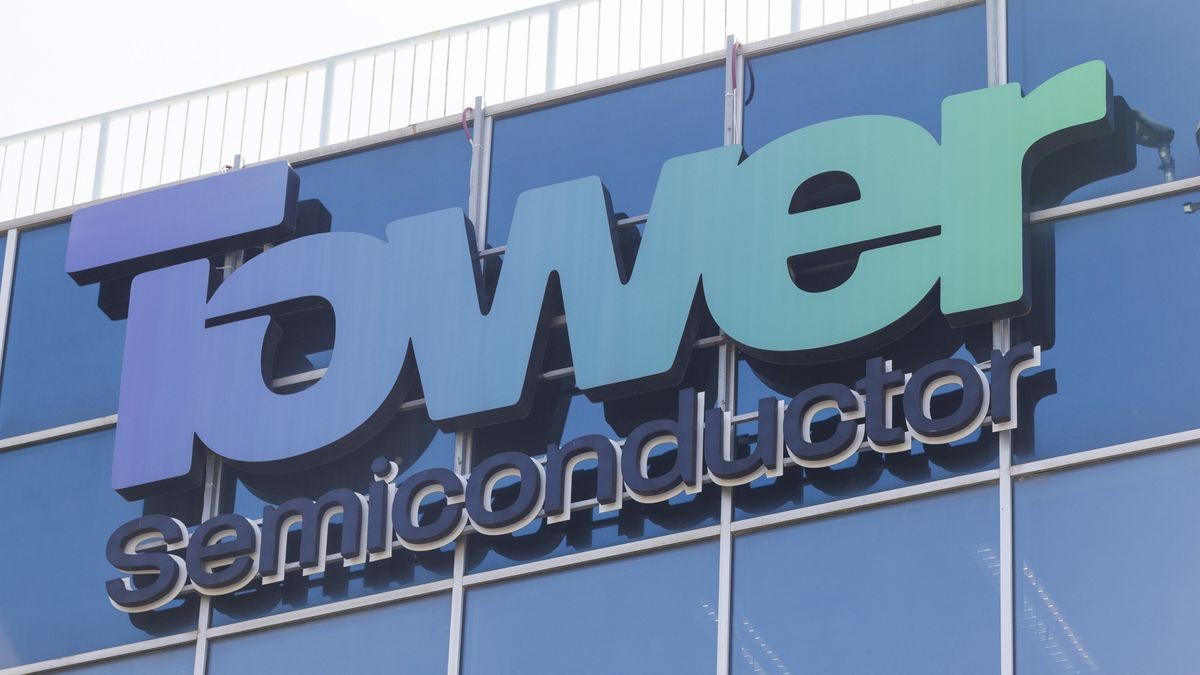
 (Image credit: Getty Images / Bloomberg)
 Like
0
Like
0
 Dislike
0
Dislike
0
 Love
0
Love
0
 Funny
0
Funny
0
 Wow
0
Wow
0
 Sad
0
Sad
0
 Angry
0
Angry
0






Comments (0)