

The Cheapest Way Into Full Frame Nikon, and What It Costs You
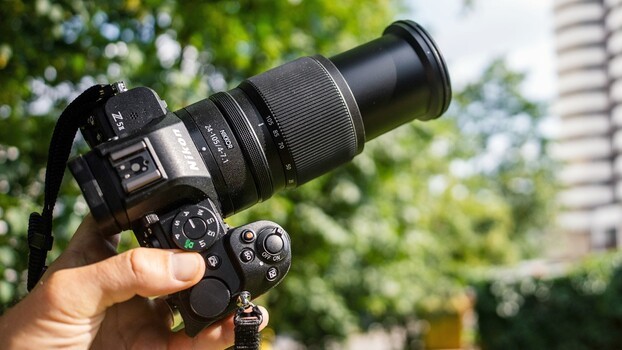
There's a version of the Nikon Z system where you carry one lens, shoot your whole family trip, and never touch a second piece of glass. The Nikkor Z 24-105mm f/4-7.1 is built to be that lens, and the honest question is whether the compromises baked into that convenience are worth living with.
That question gets a plainspoken answer from Jacek Sopotnicki, who walks through the Nikkor Z 24-105mm f/4-7.1 paired with the Nikon Z5 II and calls it a "brutal truth" review from the first minute. The lens is lightweight and compact for the range it covers, with a plastic build that Sopotnicki describes as fine but nothing to celebrate. It uses a common 67mm filter thread, which keeps filters cheap and easy to find. There are no physical switches on the barrel.
Image quality is where the tradeoffs surface. At 24mm the center is sharp enough, but the corners show a clear drop in sharpness and contrast, along with some purple fringing that Sopotnicki suggests taming by stopping down to around f/5.6. The middle of the range, roughly 35mm to 70mm, holds up best, with strong center sharpness and the straightest geometry. At 105mm the maximum aperture narrows to f/7.1, which means stopping down at all pushes you toward f/8 or f/9, a real limit in low light. Distortion is heavy but even, so the built-in correction profiles clean it up without much fuss.
The lens surprises in a few places worth knowing before you write it off. Focus breathing is well controlled, which makes the 24mm end at f/4 a reasonable choice for gimbal video on a stabilized body. Bokeh came out nicer than Sopotnicki expected, even if this was never going to be a portrait specialist. Autofocus is fast and reliable with one caveat about Nikon's subject detection, and his fix for it is the kind of practical tip that saves shots. That advice, along with his verdict on whether this lens is actually worth buying, is the part you'll want to hear him deliver directly.
The 24-105mm range itself explains why this lens exists at all, and it's a range with real history behind it. Full frame shooters have gravitated toward 24-105mm as the modern travel standard because it stretches from useful wide angle to short telephoto without a bag swap. Nikon's decision to build a variable-aperture version rather than a constant f/4 is a familiar move across the industry. Canon and Sony both offer premium constant-aperture standard zooms alongside cheaper, dimmer alternatives, and the pattern is consistent: you trade a stop or two of light and some corner sharpness for a lens that costs less and weighs less. If you shoot mostly in daylight, travel with a family, and value not thinking about gear, that trade lands in your favor. If you chase low light or need edge-to-edge sharpness wide open, it doesn't, and that's the honest line to draw before spending money. Watch the full breakdown above to hear Sopotnicki's final call on whether this lens deserves a spot in your bag.
What's Your Reaction?
 Like
0
Like
0
 Dislike
0
Dislike
0
 Love
0
Love
0
 Funny
0
Funny
0
 Wow
0
Wow
0
 Sad
0
Sad
0
 Angry
0
Angry
0











Comments (0)