

Why There's No Such Thing as Bad Light
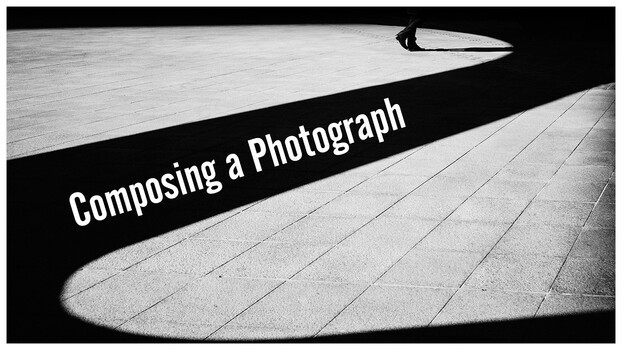
Most photography advice hands you rules to memorize and light to chase, then leaves you disappointed when your pictures still look like textbook exercises. The alternative is treating light, composition, and moment as choices rather than commandments.
That's the framework Dylan Goldby lays out in the first entry of a planned series on how he approaches making a photograph. He breaks every image down into three elements: light, composition, and moment. Rather than telling you there's good light or a correct rule of thirds, Goldby frames the whole thing as exploration, offering his own thinking so you can find your own path. He's upfront that this is how he works right now, not a masterclass, and that his approach today looks nothing like it did ten years ago. The thread running through all three sections is a single question he asks himself at every scene: how can I interpret this and make it something I created?
On light, Goldby drops the idea of good and bad entirely and replaces it with appropriate and inappropriate. Certain scenes work backlit, others frontlit or sidelit, and warm morning light suits some subjects while cool overcast light suits others. He describes his old habit of only shooting during the "good light" window and packing the camera away the moment it ended, and how using every kind of light instead gave him more varied and impactful photographs. The part that carries real weight is his point about exposure as a decision. When your phone tries to protect both highlights and shadows, it flattens a dramatic scene into mush, while your camera lets you push a high-key exposure or hold onto the first rays kissing wet rocks, depending on what you want to say. He walks through a rocky summer coastline as an example of how the same scene supports completely different treatments.
His take on composition may sting for anyone who's read a stack of books and still feels stuck. Rules and techniques, he argues, are useful after the fact for describing images you've already made, but forcing them in the field produces dull frames that look like the rules were stamped onto the world. Goldby's shift came when he started waiting for the world to speak to him, stopping only when something made him say "wow" and then interrogating why. He treats composition as a subtractive process, cutting away everything that doesn't contribute using lens choice, perspective, and depth of field. He also breaks down visual weight using his own talking-head setup and a photograph of a blessing, tracing exactly where your eye travels and why, then reveals that the analysis came later, not in the two seconds he actually had to react.
The principle underneath all of this connects to a wider shift in how working photographers talk about their craft. For years the loudest voices online sold formulas, golden-hour presets, and gear checklists, promising that the right kit and the right rule would produce magic. Goldby's emphasis on understanding and loving your subject sits closer to how documentary and street shooters have always worked, and it's worth applying as a habit regardless of genre. Photograph a scene, then study the result on a large screen and ask where your eyes land and what pulled them there. Each pass builds instinct that quietly informs the next frame you compose. This approach fits anyone who feels technically capable but creatively stalled, and it costs nothing but attention and repetition.
Moments get the strongest billing of the three. Goldby calls the moment the thing that carries an image across the finish line, more powerful than light or composition combined. He points to the family snapshots everyone has at home, poorly lit and badly framed, that survive in memory because of what was happening when the shutter fired. In street work it might be a glance or the convergence of separate actions, in landscape the exact break of a wave, in a portrait the second a subject stops performing and lets their real self through. He shares an image from the Ho Chi Minh Mausoleum in Hanoi, where morning light shaped the building and the rigid architecture set the composition, leaving him to wait for a soldier to straighten a no-entry sign. That single action turned a photograph of a place into a statement about the reverence still shown there.
Goldby closes by tying the three elements together, noting that light often informs composition, which shapes the moment you're hunting, in whatever order a given scene demands. Watch the full breakdown in the video above to see how he reads each scene and the images he uses to make his case.
What's Your Reaction?
 Like
0
Like
0
 Dislike
0
Dislike
0
 Love
0
Love
0
 Funny
0
Funny
0
 Wow
0
Wow
0
 Sad
0
Sad
0
 Angry
0
Angry
0












Comments (0)