

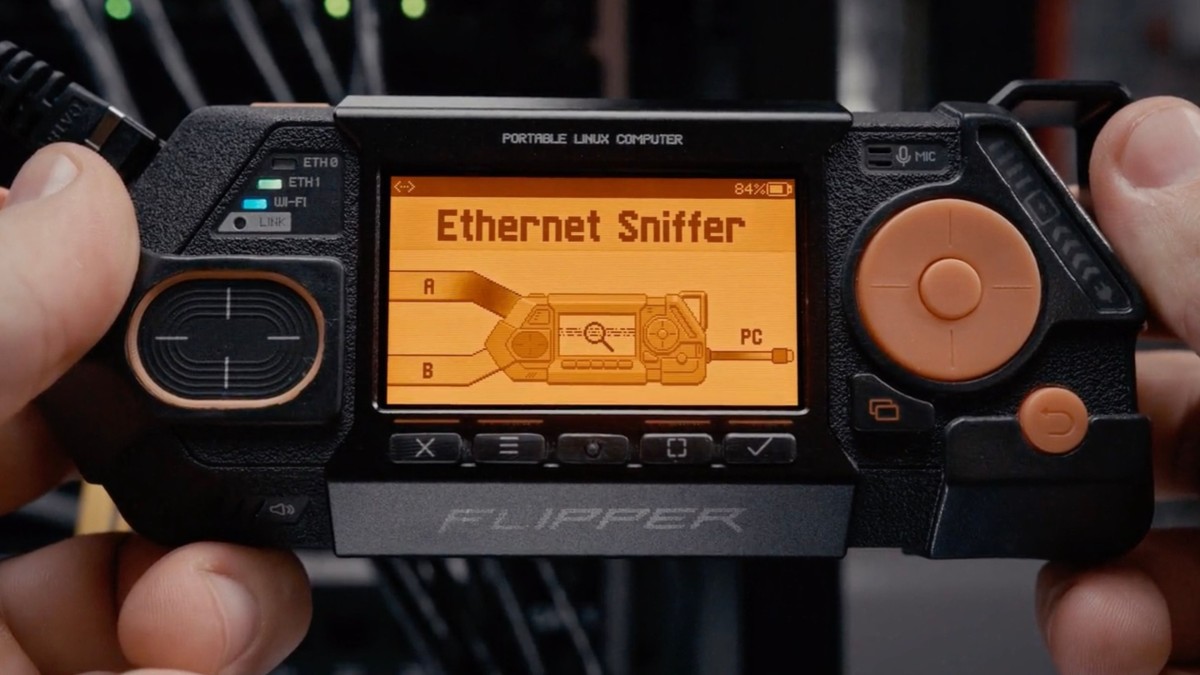
The Flipper One is more than a Zero 2.0 – it’s a $399 Linux computer with a $13M Kickstarter
ZDNET’s key takeaways
- Flipper One raised $13M+ from 24,000+ backers — over 40x its goal.
- It’s a $399 pocket Linux computer for networking, not a Zero upgrade.
- Add-on modules raise the price: The full LoRa, SDR, and 5G bundle is $759.
Flipper One vs. Flipper Zero: What’s different?
The thing that made the Flipper Zero so popular was how easy it was to use. You could fire it up and turn the volume down on the TV at your parents’ place, see the radio waves coming from your car’s key fob, and copy hotel room key cards.
Also: The Flipper One may be the ultimate Linux PC for hackers in 2026 – and I’m excited
It could do a lot, there wasn’t a steep learning curve, and you didn’t need to buy anything else. Did the fake videos on TikTok from people claiming they could change the prices at gas stations (I wish!) or start cars remotely help make the Zero more popular?
Unfortunately, yes. But what made it successful was that it packed a lot of power into a package that was small, fun, affordable, and easy to use.
If the Flipper Zero, with its NFC, RFID, sub-GHz, and IR, was kindergarten, the Flipper One is a college degree: a pocket Linux computer focused on networking.
This is reflected in the price. You can pick up a Zero for $169, while the Flipper One is $399.
What this buys you is the Flipper One base computer with a 256 × 144 grayscale LCD, Rockchip RK3576 8-core ARM SoC with NPU, a low-power MCU for handling the LCD and user interface, 8GB of LPDDR5 RAM, 64GB of UFS 2.2 storage, and a microSD slot.

Is the Flipper One worth $399?
If that $399 feels like a lot, it’s worth keeping in mind that, according to Flipper, the price only covers production costs and that the RAM and UFS storage account for at least half of the total hardware cost.
If you think this is a lot, you could spend a lot more. Adding a LoRa, SDR, or 5G module will push the total up a lot higher. And if you want all three modules, you’re looking at $759 for the Flipper One Ultimate Bundle.
Also: The Flipper One is the Linux cyberdeck I wish my Raspberry Pi could be
The reception has been strong enough that pledges have flown past the $300,000 goal that Flipper initially set, with over 24,000 backers pledging over $13 million. Close to 5,300 backers have gone for the Ultimate Bundle, compared to just over 4,300 choosing the bare Flipper One.
This suggests that backers really want the radio capabilities that this new platform offers.
 The Flipper One Ultimate Bundle adds an SDR, 5G module, and LoRa mesh networking.Flipper
If you want one, this crowdfunding run is a good time to get one because it’s a Kickstarter Special slashing 25% off an estimated retail price of $550.
The response over on Reddit has been a little more subdued, with some being taken aback by the price of the Zero’s bigger sibling.
Also: 7 useful things I can do with my Flipper Zero – as someone who’s used it for years
As someone who homebrews a lot of electronics, I’m going to say that the price is justified, and this project goes far beyond something you could put together with a Raspberry Pi and some code.
When will the Flipper One ship? Kickstarter delivery timeline
The Flipper One campaign runs until Dec. 17, 2026, with delivery estimated for July 2027.
Keep in mind that this is a Kickstarter pledge, not a purchase, and that rewards aren’t guaranteed. Flipper also says on the Kickstarter page that component shortages are the biggest risk to the project and that they “could cause significant delays to production and delivery.” It also says that if RAM prices continue to rise, it cannot “rule out adjusting some product specifications, including reducing the amount of RAM.”
Also: Is the Flipper Zero the best multi-tool for hacking?
And the good news here is that I’ve seen several analysts predicting that RAM prices will begin to go down in 2027 as demand eases off.

Adrian Kingsley-Hughes
Senior Contributing Editor
Adrian Kingsley-Hughes is an internationally published technology author who has devoted over two decades to helping users get the most from technology -- whether that be by learning to program, building a PC from a pile of parts, or helping them get the most from their new MP3 player or digital camera. Adrian has authored/co-authored technical books on a variety of topics, ranging from programming to building and maintaining PCs. His most recent books include 'Build the Ultimate Custom PC', 'Beginning Programming' and 'The PC Doctor's Fix It Yourself Guide'. He has also written training manuals that have been used by a number of Fortune 500 companies. See full bio
What's Your Reaction?
 Like
0
 Dislike
0
 Love
0
 Funny
0
 Wow
0
 Sad
0
 Angry
0







Comments (0)