

The Legend of Zelda: Ocarina of Time remake's biggest challenge is voice acting and music

Published Jun 12, 2026, 10:00 AM EDT
Never mind art style and design, what is Nintendo going to do about voice acting and music?
 Image: Nintendo
Sign in to your Polygon.com account
It's understandable that the first thing that comes to mind when contemplating the choices Nintendo will make with its remake of The Legend of Zelda: Ocarina of Time is the art style. The remake's whole existence is premised on a graphically rich, modern treatment of a crudely polygonal 3D world that is showing its age. How will it look? Where will Nintendo situate it on the spectrum that has run from the vivid cartooning of The Wind Waker through the anime styling and watercolor palette of Breath of the Wild to the quasi-realistic Twilight Princess? We have a partial answer from the trailer: a glossy, richly textured, CG animated movie look.
I'm fascinated and slightly scared by most of these questions. I cannot wait to see the answers. But there's one less-discussed aspect of Ocarina of Time that's causing me even more anxiety right now, and it's how the game will sound. Particularly how Nintendo updates the musical score, and whether or not it chooses to use voice acting.
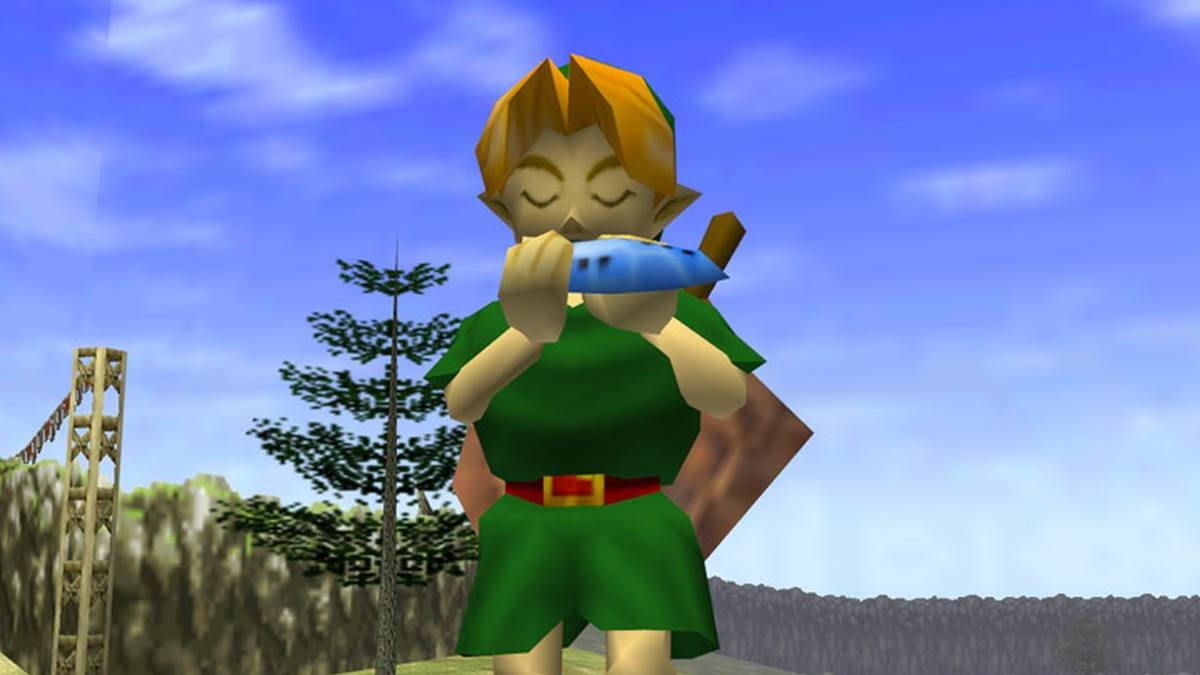
The 1998 Ocarina of Time has an extremely distinctive soundscape. There's the musical score by Koji Kondo, of course, which is stuffed with deathless melodies, including all the ocarina songs, which tie directly into the gameplay and story. There are the bright effects and there's the ambient soundscape, which is sparse and echoing. And there are the heavily compressed voice snippets, including Link's iconic clipped yells, the Gorons' baritone grunts, and Navi's immortal "Hey! Listen!"
It's the audio that defines Ocarina of Time's unique atmosphere, which is epic, yes, but also intimate and eerie. Kondo's melodies are seared into your brain via the ocarina you use to play them; they manipulate the world and bond you to characters like Zelda, Sheik, and Epona. Their expressions in the soundtrack veer away from orchestral pomp (with the exception of the Hyrule Field theme) and toward homely folk and chamber music, played on synthesized fiddles, harpsichords, and harmonicas. In the dungeons, Kondo enters a completely different realm of spooky, open-ended ambient loops that never resolve musically.
And then there's the title theme. I still remember how shockingly different it was the first time I heard it in 1998: spare and dreamlike, almost mournful, a plaintive ocarina crying out over simple piano runs and subtle washes of synth. More Twin Peaks than Final Fantasy. It completely eschews grandeur and sets the game's mood as elegiac, mysterious, maybe a little bit sad.
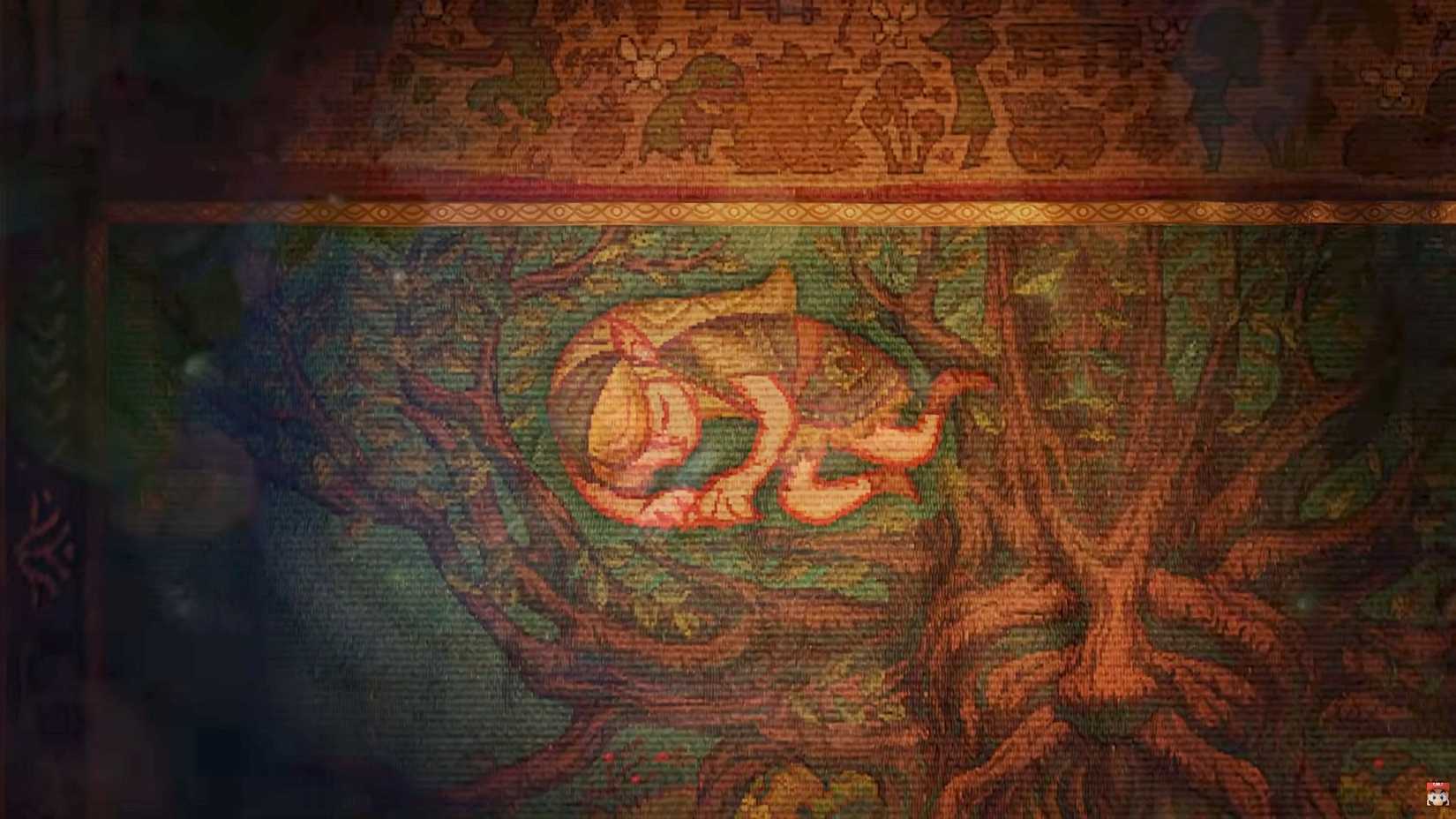 Image: Nintendo
This is not how Nintendo set the mood in the trailer for 2026's Ocarina of Time. An ocarina plucks out the notes of "Saria's Song," and there's a hint of the jaunty "Kokiri Forest" theme in the background. But the music builds to a full, orchestral fanfare based on the Hyrule Field theme. It sounds majestic; it puts me in mind of the new orchestral soundtrack for the upcoming remake of Star Fox.
The new Star Fox music sounds fantastic, but that's because it's how the music, inspired by John Williams' Star Wars scores, was always meant to sound. Ocarina's score is different, more multifaceted and subtle. It's a given that Nintendo will be faithful to Kondo's melodies. But I hope it isn't tempted to overproduce them, to make them too lush and cinematic. That's not Ocarina to me.
Another choice in the trailer is to include a voice setting out the opening of the story: the Deku tree, the Kokiri people, the boy with no fairy. It's a kind, rich-toned old man, a classic storybook narrator; very Disney. I know Nintendo has always admired and modeled itself on Disney. But, for me, Ocarina has a different kind of fairytale vibe, and this is not the tone I imagined for this story. The narration at the start of the 1998 game comes — silently, in text form — from the Deku Tree itself. It is halting, ancient, formal.
 Image: RiazorMC/Nintendo
Who will voice the Deku Tree in the remake? I'm assuming the game will be at least partially voiced in cutscenes, like Breath of the Wild and Tears of the Kingdom. Perhaps not, and I might welcome that, although it would fly in the face of modern expectations of such a cinematically mounted game. I hope it won't be fully voiced — Zelda has always been a reading experience, laid before you like a book — and I presume Link himself will remain as mute as ever. (Please God.)
Even so, casting and recording the voices of these iconic characters — not just Zelda and Ganondorf, but Impa, Saria, Malon and Talon, Dampé, and more — is an enormous responsibility. It's quite different to casting an all-new take on the legend, like Breath of the Wild. Nintendo has to nail the representations of characters whose voices have sounded in our heads for almost 30 years. It would be so easy to get it wrong.
I don't mean to concern troll. And, to be clear, I trust Nintendo. It has consistently proven to be a very careful steward of its own legendary catalog, and its remakes and remasters seldom put a foot wrong. But it has never attempted anything on the scale of this Ocarina of Time remake before, and the source material might be the single most precious masterpiece in its fulsome vault. There are so many opportunities for it to go wrong. And they will start with the first thing that reaches our ears.
What's Your Reaction?
 Like
0
Like
0
 Dislike
0
Dislike
0
 Love
0
Love
0
 Funny
0
Funny
0
 Wow
0
Wow
0
 Sad
0
Sad
0
 Angry
0
Angry
0





Comments (0)