

The Lie of Authentic Landscape Photography
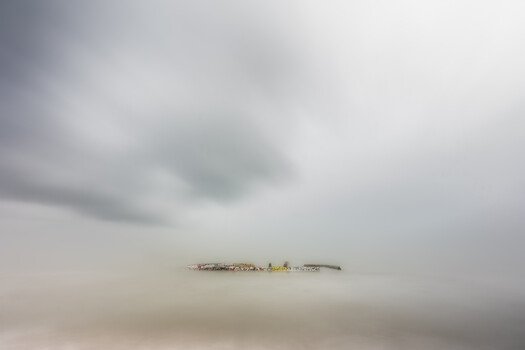
"There's no way the scene looked like that when you took the picture. Show us the raw file." Have you ever had questions like these asked of you when sharing your work online?
I think we've all felt that slight sting of defensiveness when someone challenges the validity of our art. The rabbit hole of authenticity runs deep, and it's a conversation that seems to crop up more and more in this age of digital perfection. But it leads me to a very simple, perhaps provocative question: Why? Why should I show you my raw file? What is it about that flat, unprocessed data that people think holds the "truth"?
Indulge me for a minute and let us journey on a quest together for an authentic landscape photography image. If you ever get asked questions like the one above, where somebody feels the artist is somehow obliged to share their original file to prove a point, we have to understand something fundamental. We have to realize that landscape photography—or indeed any genre of photography—is based on a massive, widespread misunderstanding. The reality is that all photography is a translation of a three-dimensional scene into a two-dimensional, filtered interpretation. It is, by its very nature, inherently subjective to the eye of the beholder. I believe that authenticity should be measured by the integrity of the artist's vision, not the integrity of the scene's literal, cold rendering on a digital sensor.
Today, I'd like to explore the inherent manipulation of the camera and how it has its own built-in interpretations. We'll look at the vital role of memory and emotion—what was it that actually drew you to the scene in the first place? We will also discuss the ethical distinction between documentation and art, because there are key differences we need to respect. Finally, I want to talk about the liberating power of interpretation and how you can—and should—embed your own artistic flair into the world around you.
The Camera's Inherent Bias: Not a Mirror, but a Translator
One thing has to be taken very much into consideration, particularly for anyone who is very new to photography: the camera is not a mirror. It is a translator—a tool through which you repurpose and reinterpret the world around you. The camera has its own inherent bias, and as artists, we have the capacity to either strictly adhere to these biases or take advantage of them. Here are just a few of the inherent manipulations the camera puts on your imagination each and every time you press that shutter button.
The First Act of Manipulation, the Lens: Without a lens, the camera is simply a light-tight box, essentially unusable. And right there lies the problem, because the moment you put a lens on, the camera becomes an unreliable narrator to what it is you're looking at. Let's take two common examples. First, the ultra-wide perspective. When you are shooting ultra-wide, the scene around you is exaggerated, particularly toward the edges of the frame. This is a look the human eye simply doesn't experience naturally. We can, of course, take advantage of this if you want to exaggerate the pointiness of a mountain or use it to add a greater sense of scale to the entryway of your frame.
The second example is the telephoto lens—say, a 100-400mm. When you are zoomed all the way into 400mm, you get an effect called compression. It pulls the background toward the foreground, stacking layers of the landscape in a way that feels epic and grand. But again, this is simply something the human eye cannot replicate. As beautiful as those compressed images can be, the reality is the camera is not a natural recorder once that lens is attached. It is already changing the world for you.
The Dynamic Range Compromise: As wonderful as modern cameras are at capturing a wide range of light, they are still a far cry from the human eye and brain. We can see detail in the deepest shadows and the brightest highlights simultaneously, but the camera often has to choose. When we press the shutter, the resulting raw file is often a flat, low-contrast frame. It's a dull and lackluster representation of what you pre-visualized in your mind's eye. It will, 99% of the time, require post-processing just to make it appear normal, let alone close to the authentic expression of what you actually wanted to represent. To leave a raw file as it is and call it the truth is like looking at a pile of unbaked ingredients and calling it a cake.
The Frame Is the Filter: This point right here is probably the single most powerful act of authenticity—or lack thereof—that a photographer can choose to do. The very simple act of choosing a frame and a particular composition that catches your eye means you are excluding everything outside of it. You are imposing a subjective boundary on what is, in reality, an infinite landscape. As artists, we have a wonderful creative freedom to create these boundaries. These choices themselves have their own impact on the final frame—creating mystery, curiosity, and a sense of what could have been just beyond the edge of the photo. This is one thing that I absolutely adore; each and every time I go out into the landscape, it is entirely up to me what I want to photograph and, more importantly, what I want to hide.
The Role of Memory and Emotion: Subjective Reality
Let's get into the "meat and potatoes" of this, because there is simply no question that when we are overlooking something beautiful, we are struck by emotion. The memory of that emotion, after the fact, is open to a wonderful array of interpretation.
The Felt Experience: If you follow my adventures, whether it be here on Fstoppers, my YouTube channel, or my own blog, you will know—or at least have come to learn—that when I go out and shoot, I am looking for something a little bit more than just a landscape photograph. In my humble opinion, the true subject of landscape photography is not the objective scene itself; it is the very real emotional experience that I, as the photographer, have at that specific point on the earth and at that specific time on the clock.
If you are anything like me, we go out to shoot to capture the feeling of awe, peace, or the dramatic tension that we experience while overlooking a scene. This is my crack cocaine—the high I will forever chase. The camera is just the vehicle I use to try to bottle that feeling.
Post-Processing as Memory Retrieval: Now, when we get home to the computer, I want you to think of your memory card being put into the slot like Quaid getting lowered into the chair in Total Recall. To me, the post-production part of my workflow is a form of memory retrieval. Looking at that flat raw file is the same as a painter looking at a blank canvas—the possibilities are endless.
I use contrast manipulation, color grading, and localized edits like dodging and burning to bring the final image closer to my own subjective, remembered, and emotional experience from when I was out in the field. If the sunset I was photographing felt more saturated, more engaging, and more vibrant than the camera recorded, then it is my due diligence to restore that feeling. From that flat, boring raw file, I am trying to create a more authentic feeling to the image, even if it deviates from the data.
The Psychological Element: There is also a deep psychological effect at play here. The human perspective of a scene is quite fluid. What we "see" when we are photographing is often what we expect to see, and our focus is naturally drawn selectively to the elements we wish to focus on within the art we are looking to create. When we post-produce an image, we can, in a way, replicate this selective focus that we had in our mind when standing there in the wind. This is, in itself, a form of truth-telling in art. It's one of the beautiful benefits of the digital darkroom; adjustments can be made and undone in the blink of an eye, giving us even greater perspective on the final piece we want to share.
Ethical Freedom: Distinguishing Art from Documentation
As we dive a little deeper into this, it is worth discussing the ethical freedoms we have as creatives. We must first distinguish "Art" from "Documentation," and we can do so very simply by looking at particular guidelines.
Drawing the Line: When it comes to documentary work and photojournalism, having a metaphorical line in the sand is paramount. The integrity of the original image is of the utmost importance to ensure the facts of the scene are non-negotiable. However, for the artistic landscape photographer, it is their integrity to the vision of what they want to create that is paramount. I have briefly covered these topics before, but it is important to reiterate them as often as possible because the factual accounting of photojournalism is too important to our culture and our zeitgeist. But we shouldn't confuse the two. One is a record of fact; the other is a record of feeling.
Defining Transparency: There is an inherent transparency you can adhere to when sharing the creative works you have spent hours on. If, for example, you state that an image is a fine art photograph, there is an immediate connotation to what the viewer can expect—perhaps a long exposure or a blended horizon. It is then left up to the viewer and their own personal biases to judge the work on its artistic merit, not for its adherence to photojournalistic rules.
The Purity Test as a Creative Blocker: One of the unfortunate downsides to this modern need for authenticity in the eyes of others is that it acts as a creative blocker. It is a real shame when someone's fear of being labeled inauthentic forces them to compromise on the vision they set out to create. The double-edged sword here is that the resulting images can sometimes be safe, derivative images that follow a predictable formula. Ultimately, this hinders the development of a unique style. I love creative photography, particularly the works of Gary Gough, Karen Waller, and Kathrin Federer. Their commitment to the visions they set out to create is incredibly inspirational and absolutely worth your time checking out.
Moving Beyond the Purity Test: Embracing Interpretation
So, how can we break down these walls we may have built around our own biases? How can we stop looking at photography in such a closed-minded way?
The Liberation of Ownership: The first step is the liberation of ownership. I would highly encourage any photographer who reads this to let go of the need for external validation. Stop worrying about whether someone thinks your edit is too much. Embrace the fact that you are an interpreter of the world around you and that the camera is simply the tool you use to tell your story. Once you feel safe in this freedom, you will find your work deepens. It gains a greater meaning and a stronger connection to you—and that is what is most important.
The Power of Radical Editing: A practical example of how we can look past these blocks would be a practice of radical editing. Why not try to look at an image you've just freshly imported and let your emotions guide the edit entirely? What was it that stopped you in your tracks when you took the frame? Reconnect with the image in such a way that you now begin to weave a narrative. And if that narrative deviates significantly from the literal "truth" of what your camera recorded, then so be it. If the story you wish to convey demands a deep, moody red sky, then make the sky red. Ownership of your artistic endeavors will only stand to you in the long term.
New Metrics for Success: Lastly, we can redefine what we feel is a success for our photography. By redefining the measure of a successful image, we don't need to judge how similar it is to the raw file. Instead, we judge it by the power with which it translates the photographer's subjective experience to the viewer. The question should shift from "Is this really what the scene was like?" to "Does this image feel right for me?" This simple shift in mindset can broaden all of our horizons when it comes to viewing art and allowing creative endeavors to be explored.
Wrapping Up
Well, we have made it to the end of another one! The pursuit of an authentic landscape image is a limiting myth, rooted in a fundamental misunderstanding of both the camera and human perception. Once we understand that photography is an interpretation, we can find something a lot more meaningful in the art form that we all so love and crave to pursue.
As one final thought, it's important to remember that the job of a landscape photographer is not to be a photocopying machine for reality. It is to be the author—the one who translates light, place, and emotion into a cohesive visual story.
If you'd like to take this further, Photographing the World 4: Advanced Landscapes is a great companion for anyone interested in pushing their landscape work beyond the literal record.
Call to Action: I love my little calls to action at the end of these. I would highly encourage anyone who reads this to go back to one of their favorite images and re-edit it. Now that some time has passed, try to hold onto the memory and the emotion of the moment you felt when you were actually there. Don't be afraid of how far you deviate from the original raw data. And, of course, if you are inclined, you are most welcome to share the results below—I would love to see them.
What's Your Reaction?
 Like
0
Like
0
 Dislike
0
Dislike
0
 Love
0
Love
0
 Funny
0
Funny
0
 Wow
0
Wow
0
 Sad
0
Sad
0
 Angry
0
Angry
0





Comments (0)