

The Most Anticipated Anime Epic of 2026 Just Put Demon Slayer and Jujutsu Kaisen to Shame

Published Aug 14, 2026, 3:30 PM EDT
Studio Pierrot has transformed one of Shonen Jump’s defining anime into a modern prestige blockbuster
 Image: VIZ Media
When Bleach first arrived on TV Tokyo in October 2004, it looked exactly like a product of its time. Its high-contrast digital coloring, bright spiritual effects, dramatic close-ups, and 4:3 framing were perfectly suited to the era of weekly Shonen Jump anime — series that had to keep moving, week after week, year after year.
That format came with a price. Bleach, like One Piece and Dragon Ball, was built on an exhausting production model that demanded enormous amounts of animation on an almost constant schedule. Stories had to be stretched. Filler was inevitable. Animation quality could fluctuate wildly from episode to episode. The goal wasn't to make every episode look like an event. It was to keep the content train chugging along.
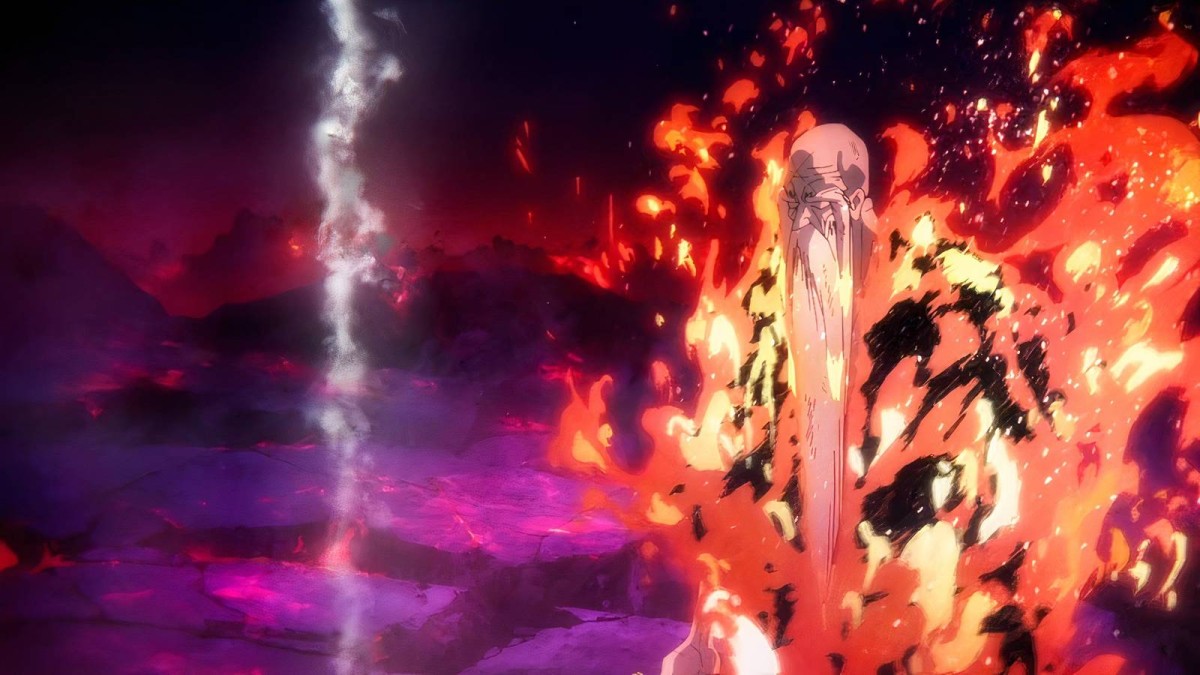
Almost two decades later, Bleach: Thousand-Year Blood War feels like it belongs to an entirely different era of anime. From its opening episodes, The Calamity — the final cour of the adaptation — looks more like a dark fantasy film that happens to arrive in weekly installments than an ordinary anime TV series. Studio Pierrot isn't simply tying up the end of Tite Kubo's story, but is applying all the incredible leaps and techniques it has learned since Bleach first aired.
Bleach finally gets to look as big as it always felt. Under director Tomohisa Taguchi, the series has abandoned the bright, flat presentation associated with the original anime in favor of dense shadows, directional lighting, atmospheric effects, and a much more deliberate sense of space. The difference can be startling. Soul Society no longer feels like a collection of anime backgrounds that characters happen to move through, but an enormous, battered, and lived-in place that has been dragged through a war. Buildings disappear into darkness, while characters are frequently framed against vast environments rather than isolated against simple backgrounds. Smoke, fog, fire, and debris give the world depth that the original series rarely had the time or resources to develop.
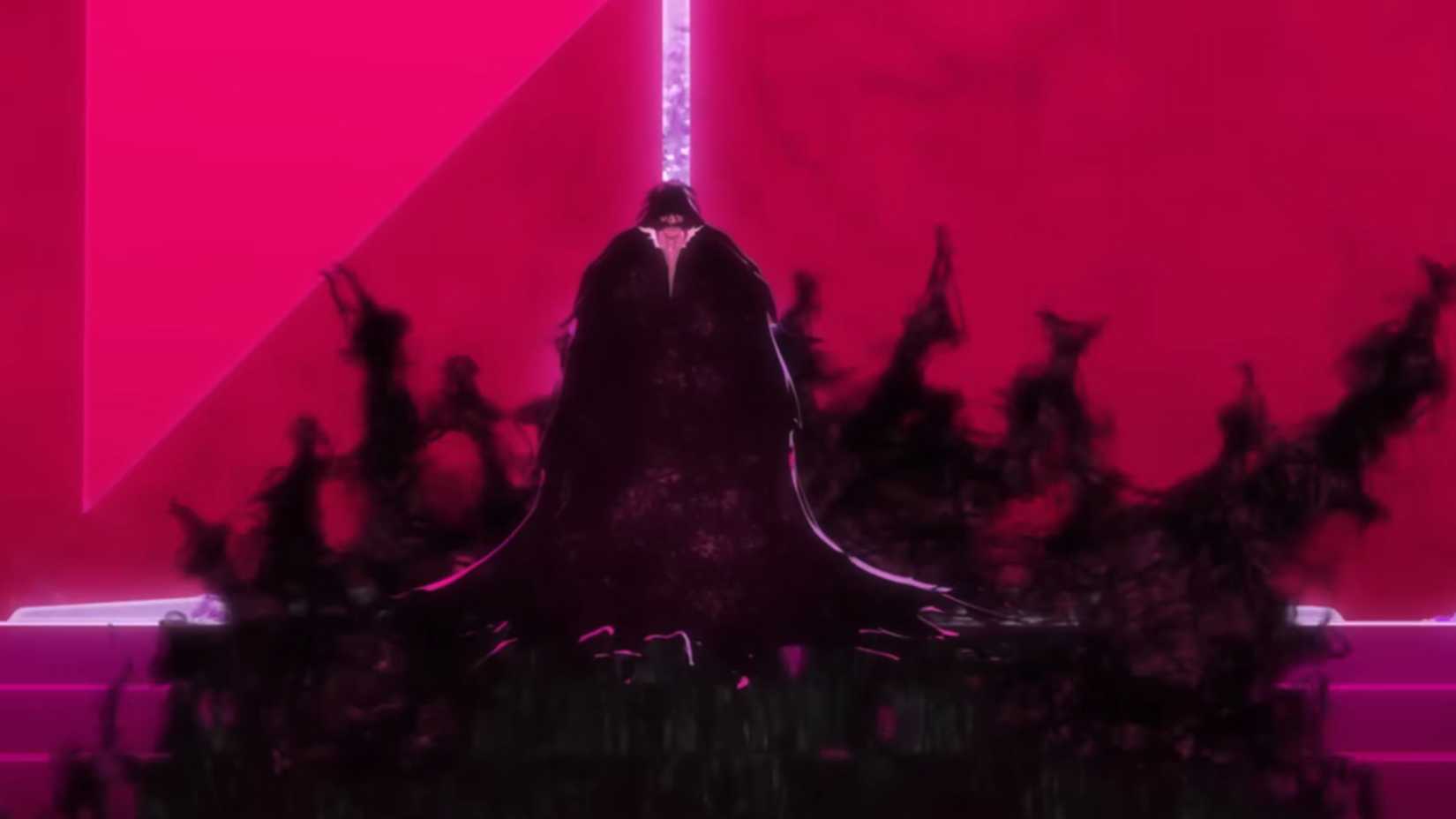 Image: Studio Pierrot
It’s an especially important element for Bleach, because Kubo's manga was always interested in fashion, silhouette, negative space, and character design. The original anime captured those qualities at times, but the production realities of weekly television often meant the adaptation had to prioritize simply getting the characters on screen. But now, Thousand-Year Blood War can linger, allowing the composition to breathe and hold a character's silhouette. Taguchi often pulls the camera back to make Ichigo look small against an enormous battlefield before suddenly cutting into an intimate, violently animated close-up.
That is the language of modern prestige anime, a category Bleach now finds itself competing against the very shows that have defined the medium's current blockbuster era. Demon Slayer and Jujutsu Kaisen have raised expectations for what a Shonen Jump adaptation can look like, turning individual episodes into spectacles and making cinematic presentation part of the appeal. Yet Thousand-Year Blood War doesn't feel like an aging franchise desperately trying to keep up. If anything, it’s proving that Bleach can still run with the industry's newest power players. The difference is that it has decades of history — and a studio with decades of experience — behind it.
 Image: Studio Pierrot
Studio Pierrot's pedigree extends far beyond Bleach, of course. The studio was responsible for Naruto and Naruto Shippuden, Yu Yu Hakusho (one of my personal favorites), Black Clover, Boruto, and a host of other foundational shonen series, giving it an unusually deep understanding of how to translate long-running manga into television. Thousand-Year Blood War demonstrates what happens when that institutional knowledge is paired with a production model that isn't constantly fighting against the clock. Pierrot can draw from everything it has learned from making these enormous franchises while finally giving Bleach the time and resources to make its biggest moments feel as electrifying as they were always supposed to.
The animation can explode when a fight demands it, but the new season’s greatest strength is how controlled it all still feels, even in the midst of explosions. The oppressive lighting, restrained color palette, widescreen compositions, weightier sound design, and Shiro Sagisu's sweeping score all give the series a renewed sense of purpose. The new series doesn't need to constantly prove that it has become "better animated." It simply understands how to make Bleach look like Bleach at its most powerful.
 Image: Studio Pierrot
That's the most satisfying part of this comeback. Bleach is not trying to compete with Demon Slayer or Jujutsu Kaisen. It doesn’t have to. 20 years after its debut, the series that once represented the height of weekly shonen anime has become something closer to a prestige event. It’s not a relic being dragged into the modern era, but a legacy franchise demonstrating that it still belongs at the top.
New episodes of Bleach: Thousand-Year Blood War release on Hulu and Disney Plus Saturdays at 10:30 a.m. ET.
What's Your Reaction?
 Like
0
Like
0
 Dislike
0
Dislike
0
 Love
0
Love
0
 Funny
0
Funny
0
 Wow
0
Wow
0
 Sad
0
Sad
0
 Angry
0
Angry
0








Comments (0)