

The Odyssey is great, but Christopher Nolan is the best IP in movies
Patch Notes is a weekly newsletter bringing you the best of Polygon, sent on Fridays and published on the site on Sundays. You can subscribe here.
You can set your watch by Christopher Nolan. Every three years, in the summer, he delivers a new movie. He's kept this metronomic pace up since 2014's Interstellar, a rare fall release for the director; before that, the gaps were just two years.
Nothing slows Nolan down (or speeds him up, for that matter). It doesn't matter what he's trying to do: depict a black hole, stage a war, reverse time, simulate the detonation of an atom bomb, or render a 3,000-year-old epic poem physical and real — as he does in The Odyssey, out this weekend.
Nor does it matter what's going on outside the frame, like a global pandemic, or an acrimonious split with the movie studio he called home for the best part of 20 years. (Both of these hit in the early 2020s; Nolan quit Warner Bros. on point of principle after the studio started releasing movies on streaming at the same time as in theaters, even though his own Tenet avoided that fate.) Three years from today, there'll be a new Christopher Nolan movie in theaters. You can count on it.
 Image: Universal Pictures
Nothing stops the metronomic tick of Nolan's creative watch. He works with his wife Emma Thomas, who has produced every one of his 13 feature films going back to 1998 (they married in 1997). Safely ensconced in the production company that they run together, Syncopy, Nolan conceives his next project, writes it, they go out and shoot it, edit it, and release it. On to the next one.
Any artist, or creative person, or indeed anyone who has had to conceive and deliver big projects, would envy this level of stability, autonomy, and discipline. It's a gigantic privilege, but Nolan earned it. He's the most important filmmaker of the 21st century. His Batman movies fundamentally changed culture, and his filmmaking style defined modern movie spectacle even as it rejected the overwhelming march of digitization. His embrace of IMAX and eventization of film exhibition has helped save filmgoing from extinction.
Ever the perfectionist, the detail guy, Nolan expertly stage-managed his own rise — including the leg-up he got from Batman. He turned down an offer to make Troy, considering himself not ready for the material, and chose the Dark Knight instead. He doesn't need Batman any more. Nolan is his own IP now, and his own star. Despite The Odyssey cast containing every single famous person — really, all of them — it is for Nolan that audiences will show up. He joins a vanishingly small list of filmmakers who have achieved this at a populist scale: Alfred Hitchcock, Steven Spielberg in his prime… that's about it.
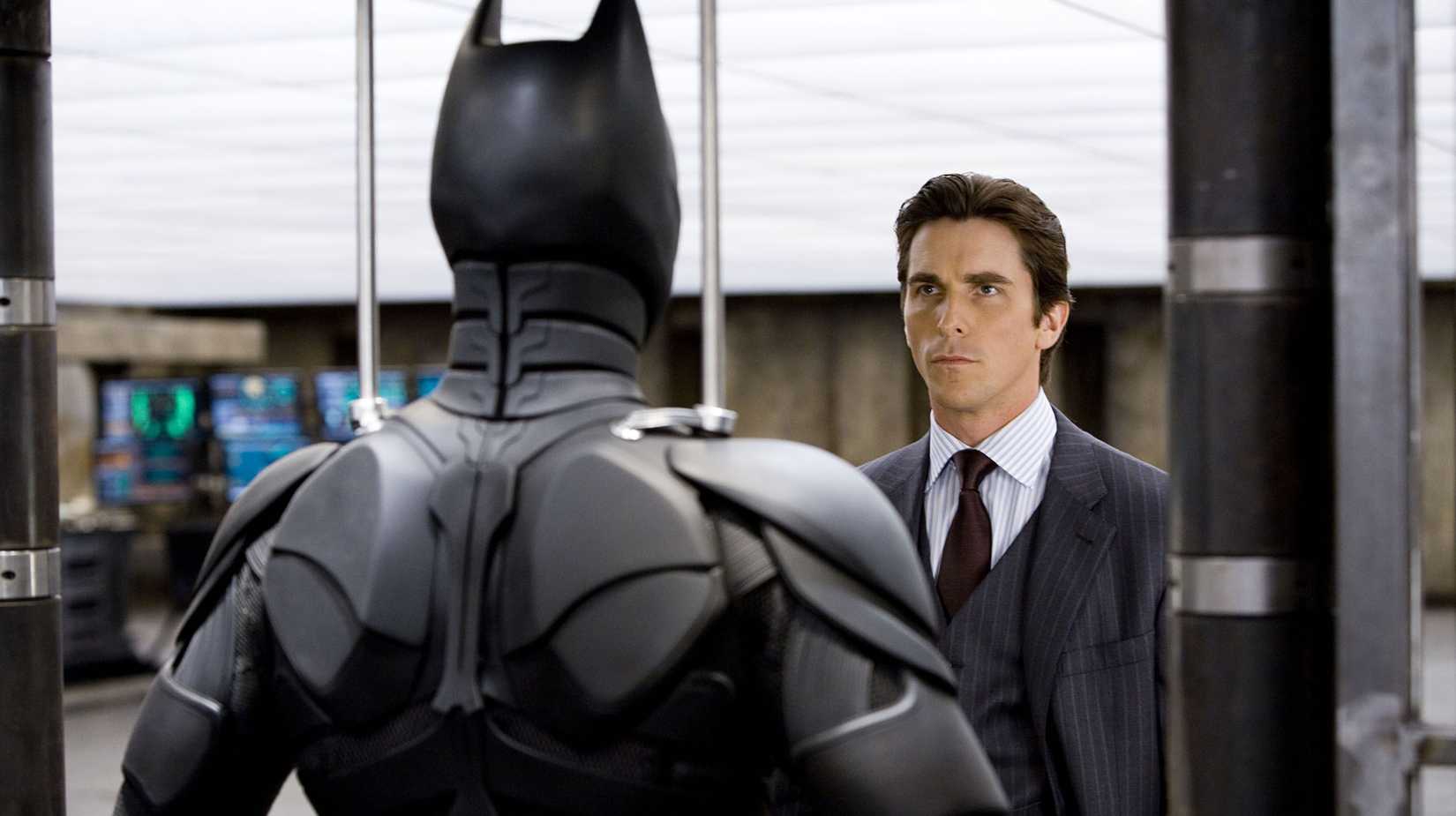 Photo: Warner Bros./Everett Collection
I would call myself an admirer but not a fan. I stand in awe of Nolan's image-making but find some of his characters and devices leave me cold, or tip into self-parody. Whatever you think of his art, though, you have to admire what he's built. And I think the three-year thing has a great deal to do with it.
Nolan movies have exactly the right amount of scarcity. They're not so frequent they overwhelm or bore us, or that he loses his grip on quality control. Every one is an event. Nor are they so infrequent we forget how the last one made us feel or start to look for that particular thrill somewhere else, or that he gets left behind by the zeitgeist. Each of his films is different, but they exist in a clear continuum, and the things that connect them — his great man complex, the implacable forces of gravity, time, and fate that rule us all — are easy to perceive.
If Nolan is IP, then the IP managers of the world would do well to study his career. Imagine if there was a new Batman movie every three or four years, no more, no less. (There was when Nolan made them.) Imagine if Disney had tried to make one Star Wars movie every three years, instead of one a year and then none for seven. Imagine if Marvel Studios had known when to slow down instead of running into a wall. Imagine if the big video game studios could make more than one game every seven years. I think a lot of our cultural touchstones would look a lot healthier.
Plus this:
What's Your Reaction?
 Like
0
Like
0
 Dislike
0
Dislike
0
 Love
0
Love
0
 Funny
0
Funny
0
 Wow
0
Wow
0
 Sad
0
Sad
0
 Angry
0
Angry
0







Comments (0)