

‘The Social Reckoning’ Bombs with $5.5 Million Opening. Why Did Aaron Sorkin’s Facebook Follow-Up Fail at the Box Office?
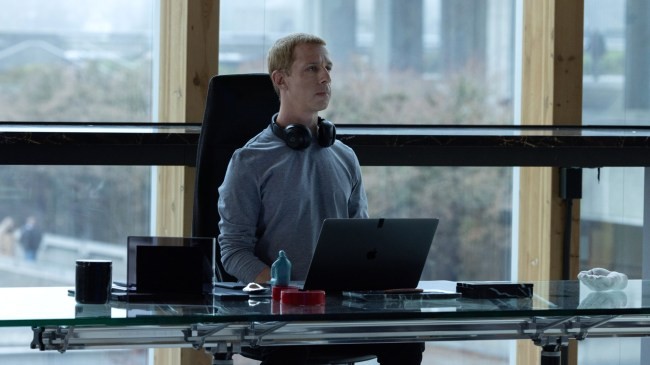
In 2010, “The Social Network” arrived in theaters on a wave of anticipation. Two of the biggest names in movies, director David Fincher and writer Aaron Sorkin, were joining forces to explain the age of interconnectedness.
The timing was perfect. Twitter was gaining steam, YouTube was transforming the way people watched stuff, and Facebook, the subject of “The Social Network,” had established itself as a social media juggernaut, leaving MySpace and other pretenders in the dust. But six years after it launched, Mark Zuckerberg, Facebook’s geeky, 20-something founder, remained an enigma, one that Fincher and Sorkin were determined to unravel.


And the film‘s marketing campaign could not be ignored. Its initial teaser, set to a choir mournfully singing Radiohead’s “Freak” as dozens of Facebook profiles flashed across the screen, is still startlingly innovative, as is its poster, a shot of Jesse Eisenberg (as Zuckerberg) with the words “You Don’t Get to 500 Million Friends Without Making a Few Enemies” superimposed on his face. (Today, Facebook has 3 billion users.)
The film delivered on its promise. Fincher’s cool, penetrating camera captured the shadowy, morally compromised world of Silicon Valley and Harvard’s old-money elitism, while Sorkin’s crackling dialogue kept the film’s deposition-heavy plot humming. And the script grounded the story in themes that were immediately recognizable, despite its exotic settings.
“What attracted me to [the film] had nothing to do with Facebook,” Sorkin said in an interview with the Writers Guild of America. “The invention itself is as modern as it gets, but the story is as old as storytelling; the themes of friendship, loyalty, jealousy, class, and power.”
“The Social Network” was a box office success, as well as an Oscar winner, and it is now considered to be one of the greatest films of the 21st century. That won’t be the fate of its follow-up, “The Social Reckoning,” which bombed in its opening weekend, collecting a mere $5.5 million. Its predecessor earned $22.1 million in its debut and closed out its run with $225 million globally. Sony wisely kept “The Social Reckoning’s” budget at $30 million, meaning it won’t face losses on the scale of a “Digger.” (Ousted Warner Bros. chiefs Michael De Luca and Pamela Abdy probably should have taken a page from Sony’s Tom Rothman, who greenlights ambitious movies while keeping costs low.)
“The Social Reckoning” isn’t just a financial failure, it’s a critical one, too. The reviews were blistering, with many critics bemoaning the fact that Fincher had passed on directing the film, leaving it to Sorkin to slide behind the camera.
“Sorkin doesn’t look beyond the words on the page, and the film itself appears made with heads down,’ The New Yorker’s Richard Brody lamented.
Eisenberg also opted to sit this one out, reportedly because he was worried about glamorizing the tech mogul. He’d become disturbed after fans approached him quoting lines of dialogue from “The Social Network” or asking him to sign cards that read “I’m the CEO bitch.” Instead, he was replaced by Jeremy Strong. That made the film more difficult to market. With only one member of its creative team returning, Sony Pictures shied away from selling it as a sequel, but the studio still sprinkled bits of “The Social Network’s” DNA into promotional materials. There was the title, an obvious nod to the first Zuckerberg film, and ads used bits of Trent Reznor and Atticus Ross’ score. Posters also referenced the “The Social Network’s” marketing campaign, noting “We’re Way Past Making Friends” in similar, blocky script.
But there wasn’t the same urgency in the story being told. “The Social Reckoning” focuses less on Zuckerberg, and more on data engineer Frances Haugen’s decision to blow the whistle on how Facebook’s algorithms were promoting political content that radicalized users, as well as the company’s awareness of how its products were contributing to a rise in bullying and teen suicide. Haugen’s decision was courageous and the public had a right to know about the darker side of the tech giant, but “The Social Reckoning” arrives as a much greater threat has emerged from Silicon Valley.
Artificial intelligence is dominating the headlines, as fears mount about the economic disruptions it will unleash when millions of jobs are replaced by machines, and, graver still, its potential to trigger a world-ending event. It seems like every day a new Cassandra emerges warning of a potential apocalypse, be it an AI mogul or a disillusioned executive. And it’s not like Haugen’s testimony led to lasting change at Facebook. We’re still drowning in a sea of misinformation, with a federal government that has put the lazy in laissez-faire with its regulatory approach.
As IndieWire’s Ryan Lattanzio put it, “‘The Social Reckoning’ argues that the aftermath of their whistleblowing is still somehow felt today. In actuality, living as we do in 2026, it pretty much feels like… no one cared, and nothing changed?”
Instead, two other films may emerge to spark the kind of urgent debates that “The Social Reckoning” thought it would inspire. “Musk,” which opened in limited release this week earning $22,000 across four locations, and “Artificial,” a look at Sam Altman and OpenAI that was one of the breakouts of the New York Film Festival.
The four-hour documentary about Elon Musk probably won’t be a blockbuster, but it should factor into the awards conversation with its scathing look at the world’s richest man. As for “Artificial,” it already generated controversy after its original distributor Amazon MGM Studios abruptly dropped it days after the company signed a $50-billion deal with OpenAI. It was later acquired by Neon, which will release it at Christmas. The idea that “Artificial” was too hot to handle could make it irresistible to audiences worried about the way that AI is reshaping our world.
Or maybe it will cut too close to home. Sometimes we just go to the movies to escape, not to be reminded of how technology that was designed to connect us instead drove us farther apart.
What's Your Reaction?
 Like
0
Like
0
 Dislike
0
Dislike
0
 Love
0
Love
0
 Funny
0
Funny
0
 Wow
0
Wow
0
 Sad
0
Sad
0
 Angry
0
Angry
0








Comments (0)