

The Specialized Diverge Pro 4 makes rough gravel your playground
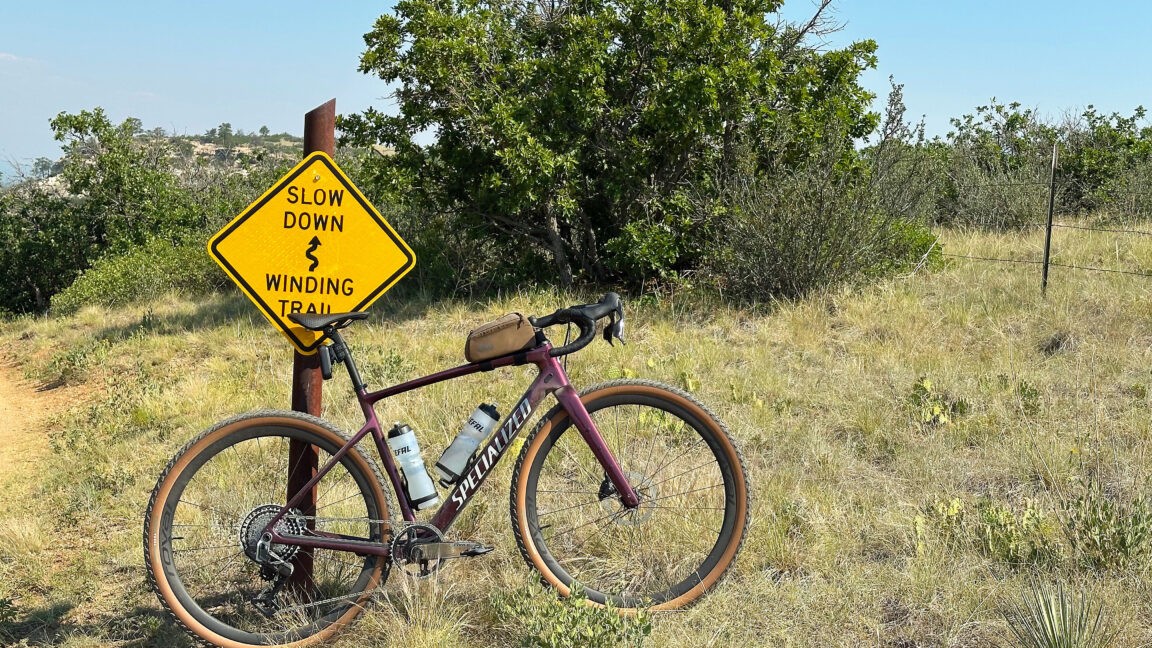
The Diverge Pro 4 is happiest when the road gets ugly.
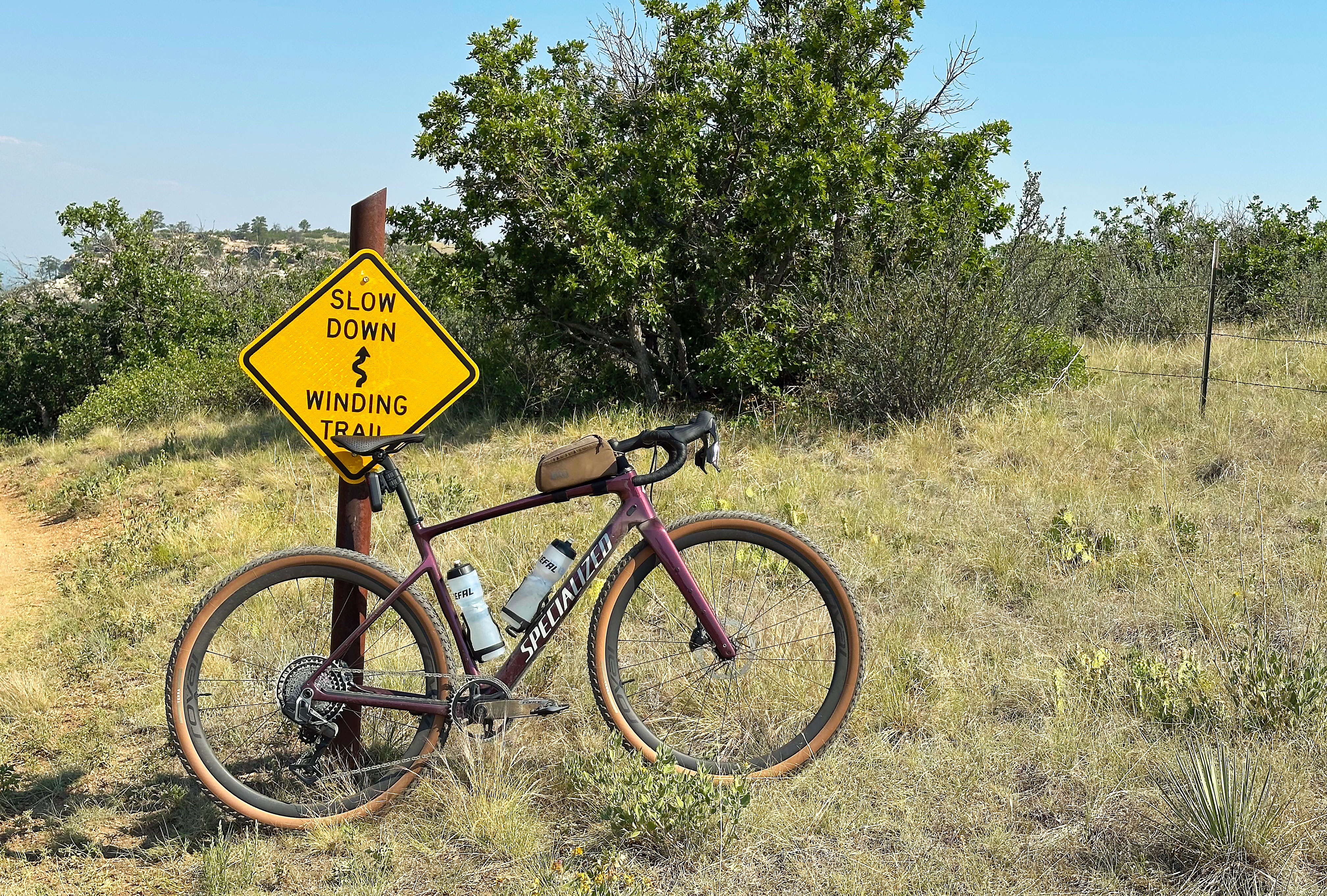
When I make my yearly trip to Denver, I always bring my road bike. It’s my annual chance to suffer on the kinds of gradients unavailable in the glacier-scoured lands of northeastern Illinois. In advance of this year’s trip, Specialized hooked me up with its new gravel bike, the Diverge Pro 4, so I brought it with me to challenge it in ways not possible on the fastidiously groomed gravel trails of suburban Chicago.
In contrast to the Specialized Turbo Creo 2 we reviewed a couple of years ago, the Diverge Pro 4 is strictly human-powered. Specialized calls it “the ultimate getaway vehicle,” designed with input from off-road adventure riders, scientists, and racers. It’s marketed as the only gravel bike you need for racing, adventure, and distance rides. While I can’t speak to its racing performance, I can say the Diverge Pro 4 is a blast on any kind of gravel and does well enough on the road.
Priced at $8,249, the Diverge Pro 4 is designed for rough trails and technical descents, both of which unfolded below me at the summit of an is-it-gravel-or-is-it-single-track climb in Douglas County, Colorado. I took a deep breath, and down I went. The descent was rutted and slightly more technical than anything I’ll ever run into around Chicago, but I had enough time on the bike to realize that if I had trouble on the descent, it wouldn’t be the bike’s fault.
A “shocking” update
To understand what makes the Diverge Pro 4 stand out, I’ll start with my favorite feature. Future Shock 3.3 is Specialized’s suspension system, and it’s a significant upgrade over the earlier versions used on the Turbo Creo 2 and Diverge Pro 3. The mechanism lives between the head tube and stem. It isolates the rider from high-frequency impacts while adding relatively little weight and without changing the bike’s steering geometry or introducing brake dive—two compromises that can come with conventional suspension forks. The fork, head tube, and front wheel remain rigidly connected, with the stem and handlebars moving vertically relative to the rest of the bike.
Future Shock uses hydraulic damping to control the movement of the spring inside the head tube. A spring by itself will just compress and return the stored energy, which can lead to a pogo-stick-like experience on bumpy roads and gravel. The damper converts some of that energy into heat by forcing fluid through a controlled pathway. The result on nasty terrain is controlled vertical movement rather than a bouncy rebound. 20 mm doesn’t sound like much, especially to anyone accustomed to mountain bikes with 100 mm or more of suspension travel. But Future Shock isn’t trying to keep a wheel planted while you launch off a rock. Its job is to prevent a stream of smaller impacts from traveling through the handlebars, into your hands, arms, shoulders, and eventually your increasingly annoyed brain. And it’s very good at it.
Specialized says laboratory testing showed up to a 53 percent reduction in peak impact at the bars versus competing setups. That’s an impressively precise number generated under equally precise laboratory conditions, so don’t read it as “every bump feels 53 percent smaller.” But whatever the decrease, the underlying effect wasn’t difficult to detect, as I felt less arm and upper-body fatigue after long rides than I experience on my own gravel bike.
Compression damping can be adjusted on the fly with a dial at the top of the stem, changing how readily the system moves through its 20 mm of travel. At the firmest setting, Future Shock moves very little under normal riding loads; open it up, and the bars move much more freely over bumps. After some experimentation, I left it fully open on nearly every surface.
Specialized made a number of other changes from the Diverge Pro 3, all of which are positives in my book. The Diverge Pro 4 sports the bike maker’s mid-range FACT 9r carbon frame with reworked geometry that offers longer reach for better weight centering. With the bottom bracket sitting 5 mm lower, the rider’s center of gravity is lower, contributing to a more planted feel in corners. All told, the Diverge Pro 4 weighs in at 8.72 kg.
Although the Diverge Pro 4 comes with 45 mm tires, there’s more than enough clearance for 50 mm tires—in fact, the Diverge I reviewed came with a set of 50 mm Terra TLR Trail gravel tires mounted on the tubeless-ready Roval Terra CL carbon wheelset.
The Diverge Pro’s drivetrain is the SRAM Force XPLR E1, which comes with a single 40t chainring; a 13-speed, 10–46 cassette; and programmable bonus buttons on the brake hoods. It’s a fantastic groupset, offering the same features as the pricier SRAM Red drivetrain in a slightly heavier, less-expensive package. The rear derailleur mounts to a replaceable Universal Derailleur Hanger, or UDH, which means a bent hanger is easier to replace than a proprietary one (which is better than finishing a long ride with limited shifting after you bit it on a corner because you didn’t see some loose gravel and bent your derailleur hanger… not that I’d know anything about that). I found the gear ratios to be more than adequate for anything outside of dropping the hammer on a flat segment of smooth tarmac, and I really appreciated the gearing on climbs while laboring up steep gradients on the big sprocket. I even had an occasion to take advantage of the massive 46t cog in back on a particularly steep stretch of road.
There’s also a Quarq Power Meter tucked away inside the spindle, which measures watts generated on the left side to calculate total power output.
The Diverge Pro 4 keeps the downtube storage area from the 3, and it’s larger. That means more room for a spare inner tube, CO2 cartridges, and tools for in-ride repairs. Or snacks, but I prefer a top-tube bag for gels, Skittles, and other on-bike munching.
A lesson in compliance
To make it to the nearest gravel trail, I need to ride a couple of miles of surface streets, so let’s briefly talk about riding the Diverge Pro 4 on pavement. It’s fine. With the DT350 hubs and bumpy 50 mm tires, the bike sounded like I was powering up a dynamo with each rotation of the pedals. The Diverge feels decidedly stolid on pavement, favoring comfort and stability over the liveliness of a road bike.
The 3D-printed saddle with cutout felt just right. Eric Bangeman
Gravel is where the Diverge Pro 4 shines.
It didn’t matter whether I was cruising down a smoothly groomed, crushed-limestone path winding along the Des Plaines River or barreling down a washboard of a gravel road in the foothills of the Rockies. The Diverge gobbled up every surface I threw at it, giving me more confidence to attack stretches of chunky gravel and a feeling of stability on descents—even the technical ones. Whether you’re on rough country roads, flowy singletrack, or bikepacking, the Diverge can handle it.
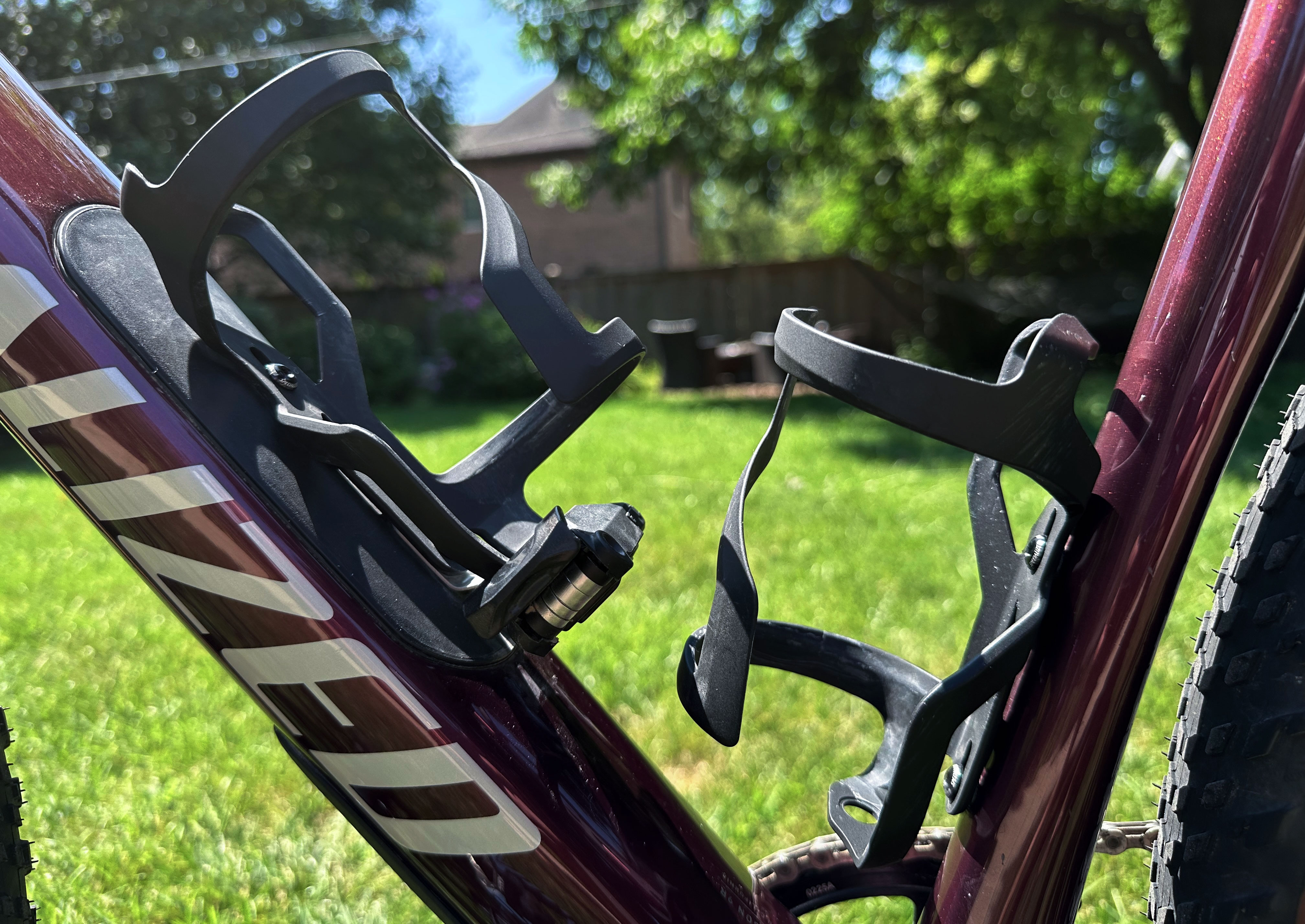
I’m not a fan of the MTB bottle cage, but the tool storage compartment is a nice feature.
Credit: Eric Bangeman
I’m not a fan of the MTB bottle cage, but the tool storage compartment is a nice feature. Credit: Eric Bangeman
There’s not much to dislike about the Diverge Pro 4. The Quarq DUB-PWR meter estimates total wattage from the left leg alone; I’d prefer a spider-based meter that measures total power at the crank spider rather than extrapolating from one side. The cranks on the 56 cm Diverge are 172.5 mm, which is out of step with an industry trend toward shorter cranks. After my second right knee replacement, I swapped out the 172.5 mm cranks on my road bike for 165 mm. Getting into an aero posture is easier and more comfortable with shorter cranks, and since my knees don’t go as high at the 12 o’clock position, there’s less hip impingement, and I experience less discomfort overall. I’m also not a fan of the mountain bike-style S-Works Carbon Zee bottle cage with the openings on the side. I ride with one-liter bottles on hot days, and my leg would occasionally bump the bottle lid on the open side of the cage.
But those are truly minor quibbles. Ultimately, the Diverge Pro 4 is a fantastic gravel bike that is ideal for those who love rough gravel, long rides, or bikepacking through the wilderness. But let’s be frank: Not everyone needs to ride around on an $8,000 gravel bike—if you would be happy with a less-expensive aluminum bike or carbon setup with a mechanical groupset, this isn’t the bike for you. (And if your wallet is wide open, Specialized just launched the $12,500 S-Works Diverge Pro this week.) But if you’re more Unbound Gravel than groomed gravel, you can’t go wrong with the Diverge Pro 4.

Eric Bangeman is the Managing Editor of Ars Technica. He lives in the northwest suburbs of Chicago, where he enjoys road cycling and plays bass in a band.
What's Your Reaction?
 Like
0
Like
0
 Dislike
0
Dislike
0
 Love
0
Love
0
 Funny
0
Funny
0
 Wow
0
Wow
0
 Sad
0
Sad
0
 Angry
0
Angry
0











Comments (0)