

The True Story Of Tenzing (& What The Movie Changes)
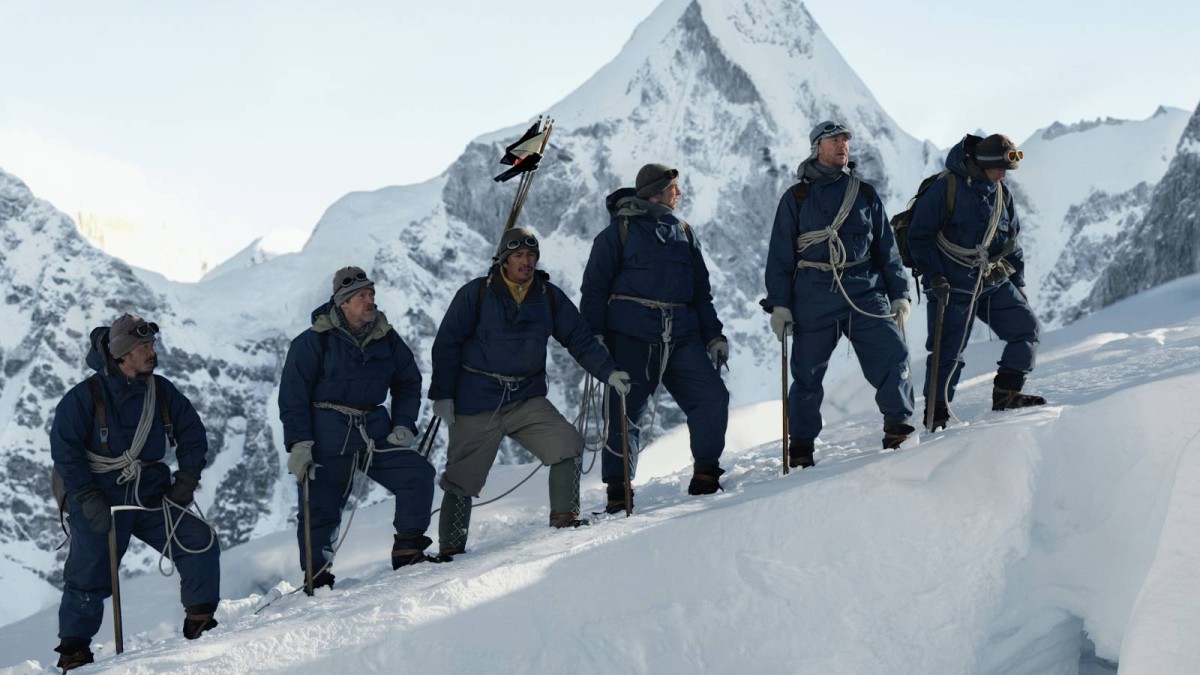
 Credit: MovieStillsDB
Published Oct 16, 2026, 10:30 PM EDT
Liz Declan is a Lead Writer for ScreenRant, primarily covering movies. She is a massive fan of Star Wars, the MCU, and Supernatural. In addition to writing, Liz loves attending and covering conventions and interviewing actors. Find her on TikTok and Instagram @va.va.vera
Sign in to your ScreenRant account
Tom Hiddleston's brand-new Apple TV biopic Tenzing has finally landed on the streaming platform (after a limited theatrical release the week before), and already, it is proving to be a streaming success. As the title suggests, this new movie centers on Tenzing Norgay (Genden Phuntsok), one of the first two men to reach the peak of Mount Everest in 1953—the other being Edmund Hillary, played by Hiddleston.
Although this is a story that has been told before, especially given that it was such a massive historical event, Tenzing's approach to this story is quite different because it specifically highlights Tenzing's contributions. Despite how instrumental Tenzing was in this climb, in the many decades since, his story has more often than not been sidelined or downplayed, and Tenzing set about to right that. In order to do so, the movie relied on myriad first-hand accounts and other credible source material to create a film that is as accurate to the true events as possible.
What ensues is a movie that captures the emotional and spiritual significance of this expedition for Tenzing, brought to a meaningful conclusion at the movie's end, and retells this story from a perspective that has too often been overlooked. In keeping with that, Tenzing is largely loyal to the original story and clearly prioritized accuracy. Even so, there do seem to have been a few changes in the movie, some more notable than others.
Tenzing Has Hillary And Tenzing Walk Side-by-Side To The Peak
 Credit: MovieStillsDB
Given that Tenzing is focused so heavily on its titular lead, which is a change from many of the versions of this story that have been made before, it makes sense that the movie would want to avoid highlighting that either Tenzing or Hillary was technically first to step foot on the highest part of Mount Everest. Reportedly, it was actually Hillary who was first—something that was revealed many years later—but capturing the moment at which the peak was reached wasn't about identifying the 'first' in Tenzing. In fact, the movie makes it a point to show Hillary and Tenzing walking to the highest point together.
The shot specifically sees Hillary and Tenzing walking side-by-side, in step with one another, visually cementing the idea that what they accomplished, they accomplished together. This approach is also much more in keeping with the overall themes of the movie, as the bond between Hillary and Tenzing is a focal point, and the entire journey in the film is not about victory over the mountain, as some might see it, but rather about the emotional profundity of what this expedition really meant, particularly to these two historic climbers.
The Real Edmund Hillary Described The Summit Arrival Slightly Differently

There's very little doubt that Tom Hiddleston gave it his all when it came to depicting Edmund Hillary, and the press tour for the movie has certainly suggested that he had a great level of dedication to accurately portraying this historical figure. Even so, certain accounts suggest that, in addition to Tenzing withholding an answer regarding whether Hillary or Tenzing technically made it to the peak first, some changes were made to how this summit arrival looked.
According to one National Geographic article, for example, Hillary said, in his own words, "Inevitably, my thoughts turned to [George] Mallory and [Andrew] Irvine. With little hope, I looked around for some sign that they had reached the summit, but could see nothing." Hillary was specifically referencing the climbers Mallory and Irvine who had attempted to become the first people to reach the peak of Mount Everest in 1924. Sadly, both men disappeared, and it's unknown whether they ever reached the summit.
In Tenzing, however, Hillary doesn't seem to make any such search. Instead, he and Tenzing both seem to be celebrating and enjoying the moment. This omission does make sense, especially in the context of this film, which not only wanted to remain primarily focused on Tenzing but also offer a more optimistic tone, particularly right before the movie's end.
Some Character Changes Were Seemingly Made
 Credit: MovieStillsDB
Although Tenzing was clearly dedicated to getting this story right, and that was especially true when it came to the representation of Tenzing himself, there were some changes seemingly made to the movie's characters. Perhaps the most notable adjustment was to John Hunt, who was leading the expedition. Although Hunt's real-life militancy was captured in Tenzing, the movie does seem to partially misrepresent how he saw Tenzing. Yes, he had a military-style approach to the climb, but that reportedly didn't include the disregard for Tenzing that Hunt, at times, exhibits in the movie.
At multiple points in Tenzing, in fact, Hunt makes comments suggesting that he doesn't see Tenzing primarily as a climber and instead relegates him to other tasks, such as carrying loads up instead of showing the group the ideal place for a campsite (despite Hillary chiming in and pointing out that Tenzing had been there multiple times before). Later, of course, Hunt comes around, but there are multiple points in the movie in which viewers get the sense that Hunt is failing to see Tenzing's true value.
Yet, according to the same National Geographic article, that wasn't exactly Hunt's stance or attitude. Whereas in the movie Hunt directly tells Tenzing that he was never guaranteed a summit spot, for example, member of the party George Band said, "It had always been Hunt's intention, if feasible, to include a Sherpa in one of the summit teams, as a way of recognizing their invaluable contribution to the success of these expeditions...Tenzing had already proved he had summit potential by his performance the previous year with Lambert."
In that sense, Hunt's dismissiveness towards Tenzing may have been played up a bit in the movie, although, all things considered, that's not such a massive alteration.
The Scale Of The Expedition Was Adjusted
 Credit: MovieStillsDB
Yet another change that makes sense is Tenzing's scaling down of some of the numbers in terms of those who were involved in the expedition. For example, estimates suggest that there were as many as 350 porters involved in the expedition. While the movie makes it clear that there were many people involved in the climb to Mount Everest beyond just the relatively small group of climbers themselves, it doesn't represent a group in the hundreds, even in its earlier periods.
All in all, though, that's hardly a significant change (and it's actually just one that makes plenty of sense for a movie). In general, Tenzing did quite an impressive job of recreating this story in a way that was both accurate and loyal to the facts for the most part and focused on Tenzing Norgay, who has gone overlooked far too often.

Director Jennifer Peedom
Writers Luke Davies
Producers Emile Sherman, Liz Watts, Iain Canning
What's Your Reaction?
 Like
0
Like
0
 Dislike
0
Dislike
0
 Love
0
Love
0
 Funny
0
Funny
0
 Wow
0
Wow
0
 Sad
0
Sad
0
 Angry
0
Angry
0







Comments (0)