

The US Navy finally has a carrier with a built-in center for drones and other unmanned aircraft
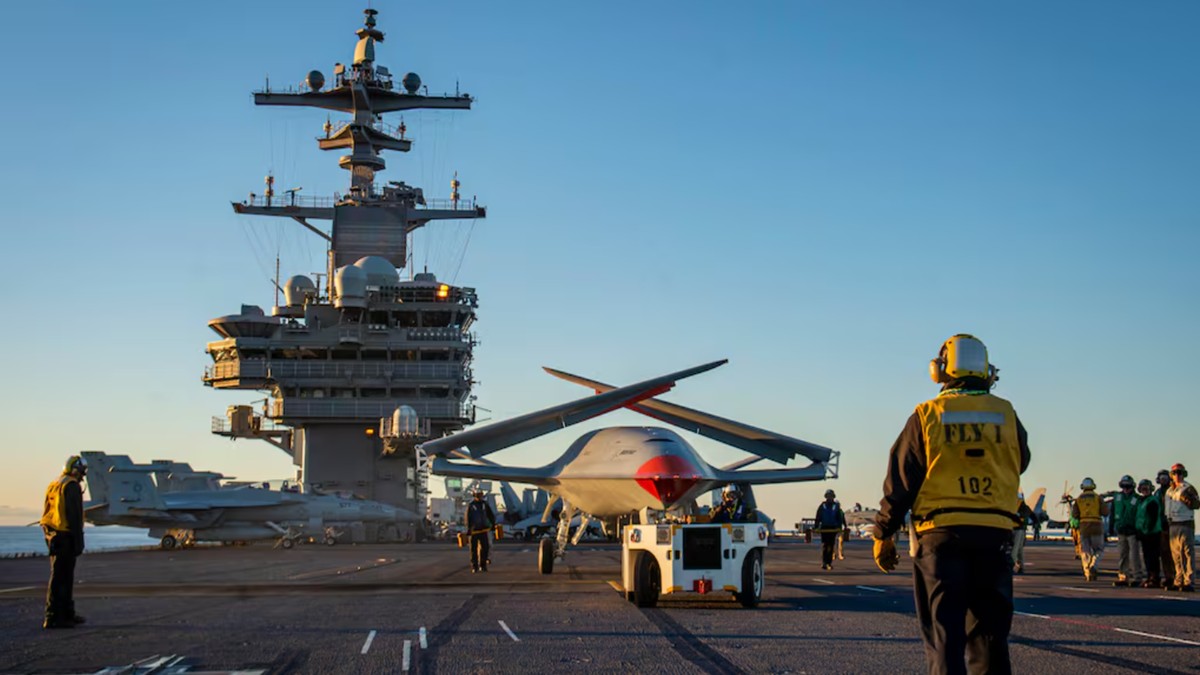
- USS Theodore Roosevelt is now the Navy’s first carrier ready for MQ-25 operations
- US Navy spent years developing infrastructure needed to operate unmanned aircraft aboard carriers
- Ronald Reagan is expected to join the MQ-25 carrier fleet in August 2026
The US Navy has completed a major step toward operating unmanned aircraft from carriers with dedicated facilities for controlling them.
The USS Theodore Roosevelt is now the service’s first carrier with a fully operational Unmanned Air Warfare Center supporting MQ-25 operations.
Another carrier, the USS Ronald Reagan, is expected to have its own center ready for operational deployment by August 2026.
Theodore Roosevelt leads the carrier integration effort
The Unmanned Air Warfare Center combines equipment required to control and manage unmanned aircraft operating from an aircraft carrier.
The Navy says its systems include the Unmanned Carrier Aviation Mission Control System and MD-5E Ground Control Station.
Those systems provide the command-and-control functions required for operating Boeing’s MQ-25A Stingray unmanned aerial refueling aircraft.
The USS George H.W. Bush became the first carrier to receive and test the center during August 2024.
Sign up to the TechRadar Pro newsletter to get all the top news, opinion, features and guidance your business needs to succeed!
However, Theodore Roosevelt is the first carrier where the capability has reached fully operational and deployable status.
According to a Pentagon acquisition document dated April 21, 2026, the Theodore Roosevelt “became the first fully operational/deployable MQ-25 capable aircraft carrier.”
The development gives the carrier force a dedicated infrastructure for unmanned aviation rather than treating drones as temporary additions.
That distinction matters because the MQ-25 requires specialized equipment alongside existing systems used for conventional carrier aviation.
The Navy expects the Ronald Reagan facility to become operational and deployable toward the end of August 2026.
MQ-25 moves closer to carrier deployment
The carrier infrastructure comes as the MQ-25 program advances after several years of development and testing.
In May 2026, the Stingray reached milestone C, allowing the program to move from development toward production and deployment.
The milestone followed nearly eight years of work since the Navy awarded Boeing an $805 million contract in 2018.
That contract covered four aircraft for design, development, fabrication, testing and delivery under the original program.
At that time, Navy estimates put the eventual cost near $13 billion for a planned fleet of 72 aircraft.
The program nevertheless experienced delays, including a first flight that occurred later than earlier schedules.
On April 25 2026, the Stingray completed an approximately two-hour flight near Mascoutah, Illinois, advancing its testing program.
The aircraft is intended primarily to provide aerial refueling, reducing the burden currently carried by F/A-18E/F Super Hornets.
That change could allow more Super Hornets to remain available for strike missions rather than supporting carrier refueling requirements.
The MQ-25 therefore depends on both the aircraft itself and carrier infrastructure capable of controlling unmanned operations.
With another carrier approaching readiness, the U.S. Navy is now moving from isolated testing toward a broader carrier-based unmanned aviation capability.
Via Defense News

Follow TechRadar on Google News and add us as a preferred source to get our expert news, reviews, and opinion in your feeds.
What's Your Reaction?
 Like
0
Like
0
 Dislike
0
Dislike
0
 Love
0
Love
0
 Funny
0
Funny
0
 Wow
0
Wow
0
 Sad
0
Sad
0
 Angry
0
Angry
0












Comments (0)