

Thinking About Trying Film Photography? Here Are 5 Tips
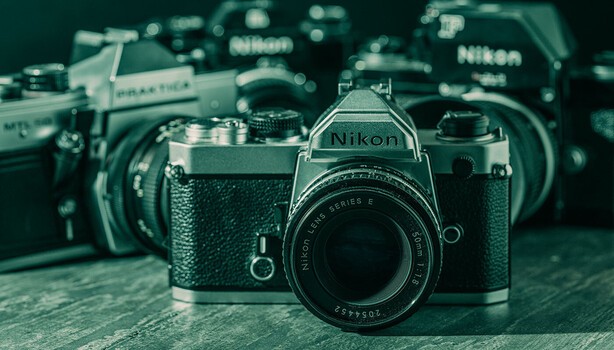
For the past couple of years, I've found myself reaching for film cameras more often. Not because they're better than digital—they’re not. For the analog look then? No, I believe you can get a film look with digital, if you know your way around an editing app. It’s really because they remind me why I fell in love with photography in the first place.
I spent my first twenty years as a photographer shooting film before moving to digital, and now I'm back loading rolls into my old cameras because I’ve been enjoying using modern digital cameras less and less. They’re loaded with technology I don’t need that actually gets in the way of my enjoyment of photography. It’s clear that camera manufacturers are making new cameras aimed at content creators, not photographers. I don’t want a flip-out selfie screen for video. I don’t want video. I don’t need all the computer tech that is loaded into new cameras that do the work for you. I want to enjoy the process of photography once more. A digital Leica M camera gives you that experience, but they’re out of reach for most people. I believe a vintage film camera is the best option to provide that simple tactile photography experience—and a whole bunch of satisfying fun!
If you're thinking about giving film photography a go, here are five tips to consider. It'll save you money and frustration, and probably stop you from buying the wrong camera.
1. Buy a Simple Camera, Not an Expensive One
The biggest mistake beginners make is assuming they need a Leica M6.
You don't. Ignore the trend-setting influencers; I'd argue you'll learn just as much—and probably enjoy yourself as much—with a camera that costs a twentieth of the price. Yes, you read that correctly!
A film camera is little more than a box that holds a roll of film. The film creates the image. The lens can create some character, but the camera simply controls when the light gets in.
One of my favorite film cameras is the Nikon FM.
It's mechanical, beautifully built, incredibly reliable, and doesn’t get in your way when photographing. And Nikon lenses are plentiful and cheap on the used market.
Alternatively, cameras like the Pentax MX, Olympus OM-1, Canon AE-1 Program, or Minolta X-700 are all superb choices.
Forget social media hype; buy a camera that feels good in your hands and makes you want to go for a walk with it. That's what matters.
2. Start With One Prime Lens
Why one prime lens and not a telephoto? A single focal length teaches you to see and work a little. You'll learn far more by walking closer or stepping further back than constantly zooming in and out or changing lenses.
Most of us who learned photography back in the film days started with a 50mm. Most film cameras from the sixties through to the nineties were sold with a 50mm as a “starter kit.” They’re plentiful and the cheapest focal length to buy.
A 50mm allows you to shoot portraits and still life, and also to explore with—so it’s good for travel and street photography.
A slightly more expensive option is a 35mm prime, which some would say is even more versatile for shooting everyday life. There’s no correct focal length; you need to look at both options if you can, and decide. I’d say start with the 50mm.
A huge bonus for those wanting a travel or everyday camera is that film cameras and prime lenses can be small, light, and easy to carry. Some, like the Rollei 35 S, even fit into a pocket. The options are plentiful.
Once your choice is made, stick to it. One lens, one camera. Now you’re ready to learn it inside out.
3. Start With Affordable Film
Don't fall into the trap of buying expensive film because somebody on YouTube or Instagram told you it's “the best.” There is no “best” film; there are different film stocks that allow you to do different things in different conditions.
When you're learning, mistakes are part of the process. You’ll overexpose, you’ll underexpose, you’ll load the film incorrectly at some stage—we all did at first. So it’s best to start with something forgiving and affordable.
For color, I'd recommend:
For black and white:
All of these films have huge exposure latitude, meaning they'll forgive the occasional mistake while still producing beautiful negatives.
You may have heard many YouTubers and TikTokers say Portra is the best. It’s not. Portra is a professional film that costs more than twice as much as some of the films listed above. You don’t need it; it won’t make your photos better; it will just leave your bank account emptier. Leave it until you’ve gained experience using some of the other films listed, and understand first why you might want to try it.
4. Slow Down and Enjoy the Process
This is the main reason I enjoy shooting film. Taking things slow and the tactile experience of intentionally operating mechanical parts to set an exposure and aperture are incredibly rewarding. With thirty-six exposures in the camera, you stop firing away hoping one image works. Film photography helps to encourage intention. Every frame costs money, so you change your mindset and spend more time looking and thinking about what you’re doing.
Unlike digital photography, where you can fire off dozens of frames a second, with film you ask yourself whether the photograph is actually worth taking. You may be surprised to find shooting fewer photographs often results in more photographs you actually like.
Slow down, think, and enjoy the experience.
5. Don't Chase Perfection
Modern photography has become obsessed with perfection. Perfect autofocus and sharpness. Perfect noise reduction. These are things that don’t necessarily make a good photo, and film photography reminds us of this. Film is about capturing memorable photos, with grain, a little blur or soft focus, even the odd light leak once in a while—things that add character. Some of the most iconic photos ever made are far from technically perfect, because being technically perfect isn’t the main point of good photography.
Emotion, character, and soul—that’s what film has always done so well, because there wasn’t the distraction of focus-tracking choices and settings to control noise reduction or maximize dynamic range.
Final Thoughts
When people discover I shoot both film and digital, they often ask me whether film is better than digital. I tell them digital is more convenient. It’s cheaper and faster, and you don’t have to pay and wait for the resulting photos from your outing. Digital photography is technically superior.
However, film makes photography feel more deliberate. Operating metal mechanical cameras that can only be controlled manually is a very rewarding tactile experience.
I find I think less about settings and more about seeing. A basic manual film camera is simple to use, even though it requires a little more effort at first to learn how the camera works. Once camera operation becomes second nature, you turn your attention to looking, observing, and creating.
Yes, the latest digital camera in auto mode can do much more, but holding what is basically a small plastic computer isn’t the same as operating a beautifully made metal camera.
Recommended Starter Kit
Camera: Nikon FM (or Pentax MX, Olympus OM-1, Canon AE-1 Program)
Lens: 50mm f/1.8 or 35mm f/2.8 prime
Color Film: Kodak UltraMax 400
Black & White Film: Ilford HP5 Plus
Any of the cameras mentioned, paired with a 50mm lens, can be found for as little as $100-$150. I recently bought a mint-condition Praktica MTL 50 and Pentacon 50mm f/1.8 for $35!
Have your first few rolls professionally developed and scanned. If you get hooked, to save money, you can always consider developing your film and scanning it at home.
What's Your Reaction?
 Like
0
Like
0
 Dislike
0
Dislike
0
 Love
0
Love
0
 Funny
0
Funny
0
 Wow
0
Wow
0
 Sad
0
Sad
0
 Angry
0
Angry
0









Comments (0)