

The Camera That Refused to Change for Seven Decades
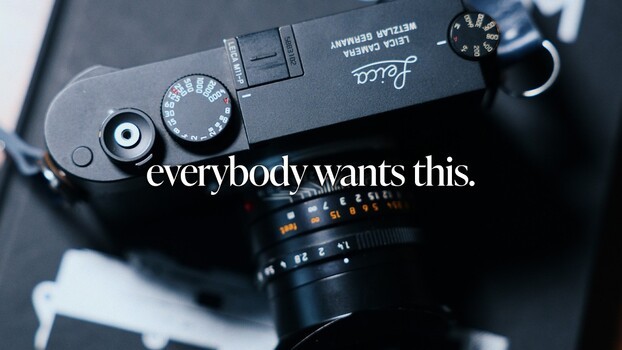
The Leica M has stayed in production for over 70 years, and the rangefinder inside a 2026 model works almost exactly like the one Leica shipped in 1954. That kind of stubbornness runs against every other camera company, all of which abandoned the rangefinder for SLRs, then mirrorless.
The full run from the M3 to today's Leica M11 gets a clear, opinionated tour from Mike Chudley, who spent time this year at Leica's headquarters in Germany, toured their vaults, and hosted a workshop for Leica Vienna. He starts at Photokina in 1954, where the Leica M3 introduced the bayonet M-mount and combined the viewfinder and rangefinder into a single window. The M3 sold over 220,000 units and remains the best-selling M body of all time. From there he walks through the M2 adding 35mm frame lines, the beloved fully mechanical M4, and the M5, a controversial model whose TTL metering arm and taller body cost it after only four years.
Chudley spends real time on how a rangefinder actually works and why that shapes the way you shoot. The viewfinder sits to the left of the lens, so you see the world outside your frame lines and can watch people walking into the shot. There is no shutter blackout, so your view is never blocked at the moment you press the button. The tradeoff is close-up work, where parallax error means the two viewpoints stop lining up below a minimum focusing distance. He points to the Leica M6 as the model most shooters call definitive, and the 2003 Leica MP as the most refined film body, so lifelong that the only electronic part is the battery running the light meter.
The digital chapter carries its own drama. The 2008 Leica M8 arrived with an APS-H crop sensor and infrared problems, then the 2009 Leica M9 went full frame at 18 megapixels but shipped with a sensor prone to corrosion. Chudley notes that people now hunt down the M9 anyway for the CCD sensor and its nostalgic color, a reminder that shooters sometimes chase an older look after the newest sensors get too clinical. The Leica M10 brought back the slim, traditional body feel, and the M11, with its triple-resolution 60, 36, and 18 megapixel modes, is where he lands as the most perfected digital M.
The CCD detail points at something bigger happening across the market. Film stocks keep selling out, dealers keep listing used CCD bodies at a premium, and plenty of photographers now shoot on gear that would have looked outdated a decade ago. The pull toward a rangefinder fits that same current. When your camera hides nothing behind autofocus and eye tracking, you carry the focusing, the metering, and the framing yourself, and that changes how you see a scene before you commit to it. Zone focusing gives you a way to preset distances and move fast, so the skill transfers even if you never buy a Leica. Learning to read light with your eye and to guess focus by distance makes you sharper on any manual lens, which is why so many street shooters practice it on cheap bodies first. This approach suits someone who wants to slow their attention down without slowing their shooting down, and it makes the least sense if your work depends on grabbing tack-sharp frames of fast, unpredictable subjects up close.
Chudley is upfront that modern cameras from Canon, Nikon, and Sony will out-spec an M and cost less, and he makes his case with a Porsche 911 comparison and a nod to the tactile, manual-gearbox feel of the body in hand. Watch the video above for his full ranking of every M body and where he thinks the system goes from here.
What's Your Reaction?
 Like
0
Like
0
 Dislike
0
Dislike
0
 Love
0
Love
0
 Funny
0
Funny
0
 Wow
0
Wow
0
 Sad
0
Sad
0
 Angry
0
Angry
0











Comments (0)