

This DPReview community member zooms in on mesmerizing insects using an Olympus OM-D E-M1 Mark II
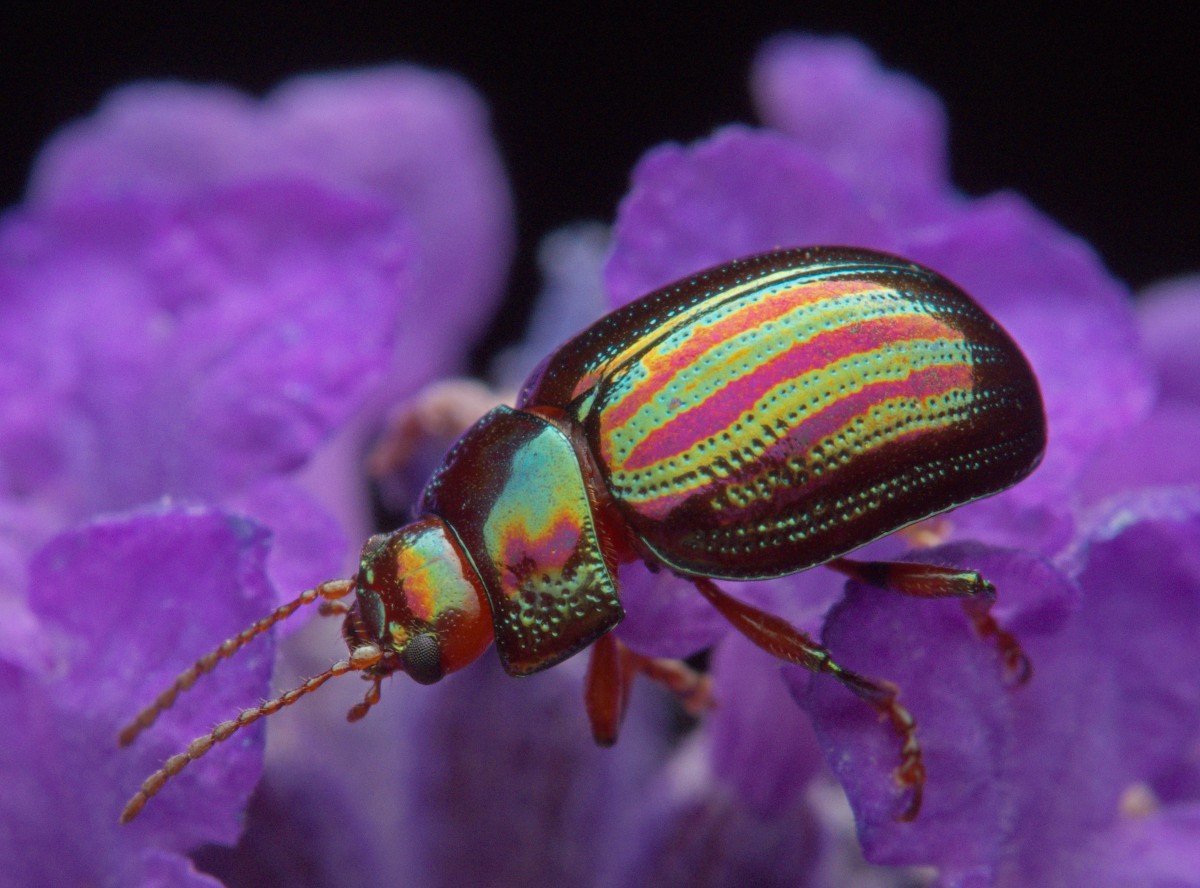
Durham photographer Peter Swan shares the compact Micro Four Thirds kit behind his striking insect and macro images.
 Peter Swan
Meet Peter Swan
Home base: Durham, England
Peter Swan, known as TheDispossessed in the forums, is a Durham-based nature photographer who has found a hidden world of subjects in the small things many people overlook. His compact Micro Four Thirds kit is built around an Olympus OM-D E-M1 Mark II and a 60mm macro lens. The selectively chosen diffused flash helps him reveal the color, texture and character of insects and other smaller creatures – from garden regulars to rare British butterflies.
“I first got into photography properly when I purchased my first digital camera, a Canon PowerShot S60, back in 2004. Back then, my main subjects to photograph were landscapes and cityscapes. I got my first DSLR a couple of years later (a Canon 350D) in 2006. This led me to become interested in photographing subjects that required specialized lenses – for example, those capable of 1:1 macro. Since then, I’ve steadily built up a collection of photographic gear but have gravitated towards the micro four-thirds format for its overall convenience.”
Our ‘What’s in your bag?’ community spotlight series features readers sharing their favorite gear and photography, including from past DPReview collaborators. See below for what Lester has to share.
What’s in Peter’s bag
 Peter Swan’s camera bag.Peter Swan
Favorite cameras(s): Olympus OM-D E-M1 Mark II
Favorite lens(s):
- Olympus 60mm F2.8 macro (“my favorite lens”)
- Olympus 100-400mm F5-6.3
- Olympus 25mm F1.2
- Panasonic 12-32mm F3.5-5.6
- Panasonic 35-100mm F4-5.6
“All five lenses and the camera can easily fit in my backpack with space for food, waterproofs, etc. If need be, I can even squeeze in my Panasonic GX9, which semi-permanently has the 7-14mm F4 lens attached – such are the benefits of the micro four thirds system!”
Must-have accessories: “A Nissin i40 flash that is held together with duct tape, Marumi DHG Achromat 200 close-up lens and a Cygnustech diffuser – all alongside a couple of polarising filters.
I usually bring food, water, waterproof clothing, and most importantly, a tick remover. When you’re out searching for minibeasts in the undergrowth, it is only a matter of time before you pick up a tick, so it’s best to get them out quickly and safely to minimize the risk of picking up a tick-borne disease.
All of it is put into a Tarion rolltop camera bag. It has plenty of space for my lenses and camera(s), a laptop if needed, and the rest.”
What about insects is so attractive to photograph?
 “Roesel’s bush cricket – photographed in Rutland.”
Olympus OM-D E-M1 Mark II | Olympus M.Zuiko Digital ED 60mm F2.8 Macro | F11 | 1/250 sec | ISO 200Peter Swan
“I have a passion for photographing insects and other invertebrates, which emerged shortly after getting my first macro lens in 2015. I love being out in nature, but I didn’t have the patience to sit for hours in a bird hide.
With minibeast photography, you can go out to any park, nature reserve, or even into your garden, and you’ll find something to photograph – even in the middle of winter. Even in a nature-depleted, highly populated country with a cool maritime climate (the UK), you’ll be surprised at just what you can find when you go out looking for it.
With minibeast photography… you’ll be surprised at just what you can find when you go out looking for it.
Along with butterflies and dragonflies, some of the most interesting species, such as springtails, are only a few millimeters long and are typically overlooked by most people, yet can be brilliantly colorful.”
What’s changed since the beginning?
 “Brassica Bugs, photographed in Holme Fen, Cambridgeshire.”
Olympus OM-D E-M1 Mark II | Olympus M.Zuiko Digital ED 60mm F2.8 Macro | F13 | 1/250 sec | ISO 250Peter Swan
“When I first started with macro photography, I was photographing subjects using natural light with a non-stabilized macro lens. To get sharp enough photos, I wasn’t stopping down enough to achieve adequate depth of field, and I was frequently shooting at very high ISO, so the detail wasn’t there.
Upgrading to a stabilized lens helped somewhat, but what really made a difference was when I started to use diffused flash. This is not harmful to the insects while allowing the use of a low ISO and a deeper depth of field to get more of the subject in focus. I initially made my own simple flash diffuser using a transparent folder with white paper glued to it before buying a custom-made one (Cygnustech) after seeing the results other people were getting with theirs.
The next steps for me would be to become more proficient in focus stacking; however, this requires a lot of time and patience (some stacks require 50+ shots) and, ideally, your subject to remain still for a few seconds. My photo of a very accommodating cellar spider in my house involved 15 images stacked using Zerene.”
What places have helped you to better understand photography?
 “Harlequin Ladybird – photographed in Durham.”
Olympus OM-D E-M1 Mark II | Olympus M.Zuiko Digital ED 60mm F2.8 Macro | F13 | 1/250 sec | ISO 200Peter Swan
“While macro photography can be done anywhere, the best places for biodiversity are dedicated nature reserves. However, if you look closely, you can find minibeasts everywhere. For example, now that I know what to look for, I often see ruby-tailed wasps (some of Britain’s prettiest insects) slowly patrolling the walls outside my house and workplace.
While macro photography can be done anywhere, the best places for biodiversity are dedicated nature reserves.
I have had a few memorable experiences when photographing some of Britain’s rarer butterfly species – for example, visiting Arnside Knott in Cumbria to photograph Brown Hairstreaks (Thecla betulae), Hickling Broad in Norfolk to photograph old world swallowtails (Papilio machaon), and Fineshades Wood in Northamptonshire to photograph Purple Emperors (Apatura iris).
Sometimes you go somewhere and spot an interesting species immediately, while at other times this happens at the end of the day when you’re just about to pack up and go back home.”
What would help other photographers zoom in on nature’s tiniest of creatures?
 “Dicyrtomina ornata (springtail) – photographed in Durham on a damp, chilly December day.”
Olympus OM-D E-M1 Mark II | Olympus M.Zuiko Digital ED 60mm F2.8 Macro | F10 | 1/200 sec | ISO 200Peter Swan
“Generally, the early morning is the best time for photographing insects before they get a chance to fully warm up. If photographing creatures later in the day, be very patient when sneaking up on them, as many species can be extremely skittish!
One of the most important things is to have a clean background. Sometimes I might gently encourage the subject to walk onto an isolated leaf or stem, helping it stand out nicely. Other useful techniques include the use of diagonals. Having lines (e.g., stems) parallel to the edges of the photo is not ideal, aesthetically.
One of the most important things is to have a clean background.
Find something you enjoy photographing, and get out there with your camera to capture it. Or find something that you don’t usually photograph and give that a try, if not just to help move you outside your comfort zone – you never know, you might prefer that particular genre of photography!”
Peter really enjoyed participating in this spotlight article and would love to hear what you think of his photography and to answer any of your questions in the comments below.
You can check out Peter’s other work at flickr.com.
Editor’s note: This article continues a series, ‘What’s in your bag?’, highlighting DPReview community members, their photography and the gear they depend on. Would you like your photography to be featured in a future installment? Tell us a bit about yourself by filling out this form.
Want to stay up to date on the latest product news and releases? Add DPReview as a preferred source to ensure our independent journalism makes it to the top of your Google search results.
What's Your Reaction?
 Like
0
Like
0
 Dislike
0
Dislike
0
 Love
0
Love
0
 Funny
0
Funny
0
 Wow
0
Wow
0
 Sad
0
Sad
0
 Angry
0
Angry
0







Comments (0)