

Trump admin still won't let Wi-Fi giant TP-Link sell its latest routers in US


TP-Link, which may be the top provider of wireless routers for US homes and small businesses, isn’t allowed to sell its latest Wi-Fi routers in the US. The Trump administration imposed a sweeping ban on foreign-made consumer routers in March 2026, and TP-Link hasn’t been able to obtain an exemption.
The rules prevent the import or sale of all new router models that are manufactured, assembled, designed, or developed outside the US. The Trump administration has control over which router makers receive special permission to import and sell new products through a waiver-review process involving the Federal Communications Commission, the Department of Defense, and the Department of Homeland Security.
While some of its competitors have obtained exemptions to the ban, TP-Link appears to be having a hard time making its case to government officials. Its routers approved before the March 2026 ban remain available for sale in the US, but its newly released Wi-Fi 8 routers cannot be imported or sold.
TP-Link’s struggle is not much of a surprise, given its history as a Chinese company and the Trump administration’s focus on reducing reliance on Chinese and other foreign technology. While TP-Link faces political challenges related to the Trump administration’s push for on-shoring, its problems go deeper: It must convince the government its routers aren’t vulnerable to foreign hacking campaigns and that its routers are not Chinese-controlled technology, as suggested at a Congressional committee hearing last year.
TP-Link was founded in 1996 in China but has since split into two companies, with one in the US. The US-based TP-Link established California as global headquarters in October 2024, months after completing a “formal organizational separation” from the TP-Link entity in China.
“TP-Link has split from and no longer has any affiliation with TP-LINK Technologies Co., Ltd., which serves the mainland Chinese market. Despite having similar names, these companies have entirely different ownership, management, and operations,” TP-Link says.
Trump administration control of router sales
TP-Link opened preorders for its first Wi-Fi 8 router, the Archer 8 Ultra, in September, though not in the US. It’s expected to ship this month and costs £899.99 in the UK, or about $1,178. Since it’s priced like a luxury device, its unavailability in the US won’t make a difference to most consumers. But it’s unknown how long it will take TP-Link to gain permission to sell Wi-Fi 8 routers in the US, or whether it will receive permission at all.
TP-Link has pledged to assemble all new routers in the US, but convincing Trump officials that it is fully under US control is likely a difficult task. The government reviews of router makers’ requests for waivers, formally called conditional approvals, are shrouded in secrecy. From the outside, it is unclear whether the Trump administration applies consistent security criteria to all companies or whether it grants waivers to favored companies without regard to the actual security of their products.
Companies led by Trump allies Elon Musk and Jeff Bezos fared well in the reviews. SpaceX’s Starlink division obtained a waiver for its routers, while Amazon received a waiver covering routers for its Leo satellite broadband service and the devices sold by its Eero subsidiary. There have been 26 waivers issued so far, covering products made by firms such as Netgear, Asus, Adtran, Calix, Nokia, Micro-Star International, Askey, Zyxel, Humax, and Vantiva.
Some US lawmakers seem to think the FCC process covers too many products. House Commerce Committee Ranking Member Frank Pallone, Jr. (D-N.J.) and Chairman Brett Guthrie (R-Ky.) proposed legislation in September that would limit the FCC’s authority to place entire categories of equipment on the list of banned products, as it did with routers.
The Pallone/Guthrie bill would also require the FCC to report to Congress a week before adding any new technology or service to what’s known as the Covered List and require new additions to include only technologies or services produced or provided by an entity controlled by a foreign adversary. That means China, Russia, North Korea, or Iran.
“The current process for identifying and barring malicious foreign technology has worked in many cases, but lacks the transparency, consistency, and clarity needed to meet our long-term national security needs as technology rapidly advances,” Pallone and Guthrie said in a joint statement.
Dramatic expansion of FCC’s Covered List
The Pentagon declined Ars’ request for comment on TP-Link’s request for an exemption. The FCC and Department of Homeland Security did not provide any comment.
The US ban on all foreign routers was part of a dramatic expansion of the Covered List, which is managed by the FCC in consultation with the Commerce Department and federal agencies with national security expertise. The Covered List was created by a 2020 law and received its first additions in March 2021. It applies to products that “pose an unacceptable risk to the national security of the United States or the security and safety of United States persons.”
For the first few years of the Covered List’s existence, only specific companies were added. This included Chinese device-makers Huawei and ZTE, several video surveillance product makers, the Russian security company Kaspersky Lab, and several Chinese telecom companies. Under the Trump administration, new additions to the list include entire product categories, regardless of whether a particular vendor has been identified as a risk. In addition to routers, the Covered List currently includes foreign drones, robotic devices, and power inverters.
A former government official told Ars that the Covered List isn’t as useful as it should be.
“The government needs to be able to quickly identify national security risks and, to the extent that they can, you’ve got to give the public and industry guidance on what to do in order to avoid that risk,” said Betsy McIntyre, a lawyer and consultant who previously worked for the FCC on telecom mergers and at the Department of Justice on national security reviews of foreign investment in telecom. “That’s why I have always loved the Covered List. It’s this great tool. It’s simple. It has so much potential to guide procurement decisions for small businesses, large businesses. It can even help when moms are going to Best Buy and figuring out what kinds of equipment they should be buying.”
McIntyre doesn’t like the approach of adding entire categories of products to the list, rather than specific products from individual companies.
“The ideal Covered List would be, as soon as there’s a problem, it would be updated,” she said. “They’d name a company, and then people know: ‘don’t buy this’ or ‘this kind of equipment poses a national security risk.’ It’s a little bit muddled now.”
Although the FCC maintains the Covered List, McIntyre said the FCC’s role was set up at the beginning to be “very ministerial.” The FCC would add companies or products to the list based on determinations by national security agencies, with the FCC having no discretion once it received a determination.
McIntyre noted that she was not privy to any of the discussions that led to the broad inclusion of routers this year. It’s not necessarily clear to the public why any particular item is added to the list or why any company receives an exemption because “the national security decision-making process can be a black box,” she said.
Router security: “They’re all equally awful”
TP-Link routers formed the bulk of a botnet controlled by Chinese threat actors, Microsoft said in 2024. But TP-Link is far from the only router maker whose products have vulnerabilities. Routers made by US companies Cisco and Netgear were part of a botnet of devices hijacked by Chinese state-sponsored attackers in 2023, the Justice Department said after taking action to remove the malware.
Security expert Bruce Schneier said there’s no reason to think TP-Link routers are less secure than those of its competitors. “They’re all awful. They’re all equally awful,” he told Ars.
Computers and smartphones generally have strong security because companies like Apple, Google, and Microsoft “have massive security teams designing these things to be good in the first place and writing patches when flaws are found,” Schneier said.
With routers, webcams, smart refrigerators, wireless drones, and Internet of Things devices in general, “there’s no one on staff to deal with a security vulnerability… These are just less secure devices because the economics of them doesn’t reward security. The way you patch a lot of your home routers is you throw it away and buy a new one. That’s the patch mechanism.”
When asked about TP-Link facing more scrutiny because of its history as a Chinese company, Schneier said that router makers are “all Chinese companies… I don’t care what [name] you stick on the box. They’re all made in China.”
TP-Link is pledging to assemble routers in the US, though it would still use parts from overseas. Schneier said that “these are distinctions that don’t matter that much.”
TP-Link has faced years of scrutiny
TP-Link says the devices it sells in the US are made in Vietnam. But an April 2025 Bloomberg article said, “TP-Link confirmed that, aside from components bought in Vietnam that account for 0.5 percent of the total value of inputs to the plant there, all other components are imported from China.”
TP-Link declined an interview request from Ars this month. “Aside from what’s already out there, the company doesn’t have any new updates to share right now,” a TP-Link spokesperson told us.
TP-Link could sue the government, but litigation can drag out for years. Drone makers have been subject to the same kind of FCC import ban since December 2025, and Chinese drone maker DJI sued the FCC in February. FCC and Justice Department lawyers urged the court to dismiss the lawsuit as “premature” because the FCC hasn’t made a final decision on a petition that DJI filed with the FCC. The US government’s latest motion to dismiss the lawsuit is still pending with the Ninth Circuit appeals court, and the FCC hasn’t ruled on the petition for reconsideration that DJI filed in January.
Several developments over the past two years make it unsurprising that TP-Link hasn’t obtained a waiver. US officials reportedly considered a TP-Link ban due to national security risks during the final months of the Biden administration. The government separately probed TP-Link last year in an antitrust investigation reportedly focused on whether it sold goods below cost to gain a dominant share of the US router market.
The House Select Committee on the Chinese Communist Party held a March 2025 hearing on deterring China’s hacking attacks and improving what the committee called “America’s lackluster cyber defenses.” Rob Joyce, former director of cybersecurity for the National Security Agency, said in testimony that China is “undercutting our market to deliver Chinese-controlled technologies into our homes” and named TP-Link as the prime example.
“TP-Link, the world’s largest manufacturer of commercial Wi-Fi and home routers, has grown to at least 60 percent of the US retail market for Wi-Fi systems and SoHo [Small Office and Home Office] routers compared with about 10 percent of the market at the start of 2019,” he said. “How have they achieved this miraculous growth? They appear to be selling at price points below profitability to drive out the western competition… TP-Link routers were among the various brands exploited by Chinese state-sponsored hackers in the massive Volt, Flax, and Salt Typhoon attacks… We cannot have the software for these prolific devices be written, updated, and controlled by a Chinese company. By law, such a company is subject to the direction of the PRC [People’s Republic of China] Intelligence apparatus. This is a threat we cannot ignore.”
TP-Link says US market share numbers exaggerated
TP-Link said in a March 2025 response to Joyce’s comments that its “products are not ‘Chinese-controlled technology,’” that “all of TP-Link’s R&D operations globally are owned and controlled by TP-Link’s US headquarters,” and that “no government—including the PRC—has access to and control over the design and production of TP-Link routers.”
In 2023, the year before Biden administration officials reportedly considered a TP-Link ban, TP-Link boasted of being “the world’s No. 1 Wi-Fi product provider for 12 years running” based on the analyst firm IDC’s tracking of worldwide shipments. More recently, TP-Link has argued that estimates of its dominance are wildly inflated, at least in the US.
TP-Link’s response to Joyce said it held “a 36.6 percent unit share and a 31 percent dollar share of the US consumer router market during 2024.” The company says in a fact sheet that when routers provided to users by Internet service providers are taken into account, “TP-Link’s market share of residential Wi-Fi router sales in North America in 2024 was under 10 percent.”
Many home Internet subscribers simply use the router that comes with their broadband service. In June, the cable lobby group NCTA asked the FCC to relax the router ban to make it easier for ISPs to change components in their devices. The FCC granted the waiver on November 5.
Florida and three other states with Republican attorneys general sued TP-Link last month, alleging that it lied to consumers about connections to China and the risks of its routers being exploited by Chinese state hackers. A group of 21 Republican state AGs also sent a letter to the FCC, urging it to address alleged violations of state laws in its review of TP-Link’s waiver request. TP-Link told the FCC that the “heightened standard” demanded by state attorneys general “would be unattainable to TP-Link or any other router manufacturer in the world.”
FCC says existing TP-Link routers exceed power limits
Last month, the FCC warned TP-Link that several of its existing routers exceeded power limits. These include devices already being used by US consumers, such as the Archer BE670 tri-band Wi-Fi 7 router.
“Based on our evaluation of the purchased samples, we have tentatively determined that TP-Link included false or incorrect information in its applications for these equipment authorizations; and these devices do not operate consistently with the parameters power levels [sic] submitted in the certification applications,” the FCC told TP-Link.
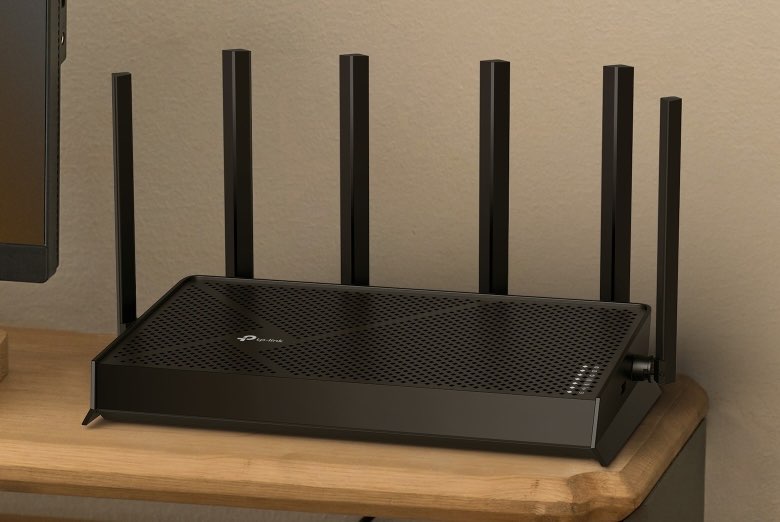
TP-Link’s Archer BE670 router.
TP-Link’s Archer BE670 router. Credit: TP-Link
TP-Link told Bloomberg that any routers exceeding power limits are an aberration and that the four products identified by the FCC account for less than one-third of 1 percent of the company’s total US unit sales this year. Nonetheless, the power-limit investigation related to TP-Link’s existing routers may be a bad sign for its chances of getting a waiver to import and sell Wi-Fi 8 routers.
TP-Link told reporter Dong Ngo that the FCC tests were “routine spot checks.” But FCC officials may have examined existing TP-Link devices because of the pending request for a waiver from the Covered List.
“Any time a company has significant requests before the agency, it’s not unusual if the agency is making sure that the company is behaving in a manner the way they expect it to, complying with the rules,” said Jeremy Marcus, a lawyer who spent over 20 years in government in multiple roles including deputy chief of the FCC Enforcement Bureau.
Marcus declined to discuss TP-Link specifically. He noted that the FCC Office of Engineering and Technology has ongoing market surveillance programs. But when a company has larger issues pending at the FCC, the Office of Engineering and Technology may “do their own due diligence to make sure that existing equipment is performing the way it’s authorized to,” he said.
What is a US-made router?
Although TP-Link has since gone a bit quiet and declined an interview request from Ars, a company official previously spoke to other publications about the FCC waiver process. TP-Link corporate affairs officer Steve Kovsky told PCMag last month that “there isn’t a lot of clarity” in the government’s demands for US-built technology. Many components used in routers are only available from foreign countries, he said.
“There are no published guidelines that say, ‘Well, it could be 25 percent US, or it could be 15 percent US,'” he said. “Or what about, we buy our chipsets for these products from Qualcomm and Broadcom. Is that a US product?”
Kovsky’s background is in corporate marketing and communications, and he started at TP-Link a year ago in a contracting role as a senior communications strategist and consultant. He was hired as the corporate affairs officer in June and has been the main public speaker on the company’s attempts to get a Covered List waiver.
Kovsky expressed some optimism last month. “We have no problem with the FCC, and are really looking forward to pursuing this, and really setting the standard for transparency, and showing that we have the ability to perform and meet all of these criteria with flying colors,” Kovsky told PCMag. “I don’t know if every manufacturer could say the same thing.”
Kovsky spoke to The Verge around the same time, defending the company’s security. “We do not sell customer data or share it with any government ever,” he said. “We never will. We do not allow backdoors in our products. We are not susceptible to malware or vulnerabilities to an extent that’s greater than any other manufacturer in this category, to my knowledge.”
Kovsky also downplayed TP-Link’s router market share in the US. “It’s about 9 to 10 percent, which is like top three,” he said. “It’s a good number, but we do not have an overwhelming share of the US market.”
Kovsky pleaded with government officials for a quick approval in a letter to the FCC last month. TP-Link is ready to make “a nearly $1 billion investment in America that would result in equipping existing US factories, and ultimately building new, highly automated manufacturing facilities, to start assembling next-generation Wi-Fi 8 routers in the United States as soon as next year, creating hundreds of new jobs,” he wrote. “TP-Link is proud of this proposal and is poised to unleash this investment upon a grant of its Conditional Approval application.”
Router makers must justify use of foreign parts
Because the Trump administration added virtually all routers to the Covered List, each router maker must obtain a determination from the Department of Defense or Department of Homeland Security that its routers do not pose unacceptable national security risks and present a plan to establish or expand manufacturing in the US.
Router makers seeking conditional approvals must submit, among other things, details about which countries all of the components and software in its routers come from; details about parts that have only a single source and contingency plans if those suppliers become unavailable; locations of manufacturing and assembly; and a “quantitative assessment of supply chain concentration by country, expressed as both a percentage of total value and production volume.”
Router makers must also provide a “justification on why any foreign manufactured router is not currently manufactured in the United States, including why these foreign sources were selected and whether alternatives exist,” and a “detailed, time-bound plan to establish or expand manufacturing in the United States.”
Although McIntyre would prefer that the list be focused on individual companies instead of entire product categories, she said others argue that the process benefits the US because it forces companies to think harder about where they obtain components from and to provide the government with on-shoring plans.
“I have talked to people who say, ‘Listen, you do these entire class bans and it’s really forcing companies to really think about their supply chain… You want to have as many of these routers made in the United States as possible, just because you have a little bit more control over what’s going into the router,’” she said.
The FCC said the addition of routers was based on a determination by a White House-convened group of Executive Branch agencies with national security expertise, which said that “malicious state and non-state sponsored cyber attackers have increasingly leveraged the vulnerabilities in small and home office routers produced abroad to carry out direct attacks.” The agencies said that “routers in the United States must have trusted supply chains so we are not providing foreign actors with potential built-in backdoors to American homes, businesses, critical infrastructure, and emergency services.”
Lawmakers say Congress must oversee Covered List
Although the FCC has generally based Covered List inclusions on determinations by other agencies, McIntyre pointed out an exception. In January 2025, the Commerce Department issued a determination about the risk of connected car hardware and software being controlled by Chinese- or Russian-controlled entities and used its own authority to prohibit transactions involving Chinese or Russian vehicle-connectivity systems.
After the Commerce determination, the FCC sought comment from the public on whether to add the vehicles to the Covered List. “That is the only example I have found of the FCC doing anything other than just taking what they were given and putting it on the Covered List,” McIntyre said.
Under the law, the FCC is required to base Covered List decisions on determinations by federal agencies with national security expertise, or the Department of Commerce. With connected cars, the FCC took public comment and has not added the vehicles to the list.
“We are not required to provide the opportunity for public input on updates to the Covered List under the Commission’s rules, and we have not done so in the past,” the FCC said in May 2025. “However, because this would be the first addition that does not include the names of specific entities, we believe that offering an opportunity for public input will help promote transparency and good governance.”
The FCC made its first Covered List addition that does not include names of specific entities seven months later, but for drones, not connected cars. The Pallone/Guthrie bill mentioned earlier in this article would limit or prevent future additions that don’t name specific entities.
“The placement on or removal from the list… of a class or category of information and communications technology or service without reference to an entity that produced or provided that technology shall be deemed a major rule” as defined in the Congressional Review Act (CRA), the bill says.
The CRA lets Congress overturn certain federal actions, including major rules. Pallone and Guthrie’s bill announcement said the Covered List process needs Congressional oversight and that their proposed “changes improve consistency and transparency around the FCC Covered List, ensuring that it targets foreign adversaries and is used as Congress intended to safeguard our national security.”

Jon is a Senior IT Reporter for Ars Technica. He covers the telecom industry, Federal Communications Commission rulemakings, broadband consumer affairs, court cases, and government regulation of the tech industry.
What's Your Reaction?
 Like
0
 Dislike
0
 Love
0
 Funny
0
 Wow
0
 Sad
0
 Angry
0








Comments (0)