

United States seeks IAEA access to Iranian nuclear sites in exchange for asset release
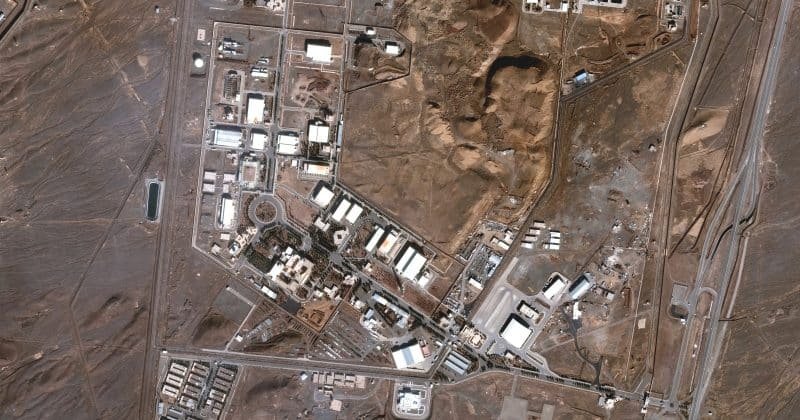
Washington and Tehran are hammering out a deal that would trade nuclear transparency for cold, hard cash. The emerging framework ties International Atomic Energy Agency inspections of Iranian nuclear facilities to phased sanctions relief and the release of billions in frozen Iranian assets.
The negotiations, which intensified in mid-June 2026, center on a memorandum of understanding that could begin with roughly $12 billion in released assets. That figure could scale to $24-$25 billion depending on Iran’s willingness to open its nuclear program to international verification.
What the deal looks like
The draft MoU establishes a 60-day negotiation window following a ceasefire to finalize the terms. During that period, the IAEA would work to reinstate verification protocols at Iranian nuclear sites, and Iran would demonstrate commitments to nuclear transparency and nonproliferation.
In exchange, sanctions relief would come in phases. The initial tranche of approximately $12 billion would flow first, with the remaining funds, potentially reaching $20-$25 billion total, contingent on IAEA access and verified nuclear commitments.
The IAEA’s Board of Governors adopted a resolution on Iran on June 10, 2026, urging cooperation amid what the agency has described as verification gaps at nuclear sites. Those gaps emerged after US and Israeli strikes on Iranian facilities in June 2025, which disrupted the agency’s ability to monitor the country’s nuclear program.
IAEA Director General Rafael Grossi has signaled ongoing discussions with both Washington and Tehran to get inspectors back on the ground. The framework also reportedly includes provisions related to access through the Strait of Hormuz, a critical chokepoint for global oil shipments.
Iran suspended some IAEA cooperation following a sanctions snapback in September 2025. The current diplomatic push represents a notable reversal, with the US administration opting for negotiation over escalation.
Markets are already pricing it in, selectively
Traditional equity markets have rallied on renewed hopes of regional de-escalation. Oil prices, meanwhile, have declined as traders factor in the possibility that sanctions relief could bring Iranian crude back onto the global market in meaningful quantities.
Crypto markets, however, have been notably more cautious. The digital asset space has not rallied alongside equities, reflecting a differentiated risk appetite among traders who appear to be treating geopolitical uncertainty as a reason for restraint rather than optimism.
No specific cryptocurrencies or digital assets have been mentioned in connection with the negotiations themselves.
Why crypto investors should care
The potential release of $12 billion to $25 billion in frozen assets represents a significant injection of capital into a region that has been largely cut off from global financial systems.
Iran has previously explored cryptocurrency mining and digital payment infrastructure as workarounds for sanctions pressure. Any easing of restrictions could reshape how the country interacts with global financial networks, including crypto rails.
The cautious posture in crypto relative to equities suggests traders are assigning meaningful probability to a breakdown in talks. That gap between crypto caution and equity optimism is itself a tradeable signal, one that reflects how differently these markets process geopolitical risk in real time.
Disclosure: This article was edited by Editorial Team. For more information on how we create and review content, see our Editorial Policy.
What's Your Reaction?
 Like
0
Like
0
 Dislike
0
Dislike
0
 Love
0
Love
0
 Funny
0
Funny
0
 Wow
0
Wow
0
 Sad
0
Sad
0
 Angry
0
Angry
0










Comments (0)