

Veed AI video editor (2026) review
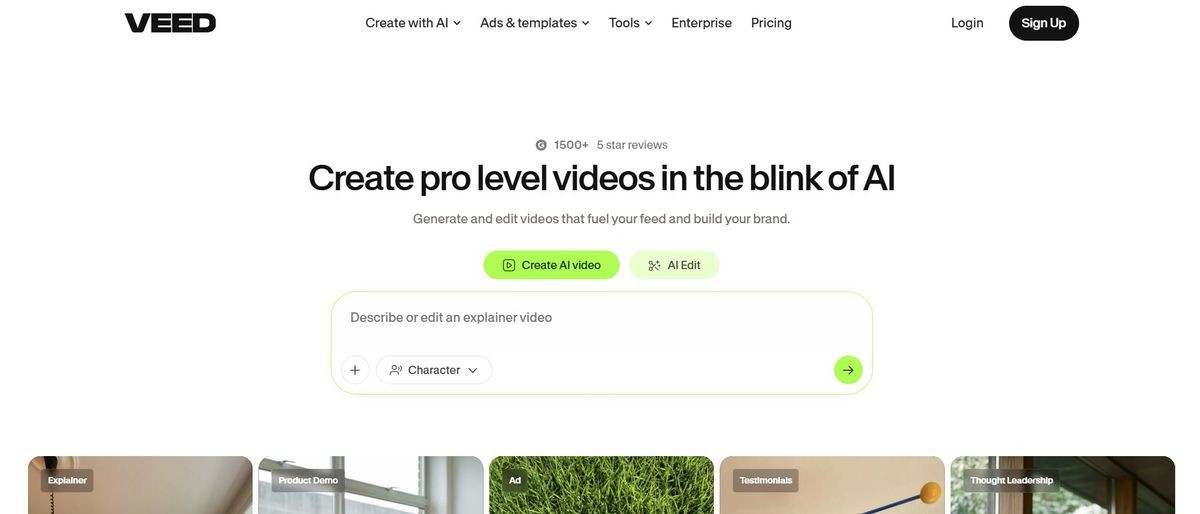
Veed is a well-rounded AI content generation and editing platform, offering features like text-to-image, text-to-video, script-to-video, translations, and more. It also has one of the best subtitle styling options, along with support for 4K video exports. It also offers one of the most realistic and diverse selections of AI avatars. Plus, you have the option of inviting editors to collaborate on your projects, along with access to custom Brand Kits. That said, its free plan is pretty limited, allowing you to generate only one or two AI videos.
Pros
- +
One of the best subtitle styling options
- +
Realistic AI characters
- +
Easy-to-use video editor
- +
Supports 4K video exports
Why you can trust TechRadar We spend hours testing every product or service we review, so you can be sure you're buying the best. Find out more about how we test.
Veed has quickly carved a name for itself in the AI video and image generation industry. Used by giants like Netflix, Google, P&G, and the BBC, Veed has grown into a full-fledged AI-powered video platform serving over 10 million monthly active users worldwide.
In our Veed review, we put the platform to the test and evaluate its top AI-powered creative features. We evaluate it first-hand, analyzing even its user interface, pricing, as well as how it compares to the best AI video editors available today. Read on to find out if it's the right choice for you.
Veed: Plans and pricing
Veed offers a handy free plan, which comes with around 120 credits, 2 GB of storage, and an upload file size limit of 1 GB. You can export videos up to 10 minutes in length in 720p, with limited AI video generation within the available credits.
Latest Videos From

Additionally, AI video editing features such as filler removal, background removal, and auto-edits are all available on a try-once basis.
We found the free video editing package to be fairly limited and ideal only for testing out what Veed offers, rather than using the platform long term.
To get the most out of Veed, you'll need one of its paid plans, starting with the Creator plan, priced at $12 per user per month. Here, you can export videos in 1080p quality with 5 GB of storage.
You can check it out by clicking here.
Are you a pro? Subscribe to our newsletter
Sign up to the TechRadar Pro newsletter to get all the top news, opinion, features and guidance your business needs to succeed!
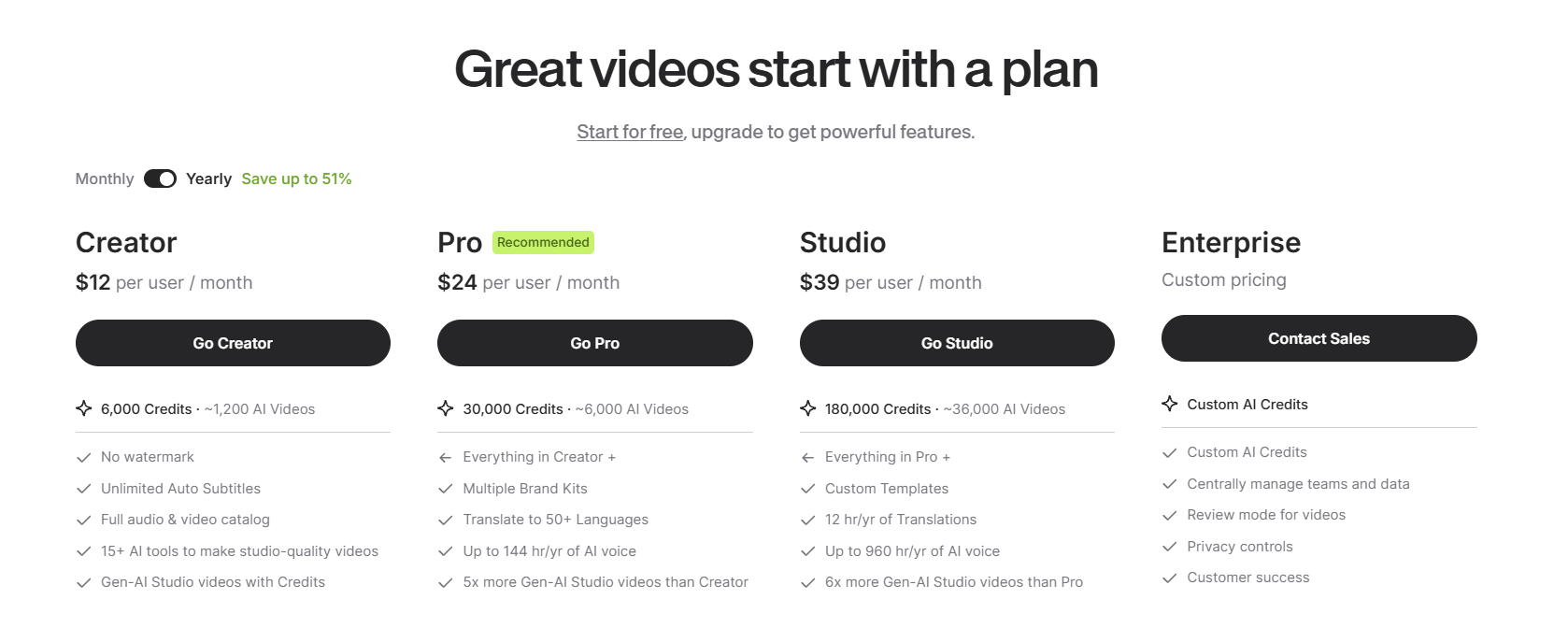
A good thing is that there is no upload file size limit, along with unlimited access to auto subtitles and various subtitle styles. AI image generation limits are also increased to 300 images per month, compared to 100 images with the free plan.
Along with this, you get access to all AI video editing features except Text Behind Person, which is still available only on a try-once basis. Subtitle translation and AI dubbing are also limited to a try-once basis. This is also the first plan where you get limited access to Brand Kits and unlimited access to stock templates.
The Pro plan, priced at $22 per user per month, comes with 30,000 credits, enough for creating 6,000 AI videos. Here, you can export videos in 4K quality, along with unlimited AI image generation and access to all AI video editing features. Subtitle translation and AI dubbing also come with higher limits of six hours per year.
Then there's the Studio plan, offering 180,000 credits for $39 per user per month. This plan comes with unlimited storage, along with 12 hours per year of subtitle translation and AI dubbing. You can invite up to five editors, compared to three in all previous plans, along with one reviewer. All other features are limited within the credit allowance that comes with this plan.
Lastly, there's the Enterprise plan for large organizations, where you can customize your credit allowances with unlimited access to almost all features that Veed has to offer. This is the only plan where you get priority support from Veed, along with a dedicated Customer Success Manager, onboarding, and training.
Veed: Features
Veed offers a good mix of both AI generation and video editing features. For starters, you can generate AI videos with simple prompts in up to 4K quality, depending on your plan. You get access to some of the best AI models, including Veo 3.1, Seedance, Halo, Luma Ray, PixVerse 4.5, and MiniMax.
Besides this, there are features like text-to-video, image-to-video, and the ability to create AI avatars. You get more than 60 diverse avatar options, along with support for more than 120 languages. However, unlike Kapwing, most of Veed's avatars are rooted in real-life people and appear more authentic. Besides AI avatars, you can also create custom social media characters, which can be used consistently across future content you create.
The best thing about Veed is the wide range of subtitle options you get. From manual subtitles available in all plans to auto subtitles, there are unlimited subtitle styles to choose from, along with dynamic subtitles that animate with speech. These subtitle options are perfect for modern social media content.
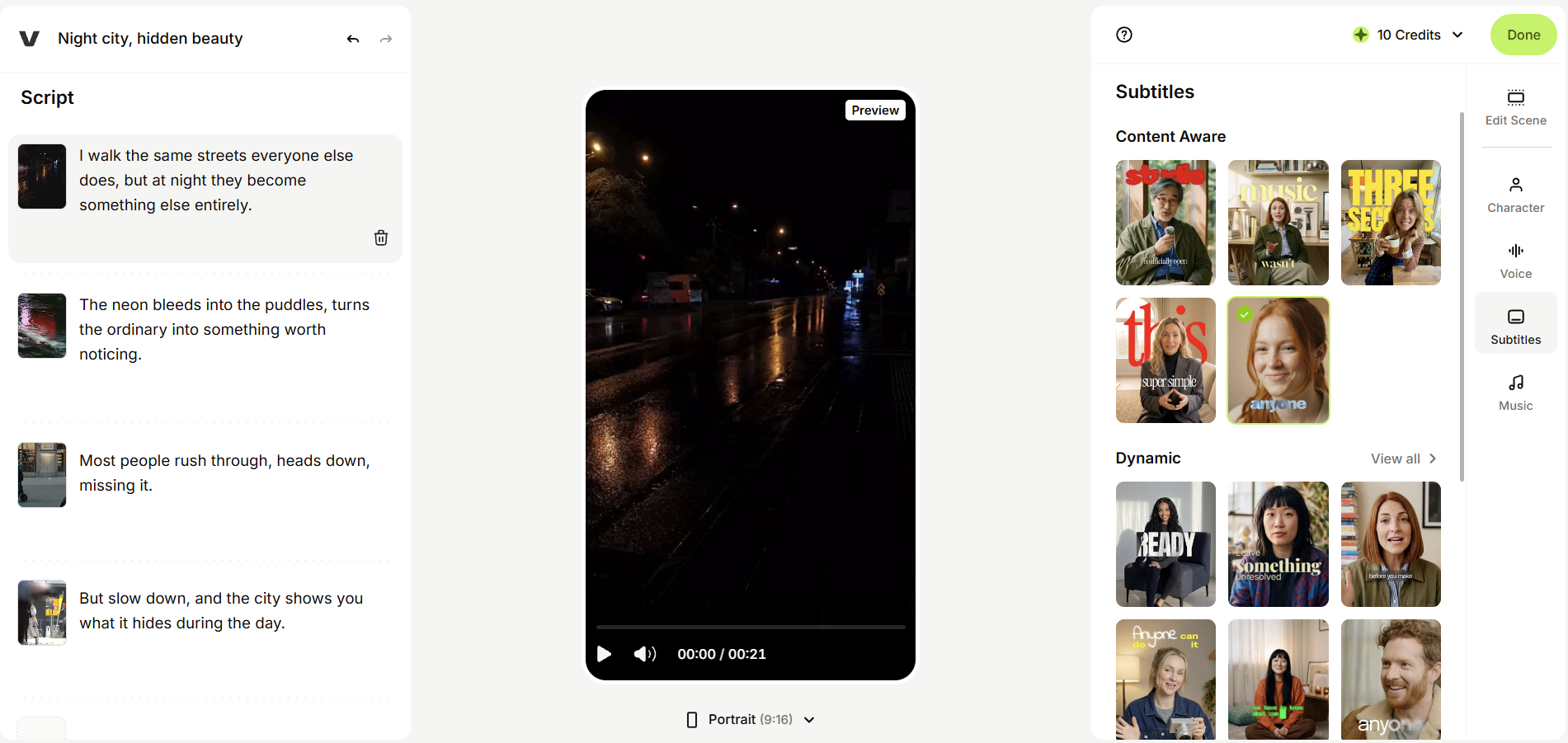
Editing features are also plentiful, with options such as Clean Audio, which removes background noise, removing filler words like "uh" and "um," removing awkward silences from videos, fixing eye contact so that your character looks directly into the camera, background removal, and auto-editing.
Another impressive Veed feature is its collaboration and brand management. Depending on your plan, you can use custom Brand Kits to maintain brand consistency across all your videos. Plus, you can invite editors to any project to facilitate real-time collaboration.
Besides this, you also get access to custom templates, which help you get started with pre-built ideas, as well as custom watermarks. The Enterprise plan also allows you to create separate private workspaces, which come in handy for large organizations with multiple teams.
Veed: Interface and in use
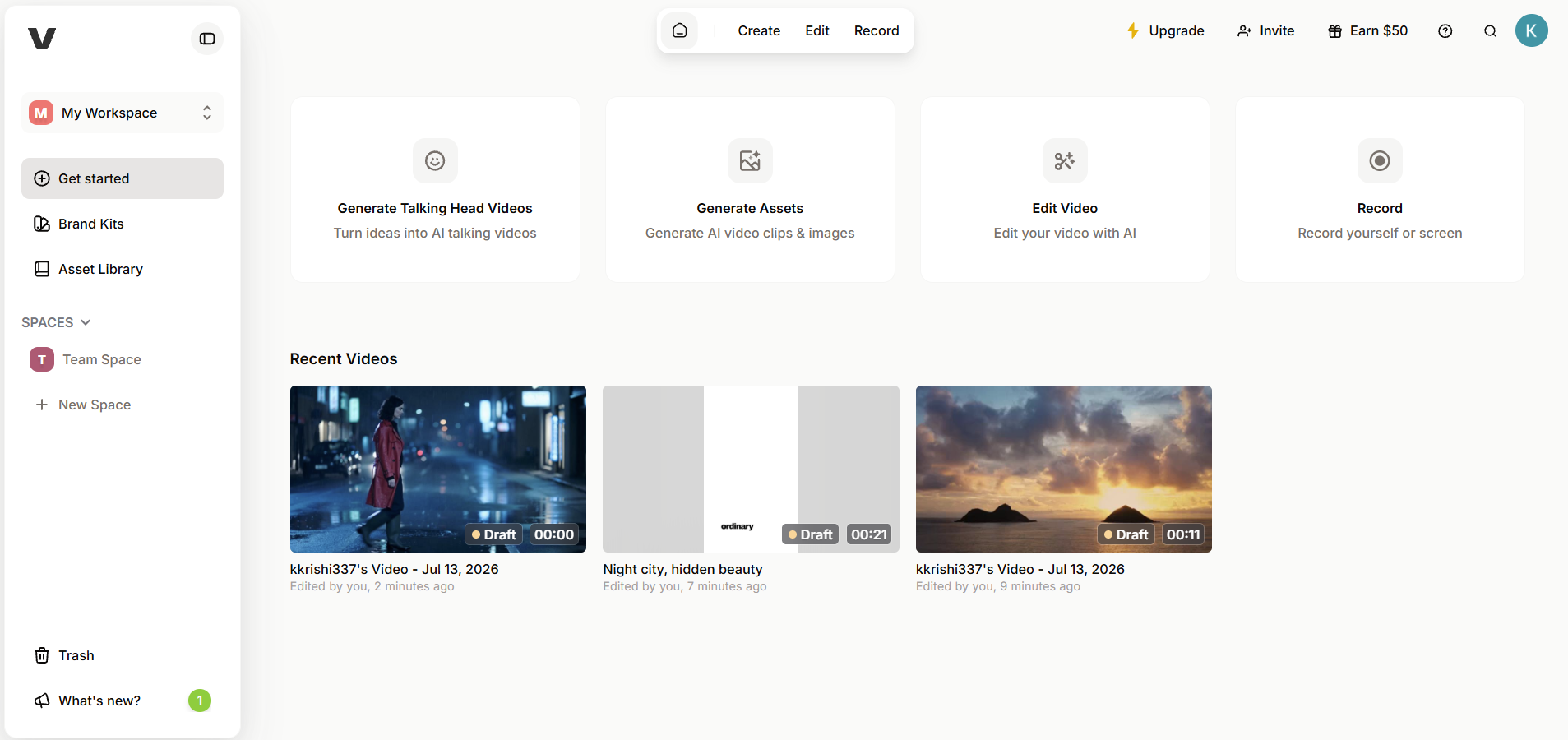
Getting started with Veed is pretty easy. Once you create your account, you are taken to the dashboard, where you'll need to enter your first prompt to generate an image or video.
In the workspace, you can see your recent videos in the central pane, along with Brand Kits and the Asset Library on the left. To create a new image or video, you'll need to click New Project from the toolbar at the top.
Once you're on the edit screen, you'll see all the editing options on the left-hand side, such as Audio, Images, Subtitles, Text, and more. There are plenty of stock videos and images to help you get started with any new project.
There is a horizontal editing bar at the bottom of the edit screen. However, many editing features, such as effects, detaching audio, opacity, and filters, are hidden – you'll need to click the three dots in the center of your dashboard to access them.
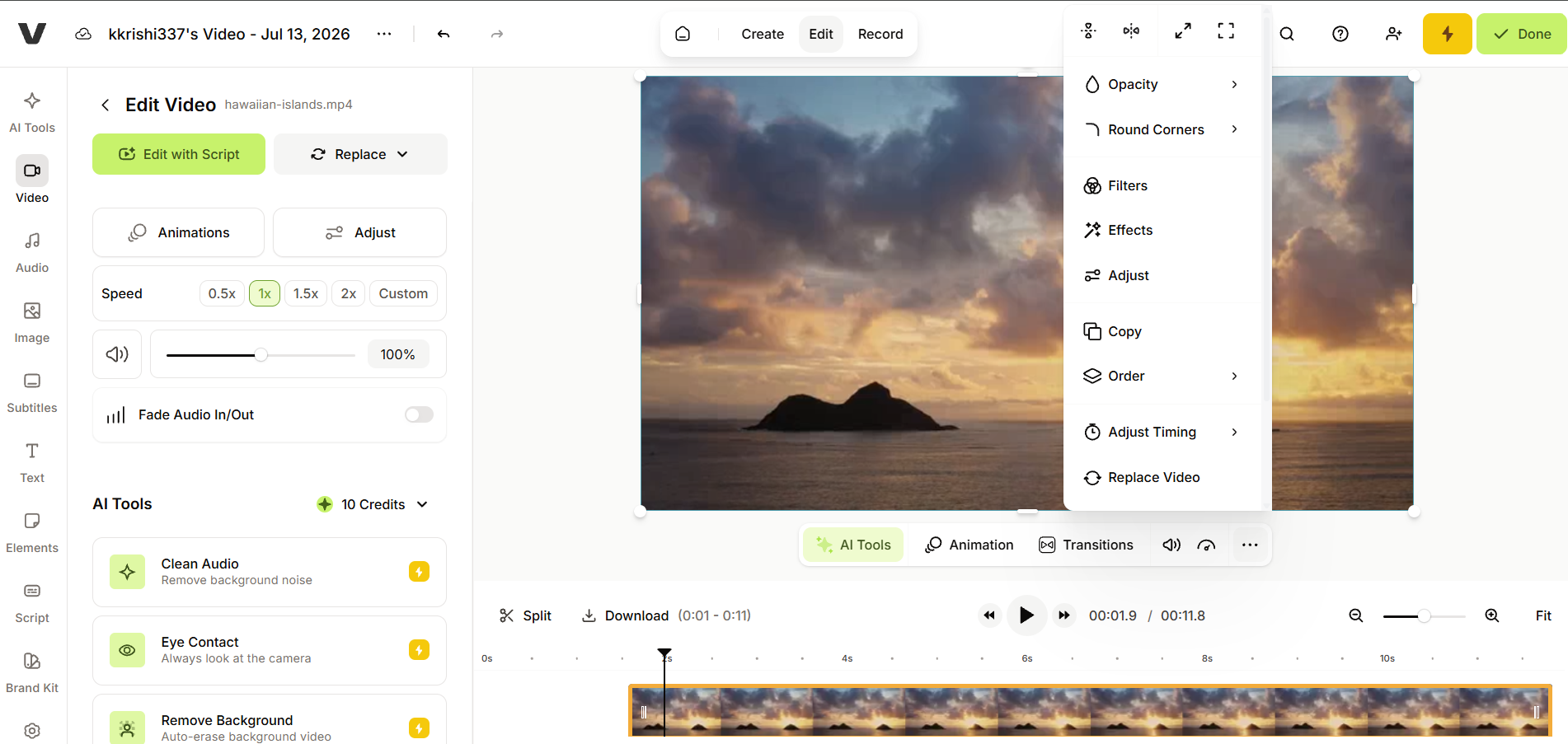
A lot of the edits need to be made after the initial AI video has already been created, such as editing the script, choosing between voice-only and character-driven videos, or adding subtitles or music.
We would have liked to see these options before generating the video, as that would have resulted in more accurate output.
Overall, editing in Veed is pretty smooth, although it takes a bit of time to get the hang of the platform.
Veed: How we tested
To test out Veed's capabilities, we used its free plan, which allows up to 120 credits. We then gave it the following prompt:
"A woman in a red coat walks across a rain-soaked city street at night, neon lights reflecting in the puddles, camera slowly tracking alongside her."
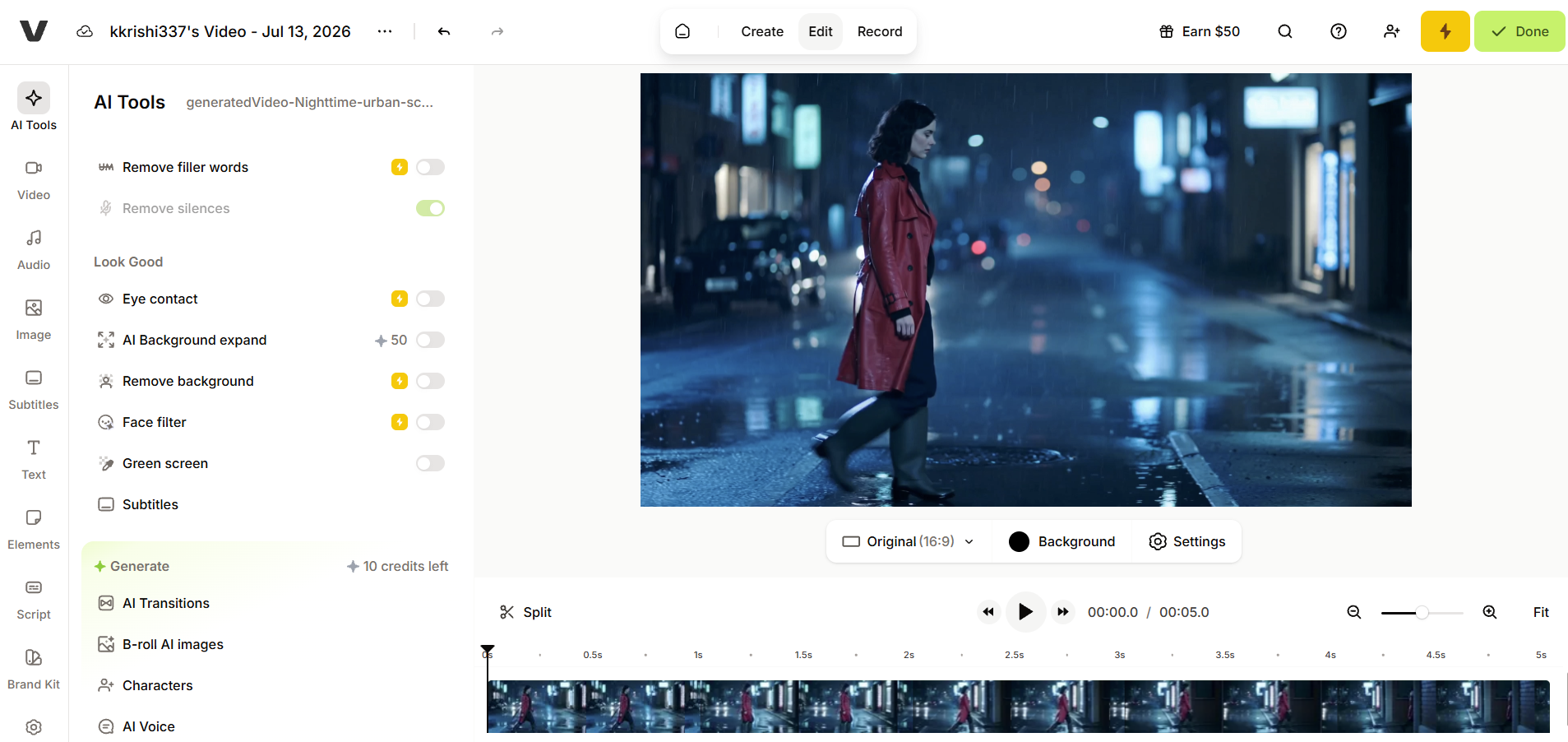
Veed took a bit of time to interpret the prompt and generate the results, longer than Kapwing and Fliki. That said, the results were pretty satisfactory, and Veed stuck to the prompt word for word.
Another peculiarity of Veed is that it can create both character-driven and voice-only videos. This means it can convert the same script into a story narrated by one of its many characters or create an AI video with only voiceovers.
That said, exporting a single AI-generated video around five seconds in length can take anywhere between 40 and 50 credits. This means the free plan lets you export only around one AI video, which is certainly not enough for everyday use.
After this, we tried creating an AI image with Veed. One thing we liked is that it lets you choose the AI model before generating the content. For instance, the image we generated cost around 20 credits with Google Nano Banana Pro, whereas the same image cost only five credits with the FLUX.2 Pro model.
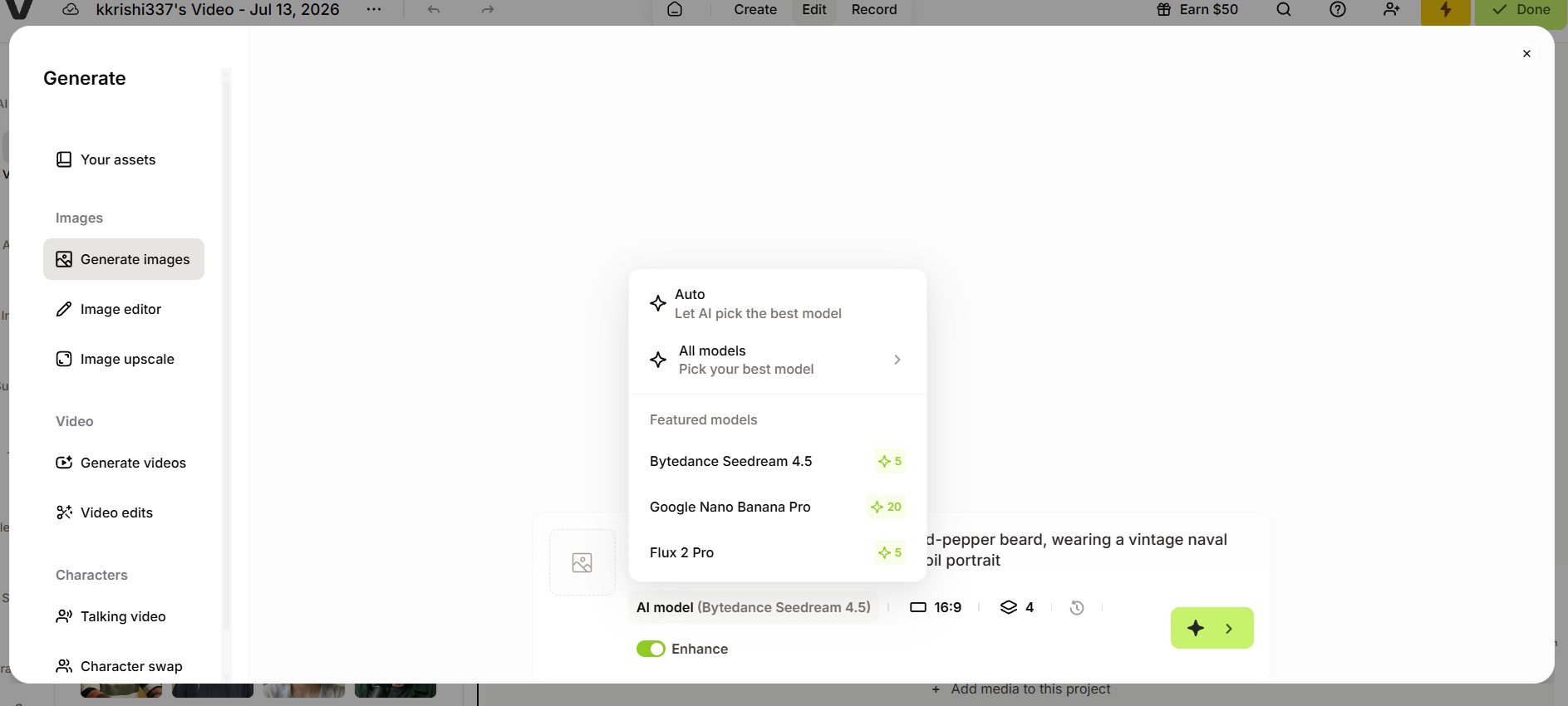
We used the following prompt for image generation:
"A weathered sea captain with a salt-and-pepper beard, wearing a vintage naval coat, painted in the style of a classical oil portrait."
You can also choose the image orientation – landscape or portrait – and the number of image variations you want (one, two, three, or four). There's also a pretty handy option to enhance your prompt, which comes in handy when you're short on creativity but need accurate results.
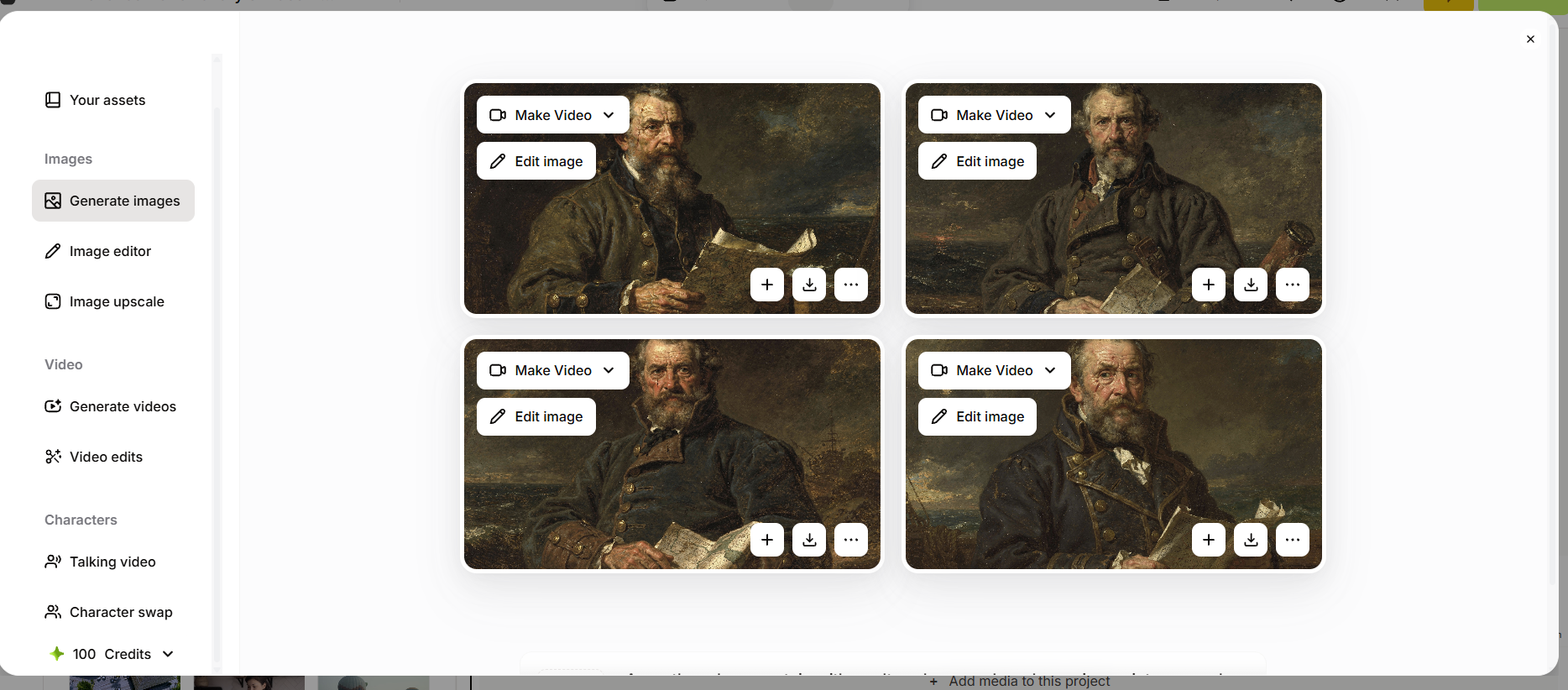
Veed created four images as requested. Each image has a built-in option to edit, download, or add to an existing project on the platform.
Veed: Final verdict
Veed is one of the most complete AI image and video generation and editing platforms you can opt for. You get a wide range of features, such as text-to-image, text-to-video, script generation, auto subtitles, dynamic editing, and more.
Using Veed is also pretty easy, making it ideal for beginner video editors, especially compared to a more complex platform like Filmora. Besides this, if you want to generate social media content, Veed offers one of the best ranges of subtitle styles available. It also offers one of the most culturally and geographically diverse selections of real-life AI characters.
That said, its free plan is pretty limited, allowing you to create only one or two AI videos, which isn't enough for regular use. However, its paid plans are in line with the industry standard and are comparable to Invideo or Kapwing.
Veed: Alternatives
Veed is certainly very good, but depending on your needs, there are a few alternatives you can consider.
The first is Fliki, which gives you a lot of control over the kind of content you want to generate. For instance, you can choose from various templates and video formats, along with the type of character you want in the video. Additionally, there's the option to add captions, choose an AI avatar, or add a voiceover before you generate the video.
Many of these editing options are also available with Veed, but only after the video has been generated, which can be a bit time-consuming. However, Fliki can export videos only up to 1080p quality, whereas Veed supports up to 4K quality.
If you're looking for something more affordable than Veed, you can consider Adobe Firefly, which starts at just $8.49 per month. It has one of the most generous free plans, with daily image and video generation limits that allow you to use it for a longer period.
Firefly also comes with infinite-canvas mood boards, which come in handy for teams looking to generate new content ideas. There's also a professional range of stock assets, such as images, videos, and templates.
That said, many of its features, such as AI avatar generation and video editing, are still in beta, leaving plenty of room for improvement.
We've tested, reviewed, and rated a range of video makers and editors, including the best video editing software, the best video editing apps and the best free video editing software.
Krishi covers buying guides and how-to's related to software, online tools, and tech products here at TechRadar. Over at Tom's Guide, he writes exclusively on VPN services. You can also find his work on Techopedia and The Tech Report. As a tech fanatic, Krishi also loves writing about the latest happenings in the world of cybersecurity, AI, and software.
You must confirm your public display name before commenting
Please logout and then login again, you will then be prompted to enter your display name.
What's Your Reaction?
 Like
0
Like
0
 Dislike
0
Dislike
0
 Love
0
Love
0
 Funny
0
Funny
0
 Wow
0
Wow
0
 Sad
0
Sad
0
 Angry
0
Angry
0









Comments (0)