

Village People's Victor Willis Dead at 74 After "Aggressive Illness”
Celebrity Deaths 2026: Catherine O’Hara, Eric Dane & More Fallen Stars
There’s a new place Victor Willis has gone.
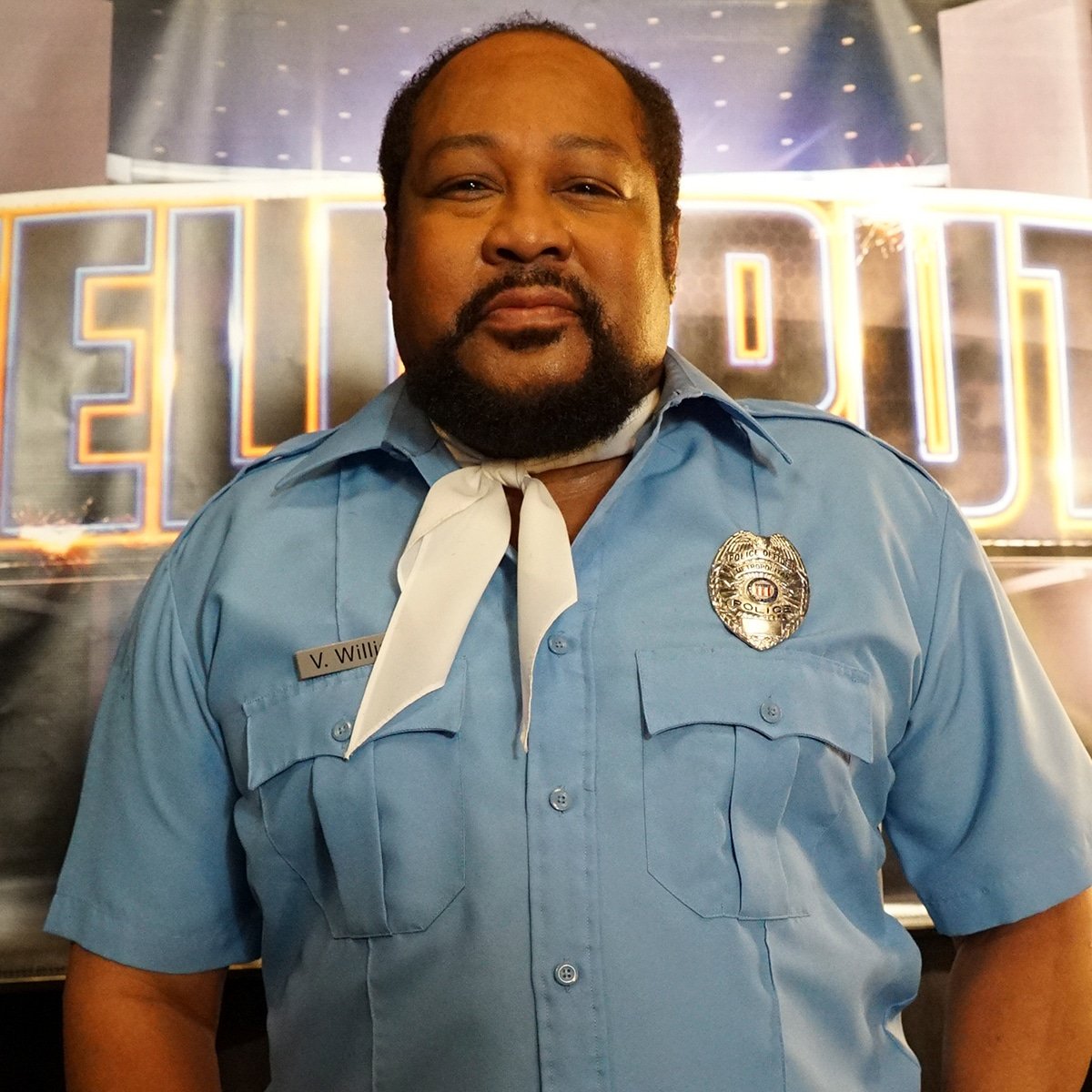
The singer—who rose to fame as the lead singer of The Village People in the late 1970s—died on June 30, the band confirmed on social media. He was 74.
Willis’ wife Karen Huff Willis also confirmed her husband’s passing with “profound sadness,” writing he died “as a result of a short, but aggressive illness.” She requested privacy for the family “at this time of great loss.”
Willis was born in Texas in 1951 and grew up in San Francisco. The son of a Baptist minister, Willis sang gospel music in church and his high school band The Ballads opened for The Temptations. His early career began on stage with roles in Hair, The Wiz and Two Gentleman of Verona (it was in the latter that Willis met his first wife Phylicia Rashad, to whom he was married for four years).
It was in 1977 that his life really changed upon meeting French producer Jacques Morali. Morali asked Willis to sing vocals on a four-track demo of disco music.
The demo was called “The Village People” and Morali would eventually ask Willis to be lead singer after dreaming, per BBC, that his singing lead on the album made it go “very, very big.”
Alongside original members Randy Jones, Glenn Hughes, Felipe Rose, David Hodo, Alex Briley, Willis released two albums with The Village People on which were the songs “Macho Man,” “In the Navy,” “Go West” and, of course, “Y.M.C.A.”
But in 1980, Willis left the group to pursue a solo career, returning briefly in 1982 before departing again a year later, this time staying away until 2017.
Eric McCandless/Disney General Entertainment Content via Getty Images
In his private life, much of Willis’ career was plagued by substance abuse problems.
"I got very depressed over the years and decided to just drop off the map,” he told the San Diego Union Tribune in 2015. "I spent the 1980s and '90s... well, I got kind of drugged out, because I was disappointed with the way things were and got frustrated, and gave up for a bit, and decided I didn't want to be a part of it.”
"So much had been taken away from me,” he said, “that I just turned to drugs."
In 2006, however, a court-ordered substance abuse treatment and three years of probation helped him get back on track. It was around that time that he met his second wife, to whom he was married from 2007 until his death.
As for The Village People’s legacy, no song from their repertoire has endured within the pop culture lexicon quite like "Y.M.C.A.” and its accompanying dance.
CBS Archive/Getty Images
The 1978 song found a new position in modern day when, to mixed reactions, Donald Trump began using the track at rallies during his 2020 campaign. While Willis initially told the BBC neither he nor The Village People endorsed Trump, the band eventually granted Trump continued use of the track.
Then, in 2025, Willis and the rest of The Village People agreed to perform the song at Trump’s pre-inauguration rally in Washington D.C.
"We know this won't make some of you happy to hear, however we believe that music is to be performed without regard to politics," Willis wrote on Facebook at the time of the decision. "Our song YMCA is a global anthem that hopefully helps bring the country together after a tumultuous and divided campaign where our preferred candidate lost."
Willis was also vocal about the “Y.M.C.A.” not being representative of the gay community, as it was often believed to be. In fact, in 2024, he threatened to sue publications who described it as a “gay anthem.”
“There’s been a lot of talk, especially of late, that ‘Y.M.C.A.’ is somehow a gay anthem,” he wrote on Facebook. “As I’ve said numerous times in the past, that is a false assumption based on the fact that my writing partner was gay, and some (not all) of Village People were gay, and that the first Village People album was totally about gay life.”
Instead, he said he wrote the song based on his own experiences at the Y.M.C.A. while growing up.
“I therefore wrote Y.M.C.A. about the things I knew about the Y in the urban areas of San Francisco such as swimming, basketball, track, and cheap food and cheap rooms,” he explained. “And when I say, ‘hang out with all the boys’ that is simply 1970s black slang for black guys hanging-out together for sports, gambling or whatever. There’s nothing gay about that.”
For the latest breaking news updates, click here to download the E! News App
What's Your Reaction?
 Like
0
Like
0
 Dislike
0
Dislike
0
 Love
0
Love
0
 Funny
0
Funny
0
 Wow
0
Wow
0
 Sad
0
Sad
0
 Angry
0
Angry
0







Comments (0)