

Webb Space Telescope Helps a Cosmic Lion Roar Life
 Lion Nebula (MIRI and NIRCam)
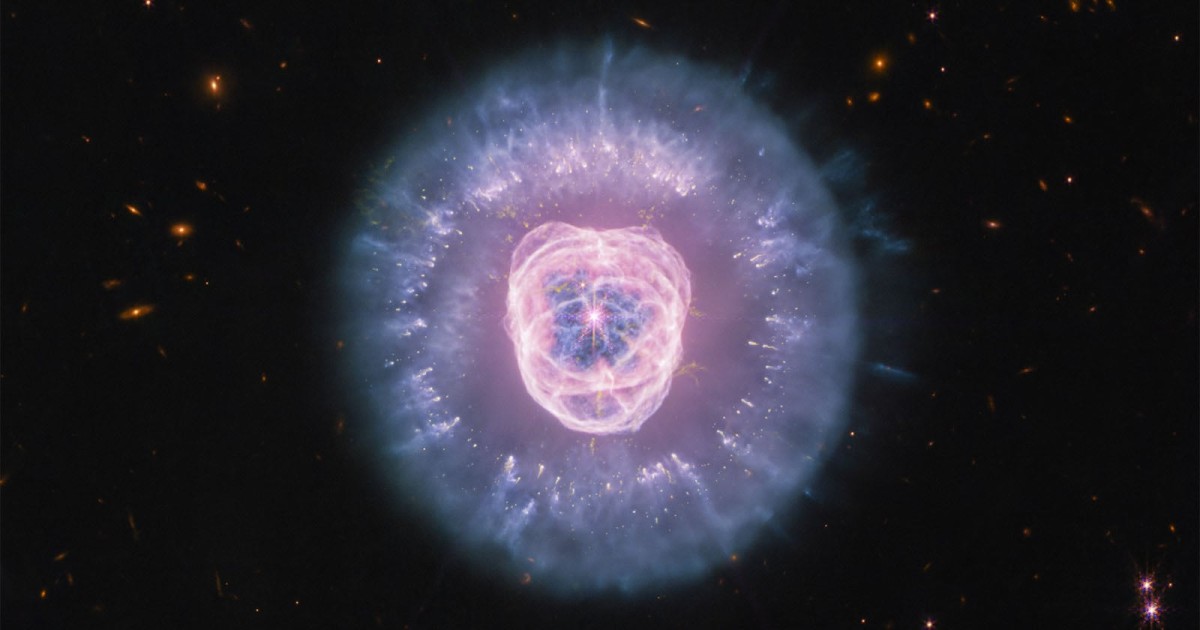
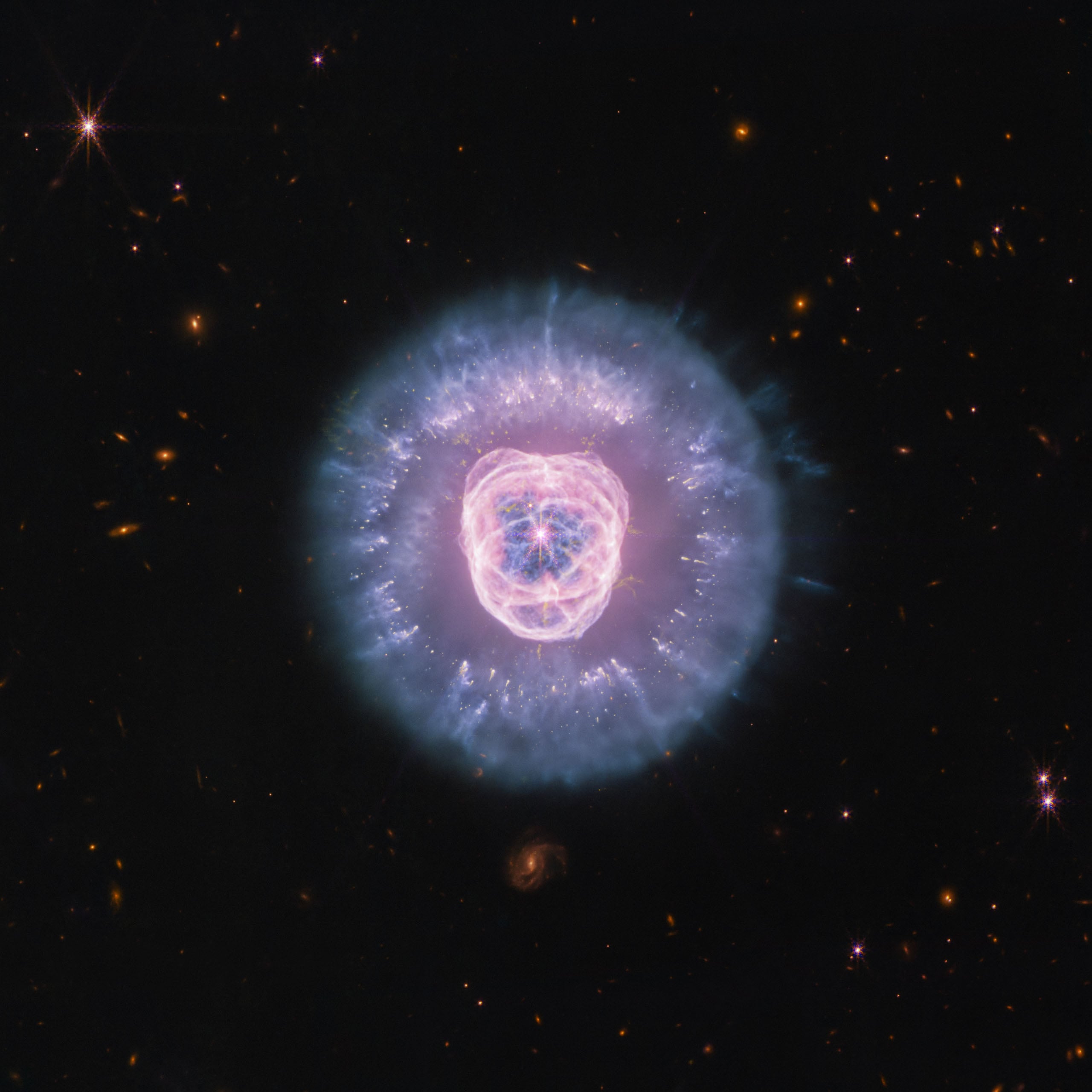
The James Webb Space Telescope (JWST) has captured beautiful new photos of the Lion Nebula, NGC 2392, demonstrating its imaging prowess compared to the venerable Hubble Space Telescope.
Compared to Hubble’s visible-light images of the Lion Nebula captured in early 2000, Webb delivers a significantly sharper view of the planetary nebula. Webb also has much better near-infrared and mid-infrared cameras than Hubble, enabling scientists to view never-before-seen details in the nebula.
Admittedly, Hubble’s orange color palette lent the Lion Nebula a much more lion-like appearance, but Webb captures more of what makes NGC 2392 so beautiful.
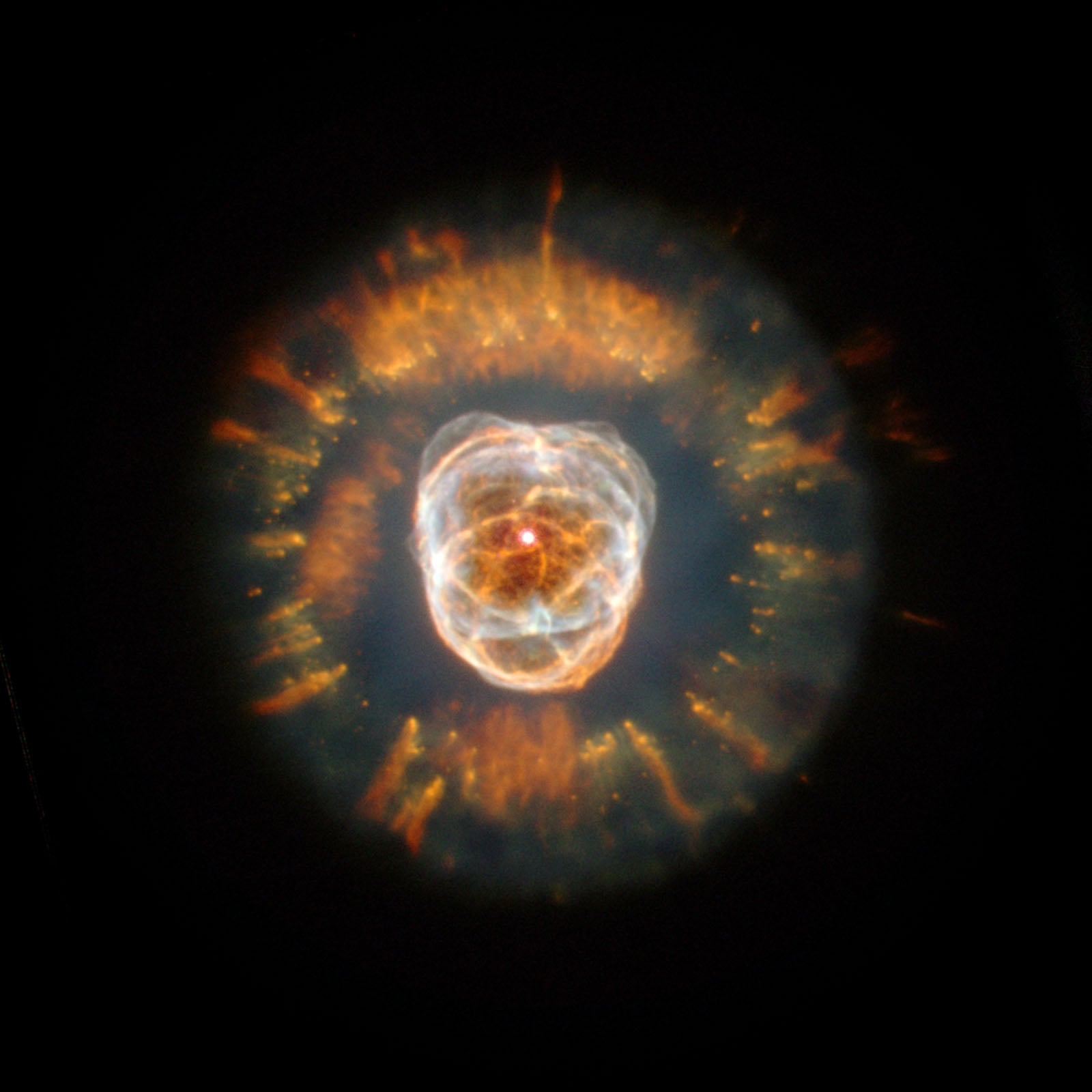 Hubble’s photo of the Lion Nebula from 2000 | NASA, ESA, Andrew Fruchter (STScI), and the ERO team (STScI + ST-ECF)
“Webb’s infrared vision highlights features like compact clumps of dust and a haze of ionized gas,” NASA explains. “It’s taken several thousand years for this collection of gas and dust to reach its current shape, and the nebula’s components continue to be altered.”
The cause of the Lion Nebula’s “distinct appearance” is the remains of a dying star at its center. That central bright dot is generating the energy and radiation that shapes the planetary nebula’s intricate structure.
This relatively small central area was once a relatively low-mass star. When massive stars die, they go out with an explosive bang, or a supernova explosion.
In the case of the low-mass star at the center of the Lion Nebula, once the star can no longer sustain itself through nuclear reactions inside its core, it becomes unstable and starts pulsating. These pulses cause the star to shed its outer layers, which then become the shells of gas and dust emblematic of a planetary nebula.
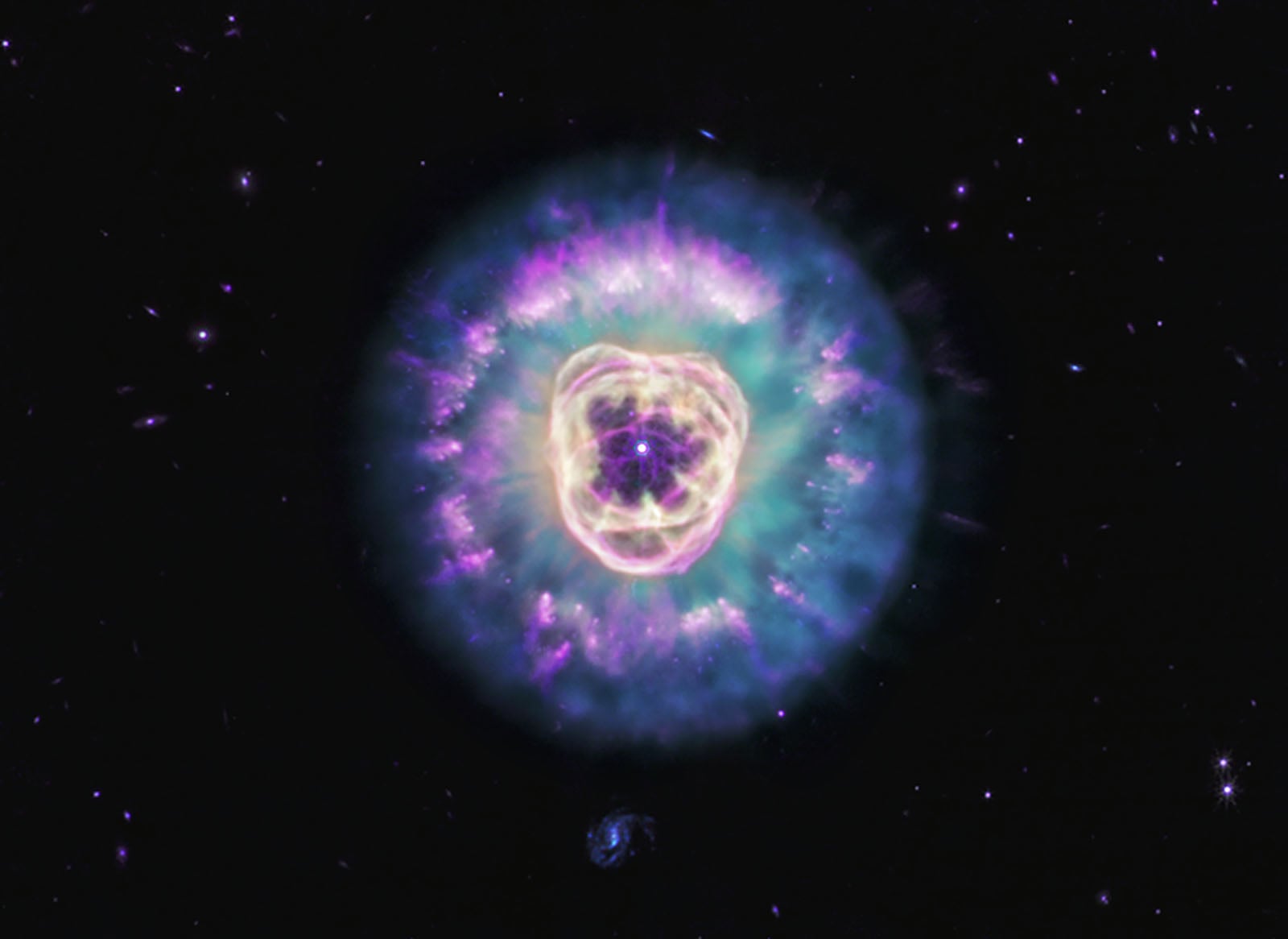 Lion Nebula (MIRI)
At the center of the Lion Nebula is a white dwarf, which is “cooking” all the surrounding material from the inside out. This is creating a huge cosmic gas bubble of ionized gas. As this bubble expands, moved by radiation from the central dying star, it destroys the dust in its path. Scientists continue to work to understand why this destroyed gas turns into complex structures of rings and shells.
Scientists characterize the gas bubble as the lion’s face with the central white dwarf acting as a lion’s “button nose.” The lion’s mane is the interior of a dust shell illuminated by the white dwarf, and the tufts of hair are cometary tails of material.
Webb’s latest photos, like Hubble’s 26 years ago, are snapshots in time of the Lion Nebula. It is changing very fast on a cosmic timescale, and scientists think it will have completely disappeared in 10,000 years or so. If the predictions ring true, the structure will have dispersed by then, vanishing into the vast abyss of space.
Image creditsNASA, ESA, CSA, STScI. Image Processing: A. Pagan (STScI).
Affiliate Disclosure PetaPixel articles may include affiliate links; we may earn a commission if you buy through one.
What's Your Reaction?
 Like
0
Like
0
 Dislike
0
Dislike
0
 Love
0
Love
0
 Funny
0
Funny
0
 Wow
0
Wow
0
 Sad
0
Sad
0
 Angry
0
Angry
0









Comments (0)