

What Is Robinhood Chain? The Ethereum Layer-2 Network for Tokenized Stocks and Meme Coins

In brief
- Robinhood Chain is an Ethereum layer-2 blockchain built using Arbitrum technology.
- The network handles tokenized real-world assets, including stocks and ETFs, alongside DeFi applications.
- Meme coins have driven most of the network's activity since its July 1, 2026 mainnet launch.
- Robinhood has covered gas costs for users of its own wallet since launch, under an offer expiring on September 29.
Robinhood Chain is a blockchain network developed by Robinhood, the financial services company behind the stock and crypto trading platform.
Launched on mainnet on July 1, 2026, Robinhood Chain brings together tokenized assets, decentralized finance (DeFi), and smart contracts that can power crypto applications.
Johann Kerbrat, SVP and general manager of crypto and international at Robinhood, said in a statement that pairing traditional finance with DeFi would extend "financial ownership to every corner of the globe."
What is Robinhood Chain?
Robinhood Chain gives developers a network for building applications involving financial assets, including tokenized stocks, ETFs, and other real-world assets.
A layer-2 network is a blockchain built on top of another blockchain. Instead of processing every transaction directly on Ethereum's main network, layer-2 networks handle transactions separately before sending data back for settlement. That typically reduces fees and increases the number of transactions the network can process compared with a layer-1.
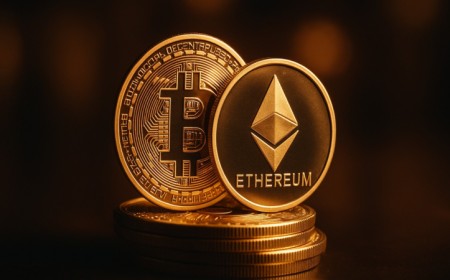
Robinhood Chain uses ETH as its native gas token, meaning users pay network fees in Ethereum. It also works with the Ethereum Virtual Machine (EVM), so developers can build with existing Ethereum programming languages and tools. Wallets and applications that support Ethereum connections can interact with the network through JSON-RPC.
The network runs on the Arbitrum Dedicated Blockchains framework, a customizable layer-2 system created by Offchain Labs. A sequencer orders transactions on a first-come, first-served basis, rather than allowing users to pay for priority placement. Batches are then posted back to Ethereum, where they reach final settlement.
What are Robinhood Stock Tokens?
Stock Tokens are blockchain-based assets issued by Robinhood that provide exposure to real-world assets (RWAs), including stocks and exchange-traded funds (ETFs).
RWAs are tokens connected to assets outside crypto, such as stocks, bonds, commodities, or real estate. Because they exist on-chain, they can interact with applications including trading platforms, lending protocols, and other smart contract-based tools.
Stock Tokens are not the same as owning company shares. They provide exposure to an underlying asset without conveying legal ownership rights, including shareholder voting rights, and they are unavailable to U.S. users. Robinhood says the tokens are not registered under U.S. securities laws and may not be offered or sold to U.S. persons, with further restrictions in jurisdictions including Canada, the United Kingdom, and Switzerland.
Robinhood has worked to connect the two halves of its network. CEO Vlad Tenev told the Iced Coffee Hour podcast that on Robinhood Chain, "if you hold a meme coin, you just get stock tokens airdropped to you."
Which applications run on Robinhood Chain?
Robinhood Chain works with decentralized exchanges, lending protocols, launchpads, oracle services, and infrastructure providers.
Decentralized exchanges, or DEXs, allow users to trade blockchain assets through smart contracts instead of traditional intermediaries. Uniswap is the network's default exchange, running both V3 and V4 deployments. Lending protocol Morpho supports Robinhood's DeFi products, and Lighter provides perpetual futures.
The chain's busiest application is Pons, a meme coin launchpad that lets anyone deploy a token with a fixed one billion supply straight into a trading pool. Pons went live within days of mainnet and absorbed most of the activity after an early rival, Noxa, stopped accepting new launches on July 11. Uniswap launched a competing zero-fee launchpad, Pools.trade, in early August.
Oracles connect blockchains to external information, such as asset prices. Robinhood Chain uses Chainlink price feeds to provide market data to applications. Other infrastructure providers include Alchemy for developer tools, BitGo for institutional custody, and Paxos for USDG stablecoin support.
How much is the network used?
In its first week, Robinhood Chain recorded more than 17 million transactions, nearly 350,000 addresses, and more than $1 billion in DEX volume. Internal company metrics put total value locked (TVL) at $250 million at the time, while DefiLlama tracked core protocol TVL at roughly $94 million.
By September 4, DefiLlama recorded $1.878 billion in 24-hour DEX volume, up from $989 million on August 28. DeFi deposits stood at $834.5 million, stablecoin market capitalization at $921.54 million, daily perpetual futures volume at $420.71 million, and bridged assets at $3.092 billion. Kerbrat said in an August interview that the chain had processed more than 200 million transactions.
The network has become a substantial fee generator. Over the 30 days to August 31 it collected $3.13 million in chain revenue, third among all blockchains behind Canton and Tron, and ahead of both Base and Ethereum. By September 4 it was taking more than that in a single day, with $4.13 million in chain revenue over 24 hours and $16.46 million in fees paid to applications on the network.
Meme coins and tokenized stocks
Early activity was driven by the meme coin Cash Cat, named after the working title Robinhood's founders considered before settling on the company's name. Robinhood listed the token in its own app on August 6.
In July, analysts at Bernstein noted that around 65,000 users held roughly $13 million in Stock Tokens, while Cash Cat alone carried a $150 million market cap. PONS, the token behind the Pons launchpad, overtook Cash Cat in late August to become the chain's largest cryptocurrency by market cap. Pons generated $5.95 million in fees on September 3, ranking fourth among all protocols tracked by DefiLlama.
Tokenized assets have grown alongside the meme coins. Active RWA market capitalization on the chain reached $219.49 million by September 4, having stood at $149.22 million at the end of August, with daily RWA volume setting records around $115 million against a July peak near $60 million. Kerbrat has described the strategy as feeding "two wolves": conventional financial products and the speculative tokens that draw crypto traders.
The future of Robinhood Chain
Robinhood has covered gas costs for qualifying swaps made through Robinhood Wallet since launch, under an offer running until 11:59pm EST on September 29, 2026. Robinhood Chain collected $4.59 million in chain fees on September 4, a cost Robinhood absorbs for traders using its own wallet. The expiry will be the first test of whether activity holds once traders pay their own way. Robinhood's third-quarter results, due in late October, will be the first to cover a full quarter of mainnet operation.
Tenev has meanwhile pushed to open the market the chain was built to serve. In an August 18 post, he called on U.S. policymakers to modernize securities rules for tokenized equities, describing markets as being in the "early innings of a global tokenization supercycle" and warning that other jurisdictions would not wait for the U.S. to catch up.
This article was published on July 11, 2026 and updated on September 5, 2026.
Daily Debrief Newsletter
Start every day with the top news stories right now, plus original features, a podcast, videos and more.
What's Your Reaction?
 Like
0
Like
0
 Dislike
0
Dislike
0
 Love
0
Love
0
 Funny
0
Funny
0
 Wow
0
Wow
0
 Sad
0
Sad
0
 Angry
0
Angry
0







Comments (0)