

Which Sony Lenses to Buy, Which to Skip, and Where to Save Money
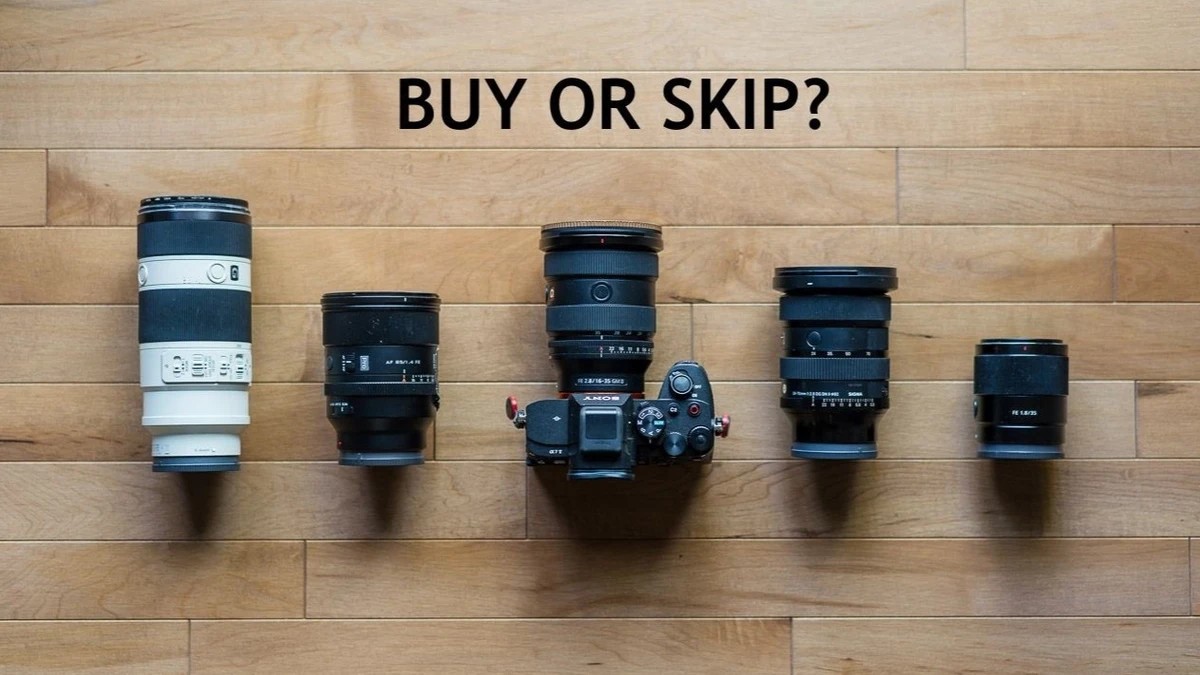
Sony's full frame E-mount lineup runs from compact primes that cost a few hundred dollars to super telephotos priced well past $10,000, and a lot of those lenses cover the same focal lengths. With that much overlap, the price tag tells you very little about whether a lens fits the way you actually shoot.
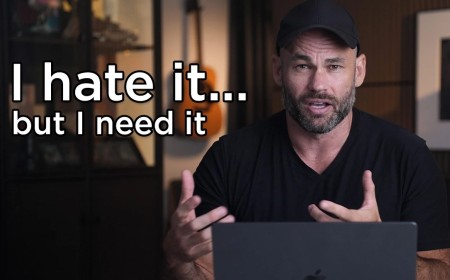
Mark Bergreen of The Bergreens has shot with Sony for more than a decade, and he works through the popular full frame lenses one category at a time. He sorts them into the ones he'd buy, the ones he'd skip, and the spots where a cheaper option makes more sense. He starts at the wide end and sets aside the Sony FE 12-24mm f/4 G and Sony FE 12-24mm f/2.8 GM as too specialized for most people, partly because their bulging front elements won't take standard screw-in filters. The Sony FE 14mm f/1.8 GM gets credit for astrophotography and not much else. His favorite lens overall is the Sony FE 16-35mm f/2.8 GM II, which he uses for landscapes, architecture, events, travel, and environmental portraits, and he considers the GM II worth the upgrade from the first version he owned. That one zoom pushes several primes off his list, since the Sony FE 20mm f/1.8 G, Sony FE 24mm f/1.4 GM, and Sony FE 24mm f/2.8 G all fall inside its range. The little 24mm survives only if you want the smallest, lightest setup you can build. He'd also skip the Sony FE PZ 16-35mm f/4 G, since its power zoom feels odd if you aren't used to zoom by wire, and while the Sony FE 16-25mm f/2.8 G works on a tighter budget, it gives up a 25-35mm stretch he considers significant.
Standard zooms are where Bergreen thinks most of your money should go, because that lens tends to live on the camera. He's taken with the Sony FE 20-70mm f/4 G, mostly because 20mm looks noticeably different from 24mm, though f/4 holds him back in dim light. The Sony FE 24-50mm f/2.8 G didn't win him over: its range felt thin next to the 20-70mm, and he found its inverted zoom, which extends at 24mm and is most compact at 50mm, a little weird. For the classic 24-70mm slot, he passed on the Sony FE 24-70mm f/2.8 GM II and bought the Sigma 24-70mm f/2.8 DG DN II Art, which he figures gives you about 90% of the Sony for a lot less money. He also weighs the Sony FE 28-70mm f/2 GM against a bag of f/1.8 primes, and the primes win on size and weight. The 28mm wide end doesn't go wide enough for him, either. The older Sony FE 24-105mm f/4 G OSS is a great all-around lens, but he doesn't love f/4 zooms, its image quality trails Sony's newer glass, and it's been around long enough that used copies are cheap. He'd avoid the inexpensive 28-60mm f/4-5.6 and 28-70mm f/3.5-5.6 kit zooms if you can afford a better zoom or prime.
In the 35mm to 55mm range, Bergreen leans toward smaller glass. He'd take the Sony FE 35mm f/1.8 over the heavier Sony FE 35mm f/1.4 GM, and if you naturally see closer to 40mm, the Sony FE 40mm f/2.5 G makes a compact walkaround lens. The 50mm G Master lenses impressed him, but they're expensive and too heavy for the way he shoots, often hauling a lot of gear into the mountains, and he finds the budget FE 50mm f/1.8 cheaply made and not great optically. The Sony FE 50mm f/2.5 G is a good lens that he'd still skip, since it duplicates what his 24-70mm already does. What he carries instead is the older Sony Sonnar T* FE 55mm f/1.8 ZA, which he keeps for its size and the way it balances on the body. Used copies of it are cheap. For portraits, he shot professionally for years on the Sony FE 85mm f/1.8 before moving to the Viltrox AF 85mm f/1.4 Pro FE. He thinks most people can pass on the G Master 85mm unless portraits are the core of their work.
Beyond 85mm, the Sony FE 90mm f/2.8 Macro G OSS and the newer Sony FE 100mm f/2.8 Macro GM OSS are fun if you want to experiment with close-up subjects, though he considers both niche, and the 100mm is expensive as well. He'd pass on the Sony FE 135mm f/1.8 GM for a cheaper third-party alternative unless you know you love that focal length, which he finds a little limiting.
Among the telephoto zooms, the Sony FE 50-150mm f/2 GM impressed him when he used it recently, but it's expensive, heavy, and stops short of 200mm, a benchmark he likes to have, so he'd rent one before buying. He prefers the smaller, lighter Sony FE 70-200mm f/4 Macro G OSS II to the Sony FE 70-200mm f/2.8 GM OSS II. It isn't great in really low light, but it works for him most of the time and adds some macro ability. The Sony FE 70-300mm f/4.5-5.6 G OSS doesn't add enough reach to sway him, and he doesn't love variable apertures, which is his one reservation about the older Sony FE 100-400mm f/4.5-5.6 GM OSS, a versatile and fairly portable lens for wildlife, sports, and landscapes. Sony's constant-aperture FE 100-400mm f/4.5 GM OSS is a much bigger lens, though, so he understands the compromise.
Super telephotos are specialized by nature. The Sony FE 200-600mm f/5.6-6.3 G OSS is among the more affordable choices, and because it zooms internally, it doesn't extend the way some alternatives do, such as the Sigma 150-600mm f/5-6.3 DG DN OS Sports, which gets really long at 600mm. The Sony FE 400-800mm f/6.3-8 G OSS has an incredible range, but he doubts most people need 800mm. The Sony FE 300mm f/2.8 GM OSS is great in low light but large, heavy, and expensive, and like Sony's recent FE 400mm f/4.5 GM OSS and FE 600mm f/6.3 GM OSS, which are more compact than the older versions, it makes you work for each composition because it can't zoom.
His takeaway is that Sony doesn't make one best lens for everyone, only the one that lets you make the photographs you want without spending all your money or running into limits. Building a kit from scratch, he'd start beginners on a versatile zoom like the 20-70mm, perhaps adding a 35mm or 50mm prime for low light and background blur, and tell them not to rush. Travel and landscape shooters get the 16-35mm or the 20-70mm f/4 plus a compact telephoto, portrait photographers get the classic 35mm and 85mm pairing, which doesn't have to be the f/1.4 versions, working pros get a 24-70mm f/2.8 and a 70-200mm, and wildlife photographers should put a 100-400mm or 200-600mm first for reach. After 15 years as a professional, he's rented and owned expensive lenses that weren't right for him and come to love some affordable ones, so he suggests deciding what you want to photograph first, then finding the gaps in your gear and filling those.
The video's chapters follow the same categories, so you can skip straight to the focal lengths you shoot.
What's Your Reaction?
 Like
0
 Dislike
0
 Love
0
 Funny
0
 Wow
0
 Sad
0
 Angry
0







Comments (0)