

Why a Longtime Canon Shooter Switched to the Leica SL3-P
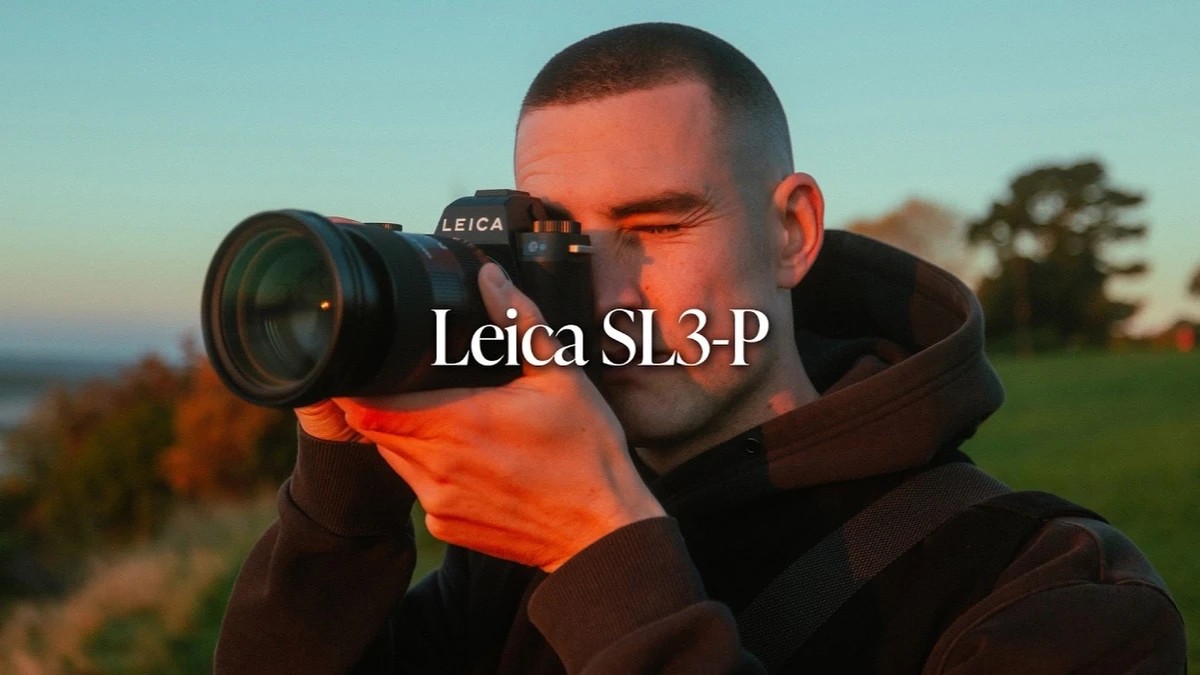
Leaving a camera brand you've used for more than a decade is a bigger decision than comparing two spec sheets, especially when the old setup still does its job. Your lenses, log workflow, and menu habits are all tied to that system, so switching means rebuilding the part of your kit that actually earns money.
Canon is all Mike Chudley has known for video. His first camera was a Canon EOS 550D his mom gave him for Christmas in 2012, followed by a 70D, an 80D, an R6, and now a Canon EOS R6 Mark II with a 24-70mm. That setup is stepping aside for the Leica SL3-P and Leica's Vario-Elmarit-SL 24-70mm f/2.8 ASPH. as his new workhorse for paid photo and video jobs and his YouTube channel. He's had the Leica for about a week, so this is a first look rather than a long-term review. He has no complaints about the Canon, which has paid a lot of bills, but he sees a ceiling on where it can take him over the next five to seven years. If he'd ever left Canon, he figured it would be for something like a Sony a1 and its best-in-class autofocus, and he'd passed on the Leica SL3 and Leica SL3-S because he'd heard their autofocus had a bad reputation.
When the SL3-P was announced, Chudley felt as if the promos were aimed squarely at him. Billed as the middle child between the video-focused SL3-S and the 60 MP SL3, whose resolution he feels costs it some low-light video quality, it pairs a 44 MP sensor with improved autofocus. Paired with his Leica M11 for everyday street and documentary work and his Leica MP for film, the SL3-P gives him a single, cohesive Leica setup. The design had no part in his decision, he says, though he likes that it drops the red dot and would have preferred it in all black.
The surprise so far is how much fun he's having with the 24-70mm. He normally shoots at 28mm or 35mm, and he never took the Canon out for personal photography, yet on casual walks with the Leica, he keeps finding himself at 50mm and 70mm. He also shoots with the black-and-white high-contrast picture profile on, as he does on the M11. He records raw only, so the profile is just a preview, but seeing in monochrome makes contrast and shapes easier to read while composing. The DNG files keep their color for editing in Lightroom, where he also has a preset of his own that mimics the Leica profile.
On autofocus, he has no news, which he calls good news: it's worked in every situation so far, eye tracking has been fantastic, and it might be a touch better than his Canon. The only misses came from him experimenting with focus modes he hadn't learned yet. After a week, it's also easily the most solid camera he's used, and the 24-70mm is built just as well. On the video side, he loves the menu system and the saved video profiles. He set one up with HD settings for an event, switched to another for a different shoot, and saved a third for his talking-head setup. After only ever grading Canon Log 3, he expected Leica's log footage to be hard to work with, and it wasn't.
He's also honest that he doesn't need the SL3-P. He could have stayed with Canon and moved up to something like an R5, but with so much of his other gear already Leica, the Canon felt out of place, and he simply wanted the Leica, which he considers an underrated reason to buy a camera. The Canon kit stays in the background for the next month or two while he tests the SL3-P in as many situations as he can, in case it can't do something the Canon did, which he doubts. Next on his list is Leica's M-Adapter L, so he can try his M lenses on the new body.
Chudley recorded the video's talking-head shots on the SL3-P itself, so you can judge its footage while he talks.
What's Your Reaction?
 Like
0
 Dislike
0
 Love
0
 Funny
0
 Wow
0
 Sad
0
 Angry
0










Comments (0)