

Why Is Gen Z Obsessed with the Oldest ‘American Horror Story’?
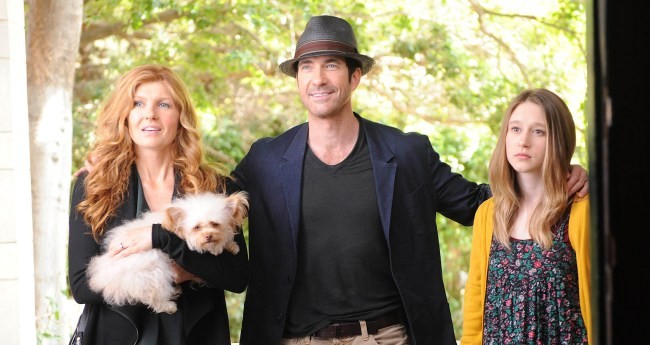
If you want to understand the enduring appeal of “American Horror Story,” start with “Murder House.”
15 years after Ryan Murphy and Brad Falchuk opened the doors to FX’s Emmy-winning horror anthology, Season 1 still hasn’t fossilized on streaming. Instead, “Murder House” has consistently attracted new fans — many of whom were barely old enough to know the show existed when it premiered in 2011.
According to recent Nielsen data, Gen Z now accounts for 36 percent of “American Horror Story” Season 1 viewing on Hulu. That’s the highest share for any installment (although Season 2, “Asylum,” is close behind at 35 percent). By comparison, the same age group accounts for just 20 percent of viewing for the latest “American Horror Story,” “Delicate,” released in late 2023 and early 2024. That’s a remarkable drop-off considering roughly 80 percent of Gen Z was under the age of 12 when “Murder House” aired.


Of course, saying streaming audiences prefer the early seasons of a long-running TV show isn’t exactly revolutionary; good ideas can (and often do!) lose their creative steam over time. But for a horror anthology built around the shock and novelty of reinvention, it’s striking that so many Gen Z fans are compelled to go back to the beginning — and the connection they describe feeling with “Murder House” says a lot about the themes and narrative concepts that are working for them today.
“American Horror Story” is airing its 13th season, simply titled “13,” right now, with the all-star affair deliberately reaching back into the series’ archives for its most iconic actors, characters, and mythology. Industry reviews have been reasonably receptive so far, but paying customers are proving tougher. Currently on Rotten Tomatoes, “American Horror Story: 13” rates 86 percent fresh with critics and 41 percent with audiences. That’s a stark divide, even for such a polarizing series.
But if bringing back familiar “A.H.S.” faces through fresh episodes isn’t quite the same thing as rewatching the original, what exactly does “Murder House” have that its successors don’t? And can Murphy, Falchuk, and FX ever really bring that back to their show?
2011 Is Already an Aesthetic
“Murder House” has never been the consensus pick for the anthology’s creative peak. In fact, IndieWire’s own “American Horror Story” ranking from just a few years ago places it fourth — behind “Coven,” “Hotel,” and “Asylum” (which we put at No. 1). But the twisted tale of the Langdon and Harmon families also has a secret ingredient: 2011.
Yes, the year of our lord and savior Rebecca Black’s “Friday,” also Will and Kate’s royal wedding and the viral scourge known as “planking,” has a real draw for teenagers and twenty-somethings in 2026. Murphy and Falchuk’s creative instincts were particularly well-matched with the real world back then and that’s still apparent — but fashion-wise, “Murder House” practically preserved the era in amber. Just look at the season’s infamous high school love interests.
Violet Harmon (Taissa Farmiga) wears floppy hats, floral maxi dresses, and oversized cardigans with her long hair fixed in a clean center part. It’s the pinnacle of sad-girl internet culture, complemented by the ghostly Tate Langdon (Evan Peters): a school shooter who died in 1994 and still rocks striped sweaters and slouchy blue jeans with shaggy blonde hair that screams Kurt Cobain.
 ‘American Horror Story: Murder House’©FX Networks/Courtesy:Everett Collection / Everett Collection
The romanticization of Tate has always been one of the show’s more uncomfortable legacies, but visually speaking, the characters are perfectly coordinated partners in adolescent misery. Add smoky interiors, indie-rock needle drops, Tumblr-ready dialogue, and an enormous Los Angeles house filled with beautiful, terrible people, and the effect is unmistakable.
Everyone in “Murder House” is trapped in somebody else’s dream life — and there’s a similar tension playing out between Gen Z audiences and “American Horror Story” Season 1 itself. What was once a contemporary exploration of horror has become a sentimental aesthetic, with this particular version of 2011 looking ironically idealistic because younger viewers never had to live inside it. You’d be hard-pressed to argue they have it better now, but teen suffering was certainly easier to dress for back then.
The early 2010s gave alienation an unusually coherent uniform: lace and plaid, faded prints, slouchy knits, messy hair, the carefully studied appearance of not having studied your appearance… at all. That’s harder to find in fashion these days, as the comparable speed of digital culture increases trend turnover and even algorithmic advertising struggles to distill so many competing aesthetics into what looking empirically sad, cool, or beautiful even means.
 ‘American Horror Story: Murder House’©FX Networks/Courtesy:Everett Collection / Everett Collection
Search TikTok or Pinterest for “Violet Harmon outfits” or even “‘Murder House’ fashion” and you’ll find endless style inspiration, appearing alongside just as many fan edits and even some recent cosplay. Elsewhere on social media, viewers explicitly celebrate how thoroughly the original “American Horror Story” evokes the feel and atmosphere of the 2010s.
In a 2024 Reddit thread about Tate’s trajectory through TV discourse, former Tumblr users remembered the character’s striped sweater as being iconic even back then. Some recalled being unable to scroll on the platform for more than a few moments without encountering Tate, and one commenter summed up exactly why “Murder House” has survived that era so well.
“I don’t even think I watched much of the show but I remember those gifs and fanvids,” they said.
Old “A.H.S.” Was Accidentally Built for TikTok
That Reddit commenter didn’t need to watch “Murder House” to remember it through Tumblr. And in retrospect, that’s practically this show’s superpower as a repertory pick.
TikTok wouldn’t exist for another five years after “American Horror Story” premiered, and even Instagram was barely a year old in 2011. But Murphy and Falchuk were accidentally making television that was already perfectly suited to the fragmented internet that followed.
“Murder House” is overflowing with stunning actors, ridiculous lines, memorable costumes, sex, violence, and images disturbing enough to get a reaction even when they’re completely stripped of context. Suffice to say, you don’t need to know much about Constance Langdon (Jessica Lange) to appreciate the way she lands a withering insult, and you don’t need any plot to understand that Tate in a trench coat and skull makeup looks pretty freakin’ sick.
 ‘American Horror Story: Murder House’
We know Tumblr got there first — with weekly “American Horror Story” drops accompanied by massive social reactions that instantly broke the new episode into pieces that could circulate far beyond FX on Wednesday nights and keep the conversation going for days. But TikTok and Instagram Reels industrialized that relationship: not so much propelling new seasons, but driving Gen Z back toward those exact viewing appointments they missed 15 years ago.
That’s particularly useful for an anthology’s lifespan online today. Starting a 13-season drama can feel like seriously overwhelming work, but stumbling across a 20-second “Murder House” edit doesn’t. Early “A.H.S.” produced a lot of those clips, and if you get served enough beats that you like, then cueing up the source material plays out like a genuine discovery.
Therein lies the crucial difference between a title merely existing on a streaming service and continuing to have a home among popular TV today. It may be Hulu’s job to keep “Murder House” available, but it’s the rest of pop culture that supplies newcomers with reasons to visit.
Gen Z Wants to Go Ghost, Not Girlboss
That said, the characters do have to be worth clipping, and love him or hate him, Ryan Murphy has always had a knack for creating fictional people who feel bigger than whatever nonsensical story spawned them.
Early “A.H.S.” is packed with outrageous characters who have long since escaped the confines of their original seasons to become artifacts that reflect the series’ history itself. And while there’s no question Tate and Violet’s doomed romance from “Murder House” has gotten iteratively richer and more vexing over the years, Season 3’s “Coven” is the clearest example of that phenomenon routinely trickling into mainstream discourse today.
Set in New Orleans, Louisiana, 2013’s witch-themed effort assembled a jaw-dropping roster of unforgettable women. You’ve got the hubris-coated Fiona Goode (Lange), voodoo queen Marie Laveau (Angela Bassett), eccentric academic Myrtle Snow (Frances Conroy), Stevie Nicks knockoff Misty Day (Lily Rabe), the real Stevie Nicks in a brilliant cameo, head bitch in charge Madison Montgomery (Emma Roberts), and more among them.
 ‘American Horror Story: Coven’©FX Networks/Courtesy Everett Collection
You don’t have to remember who becomes the coven’s Supreme, or even know what that means, to get why these campy TV portraits keep circulating. Take Madison’s endlessly recycled, “Surprise, bitch. I bet you thought you’d seen the last of me“: a line many know only as a meme. In “Coven,” it’s a major plot twist, but everywhere else, it’s iconography.
The Nielsen numbers for Season 3 are especially intriguing in that regard.
Across all generations, “Coven” was the most-streamed “American Horror Story” season. During the 29-month period examined, from May 1, 2024 to August 31, 2026, it was also the most-watched installment among Millennials and Gen X — the latter of whom streamed “Coven” for 86 million more minutes than “Murder House.” Assuming streaming data can ever settle a hopelessly subjective question, that gives Season 3 a compelling claim for best overall.
But younger viewers break that pattern in a major way.
Gen Z spent 107 million more minutes watching “Murder House” than “Coven,” while also accounting for a remarkable 35 percent of all viewing for Season 2, “Asylum.” Amusingly, Baby Boomers — who make up just 7 percent of the franchise’s overall streaming audience — also preferred “Murder House.” The data can’t really tell us why, but that symmetry does suggest that the series’ oldest and youngest fans arrived at the same season from different directions. While Gen Z found Season 1 through the persuasive, legible, and surprisingly well-sustained power of the internet, Boomers seem to have taken the most linear approach possible.
 ‘American Horror Story: Coven’©FX Networks/Courtesy Everett Collection
How various audiences discovered their “A.H.S.” entry points doesn’t necessarily explain why they stayed. But thematically speaking, “Coven” does make a certain kind of generational sense for Millennials. Rooted in the school for witchcraft and wizardry framework that brought many of those consumers to bookstores and theaters in support of Harry Potter, “Coven” is about becoming terrifying — identifying your special talents, finding your loyal allies, dressing the part (peplum, parasol, and all!), and then finally duking it out for the top job.
“Murder House” starts from the inverse assumption, asking: What if there is no way out? In that way, Season 1 isn’t about discovering your hidden power so much as discovering how powerless you are. Plus, its characters are visibly depressed, isolated, obsessive, and physically stuck inside a vortex of dysfunction that makes them literally incapable of moving on.
Death can’t even provide an escape, positing a central fantasy that isn’t about becoming exceptional but feeling less alone while you’re in hell.
“Murder House” Has Become Comfort TV
Being a teenager wasn’t easy in 2011, but the challenges facing young people in 2026 can make coming of age seem vastly more intense — and arguably scarier — than ever before. Maybe that’s why, against all odds, “Murder House” has actually managed to soothe some fans.
Sure, that sounds ridiculous for a season about rape, infidelity, mass murder, suicide, and society’s ruthless commodification of those very things. But comfort TV doesn’t have to depict a comfortable life (shout out “Gilmore Girls”) to feel validating. Sometimes, returning to a fictional world where everyone is having an even worse time than you are can offer its own weird form of rewatchable commiseration.
 ‘American Horror Story: Murder House’
Even if “Murder House” doesn’t promise everything will get better, it does affirm the idea that being trapped in the melodramatic enormity of your own anger, grief, jealousy, or fear doesn’t mean you’re the only one who feels that way. And whether the idea of an undead Violet selling her clothes on Depop gives you the chills or makes you smile, “Murder House” stands as proof that Gen Z audiences can become genuinely nostalgic for someone else’s nightmares.
That’s a fundamentally different way for television to get old. Where previous generations once encountered retro TV classics through reruns and physical media releases, streaming makes practically everything available all at once and scrambles the release chronology completely. Social media takes it one step further, allowing the costumes, characters, jokes, and even emotions of a series to appear in your feed as if they’re current even when the episodes are not.
For a generation that can start watching “American Horror Story” anywhere and still not know where to go in life, 2011 isn’t the past — but a rendering of how they feel about their generation’s personal Season 1. And though Gen Z didn’t get to experience the “Murder House” as appointment viewing, there’s no question the credit for its ever-evolving afterlife and spirit belongs to those fans. As Constance Langdon might say: This… is their fucking house, and now? “You’ll be here forever.”
What's Your Reaction?
 Like
0
Like
0
 Dislike
0
Dislike
0
 Love
0
Love
0
 Funny
0
Funny
0
 Wow
0
Wow
0
 Sad
0
Sad
0
 Angry
0
Angry
0






Comments (0)