

Why the Sony FX5 Is Sony’s Most Important Cinema Camera Ever
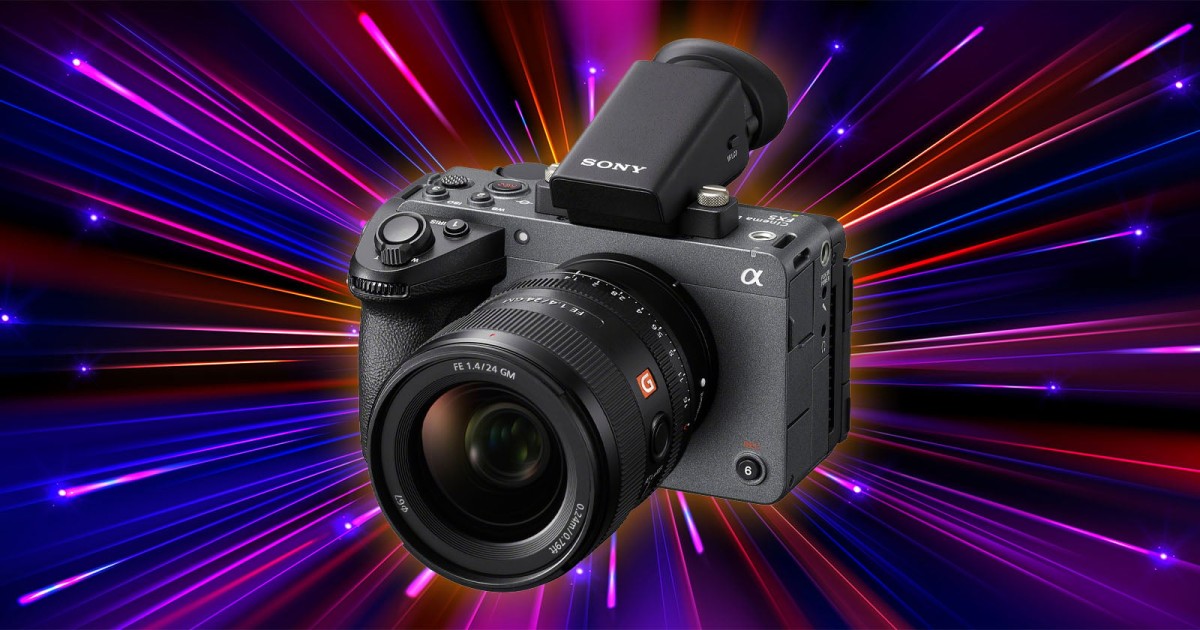
The Sony FX5 has been unveiled, ushering in a new era for Sony’s FX Series cinema cameras and, in many ways, answering the increasingly noisy critics who have been reasonably demanding more meaningful improvements from Sony.
While I have little doubt that Sony is always listening to feedback from its users and, perhaps as importantly, those who aren’t using Sony FX cameras for very specific reasons, it can often feel like a company is not paying attention at all.
There are good reasons for this. For starters, it actually takes a long time to develop new camera models. Further, every improvement, minor and major alike, has cascading effects that must be balanced against competing concerns. Adding feature X affects the performance of Y, which increases price by Z, for example. Some features require other new advancements, too, like a new sensor and faster processor. Then there’s the classic quiet nature of companies, which do not want to spill the beans about anything they are developing until it’s actually ready for market.
That’s all well and good, but the result has been that it felt like Sony was content to keep releasing the same sorts of FX cameras with the same types of features and, as many have noticed, the same limitations. The biggest of which have been the lack of Open Gate video, no internal RAW recording, and resolution capped at 4K or 8K, with no options in between.
The Sony FX5 Rights Many Wrongs
On that note, the Sony FX5 has a new 16.6-megapixel sensor and Sony’s latest Bionz XR2 processor. It is a new generation for the FX Series, and with it, Sony has carved out a new product segment altogether. The FX5 is not an FX3 Mark II, nor is it an FX6. It’s something else entirely, and it is Sony’s most consequential video camera in a very long time.
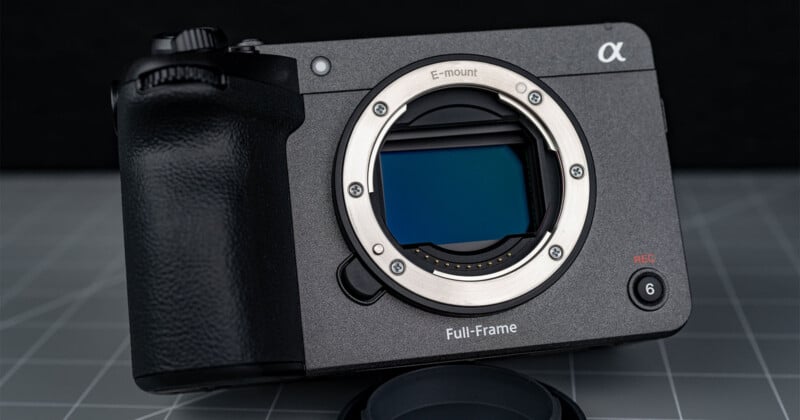 The Sony FX5 features a new 16.6-megapixel image sensor
The more powerful and performant FX5 now has Open Gate recording, 16-bit internal RAW video, waveforms, a detachable EVF, and 5K resolution. It’s not that the FX5 has it all — it doesn’t — but it has most of the things that people have been clamoring for.
Putting internal RAW in the form of 16-bit X-OCN files inside a compact, lightweight Sony FX body is a big deal. Canon, Nikon, and Panasonic have all offered internal RAW recording to varying degrees, and it has been impossible not to notice that Sony has not.
Open Gate, which is limited to just RAW recording for some reason, is another feature that has been glaringly missing with other FX bodies. Well, it’s here now.
Those two additions alone are enough to silence some of the most vocal critics of Sony’s prior FX cameras. But more importantly than answering demand, these additions also mean that filmmakers and camera operators who would have previously lost paying gigs because clients wanted Open Gate or RAW no longer face that threat. Open Gate in particular is important to those who want to easily fit video content to various formats or those who want the anamorphic look in the best format. Anamorphic is undoubtedly trendy these days, and trends pay bills.
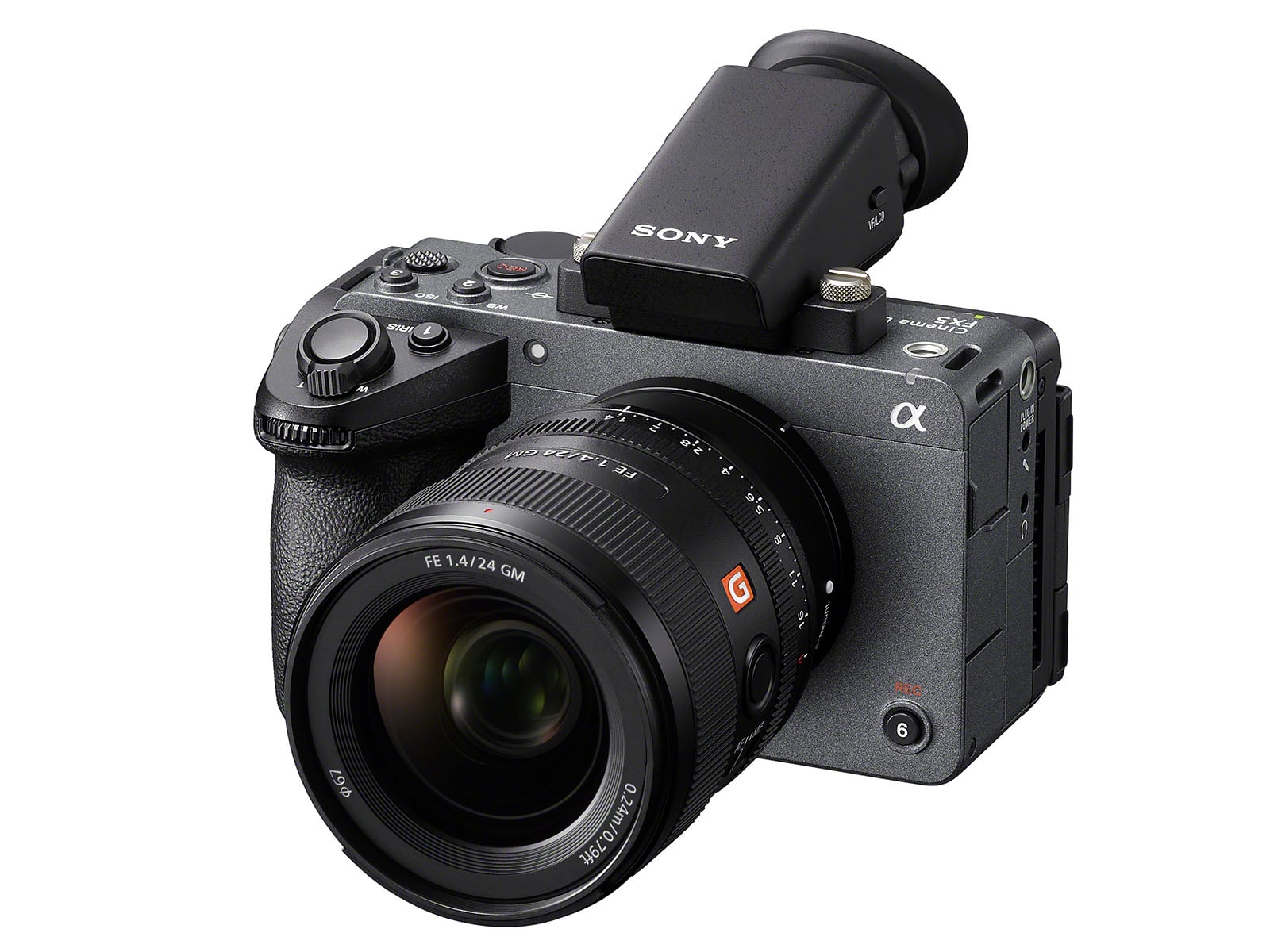
Unless there is a 6K or 8K deliverable requirement, the Sony FX5 can satisfy basically any professional client. It has the chops to do a wide range of things, including serious filmmaking as a main camera, or more likely, as a compact run-and-gun B or C camera. Filmmakers have already been using the FX3 for that type of role, and now the FX5 offers the same form factor benefits but with significantly better video features.
As PetaPixel‘s Jordan Drake explains, the FX5 has a lot more going for it than just Open Gate and internal RAW. Its detachable EVF and bigger rear display ensure that just about every user will be happy. While it’s unfortunate that the EVF blocks the Multi Interface (MI) shoe required for the FX5’s 32-bit float audio recording, that’s a relatively small price to pay for the flexibility. If the Sony FX2 did anything right, it was showing that a tilting EVF can be fantastic for this style of video camera.
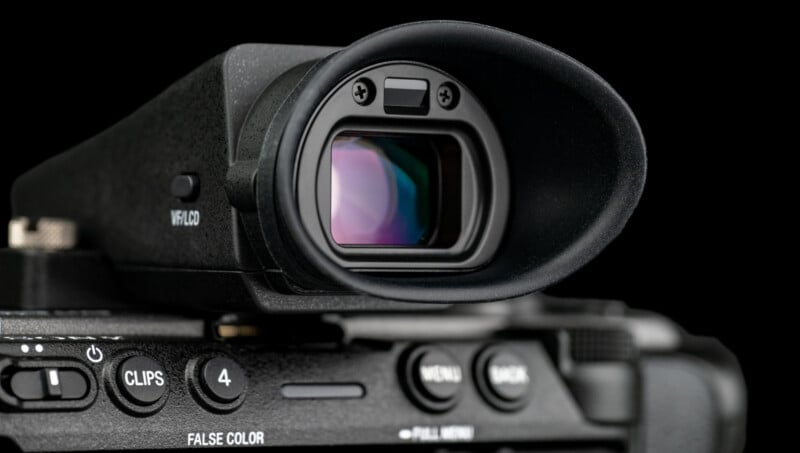 The Sony FX5 works alongside an optional, detachable EVF.
The 16.6-megapixel sensor, which perhaps not coincidentally seems like a variant of the a7R VI’s new 66-megapixel sensor with a Quad Bayer pattern, is an excellent blend of resolution and speed. Although some of that speed is lost when using the Dynamic Range Boost mode, the sensor will very rarely be a bottleneck. Obviously, if users require greater than 5K resolution, the FX5 won’t fit the bill, but it is challenging to have everything in this form factor and for $4,900.
And then there are some other big improvements on offer. There’s a new, better battery, improved AI-powered autofocus, better stabilization, and three base ISO settings (800, 4000, and 12800). There’s also the new CineAlta-inspired user interface plus more monitoring tools like waveform and vectorscope. These are important changes that may not get quite as much attention as Open Gate or 16-bit RAW, but are arguably even more meaningful to even more users.
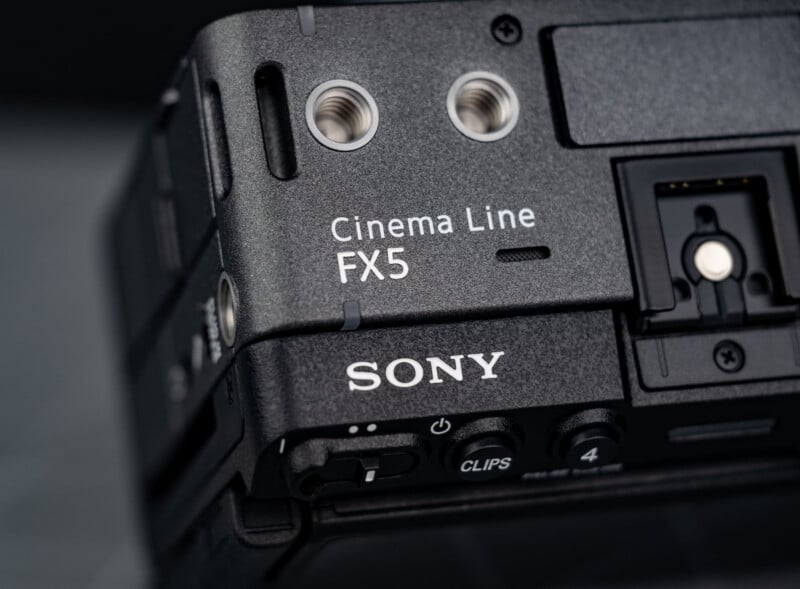
The Sony FX5 Is for More People Than Before but Still Not for Everyone
The Sony FX5 is poised to be a great choice for more users than the FX3 is thanks to its highlight-worthy additions and improvements, but it is still not the perfect choice for everyone. No camera ever is.
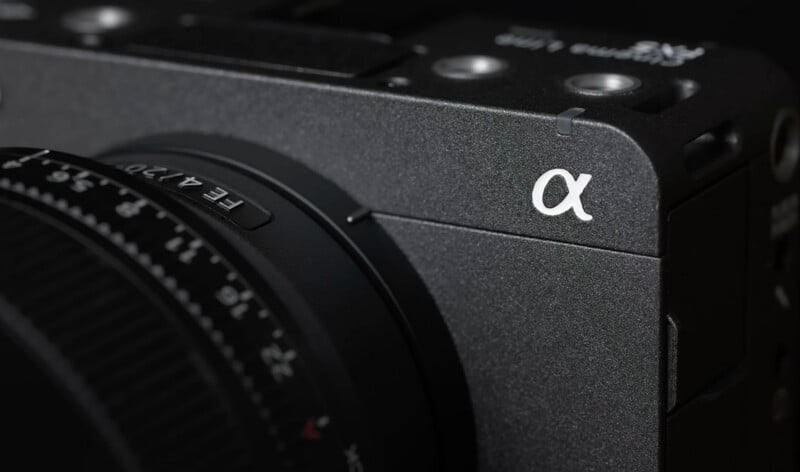
So what’s missing here? The biggest missing piece is an internal electronic neutral density (ND) filter. The Sony FX6 makes great use of its internal ND, and, unfortunately, the FX5 could not implement something similar.
The FX5 also lacks some of the FX6’s workflow advantages, including Genlock and SDI. The FX6 and its bigger body also have more expansion options than the FX5.
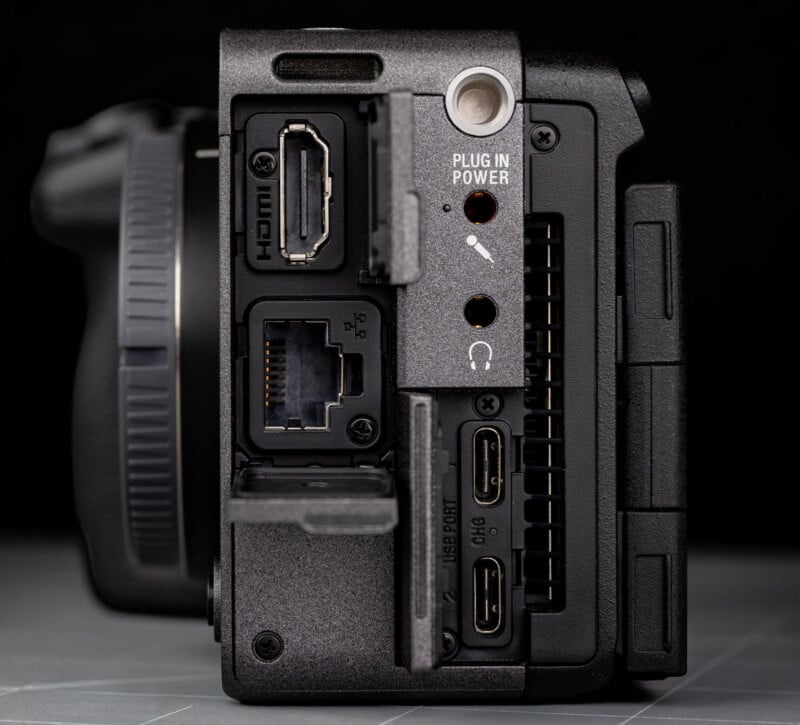 The FX5 has a lot of ports, but it doesn’t have all the pro-oriented bells and whistles of the FX6.
This ultimately means there remains a place for the FX6 in Sony’s lineup, even if the FX5 does some things better. It is hard not to imagine what a future FX6 model could look like with the FX5’s improvements included.
The Beginning of Sony’s Next FX Series Chapter
The Sony FX5 is not only an important camera for Sony in and of itself, but a much broader signal to the rest of the industry. A lot of people have used Sony’s FX bodies for many good reasons for years, although recently, this choice has felt like a tangible compromise in some ways. Users have had to give something up.
With the FX5, which surely kicks off Sony’s next generation of FX Series models, Sony has shown that these compromises either no longer exist or are significantly reduced. The Sony FX5 builds a new, much stronger foundation for Sony’s very popular and important FX lineup at a time when Sony desperately needed it. The competition since the FX3 and FX6 were released over five years ago has only grown fiercer. Because of that, the FX5 is Sony’s most important cinema camera ever.
Additional reporting by Jordan Drake
Image creditsProduct photos by Erin Thomson unless otherwise noted. Header image created using an asset licensed via Depositphotos.com.
What's Your Reaction?
 Like
0
Like
0
 Dislike
0
Dislike
0
 Love
0
Love
0
 Funny
0
Funny
0
 Wow
0
Wow
0
 Sad
0
Sad
0
 Angry
0
Angry
0









Comments (0)