

Why We Smile in Photos: The Surprisingly Recent History of Saying 'Cheese'
By the early 1840s, a daguerreotype portrait no longer took a quarter of an hour. Faster plates and brighter lenses had cut a studio sitting to under a minute, short enough to hold a pleasant face without much strain. Yet for the next 60 years, almost nobody in front of a camera smiled.
Open a box of antique portraits at any estate sale and the effect is the same. Row after row of grave, closed-mouth faces, staring out with the seriousness of a passport officer. The easy story is that they had to sit rigid for minutes at a time, and a held smile turns into a grimace. That is true for the very first portraits, and false as an explanation for the decades that followed. The grinning snapshot is not the natural state of photography that technology finally unlocked. As a convention it belongs largely to the 20th century, and you can name most of the people and companies who built it.
The Long-Exposure Story Is Only Half True
When Louis Daguerre made his process public in 1839, the plates were so slow that exposures ran to several minutes in good light, which is why his famous view of a Paris boulevard shows empty streets. Everything moving vanished; only a man standing still to have his boots shined stayed long enough to register. At those speeds a portrait was barely possible, and sitters used head clamps to keep still. Nobody was going to hold a natural grin for that.
That window was short. By 1840, a new lens design from Josef Petzval gathered far more light, and chemical tweaks like bromine fuming made the plates much more sensitive. Daguerre himself had reckoned exposures in minutes; within a few years, portrait studios were working in seconds. Reduce a sitting to five or ten seconds, and the technical excuse mostly evaporates. You can hold a smile for ten seconds right now.
So the timeline does not fit the myth. Commercial portrait studios spread across Europe and America through the 1840s and 1850s, and by the Civil War a sitting was fast enough for candid expression to be physically possible. Still the unsmiling face held on through the 1860s, the 1870s, the 1880s, all the way to 1900. Exposure length explains the frozen faces of 1840. It explains nothing about the frozen faces of 1895, when your grandmother's grandmother could have grinned and the plate would have caught it clean.
A Smile Was Something Peasants and Drunks Did
Photography copied its conventions from an older art. Portrait photographers did not invent a new visual language; they inherited three centuries of painted portraiture, and in that tradition the open smile was close to taboo. Walk any gallery of old masters and count the grins. You will run out of paintings before you run out of fingers. As the writer Nicholas Jeeves lays out in an essay on portraiture, the broad smile carried bad associations for centuries. It belonged to "the poor, the lewd, the drunk, the innocent, and the entertainment." Respectable people kept their mouths composed.
This was written down as etiquette. In 1703, the French priest and educator Jean-Baptiste de La Salle described the well-mannered mouth in a book on Christian decorum, warning against people who "raise their upper lip so high ... that their teeth are almost entirely visible," which he called contrary to good manners. A wide grin was not friendly. It was a lapse in self-control, and self-control was exactly what a portrait was meant to advertise.
A portrait, painted or photographed, was a formal document of who you were. It projected status, character, and permanence, not a passing mood. Politicians understood this instinctively. Abraham Lincoln had a reputation as a storyteller and cutup, yet his portraits are almost uniformly grave, because gravity was the point. Mark Twain, who loved a joke as much as any American who ever lived, reportedly drew the line at the camera. In a friend's memoir, he is quoted as insisting that "a photograph is a most important document, and there is nothing more damning to go down to posterity than a silly, foolish smile caught and fixed forever." Whether he phrased it exactly that way is hard to verify, but the sentiment was the mainstream one. A smile was frivolous, and frivolity was not what you wanted your descendants to inherit.
Cost reinforced the code. Sitting for a portrait was expensive and rare, often a once-in-a-lifetime event, so people treated it the way they treated sitting for a painter. You put on your best clothes, you arranged yourself, and you composed a face fit for the mantel and the family record. Nobody grins for the ages.
The Teeth Were Bad, but That Is Not Why
You have probably heard the tidy version: people had rotten teeth, so they kept their mouths shut. It is the kind of explanation that sounds obviously right, and it mostly is not.
Dental care in the 19th century was genuinely grim. Anesthetic dentistry was young, fillings existed but reached only those who could afford a dentist, and the common fix for a bad tooth was to pull it. But that cuts against the theory rather than for it. Bad teeth were nearly universal, across every class, so bad teeth cannot explain why one group of people smiled for the camera and another did not. Everyone was in the same boat. Britain's Lord Palmerston served as prime minister into his eighties, missing teeth and all, and was still considered a charmer. If poor dentition really silenced the smile, it would have silenced everyone equally, and the timing of the great grinning shift would look nothing like it does. Rotten teeth were real. They were not the mechanism.
How Kodak Sold You the Snapshot
The thing that actually changed the face in the frame was not a chemistry breakthrough or a dental one. It was marketing, and one company did more of it than anyone else.
George Eastman put photography in ordinary hands. His first Kodak camera arrived in 1888 with the slogan "you press the button, we do the rest," and in 1900 the Brownie followed at one dollar, cheap enough to hand to a child. Kodak shipped more than 150,000 of them in the first year. That price collapse moved the camera out of the studio and into the backyard, the beach, and the family vacation. The photograph stopped being a solemn appointment and became a casual thing you did on a good day.
What you did on a good day, Kodak spent decades telling you, was be happy. The media scholar Christina Kotchemidova traced how deliberate this was. Eastman Kodak owned or bankrolled much of the photographic trade press, which let it set the terms of what a good picture was, and its advertising relentlessly tied the camera to leisure and joy. Slogans sold the mood directly: "Vacation days are Kodak days," "Save your happy moments with a Kodak." From the 1890s the ubiquitous "Kodak Girl," a young woman shown traveling and playing and sightseeing without a care, modeled the whole program. The historian Nancy Martha West has described how those ads sold photography as a way to build an album with no sadness in it, a personal history edited down to holidays and smiles. If the camera means fun, the face that belongs in front of it is a happy one.
Hollywood pushed in the same direction. Movie stars beamed from magazine covers, advertising taught a whole culture to associate white teeth and a wide smile with health and success, and the snapshot absorbed the lesson. The stern portrait had been about who you were. The snapshot became about how good a time you were having, and the two demanded different faces.
From Prunes to Cheese
You can hear the whole reversal in one word. Victorian studios, chasing that small, controlled, decorous mouth, are said to have told sitters to say "prunes," which purses the lips into exactly the tight shape the era admired. The modern instruction does the opposite. "Cheese" ends on a long "ee" that pulls the corners of the mouth wide and bares the teeth, manufacturing something close to a grin on cue. The prompt itself flipped from suppressing the smile to producing one.
Nobody knows exactly who started saying it. The earliest print reference researchers have pinned down appeared in 1943, in a Texas newspaper, the Big Spring Herald, which ran the tip under the line "Just say 'Cheese,' It's an automatic smile," and credited it to a formula passed along by the former ambassador Joseph E. Davies, who in turn attributed it to a politician he declined to name. Whether the unnamed politician was Franklin Roosevelt or the phrase was already floating around, the record does not say, and honest histories leave it there. What is clear is that by the 1940s the trick was common enough to print as folk wisdom.
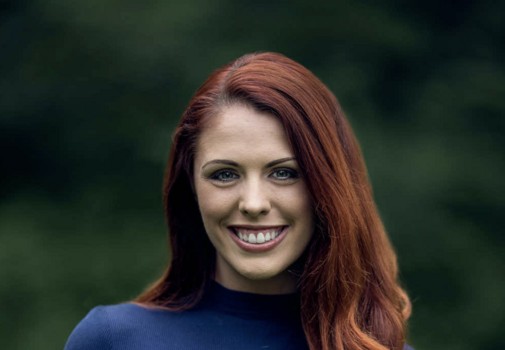
The change is measurable. Researchers behind a Berkeley study ran nearly 38,000 American high school yearbook portraits from 1905 to the 2010s through software that scored how much each face smiled. The curve climbs steadily out of the stiff-faced early 1900s, rises through the middle of the century, and keeps rising. The same data set turned up a smaller pattern that still holds today: across the decades, women smile more in their photos than men do. The grin did not arrive all at once. It spread, decade by decade, exactly as a marketed habit would.
Knowing the history does not make it easy to switch off. Coax a real, unforced expression out of a nervous subject and you learn fast that "say cheese" mostly delivers a rictus, which is why working portrait shooters study the difference between a manufactured grin and a genuine one, the whole subject of Peter Hurley's headshot course. A century of advertising trained everyone to grin for the lens. It never taught anyone to mean it.
So the next time you raise a phone and tell a group to say cheese, know that you are running a script written by a camera company. And the stern strangers in those antique-shop frames were not sadder than you, or worse at life, or hiding their teeth. They were following a different set of rules, ones that said a face fixed forever should look like it took itself seriously. Ours says it should look like it is having fun. Both are performances. Only one of them got sold to you.
What's Your Reaction?
 Like
0
Like
0
 Dislike
0
Dislike
0
 Love
0
Love
0
 Funny
0
Funny
0
 Wow
0
Wow
0
 Sad
0
Sad
0
 Angry
0
Angry
0













Comments (0)