

10 Coolest New D&D Monsters In Ravenloft: The Horrors Within
Dungeons & Dragons embraces the darkness in Ravenloft: The Horrors Within, and the monsters are no exception. While plenty of D&D monsters make for fearsome encounters, only a minority are actually capable of inflicting terror through any means other than difficulty.
Some of these monsters have previously appeared in Van Richten's Guide to Ravenloft, but they all feature new versions for the 5.5e ruleset.
Death's Head Tree

If nothing else, the death's head tree deserves a mention for how bizarre it is as a monster. While these trees were mentioned in Van Richten's Guide to Ravenloft, they didn't serve as actual monsters at the time, but merely places for flying, disembodied heads to grow.
In Ravenloft: The Horrors Within, death's head trees have newfound abilities to defend themselves. Not only can they target enemies with slam attacks, but they can also deal necrotic damage with exploding heads.
Ravenloft: The Horrors Within also includes two new types of death's heads, making an encounter with a tree overflow with fresh possibilities.
Shoggoth

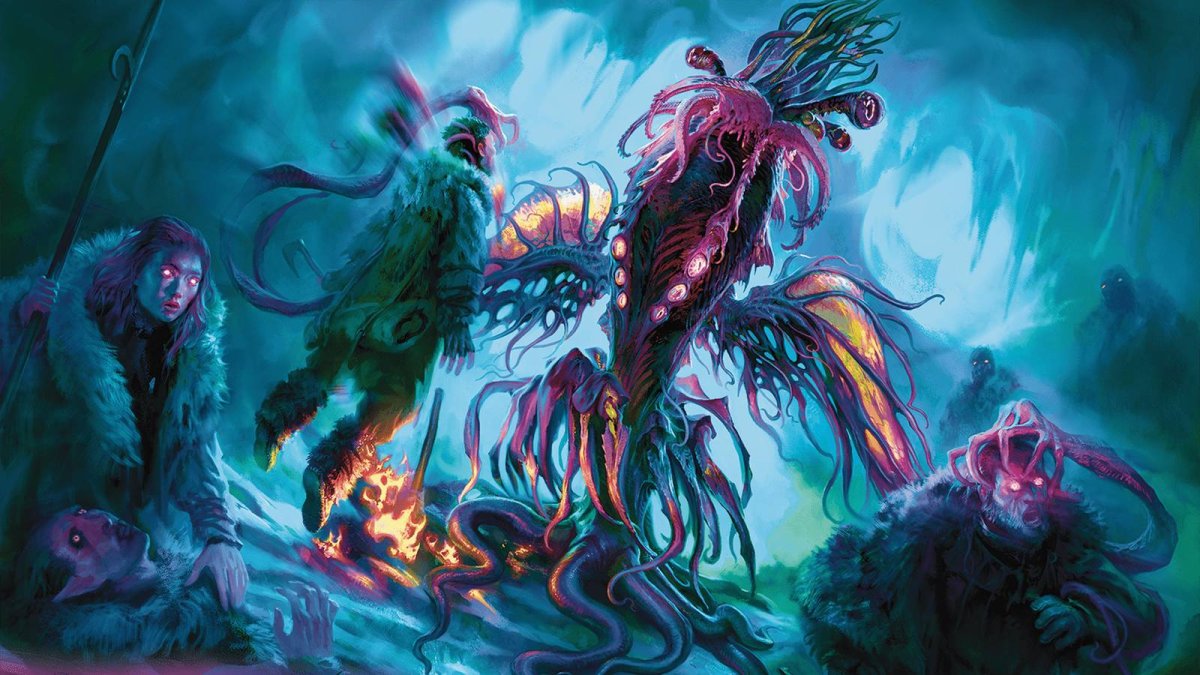
Shoggoths can be found lurking in ruins and hidden places, especially in the icy cold. If encountered, though, these Lovecraftian horrors make typical dangers like frostbite seem like minor threats.
Shoggoths were created by elder things, which are also Lovecraftian threats detailed in Ravenloft: The Horrors Within.
The primary form of attack for a shoggoth is dealing bludgeoning and thunder damage with pseudopods, which can also grapple characters. That can turn into a powerful combo with Suction Burst, which violently repels, deafens, and stuns grappled creatures. Shoggoths' most interesting potential, however, comes from their ability to mimic voices, which could be used in terrifying ways.
Strigoi
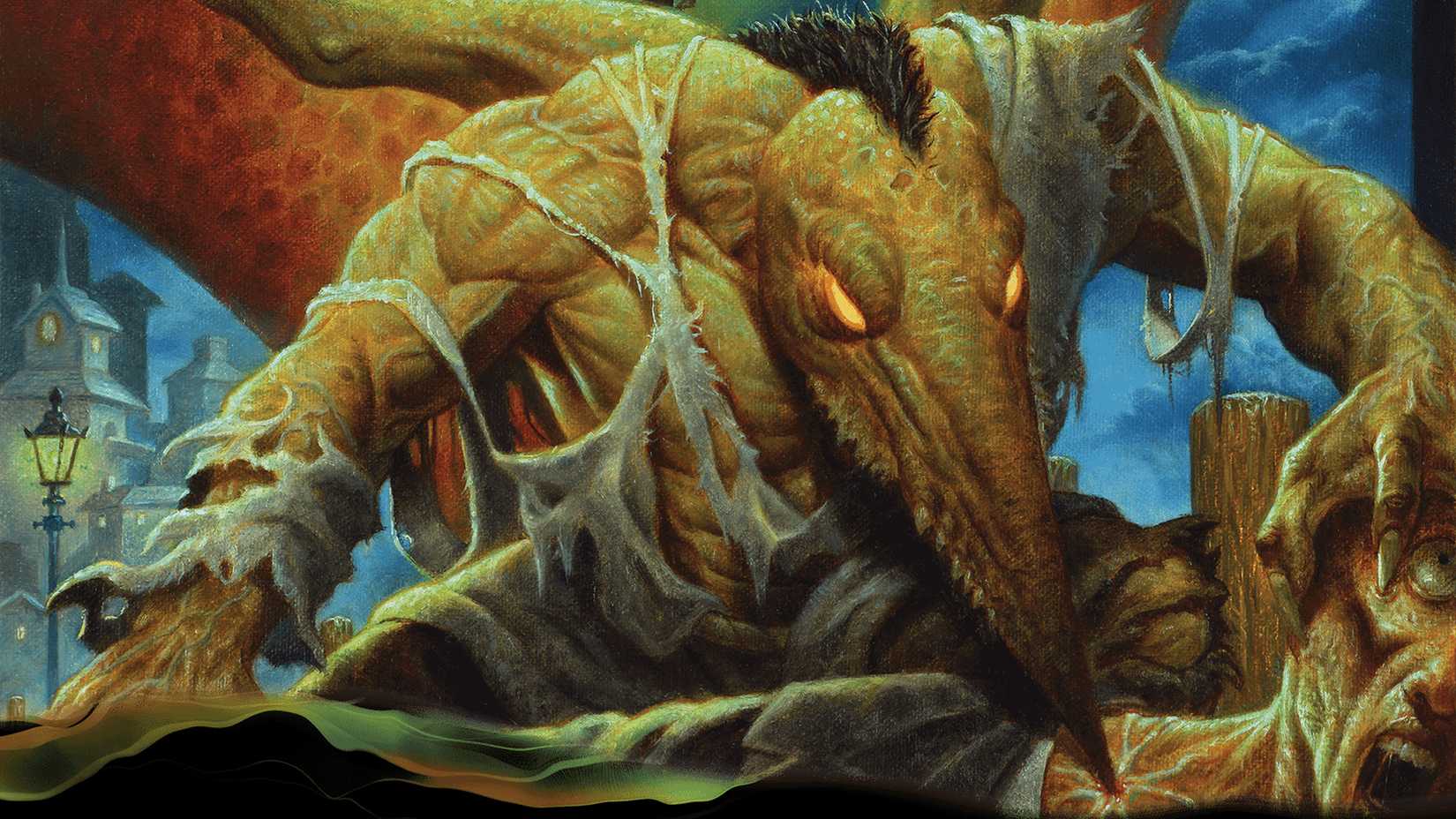
Riddle me this: what's worse than a mosquito or a vampire? The answer, of course, is a mosquito vampire. Strigoi are a disturbingly humanoid take on stirges, sucking blood through oversized proboscises.
Strigoi still aren't as deadly as actual vampires, so a capable party shouldn't have to worry too much about encountering one in the dead of night. If smaller creatures start swarming, however, things could go south more quickly. Strigoi can control stirges in their vicinity, and the Protective Swarm ability makes it easy for them to poison enemies with mosquitos.
Waxwork

Waxworks aren't necessarily the most terrifying addition in Ravenloft: The Horrors Within, but they have a ton of potential for use in fun set pieces. These constructs attack with knives, but they can also lob wax at their enemies to deal bludgeoning damage and decrease their speed. Waxworks can also shape-shift into humanoids of the same size.
The best part of a waxwork is the pyschology of it, as these creatures believe they're the original version of whatever figure they've been created to replicate. Whether the party ends up fighting waxworks of themselves or protecting a celebrity from Madame Tussaud's dark replica, there's no shortage of narrative possibilities at hand.
Jiangshi

Among the several new monsters pulled from interesting cultural folklore, the jiangshi might very well be the coolest. Based on an undead threat from Chinese folklore, jiangshi can make for a unique alternative to the typical D&D encounter with a vampire.
Each turn, the jiangshi makes three slam attacks, which aren't especially interesting. The bigger threat, however, is its Consume Energy move, which saps health from creatures that the monster can see, increases its fly speed, and can turn creatures into Wights that do the jiangshi's bidding.
Perhaps the most interesting detail of the jiangshi is that it's always compelled to move away from its own reflection. If the party knows this, weaponizing a jiangshi's reflection against it could make for a memorably dynamic combat strategy.
Mi-Go

A lot of D&D's most terrifying monsters have something to do with brains, and mi-go are no exception. In this case, extracting brains is the main goal of the mi-go, as they study them to learn how to colonize and control other worlds.
While holding a silver canister, a mi-go can attempt to extract the brain of a grappled or stunned creature. As such, this could be a particularly deadly foe for the party to face, since mistakes can quickly skip the option for death saving throws and result in a character's actual death.
Once per day, a mi-go can also cast plane shift on itself. If the party lets it get away with someone's brain, they might never see it again.
Mordenheim's Monster

Like Dracula, Frankenstein can be a great inspiration for a D&D campaign, but the typical flesh golem doesn't provide much of a worthy threat. Mordenheim's monster, on the other hand, packs in a suite of abilities and traits that could give the party a real challenge.
While Mordenheim's monster features only physical attacks, it boasts a uniquely threatening array. With Slam, Cursh, and Throw options, the monster can make quite the impression while grappling, suffocating, and flinging enemies. It can also knock them prone with violent leaps, making it clear who the battlefield really belongs to.
Want Mordenheim's monster to be even more deadly? Give it some backup, whether that's Mordenheim herself or a simple spellcaster. Lightning damage heals the monster and increases its speed, a fact that an ally can turn into a powerful advantage.
Carrionette

For all the abominations of flesh that you can throw into a D&D campaign, a simple puppet can sometimes be scarier. Enter the carrionette, which leans into the uncanny potential of a not-quite-human figure.
Carionettes aren't much of a threat in battle, employing a silver needle that does minor piercing damage, inflicts brief curses, and poisons its targets. The real danger lies in their Soul Swap ability, which allows them to possess a target while giving the target possession of the marionette form. This also knocks the target unconscious for an hour, giving the carrionette plenty of time to get up to no good while the rest of the party remains unsuspecting.
Nechrichor

Being outed from one's own body by a carrionette would certainly be unpleasant, but a nechichor is capable of inflicting something much worse. The amorphous form of these beings of sapient blood is disturbing enough on its own, and matters only go downhill when they attempt to leave that form behind.
When a nechrichor possesses a target, the target retains full awareness, but loses all control to the possessing nechrichor. Meanwhile, the nechichor itself can only be targeted by attacks, spells, and affects that specifically target undead. Unless it chooses to leave of its own accord, it can only be forced out by dropping the target to 0 HP.
It's even more difficult to kill a nechrichor permanently. Under most conditions, the monster will revive several days after being destroyed, although it's possible to avoid this by containing its remains or killing every creature it's ever puppeted.
Star Spawn Emissary

Powerful beasts are always intimidating in D&D, but it's even more horrific to know that they're just the tip of the iceberg. On their own, star spawn emissaries are incredibly strong, with their lesser forms featuring a challenge rating of 19 and their greater forms upping the CR to 21. As Ravenloft: The Horrors Within so evocatively describes, though, star spawn emissaries are simply "the fingers of alien realms," preparing worlds "for their unimaginable masters."
In their lesser forms, star spawn emissaries can appear as typical, unassuming characters, but they maintain abilities like teleportation, shape-shifting, and attacks with names like Invert Flesh and Warp Body. If defeated in these forms, it's not the end, as they'll return in their greater forms.
Greater star spawn emissaries have even more disgusting attacks, like Coagulated Nodule and Unearthly Bile. You'll especially want to avoid facing these in their lairs, which tend to incorporate body horror on a larger scale. Ravenloft: The Horrors Within features plenty of terrifying Dungeons & Dragons foes, but star spawn emissaries might just take the cake.
Original Release Date 1974
Publisher TSR Inc., Wizards of the Coast
Designer E. Gary Gygax, Dave Arneson
Player Count 2-7 Players
What's Your Reaction?
 Like
0
Like
0
 Dislike
0
Dislike
0
 Love
0
Love
0
 Funny
0
Funny
0
 Wow
0
Wow
0
 Sad
0
Sad
0
 Angry
0
Angry
0








Comments (0)