

25 Years Later, GTA 3 Is Still the Most Fascinating Open-World Experiment

Published Oct 23, 2026, 7:00 AM EDT
Give me liberty, or give me death
 Image: Rockstar
Sign in to your Polygon.com account
It’s October 2001, and you’re standing in a dimly lit game store, where rows upon rows of boxes sit in anticipation as you glance across their titles, unsure exactly which among them you'll end up taking home. Unfortunately, you can only pick one. Your eyes are already darting between Devil May Cry, Silent Hill 2, and Ico, which all feel eerily attuned to those pre-Halloween vibes. Noticing your indecisiveness (and the look of impatience on your mother’s face), the store clerk strides over with an assist, placing in your hands a game you had never heard of until that very moment.
The artwork’s nothing to write home about, just a collage of pictures in red, blue, and green hues, featuring obscure faces, a police chopper, and a car up in flames. Your instinct is to just go with your gut; Silent Hill 2 is what you came here for, after all. But something’s telling you otherwise. Maybe it’s the store clerk going on about its open-world premise, or the name itself that strikes a chord within you. Whatever reason incites it, you make the ultimate decision. Little did you know, you’d be walking home with one of the greatest achievements in video game history.
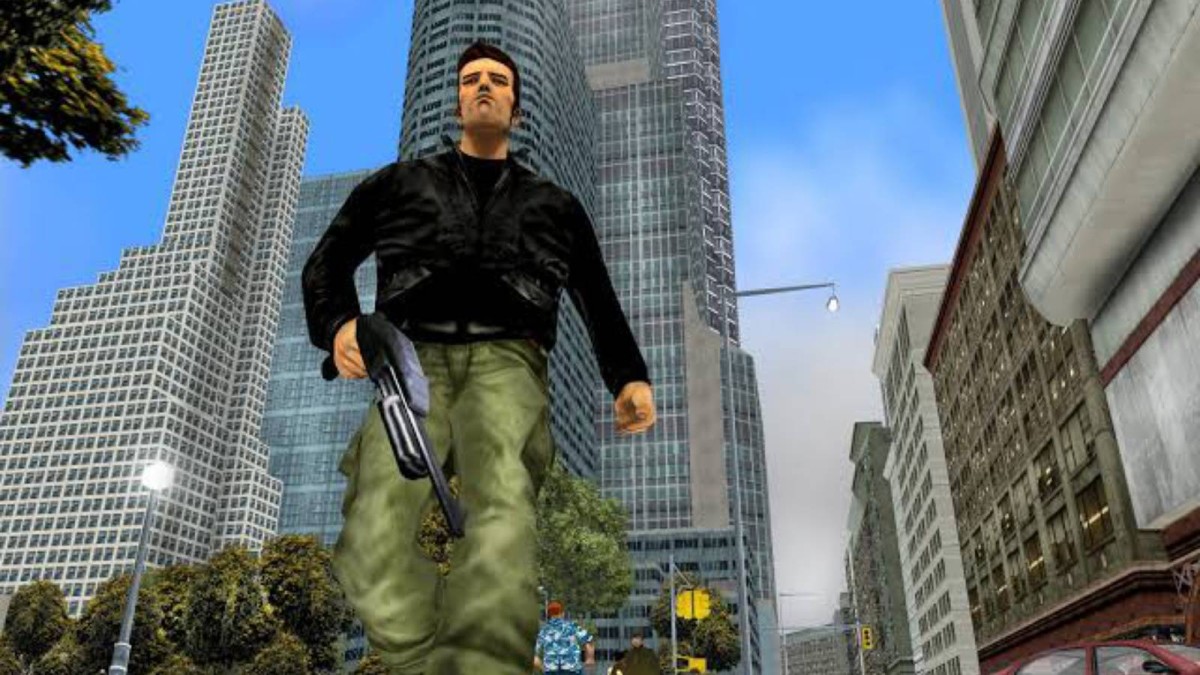
Grand Theft Auto 3 was a jolt of raw adrenaline. It was a paradigm shift that made the possibilities of 3D open-world design feel almost limitless. The game thrust players into what Rockstar co-founder Dan Houser described as “an old, post-industrial American city,” a mash-up of Chicago, Pittsburgh, Detroit, Philly, and mostly New York teeming with grim alleyways, pedestrian-filled streets, and sky-slicing buildings that eclipsed many of the incredible worlds that came before it, from The Legend of Zelda: Ocarina of Time to Driver. It was called Liberty City. No game had molded such immense verticality into a 3D world that felt like a living ecosystem where the inhabitants and environments reacted to you directly. It was a feat many at the time considered impossible on existing hardware — and Rockstar did it with virtually no load times to boot.
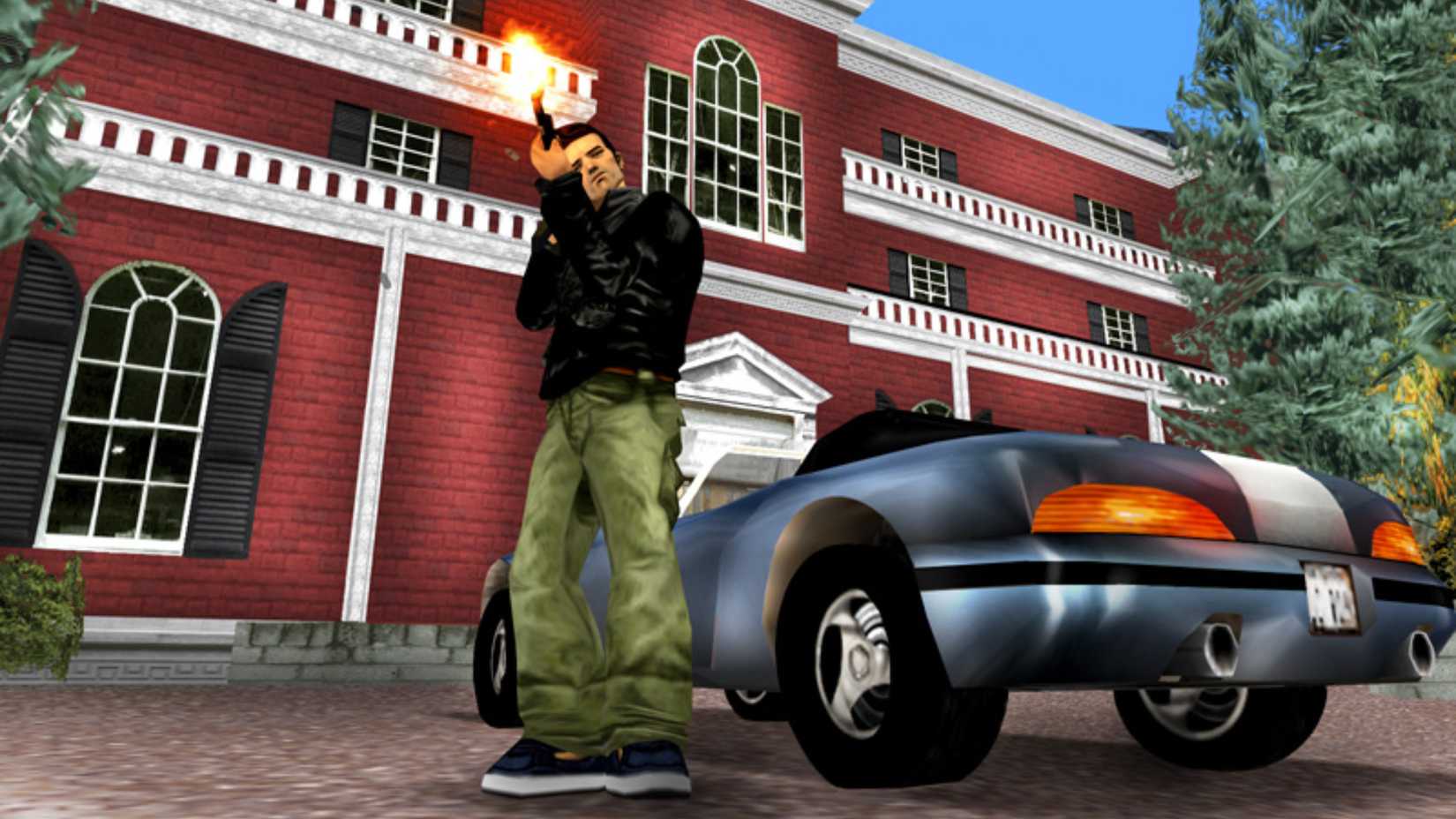 Image: Rockstar
Like nearly every title the studio would develop for the system, GTA 3 pushed the PlayStation 2 to its absolute limits. Developers DMA Design (now known as Rockstar North) had to cleverly stream around 130MB of data, including 3D animations, textures, models, and audio, through the PS2’s 32MB of system RAM. For perspective, just one Liberty City island amounted to roughly 50MB of static geometry. To make it all work, the team engineered a dynamic streaming system that fetched sectors of the map ahead of the player, while purging the city behind them. It’s why you’d often see the city pop in and populate right in front of you if you were driving at top speeds and quickly looked behind the character. When code couldn't bridge the gap, Rockstar cleverly designed curved roads to slow down sports cars, added subtle aerodynamic drag to prevent vehicles from outrunning the laser reader, and capped active traffic to eight models. What technical leads Adam Fowler, Obbe Vermeij, and their colleagues accomplished with GTA 3 was nothing short of magic.
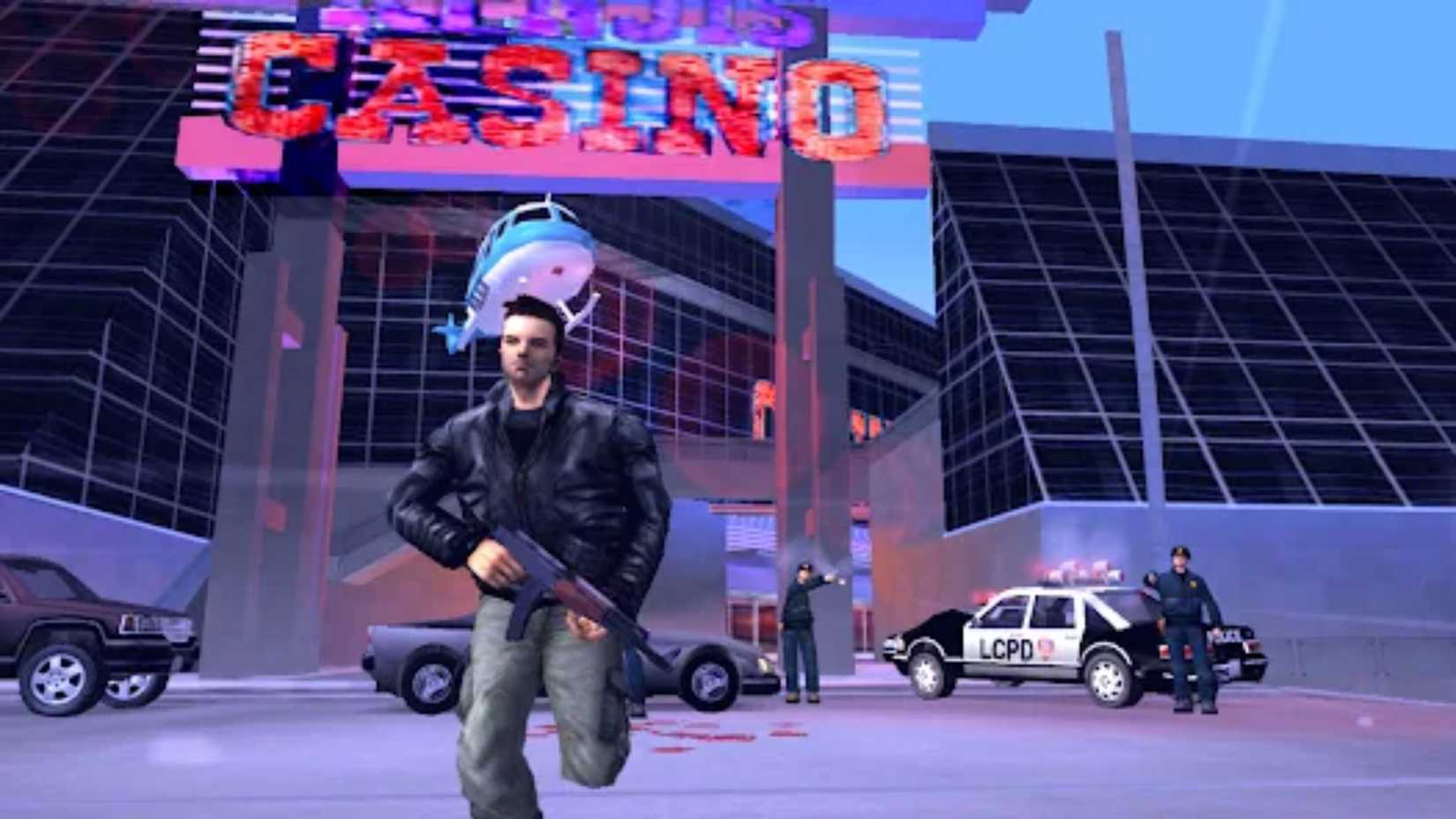 Image: Rockstar
Technical limitations weren’t the only roadblocks for Rockstar. Following the release of GTA 2, which he felt suffered from a lack of narrative thrust due to its non-linear design, Houser set out to give GTA 3 a far more complex story. With the help of co-writer James Worrall, they devised localized character "hubs" that served as contacts for missions, like Joey Leone, Toni Cipriani, and Salvatore Leone. Rather than treating open-world freedom and story progression as opposing forces, Houser used these dynamic webs to bridge the gap, tying mission arcs directly to specific territories and turf wars. That allowed GTA 3’s story to organically teach players the city's layouts and mechanics, moving through the industrial side of Portland with Toni Cipriani, navigating the Leone family's criminal empire with Salvatore, and eventually venturing into Staunton Island's political corruption and corporate underbelly. Each new contact pulled Claude deeper into Liberty City's criminal ecosystem, gradually opening up new territories while revealing another layer of the city's interconnected underworld. Coupled with the decision to keep Claude a silent protagonist, the hub structure allowed players to chart their own path without sacrificing the momentum of a cohesive crime saga.
The radio stations of GTA 3 also gave it that extra level of immersion, but before Rockstar could throw cash at some of the biggest names in the industry, the developers had to improvise with completely original music. Led by audio directors Craig Conner and Stuart Ross, the team wrote and recorded genre-specific tracks under aliases, like “Lucy,” “The Mudds,” “Marydances,” “Da Shootaz,” and more. Ross and Conner were also responsible for the GTA 3 Main Theme, a moody, “dark jazz” track inspired by The Sopranos and Goodfellas, which is still one of the best in the series. Combining underground hip-hop, drum & bass, and licensed classics from Giorgio Moroder’s Scarface score, the team was able to capture a gritty realism in the sounds of Liberty City. It’s a testament to Rockstar’s sonic ingenuity, one that finds a kind of spiritual successor in GTA 6, which features original scoring by French electronic duo Justice. The tools have changed, but the underlying idea remains the same: original music can give a fictional city an identity all its own.
What elevated these stations even further was GTA’s name-brand comedy, still in its infancy but just as hilarious, brought to life in Chatterbox FM. Scripted by Houser and hosted by Lazlow Jones, the talk-radio station's absurd caller rants and SNL-like commercial parodies gave Liberty City a lived-in texture long before you ever stepped out of your (likely stolen) vehicle. An especially on-the-nose example is a first-time-caller mother who rants about parenting in the age of video games: “I let my kid play video games, and now he runs around the house looking for gold coins. This is teaching our children to go chase money!” One of my personal favorites involves a suitably redneck-sounding character raving about how “guns don’t kill people, death kills people.” They go on to add: “You can’t die from a bullet, you can die from a cardiac arrest or organ failure or major hemorrhage. Small piece of metal ain’t the problem.” It’s no wonder Chatterbox is still widely considered some of the funniest and most satirical writing in the entire GTA series, though hopefully GTA 6 will give GTA 3 a run for its comedy gold.
 Free sign-up
Get Polygon’s Wishlister newsletter
A weekly cheat sheet to what you’ll eventually love to play. No buying, no commitment — just saving for later.
Sign up freeFree. Unsubscribe anytime.
On the heels of 9/11, released just 41 days after those fatal terrorist attacks, GTA 3 also remains a strange time capsule. Rockstar delayed the game by a few weeks to surgically scrub dialogue and a mission referencing terrorism, and changed the city’s squad cars from blue-and-white NYPD knockoffs to generic black-and-whites. Even the original box art was scrapped in North America, giving birth to the now-iconic grid layout that emblazons the cover of every series follow-up. Yet beyond those surface-level tweaks, the game took on a surreal weight in the wake of the tragedy. Having grown up just across the river in New Jersey, the attacks were an inextricable part of my life, even if much of the chaos of that era remains a blur. But I’ll never forget the long nights spent driving through Liberty City in the shadow of such devastation. Steering through those dark and rainy streets felt hauntingly poignant; a digital New York pulsing with life at a moment when the real world had suddenly ground to a painful halt.
GTA 3 was a baseball bat to the face of the gaming industry at a time when it was flourishing. It landed in the same year as Ico, Silent Hill 2, Halo: Combat Evolved, Final Fantasy 10, and Metal Gear Solid 2. Even in the face of such greatness, Grand Theft Auto 3 is unparalleled in its scope, bridging some of the most sophisticated world design ever attempted with a bespoke narrative engine that forever changed gaming. No one said it better than Sam Houser, who told IGN in 2001: “It has its own personality in a way I've never seen before in a game, to the point where it actually becomes part of the gameplay experience.”
Personality. That's what has always made Grand Theft Auto one of the most compelling entertainment properties on the planet, and GTA 3 was where that personality truly came into its own. 25 years later, with Rockstar's next open-world adventure on the horizon, Liberty City remains a testament to how ambition and clever design can fundamentally reshape an entire medium.
What's Your Reaction?
 Like
0
 Dislike
0
 Love
0
 Funny
0
 Wow
0
 Sad
0
 Angry
0





Comments (0)