

5 Classic Detective Books That Are Perfect From the First Page to the Last
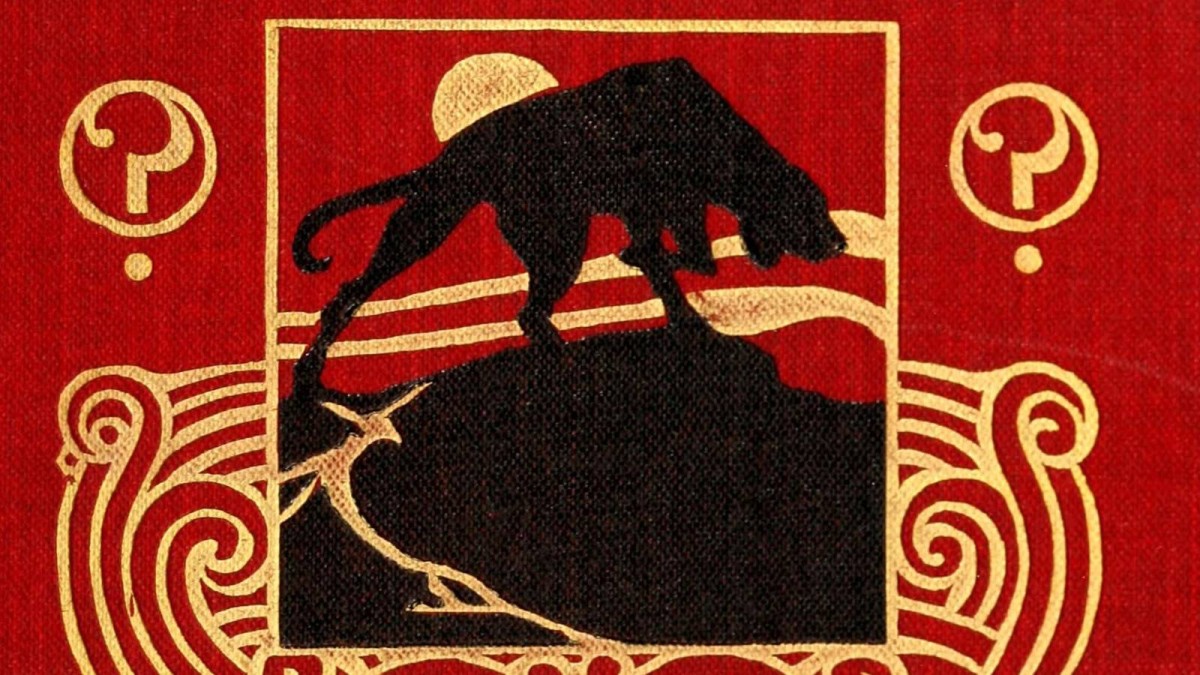
 Image via George Newnes Ltd
Published Aug 11, 2026, 12:18 AM EDT
Dyah (pronounced Dee-yah) is a Senior Author at Collider, responsible for both writing and transcription duties. She joined the website in 2022 as a Resource Writer before stepping into her current role in April 2023. As a Senior Author, she writes Features and Lists covering TV, music, and movies, making her a true Jill of all trades. In addition to her writing, Dyah also serves as an interview transcriber, primarily for events such as San Diego Comic-Con, the Toronto International Film Festival, and the Sundance Film Festival.
Dyah graduated from Satya Wacana Christian University in October 2019 with a Bachelor's degree in English Literature, concentrating on Creative Writing. She is currently completing her Master's degree in English Literature Studies, with a thesis on intersectionality in postcolonial-feminist studies in Asian literary works, and is expected to graduate in 2026.
Born and raised between Indonesia and Singapore, Dyah is no stranger to different cultures. She now resides in the small town of Kendal with her husband and four cats, where she spends her free time cooking or cycling.
Sign in to your Collider account
Like dead bodies, classic detective novels didn't just pop out of nowhere. With its earliest origins in Edgar Allan Poe's tales of ratiocination (logical reasoning) in the mid-1800s, the genre steadily gained popularity throughout the 19th century before exploding into the mainstream. From there, classic detective fiction flourished into the Golden Age of detective writing in the 1920s.
While these novels remained rooted in logical deduction and the pursuit of truth, they also explored the complexities of human nature, reflecting the tumultuous effects of industrialization and the chaos of the Great Wars. From an author who broke the rules of mystery writing to the writer who laid the foundation for noir fiction, here are the classic detective books that are perfect from the first page to the last.
'The Murder of Roger Ackroyd' (1926)
 Image via William Collins, Sons
The Murder of Roger Ackroyd is not for the gullible. After the sudden suicide of a wealthy widow, respected country doctor James Sheppard is drawn into a disturbing mystery when her close friend, Roger Ackroyd, is found murdered only hours after revealing he had learned a devastating secret. With the victim's stepson missing and several family members, guests, and servants hiding personal motives, suspicion spreads throughout the serene village of King's Abbot. At the request of Ackroyd's niece, the recently retired detective Hercule Poirot reluctantly takes on the case. As he interviews suspects and reconstructs the night's events, Poirot finds critical inconsistencies that challenge every assumption surrounding Ackroyd's murder.
Suspicion is nothing new in the classic detective genre, but back in 1926, Agatha Christie delivered a plot twist that many considered literary blasphemy. Readers will have to pay extra attention not just to how the mystery unfurls, but to how the case is written and described. The clues aren't just hidden in the suspects' alibis or the physical evidence—they're literally tucked between the lines. By the time readers reach the final page, they'll realize just how thoroughly Christie has bamboozled them with her cunning tricks. Some will feel cheated by the author, while others will admire her sheer ingenuity.
'The Hound of the Baskervilles' (1902)
 Image via George Newnes Ltd
Sir Arthur Conan Doyle wrote many Sherlock Holmes novels, but out of the four main novels, The Hound of the Baskervilles remains the most favored. A monstrous hound has haunted the Baskervilles for generations, claiming the lives of those who inherit the family's vast estate. When Sir Charles Baskerville is found dead under mysterious circumstances, fears of the curse intensify as his heir, Sir Henry Baskerville, arrives from Canada to take possession of Baskerville Hall. While Sherlock Holmes remains in London to crack the case from afar, Dr. John Watson travels to the eerie Devonshire moor, where escaped convicts, suspicious neighbors, and unsettling encounters complicate the investigation.
Holmes is the last person to sacrifice logic for the mystical, but The Hound of the Baskervilles makes it surprisingly difficult to separate folklore from cold, hard fact. The novel cleverly toys with readers, making it seem as though something genuinely supernatural may be behind the mysterious deaths. With the atmosphere of a classic Gothic tale and the slightest echoes of Poe's works, readers are drawn into a creeping sense of paranoia through the bleak, fog-covered Dartmoor and the isolated Baskerville Hall. It's also one of the few Holmes novels where Dr. Watson proves he's far more than the detective's sidekick—he's a capable investigator in his own right.
'Gaudy Night' (1935)
 Image via HarperTorch
No other classic detective setup is more salacious than academia, as in Gaudy Night. Returning to her alma mater for a reunion celebration, mystery writer Harriet Vane hopes to reconnect with the more peaceful days of academic life. Instead, she finds Oxford's Shrewsbury College plagued by anonymous threats, malicious graffiti, and increasingly disturbing acts of vandalism. Because the college wants to avoid a public scandal, Harriet agrees to investigate discreetly, drawing on her own experience as the target of public suspicion. Of course, the faculty and students aren't too pleased with the sudden intrusion. If the mystery isn't bad enough, there are also the personal grudges everyone carries within the college community.
Unlike your typical classic detective novel, Gaudy Night doesn't begin with a dead body. Instead, the mystery revolves around finding a saboteur, which proves just as tricky. Part of the novel's genius lies in its academic setting. Readers naturally assume that these highly intellectual individuals also possess strong-willed integrity, but that isn't necessarily the case. As Harriet interrogates the academics one by one, Sayers demystifies the air of superiority surrounding them, offering insightful reflections that you wouldn't typically get from solving a conventional murder case. Rather than focusing solely on who committed the crime, Gaudy Night explores ethics, truth, and the responsibilities that come with scholarship and human relationships.
Collider Exclusive · James Bond Personality Quiz Which James Bond Actor Are You Most Like? Connery · Moore · Dalton · Brosnan · Lazenby · Craig
Six actors. Six completely different visions of the same man — dangerous, charming, complicated, and almost certainly wearing a very good suit. Only one of them shares your particular way of moving through the world. Eight questions will figure out which Bond you really are.
🏴Connery
😄Moore
🎭Dalton
✨Brosnan
🤵Lazenby
💠Craig
FIND YOUR BOND →
01
How do you carry yourself when you walk into a room? Bond is always the most interesting person in the room. The question is how he makes you feel it.
AWith absolute authority — I don't announce myself. I simply make everyone aware that I've arrived. BWith a raised eyebrow and a ready quip — I'd rather disarm a room than dominate it. CWith focused intensity — I'm taking everything in, and people can tell. DWith polish and ease — I look like I belong everywhere, because I've decided I do. EWith quiet confidence — I'm still figuring out my place, but I carry myself as if I already know it. FWith guarded stillness — I notice everything and give nothing away until I choose to.
NEXT QUESTION →
02
How do you handle a dangerous situation? Every Bond faces it differently. What does your version look like?
AWith dangerous calm — I've been here before, and the threat already knows it's made a mistake. BWith improvisation and a degree of theatrical flair — tension should never be wasted. CHead-on and without hesitation — I don't need gadgets. I have training, and I use it. DWith the right tool for the job — I came prepared, and preparation is its own form of confidence. EInstinctively — I react faster than I think, and it usually works out. FWith controlled brutality — I don't enjoy it, but I don't flinch from what the moment requires.
NEXT QUESTION →
03
How do you charm someone you need on your side? Bond always gets what he needs. The method varies considerably.
AI make them feel like the most interesting person in the room — for exactly as long as I need them to be. BI make them laugh — a shared laugh is the fastest way to make someone trust you. CI'm direct and honest — I tell them what I need and why. Manipulation wastes time. DWith surface perfection — the right words, the right smile, deployed with enough precision to look effortless. EBy being present and genuine — I'm still developing my technique, but sincerity covers a lot of ground. FReluctantly and sparingly — I'd rather earn trust through actions than manufacture it through charm.
NEXT QUESTION →
04
How do you handle your emotions on the job? Every Bond deals with this differently. Most of them not particularly well.
AI suppress them completely — detachment is a professional requirement, not a personal failing. BI deflect with humour — a well-timed joke is the best defence against genuine feeling. CI let them show — I'm not ashamed of feeling things, and I think pretending not to is its own kind of weakness. DI compartmentalise with precision — everything in its place, nothing bleeding into the mission. EWith difficulty — I haven't quite worked out the system yet, and sometimes it shows. FBy burying them — deeply, imperfectly, in ways that eventually cost me something important.
NEXT QUESTION →
05
How would your colleagues describe your working style? MI6 has opinions about all of its 00s. What are theirs about you?
AEffective and uncompromising — results-focused to the point where the methods occasionally become a concern. BReliably brilliant in the field, occasionally exasperating in the briefing room. CPrincipled to a fault — they'd rather do it right than do it fast, and they'll tell you so. DPolished, capable, and slightly too good at making it look easy. ERaw potential — still developing, but there's something there that's hard to teach. FA weapon. Pointed at problems, usually effective, occasionally unpredictable.
NEXT QUESTION →
06
How do you feel about operating within the rules? The licence to kill comes with terms and conditions. Not everyone reads them.
ARules are for people who haven't earned the judgement to know when to break them. BI follow them in spirit and bend them in practice — the important thing is the outcome. CI take them seriously — there are things I won't do regardless of what the mission requires. DI work within them effectively and creatively — the system has its uses if you know how to navigate it. EI'm still working out where my lines are — the job has a way of moving them on you. FI follow orders until I decide the order is wrong. Then I act on my own judgement and accept the consequences.
NEXT QUESTION →
07
What is your relationship with love? Every Bond has a different answer. None of them have found it easy.
AA liability I've learned to manage — I don't let it interfere with the work, and I try not to examine why. BA pleasure I take seriously in the moment, lightly in the long term, and honestly in between. CSomething I want genuinely — and struggle to reconcile with the life I've chosen. DPart of the performance — I'm charming, and I enjoy it, but I keep the door to anything deeper firmly closed. ESomething that surprised me — I found it when I wasn't looking and it changed everything, briefly. FA wound I carry — something happened, and I haven't fully processed what it means for everything since.
NEXT QUESTION →
08
When the mission is over, how do you want to be remembered? The name is Bond. The rest is entirely up to the man behind it.
AAs the original — the one who defined what this could be before anyone else knew what it was. BAs someone who made it enjoyable — who understood that entertainment is its own kind of excellence. CAs someone who took it seriously — who refused to coast and pushed harder than the role required. DAs the complete package — who had the looks, the timing, and the ability to make it all seem inevitable. EAs an underrated chapter — one that deserved more time and more credit than it received. FAs the one who made it human — who found the cost beneath the cool and didn't look away from it.
REVEAL MY BOND →
The Name Has Been Determined Your Bond Is…
Six actors. One role. Your answers point to the Bond who shares your presence, your method, and your particular way of carrying the weight of being the most dangerous person in the room.
Sean Connery
You are the original — and you carry that fact without needing to announce it. There is an authority in the way you occupy a room that others spend careers trying to replicate.
- You don't explain yourself, justify yourself, or soften yourself for anyone's comfort. The confidence is structural, not performed.
- Connery's Bond established everything — the tone, the danger, the cool — because Connery himself had the innate presence to make something that had never existed feel inevitable.
- You share that quality: the sense that you were always going to end up exactly here, doing exactly this.
- The name is Bond. In your case, it always was.
Roger Moore
You understand something that more serious people miss: that wit is its own form of intelligence, and that making people laugh is not a retreat from danger but a way of mastering it.
- Moore's Bond is underrated precisely because the effortlessness looks easy — and effortlessness is the hardest thing to manufacture.
- You have the same quality: a lightness that disarms people before they realise how sharp you actually are.
- The raised eyebrow, the perfectly timed quip, the refusal to be rattled — these are not affectations. They are a philosophy about how to move through a world that would like to take itself too seriously.
- You have never let it.
Timothy Dalton
You took the role seriously when everyone wanted you to coast — and that refusal to take the easy version of anything is the most defining thing about you.
- Dalton's Bond has genuine moral weight: he feels the cost of what he does, he has lines he won't cross, and he is not interested in the version of himself that pretends otherwise.
- You share that intensity. You push harder than the situation technically requires, because you have a standard and you hold yourself to it.
- He was ahead of his time — the Bond the franchise wasn't quite ready for yet, arriving exactly when he was meant to.
- You know what that feels like.
Pierce Brosnan
You are the complete package — and you know it, which is part of what makes you so effective and occasionally so infuriating to the people around you.
- Brosnan arrived at the role looking exactly like Bond was supposed to look, and he delivered on that expectation with a professionalism that made it seem effortless.
- You have the same quality: a smooth competence, a charm that operates like a precision instrument, and the ability to make even difficult things look like they weren't.
- His era was the most commercially successful in the franchise's history. There is a reason for that.
- The reason is that some people simply fit their moment perfectly. You are one of those people.
George Lazenby
You stepped into something enormous with less preparation than anyone around you thought was sufficient — and you delivered something genuine anyway, which is the more impressive achievement.
- Lazenby's single outing is, by many measures, one of the finest Bond films ever made — and he is not a small part of why.
- You share his quality of raw authenticity: less polished than the alternatives, more honest for it, capable of something real that technique alone can't produce.
- He was underestimated, and then he wasn't, and then history caught up with him.
- You are the kind of person history catches up with. Give it time.
Daniel Craig
You stripped everything back and found what was underneath — and what was underneath was harder, more honest, and more human than anyone expected.
- Craig's Bond is the franchise's most psychologically complete: a man doing a brutal job, carrying its costs imperfectly, capable of love and loss in ways that can't be dismissed.
- You share that depth. You don't hide behind the role or the charm or the suit — you let the work show what it actually costs.
- He was controversial from the moment he was announced and definitive by the time he was finished. The sceptics became the believers.
- That arc — of being underestimated and then undeniable — is one you know intimately.
↻ RETAKE THE QUIZ
'The Daughter of Time' (1951)
 Image via Scribner
Boredom does the craziest things to detectives in The Daughter of Time. Confined to a hospital bed with a broken leg, Scotland Yard Inspector Alan Grant is desperate for something to occupy his mind. An actress friend challenges him to investigate a historical mystery instead of a present crime, sparking Grant's fascination with the notorious reputation of King Richard III. Unconvinced that the king's portrait matches the villain described in history books, Grant begins reexamining the centuries-old case of the Princes in the Tower. With the help of historical records and a young researcher from the British Museum, Grant approaches the mystery like any criminal investigation.
The Daughter of Time is innovative to its core. They say the best way to solve a case is to retrace the past, but this novel takes that idea one step further by reopening a centuries-old mystery instead. There are no living suspects to interview, no crime scene to investigate, and the alleged criminal has long been dead. The only resources Inspector Alan Grant has are historical records, and that's precisely the novel's central premise. The Daughter of Time reminds readers that history isn't nearly as objective as it often appears. Rather than simply asking what happened, it challenges us to consider who gets to write history, whose version survives, and what narrative is ultimately passed down to future generations.
'The Maltese Falcon' (1930)
 Image via Alfred A. Knopf
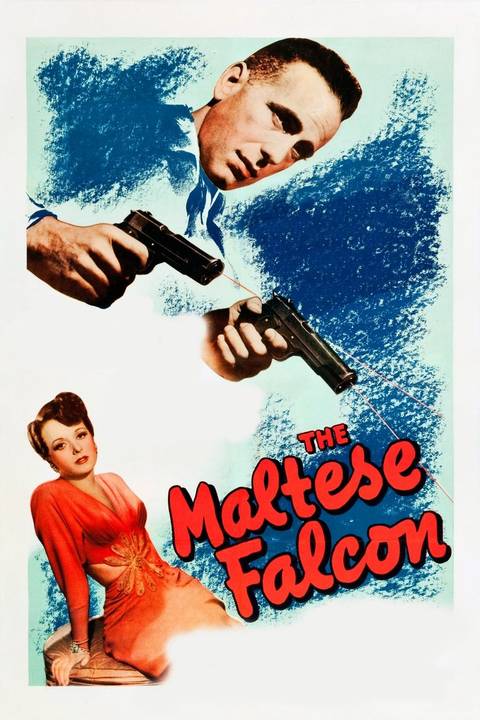
If you like the neo-noir detective series Bosch, you'll appreciate its old-school hard-boiled roots in The Maltese Falcon. Private detective Sam Spade's latest case begins when a woman calling herself Miss Wonderly hires him to follow a man she claims has run off with her sister. Before long, Spade's partner is murdered, the man they were tailing is found dead, and the police begin treating Spade as a prime suspect. As more strangers enter the picture—including the smooth-talking Joel Cairo and the enigmatic Casper Gutman—Spade discovers they're all searching for the legendary Maltese Falcon, a priceless artifact with a long and mysterious history.
Unlike Sherlock Holmes or Hercule Poirot, who investigate primarily through facts and deduction, Sam Spade relies on instinct. Much like the modern-day Detective Bosch, he has a knack for reading. He was one of the earliest detectives to be portrayed not as an untouchable hero, but as someone cynical and disillusioned by a world consumed by greed and self-interest. For grounded readers, The Maltese Falcon functions as much as a commentary on human nature as it does a detective story. Even the police force isn't portrayed as entirely innocent, making The Maltese Falcon a perfect read for those who enjoy a classic mystery but aren't easily swept up in the glorification of detectives.
The Maltese Falcon
Release Date October 18, 1941
Runtime 100 minutes
Writers John Huston
-

Humphrey Bogart
Samuel Spade
-
Mary Astor
Brigid O'Shaughnessy
What's Your Reaction?
 Like
0
Like
0
 Dislike
0
Dislike
0
 Love
0
Love
0
 Funny
0
Funny
0
 Wow
0
Wow
0
 Sad
0
Sad
0
 Angry
0
Angry
0










Comments (0)