

6 Supernatural Thrillers That Are Genuine Masterpieces
Some of the greatest supernatural movies ever made are not horror films in the traditional sense. While they may contain ghosts, demons, curses, or otherworldly forces, their primary focus is suspense, mystery, paranoia, and psychological tension rather than outright terror. As a result, they occupy a fascinating space between genres, using supernatural elements to heighten stories that are fundamentally thrillers.
The distinction matters because these movies often derive their power from uncertainty. Instead of overwhelming audiences with shocks, they slowly unravel mysteries, forcing viewers to question what is real, what is imagined, and what sinister forces may be lurking just beyond ordinary perception. Their supernatural elements are often inseparable from their themes, whether that means exploring grief, madness, guilt, repression, or humanity's fear of the unknown.
Many supernatural thrillers have earned devoted followings over the years, but only a select few can legitimately be described as masterpieces. These are films whose craftsmanship, performances, atmosphere, and storytelling continue to influence filmmakers decades after their release.
In The Mouth Of Madness (1994)
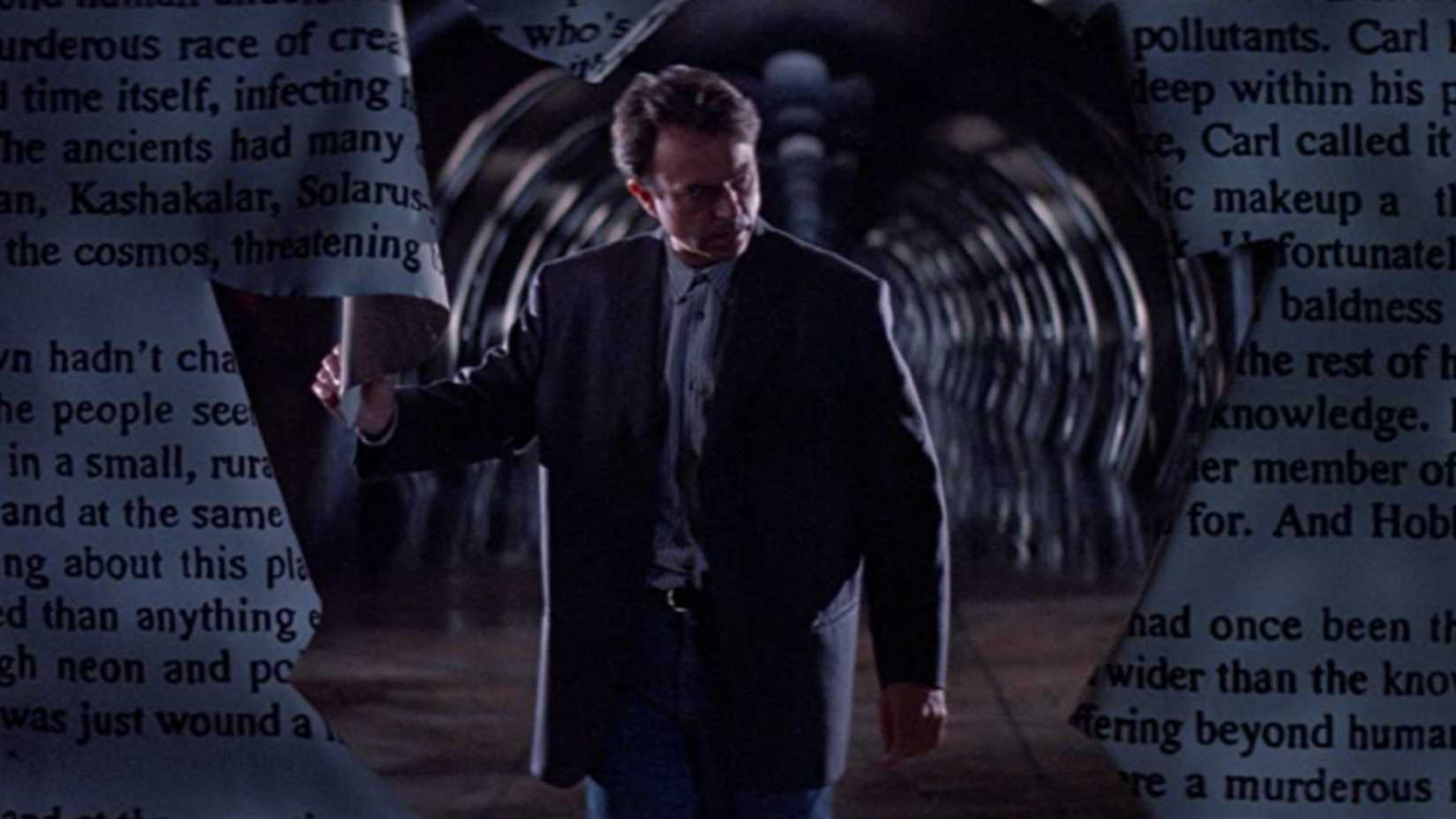
John Carpenter's In the Mouth of Madness is one of cinema's most effective explorations of cosmic horror. Sam Neill stars as insurance investigator John Trent, who is hired to locate missing horror novelist Sutter Cane, an author whose books have inspired obsessive devotion among readers across the world.
What begins as a relatively straightforward investigation gradually transforms into a nightmare in which fiction and reality become impossible to separate. Trent discovers that Cane's stories may be reshaping the world itself, turning readers into violent followers and unraveling the boundaries of existence.
In The Mouth Of Madness's greatest achievement is the way it weaponizes uncertainty. Carpenter refuses to provide audiences with stable ground. Every revelation makes the mystery larger and more disturbing rather than explaining it. By the final act, Trent's desperate attempts to understand reality feel entirely hopeless.
Neill delivers one of the strongest performances of his career, convincingly portraying a rational man slowly losing faith in everything he knows. Combined with Carpenter's oppressive atmosphere and deeply unsettling imagery, In the Mouth of Madness became one of the director's finest late-career works. It is also one of the clearest examples of a supernatural thriller where dread comes from existential terror rather than traditional horror set pieces.
The Innocents (1961)

Jack Clayton's The Innocents is one of the most sophisticated ghost stories ever filmed. Adapted from Henry James' novella The Turn of the Screw, it centers on governess Miss Giddens, played by Deborah Kerr, who is hired to care for two children at a remote English estate.
Soon after arriving, she begins to suspect the property is haunted by the spirits of former employees Peter Quint and Miss Jessel. The children appear connected to these apparitions in disturbing ways, but The Innocents deliberately leaves open the possibility that Miss Giddens is imagining everything.
That ambiguity elevates The Innocents to masterpiece territory. Clayton never provides a definitive answer regarding whether the ghosts are real. Every scene supports both interpretations, creating a psychological puzzle amid the supernatural thriller.
Freddie Francis' black-and-white cinematography is extraordinary, filling the estate with shadows, reflections, and visual uncertainty. The imagery frequently suggests hidden presences without confirming them.
Kerr's performance is equally important. Her growing obsession with protecting the children drives the narrative while simultaneously raising questions about her reliability. More than sixty years after its release, The Innocents is still one of the most intelligent and unsettling supernatural films ever made.
The Others (2001)

Alejandro Amenábar's The Others arrived during a period when supernatural thrillers were experiencing a resurgence, yet it immediately distinguished itself through its creeping atmosphere and restraint.
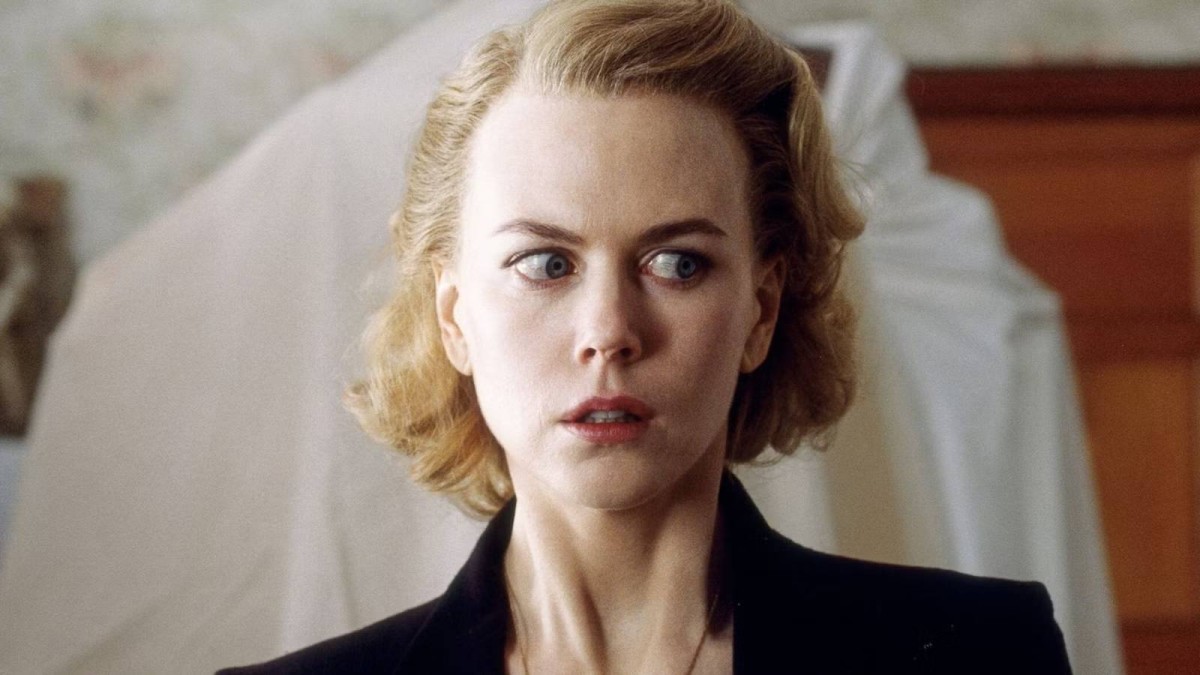
Nicole Kidman stars as Grace Stewart, a mother living in an isolated mansion on the island of Jersey shortly after World War II. Her two children suffer from a rare condition that makes exposure to sunlight potentially fatal, forcing the family to live in perpetual darkness.
When mysterious new servants arrive, strange occurrences begin to plague the house. Doors open unexpectedly, voices echo through empty rooms, and Grace becomes convinced that unseen intruders have entered the property.
The Others is particularly brilliant because it is so meticulously constructed. Amenábar carefully layers clues throughout the narrative while maintaining a constant sense of uncertainty. Unlike many supernatural movies of its era, it relies almost entirely on tension, atmosphere, and character rather than visual effects.
Kidman anchors the entire production with a remarkably nuanced performance. Grace is sympathetic, controlling, loving, and increasingly desperate all at once. Importantly, every revelation deepens that characterization rather than reducing her to a simple protagonist.
The Others’ famous twist is one of the most effective in supernatural cinema, not because it exists purely to surprise audiences, but because it fundamentally recontextualizes everything. The themes of grief, denial, and acceptance that drive the entire narrative forward are instantly reconfigured into something even more potent.
Curse Of The Demon (1957)
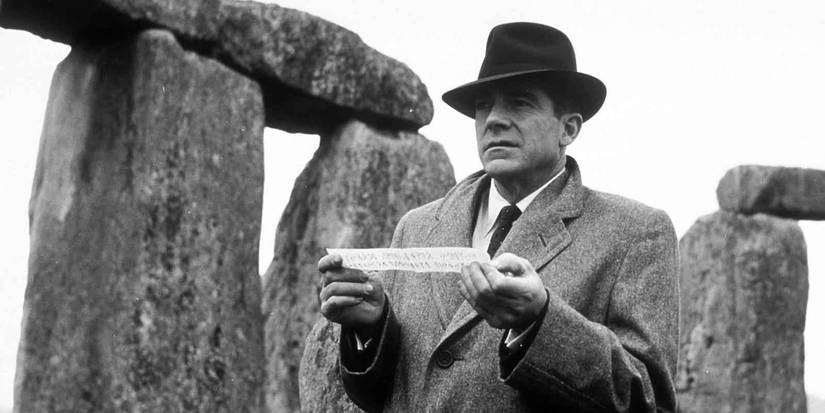
Jacques Tourneur's Curse of the Demon (released outside the US as Night of the Demon) demonstrates how much suspense can be generated through suggestion. Based loosely on M.R. James' story Casting the Runes, it depicts American psychologist Dr. John Holden, who travels to England to investigate occult leader Julian Karswell.
Holden is a committed skeptic who dismisses supernatural claims as fraud. However, after receiving a cursed parchment from Karswell, he learns that several previous victims have died under mysterious circumstances. The rational explanations he depends upon gradually become more difficult to maintain.
Dana Andrews gives Holden a compelling sense of stubborn intelligence. He refuses to accept supernatural explanations even as mounting evidence suggests he may be wrong. That conflict between skepticism and belief forms the foundation of the movie's suspense.
Tourneur had previously directed Cat People, another masterpiece built around ambiguity, and he brings a similar approach here. Although Curse of the Demon famously reveals its titular demon more explicitly than Tourneur preferred, the strongest sequences rely on atmosphere rather than creature effects.
The forest séance, the windy nighttime encounters, and Holden's growing panic create a constant sense of unease. Decades later, Curse of the Demon remains one of the finest examples of supernatural suspense, proving that psychological tension can be every bit as compelling as outright horror.
November (2017)
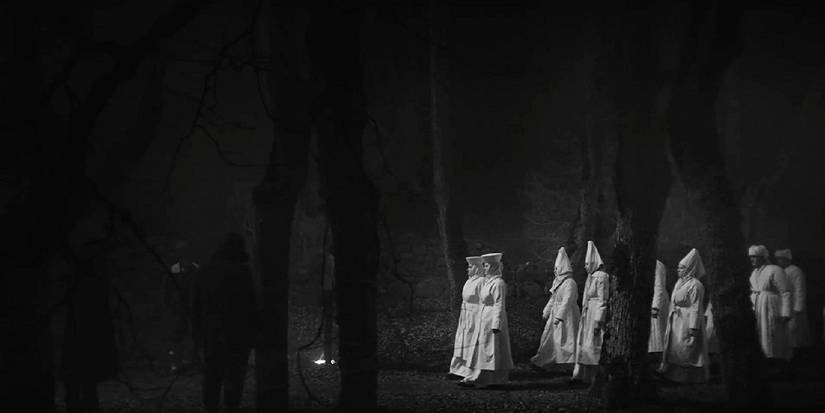
Rainer Sarnet's November is one of the most visually distinctive supernatural films of the 21st century. Set in a mythological version of rural Estonia, it blends folklore, fantasy, romance, and supernatural intrigue into something unlike almost anything else ever put to film.
The story follows Liina, a young woman hopelessly in love with village boy Hans. Unfortunately, Hans is obsessed with a visiting German noblewoman, creating a tragic romantic triangle. Around them exists a world populated by ghosts, werewolves, witches, devils, and bizarre creatures known as kratts, magical servants assembled from scraps and animated through bargains with infernal forces.
Despite these fantastical elements, November functions largely as a supernatural thriller. Every interaction is shaped by secrets, deception, and hidden motivations. The mythology constantly creates uncertainty about what characters are capable of and what consequences their actions may unleash.
Mart Taniel's stark black-and-white cinematography is astonishing, particularly the scenes filmed in infra-red. Every frame resembles a gothic fairy tale brought to life through photography rather than special effects. Its imagery feels simultaneously ancient and dreamlike, which is bolstered notably by the folk-inspired electroacoustic score.
November flourishes because it’s willing to embrace the strange. Rather than simplifying Estonian folklore for international audiences, Sarnet immerses viewers completely in its logic. It’s a haunting, beautiful, and deeply original supernatural thriller that rewards repeated viewings.
The Sixth Sense (1999)

Few supernatural thrillers have had a greater cultural impact than M. Night Shyamalan's The Sixth Sense. While its famous twist has become legendary, reducing the movie to that single revelation undersells just how masterfully constructed it actually is.
Bruce Willis stars as child psychologist Malcolm Crowe, who begins treating Cole Sear, a troubled young boy played by Haley Joel Osment. Cole eventually reveals the source of his fear: he can see dead people. These spirits appear as ordinary individuals at first, only revealing the traumatic circumstances of their deaths over time.
Osment's performance is extraordinary. He conveys terror, loneliness, and vulnerability without ever making Cole feel like a conventional horror protagonist. His scenes with Toni Collette, who plays his mother Lynn, provide several emotionally devastating moments.
Shyamalan approaches the supernatural with remarkable restraint. The ghosts are frightening, but they are not the true focus of the story. Instead, The Sixth Sense examines communication, grief, regret, and the need for human connection.
The famous twist works because it serves the narrative rather than dominating it. Once revealed, it enhances the emotional journeys of both Malcolm and Cole while completely explaining everything that came before, even things that didn't appear at first to even need explaining.
More than twenty-five years after its release, The Sixth Sense is still the gold standard for supernatural thrillers. Its combination of emotional depth, meticulous storytelling, and atmospheric tension has rarely been matched.

Release Date August 6, 1999
Runtime 107 minutes
Producers Barry Mendel, Frank Marshall, Kathleen Kennedy
What's Your Reaction?
 Like
0
Like
0
 Dislike
0
Dislike
0
 Love
0
Love
0
 Funny
0
Funny
0
 Wow
0
Wow
0
 Sad
0
Sad
0
 Angry
0
Angry
0








Comments (0)