

8 Mistakes Beginners Make With Their First Prime Lens
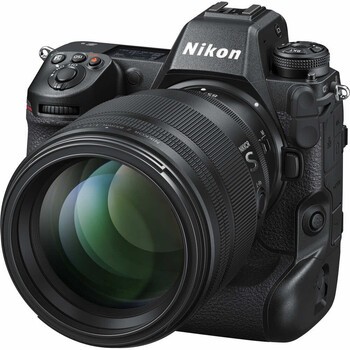
Your first prime lens, usually the classic 50mm f/1.8 "nifty fifty," is one of the best teaching tools in photography. It is small, sharp, inexpensive, and it forces good habits that a zoom never demands. But because it behaves so differently from the kit zoom most people start with, beginners tend to stumble in the same predictable ways, then blame the lens when the real issue is technique or expectation. Here are eight of the most common mistakes, each with a fix you can put to use immediately.
1. Shooting Everything Wide Open at f/1.8
The wide aperture is the headline feature, so the temptation is to leave the lens at f/1.8 all the time because the blurry background looks "pro." The problem is that at f/1.8 the depth of field is razor thin, so a group shot has one sharp person and two soft ones, a portrait lands on an eyelash instead of the eye, and most lenses are not even at their sharpest wide open.
The fix: Treat f/1.8 as one option, not the default. Open up wide when you genuinely want maximum subject separation in good control, but stop down to f/2.8, f/4, or f/5.6 when you need more of the scene sharp or a safer margin for focus. Let the situation choose the aperture.
2. Thinking the Lens Is "Soft" When It Is Missed Focus
A very common complaint about a first prime is that it seems soft, when in reality the focus simply landed in the wrong place. At f/1.8, the slice of sharpness is so shallow that a tiny sway forward or back, by you or your subject, shifts it off the eyes entirely. The lens is sharp; the focus missed.
The fix: Use a single autofocus point or eye-detection autofocus rather than letting the camera choose, and place it deliberately on the eye. If you tend to focus and then lean in to recompose, that small shift is enough to ruin it at wide apertures, so refocus after moving. Take a quick burst of two or three frames when shooting wide open, since small movements by you or your subject can shift the plane of focus between shots. A burst will not fix bad autofocus placement, but it increases your odds when everything else is close, and reviewing at 100 percent occasionally confirms you are actually nailing focus.
3. Not Understanding the Crop-Factor Field of View
A 50mm lens does not give the same view on every camera. On a full frame body it is a natural, normal-looking focal length that most people find easy to work with. On an APS-C body, the crop factor makes that same 50mm behave like roughly a 75mm to 80mm lens, noticeably tighter. Beginners on crop-sensor cameras often find their nifty fifty frustratingly cramped indoors and assume they did something wrong.
The fix: Learn what your lens actually does on your sensor. On APS-C, a 50mm is really more of a portrait lens than a walkaround lens, since you have to back up to fit much in, which is hard in a small room. If you want that natural, normal field of view on a crop body, look in the 30mm to 35mm range. A 35mm lens, or an APS-C-specific option like the Sigma 30mm f/1.4 DC DN, gets you much closer to the full frame 50mm experience.
4. Standing Still Instead of Moving Your Feet
With a zoom, you frame by twisting a ring while planted in one spot. A prime does not let you do that, and beginners often respond by simply shooting whatever the lens happens to frame from where they are standing, producing flat, samey compositions.
The fix: Zoom with your feet. Step closer to fill the frame, back up to include more, crouch or shift to one side to change the relationship between subject and background. Just remember that moving is not the same as zooming, since changing your distance also changes perspective, so watch how the background grows, shrinks, or shifts behind your subject as you move. This constraint is the whole point of a prime: it makes you move, and moving is what teaches you composition. The lens that "cannot zoom" ends up improving your eye faster than a zoom would.
5. Fixating on Bokeh Instead of the Photo
The creamy background blur is seductive, and many beginners get so fixated on producing the most melted background possible that they forget to make a good photograph. Bokeh is a flavor, not a meal. A blurry background behind a weak, poorly composed, or poorly lit subject is still a weak photo.
The fix: Put the content first, the light, the moment, the composition, the expression, and treat background blur as one tool that serves the image rather than the reason for taking it. Some of the strongest images with a prime are stopped down with plenty in focus. Chase the picture, not the blur.
6. Never Stopping Down When the Shot Needs It
The flip side of the wide-open habit: some beginners are so attached to shallow depth of field that they refuse to stop down even when the scene clearly calls for it, like a landscape, a group, or an environmental shot where context matters. The result is a frame where most of what mattered is an unusable blur.
The fix: Match the aperture to the intent. When you want more of the scene sharp, stop down to f/5.6, f/8, or f/11 and focus carefully. Many primes perform beautifully in the middle of their aperture range, which is where a lot of everyday photography actually lives. A fast prime is not just for shooting wide open; it is often at its best when you stop treating maximum aperture as the whole point.
7. Struggling With Autofocus in Low Light
A bright prime lens is a low-light favorite, but beginners often find the autofocus hunting and failing to lock in dim conditions, then conclude the lens is bad. Autofocus needs contrast to work, and a dim, flat, low-contrast subject gives it nothing to grab.
The fix: Aim your focus point at an area with contrast on the same plane as the detail you need sharp: an eye, an eyebrow, a catchlight, a collar edge, a lit rim, or a bold pattern. Avoid large focus-and-recompose movements at f/1.8, since the shift can move the focus plane off your subject. Use eye detection, a movable AF point, tracking autofocus, or manual focus with magnification when the light gets especially difficult. Finding or adding a little light also helps, like positioning your subject near a window or a streetlamp, to give the system something to lock onto.
8. Expecting a Prime to Do Everything a Zoom Does
Finally, some beginners get frustrated that the single focal length cannot cover a wide scene and a distant subject the way their kit zoom did, and they conclude the prime is limiting. It is, by design, and that is also its gift, but only if you accept the tradeoff rather than fight it.
The fix: Use the prime for what it is best at, deliberate, considered shooting where its speed, sharpness, and discipline shine, and keep your zoom for situations that genuinely demand range, like travel days or events where you cannot move freely. Many photographers carry one fast prime and one versatile zoom for exactly this reason. The prime is not a worse zoom; it is a different tool that rewards a different way of working.
The Pattern Behind All of These
Almost every one of these mistakes comes from treating a prime like a zoom, or treating its signature feature, the wide aperture, as the only reason to use it. The lens rewards the opposite mindset: move your feet, choose your aperture for the shot rather than the look, focus with care, and let the single focal length sharpen your eye. Used that way, an inexpensive first prime lens teaches more about photography than almost any other piece of gear, which is exactly why so many professionals still keep one in the bag.
The classic starting points remain the affordable f/1.8 primes nearly every brand makes, like the Canon RF 50mm f/1.8 STM and the Sony FE 50mm f/1.8. Nikon shooters can choose between the premium Nikon Z 50mm f/1.8 S and the smaller, cheaper Nikkor Z 40mm f/2, which makes a lovely first prime in its own right.
To build the fundamentals these mistakes all point back to, Photography 101 covers aperture, focus, and exposure from the ground up, and The Well-Rounded Photographer: 8 Instructors Teach 8 Genres of Photography shows how working photographers put a simple kit to use across very different kinds of shooting. And since a first prime so often becomes a portrait lens, especially on a crop sensor, The Art Behind the Headshot is a natural next step for putting that fast glass to work on people.
What's Your Reaction?
 Like
0
Like
0
 Dislike
0
Dislike
0
 Love
0
Love
0
 Funny
0
Funny
0
 Wow
0
Wow
0
 Sad
0
Sad
0
 Angry
0
Angry
0








Comments (0)