

A Camera Trap Just Caught One of India's Rarest Cats
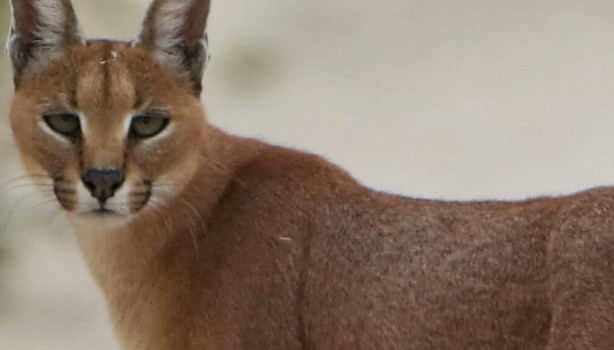
Two camera traps in Madhya Pradesh's Kuno National Park caught a lean, long-legged wildcat with black-tufted ears moving at night. The animal was a caracal, one of the least-seen wild cats in India, recorded in the same landscape where the country's cheetah reintroduction project is running.
As Mongabay India reports, the frame confirms the species is present in Kuno, but the people who study it are being careful about what that does and does not mean. The record confirms the species' presence, yet experts warn that a single camera-trap image cannot establish a resident population. Kuno's field director, Uttam Kumar Sharma, said this was the first record of the cat in the four years he has been at the park, and the forest department is now checking older files to see whether caracals had ever turned up in Kuno or nearby.
Shekhar Kolipaka, who has studied caracal distribution in India and works as a senior landscape developer at the Commonland Foundation, put the caution plainly. "A single camera-trap photograph confirms the presence of a caracal, but does not indicate the existence of a resident population," Kolipaka said in a written response to the outlet. He noted that young adult cats naturally disperse from where they were born to find their own territory, and that males in particular travel long distances, crossing rivers, farmland, villages, roads, and railway lines. Continued monitoring, he said, is what will show whether the animal in the photo settles down or keeps moving through.
The story is a clean example of why camera traps do the heavy lifting on species like this. A caracal is nocturnal and shy, so you can spend years in the field and never see one from a vehicle. Motion-triggered cameras record rare animals without disturbing them, and in a case this thin on evidence, they are often the only proof a species is even there.
The background explains why the sighting drew so much attention. The caracal is protected under Schedule I of India's Wildlife (Protection) Act, 1972, the highest level of protection, and while the IUCN lists it as least concern globally, it is treated as near threatened within India. There is no official population estimate for the country. Widely repeated figures of around 50 individuals are unverified, and a 2020 study found the cat's Indian range had shrunk by roughly 96 percent from pre-1947 levels, leaving it concentrated in parts of Rajasthan, Gujarat, and Madhya Pradesh. Recent confirmed records elsewhere have been rare and often accidental, including a chance capture on tiger-focused cameras in Rajasthan's Mukundra Hills and radio-collar and camera work near the India-Pakistan border in Jaisalmer.
Sharma also tied the record to changes in Kuno since the cheetah work began, saying water availability has increased and grasslands have improved, with what he called a possible simple correlation between that habitat recovery and the cat showing up. Madhya Pradesh Chief Minister Mohan Yadav made a similar point in a social media post, arguing the cheetah project aims to protect other wildlife and their habitats, not just cheetahs. That framing is optimistic, and the researchers closest to the caracal would rather see more fieldwork first. The forest department's next move is the concrete one to watch: going back through old records and adding monitoring around the spot where the cameras fired, to learn whether this was a lone wanderer or a sign of something living there.
Lead image by Derek Keats, CC BY 2.0, via Wikimedia Commons.
What's Your Reaction?
 Like
0
Like
0
 Dislike
0
Dislike
0
 Love
0
Love
0
 Funny
0
Funny
0
 Wow
0
Wow
0
 Sad
0
Sad
0
 Angry
0
Angry
0












_(cropped).jpg)
Comments (0)