

Alienware 16X Aurora review: A thoroughly competent gaming laptop
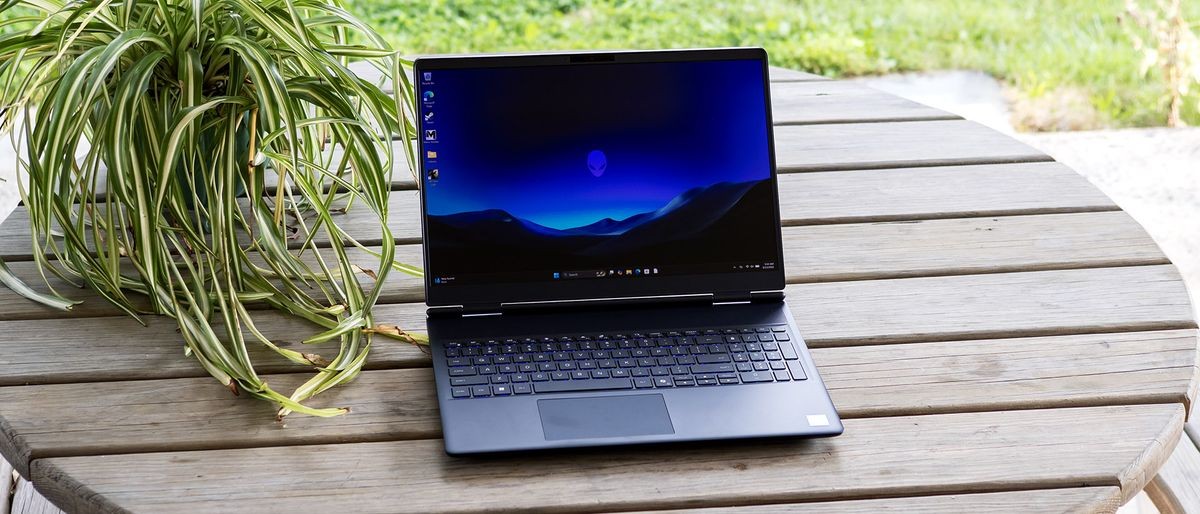
The Alienware 16X Aurora is a capable, well-rounded gaming laptop with a standout OLED display, strong productivity performance, and good build quality, though its weight and middling battery life make it better suited to desk duty than daily travel.
Pros
- +
Excellent 16-inch OLED display
- +
Solid gaming and productivity performance
- +
Sturdy, understated design
- +
Broad port selection
- +
Good upgrade prospects
Cons
- -
Heavy, desktop-replacement feel
- -
Middling battery life
- -
Dim single-zone keyboard backlight
Why you can trust Tom's Hardware Our expert reviewers spend hours testing and comparing products and services so you can choose the best for you. Find out more about how we test.
Alienware’s 16X Aurora (starts at $1,979.99) isn’t just another spec-sheet powerhouse – it’s a statement in restraint. Alienware has shifted toward performance-first minimalism with a cleaner, RGB-free chassis, but it doesn’t compromise on the specs: a 16-inch OLED display running at a blistering 240 Hz, Intel’s Core Ultra HX-series CPU, and Nvidia’s latest RTX 50-series graphics. While its bulk and limited battery life prevents it from being a great travel companion, the Aurora’s overall competence make it worth your attention.
Design of the Alienware 16X Aurora
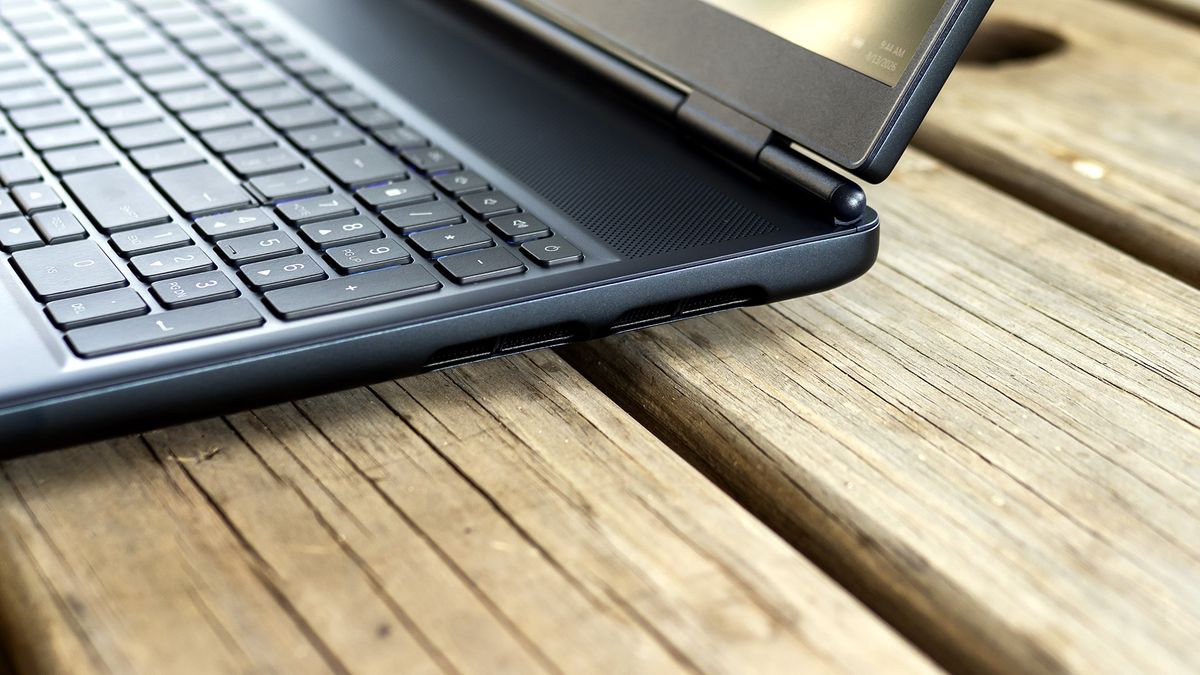
The Aurora is a discreet gaming laptop. Aside from its nearly inch-thick profile, it does little to distinguish itself. Alienware’s “interstellar indigo” chassis is plain, and the iconic Alien head on the lid is hard to see against it. Unlike many previous-generation Alienware laptops, this one has no external lighting.
Image 1 of 2
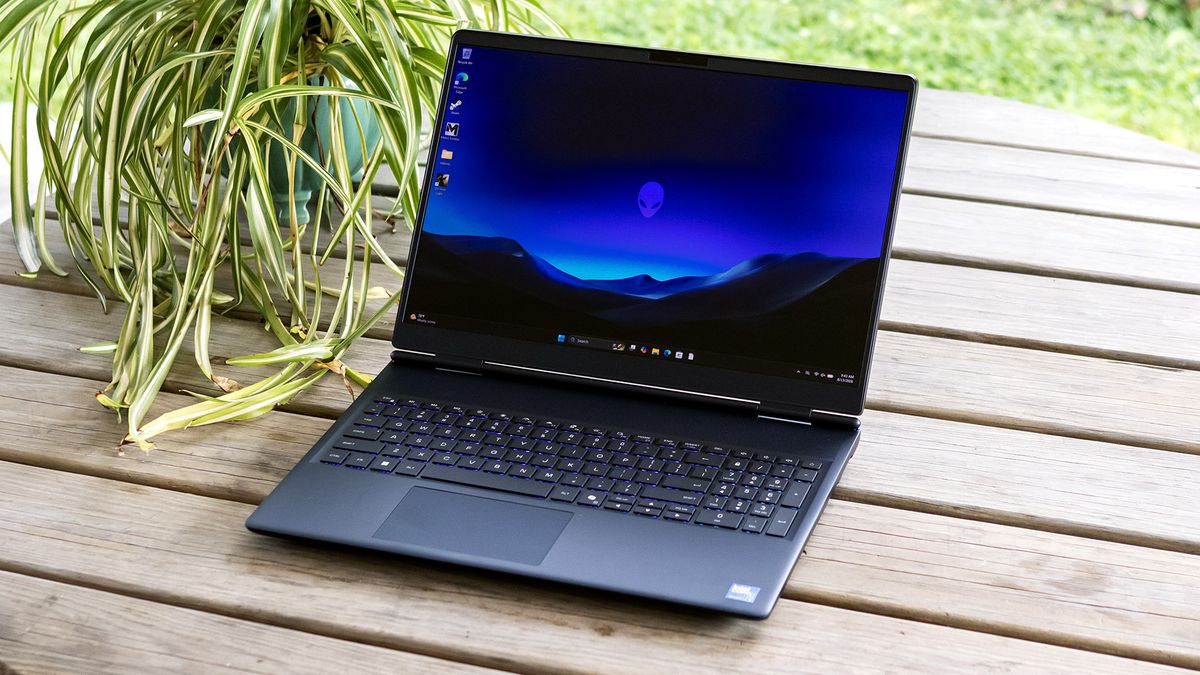
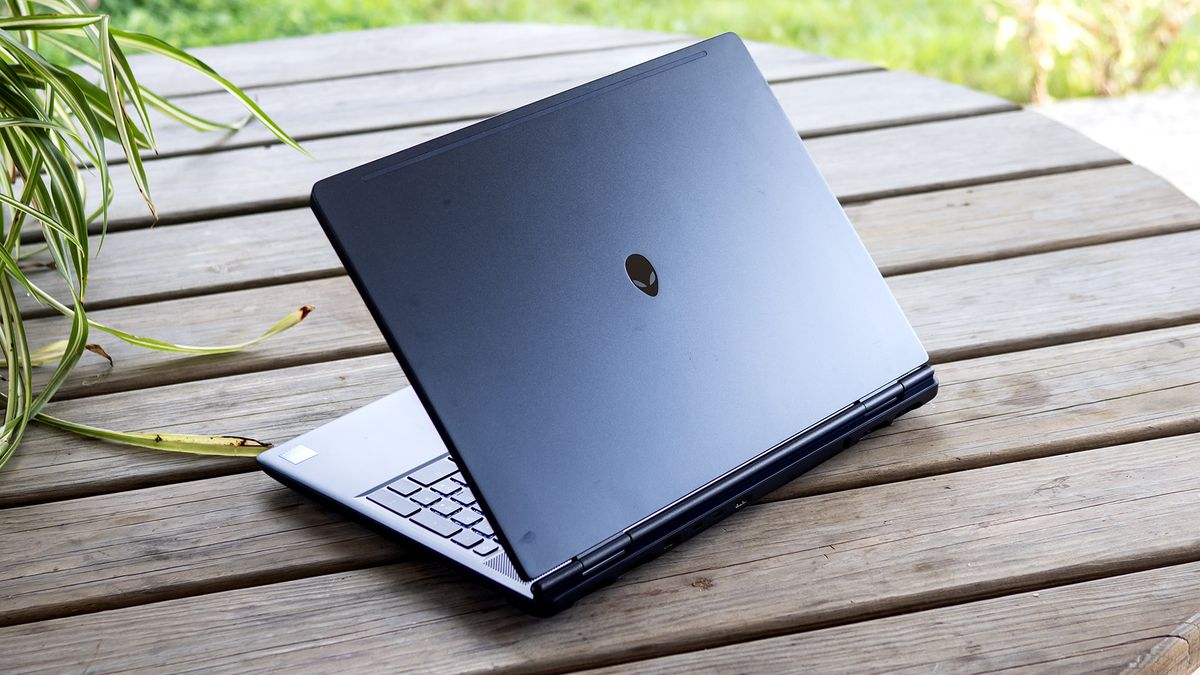
Alienware’s build quality is substantial, with aluminum top and bottom panels. A magnesium internal frame keeps the laptop rigid, though the lid can still be opened one-handed. Rounded edges on the bottom of the chassis make the Aurora comfortable to transport, though at 5.66 pounds, it’s a handful. Acer’s Nitro V 16S AI (4.55 pounds) and Gigabyte’s Aero X16 (4.2 pounds) are much lighter.
Latest Videos FromTom's Hardware
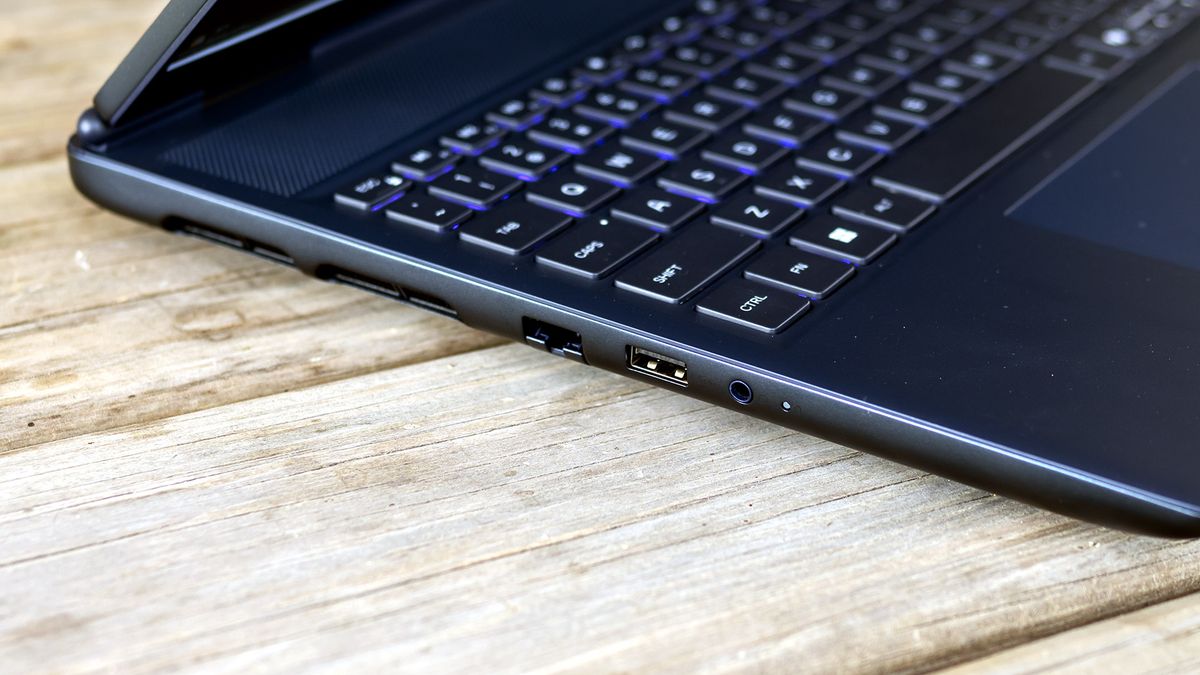
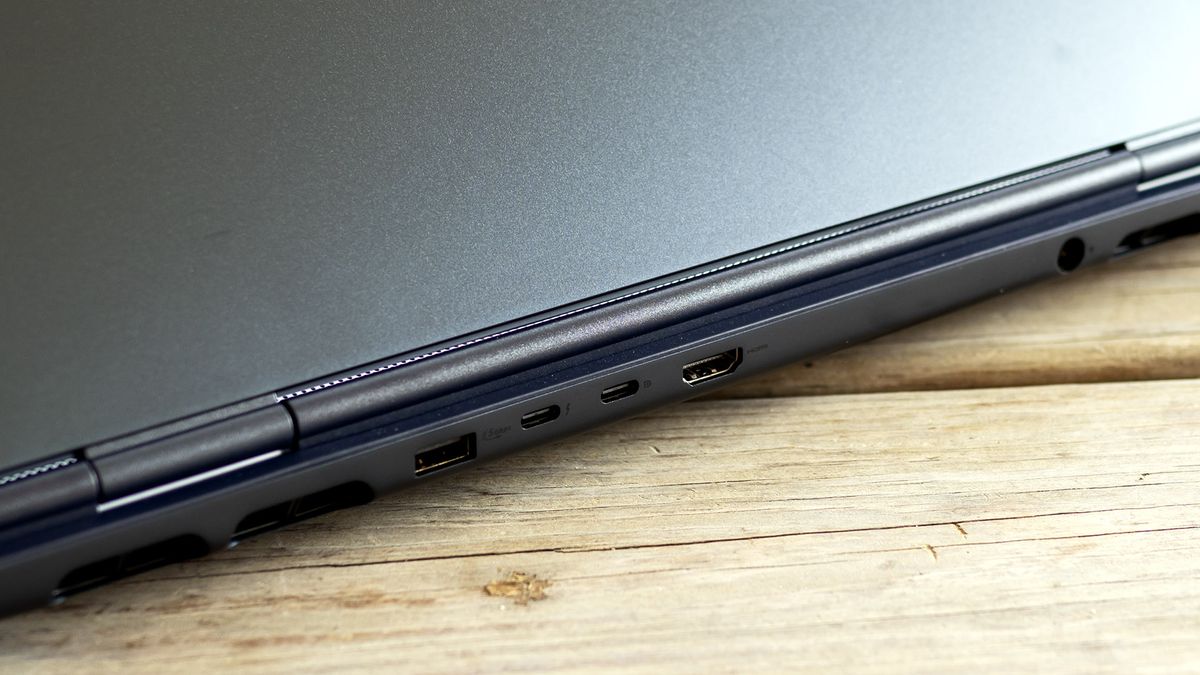
Alienware’s port selection spreads across the left and rear edges: Thunderbolt 4, USB-C (10 Gbps), two USB-A (5 Gbps), HDMI 2.1, Ethernet, and an audio jack. Having some connections on the back, particularly the barrel-style power connector, preserves mouse space. Internally, the Aurora includes Wi-Fi 7 courtesy of a MediaTek MT7925 card.
Image 1 of 3
Alienware 16X Aurora Specifications
Swipe to scroll horizontally
CPU |
Intel Core Ultra 7 270HX Plus |
Graphics |
Nvidia GeForce RTX 5060 (8GB GDDR7, 115 W, 1,455 MHz boost clock) |
Memory |
16GB DDR5-5600 (2x 8GB) |
Storage |
1TB PCIe 4.0 SSD (SanDisk SN7100S) |
Display |
16-inch, 2560 x 1600, OLED, 240 Hz, Nvidia G-Sync |
Networking |
MediaTek Wi-Fi 7 MT7925, Bluetooth 6 |
Ports |
2x USB-A (5 Gbps), USB-C (10Gbps), Thunderbolt 4, HDMI 2.1, universal audio jack, Ethernet |
Camera |
1080p IR |
Battery |
96 Whr |
Power Adapter |
180 W (barrel connector) |
Operating System |
Windows 11 Home |
Dimensions (WxDxH) |
14.05 x 10.45 x 0.92 inches (357 x 265 x 24 mm) |
Weight |
5.66 pounds (2.57 kg) |
Price (as configured) |
$2,279.99 |
Gaming and Graphics on the Alienware 16X Aurora
We tested the 16X Aurora in its entry-level configuration, featuring a Core Ultra 7 270HX Plus processor, a GeForce RTX 5060 GPU, and 16GB of dual-channel DDR5-5600 RAM.
I saw between 60 and 70 frames per second (fps) playing 007 First Light at 2560 x 1600 with medium settings and DLSS (but not frame generation). The game ran smoothly and didn’t stutter.
For performance comparisons, the Aurora faced the Acer Nitro V 16S AI (Ryzen 7 260, RTX 5060 85 W, $1,299.99 when tested), the Asus TUF Gaming F16 (Core i7-14650HX, RTX 5050 115 W, $1,199.99), and the Gigabyte Aero X16 (Ryzen AI 7 350, RTX 5070 85 W, $1,899.99).
Stay On the Cutting Edge: Get the Tom's Hardware Newsletter
Get Tom's Hardware's best news and in-depth reviews, straight to your inbox.
Our comparisons will focus on the 1920 x 1080 resolution. We also included results at each laptop's native resolution: 2560 x 1600 for our Aurora as well as the Gigabyte Aero X16, and 1920 x 1200 for the Acer Nitro and Asus TUF units.
Image 1 of 5
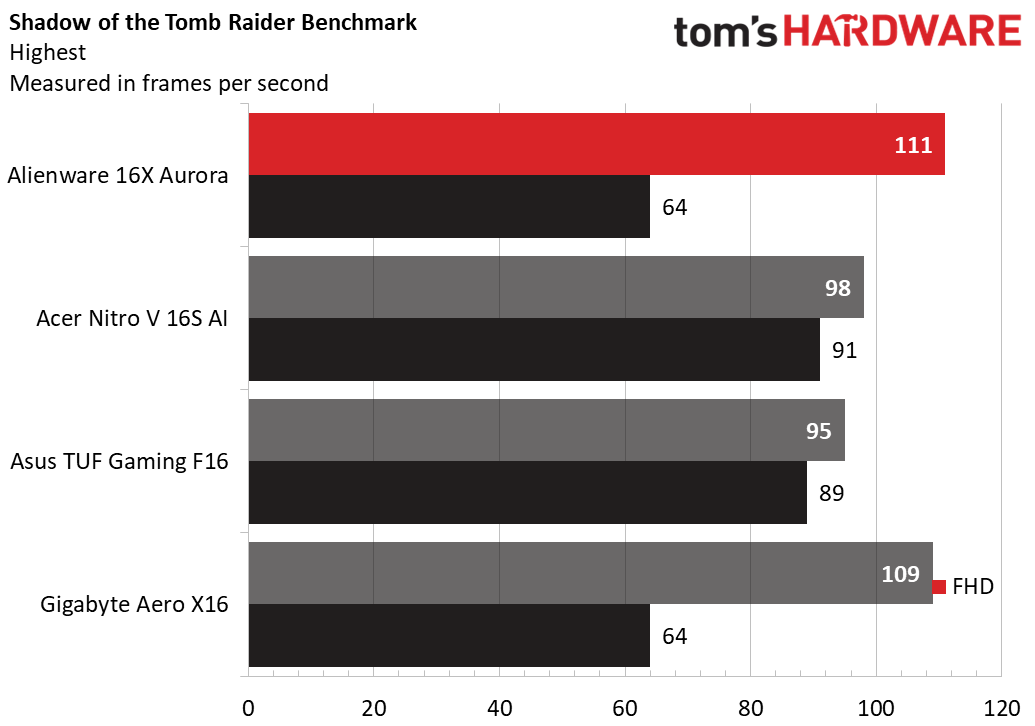
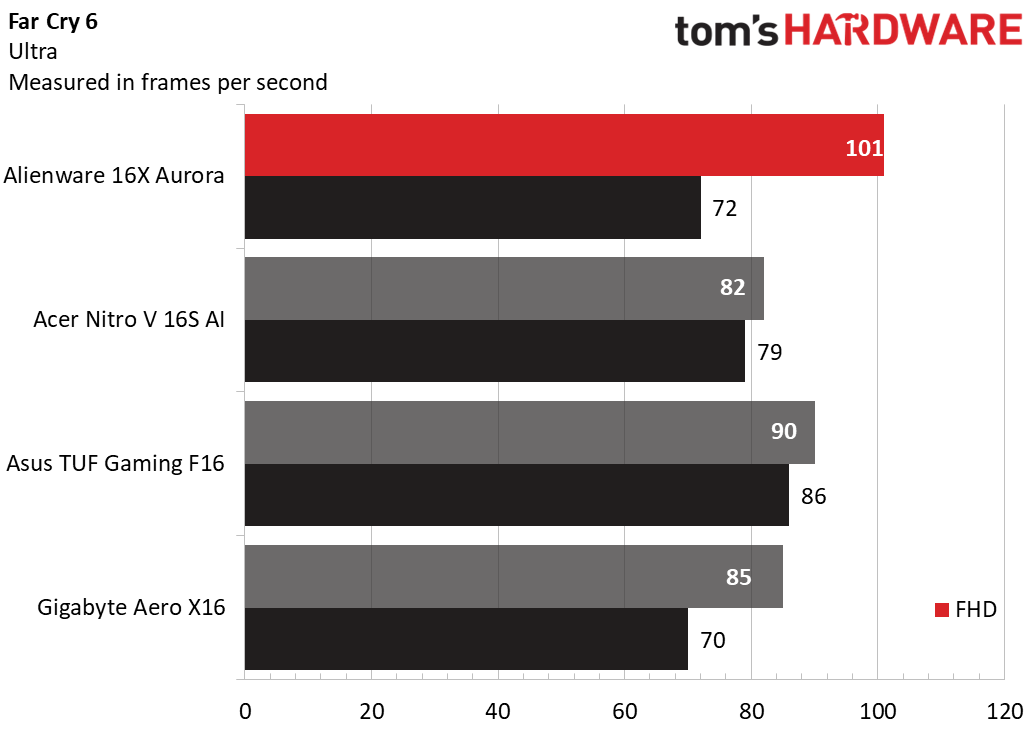
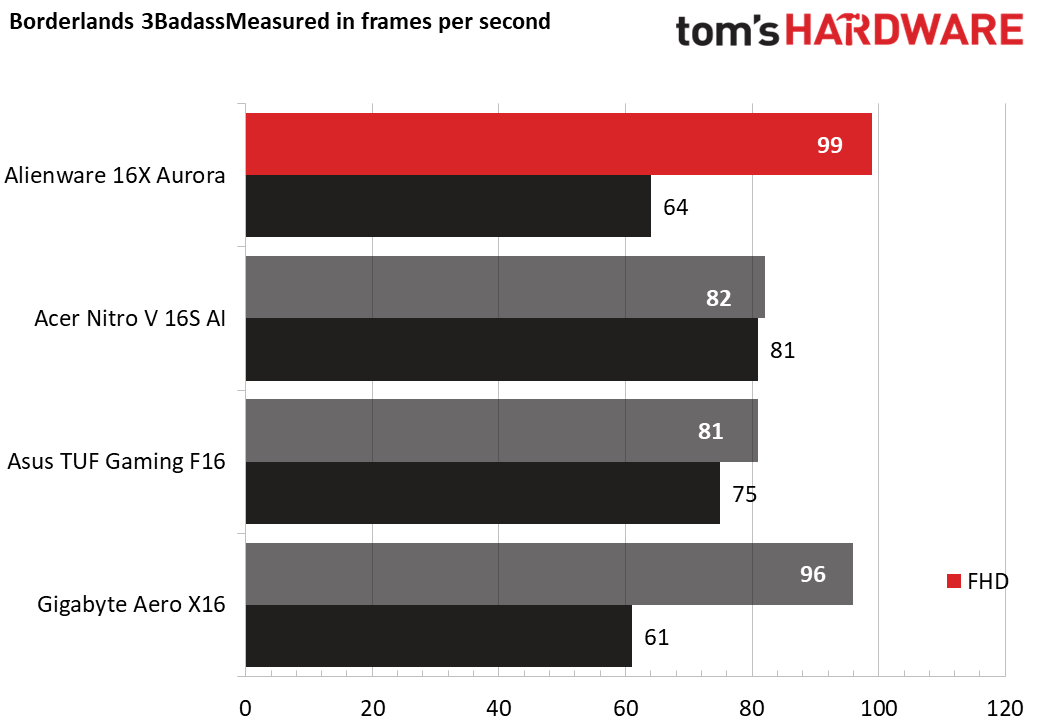
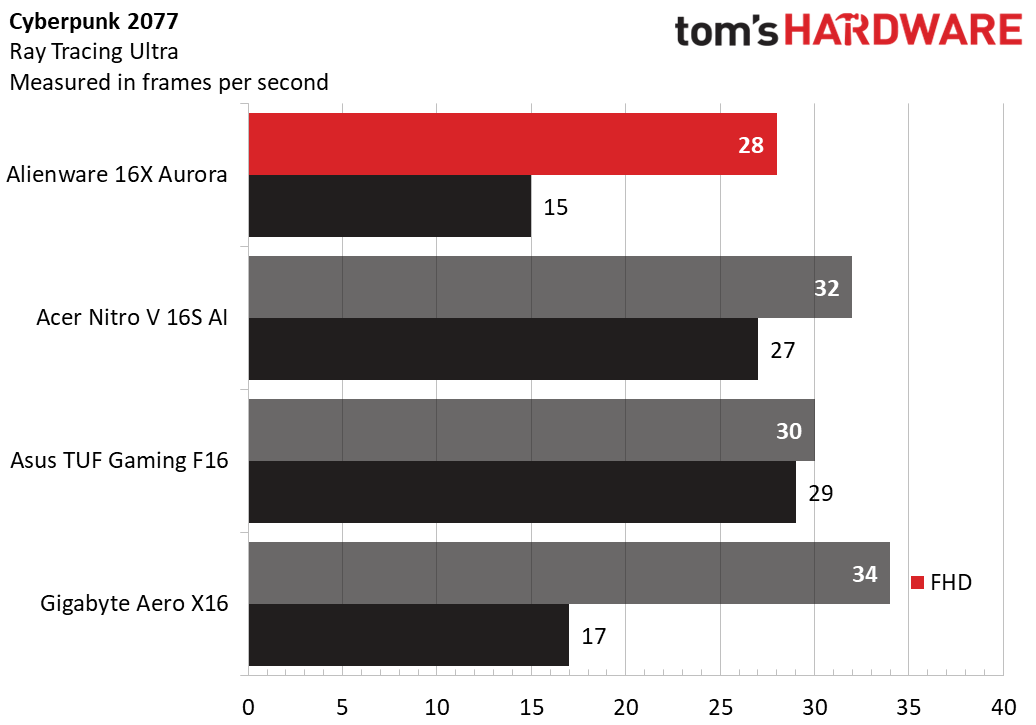
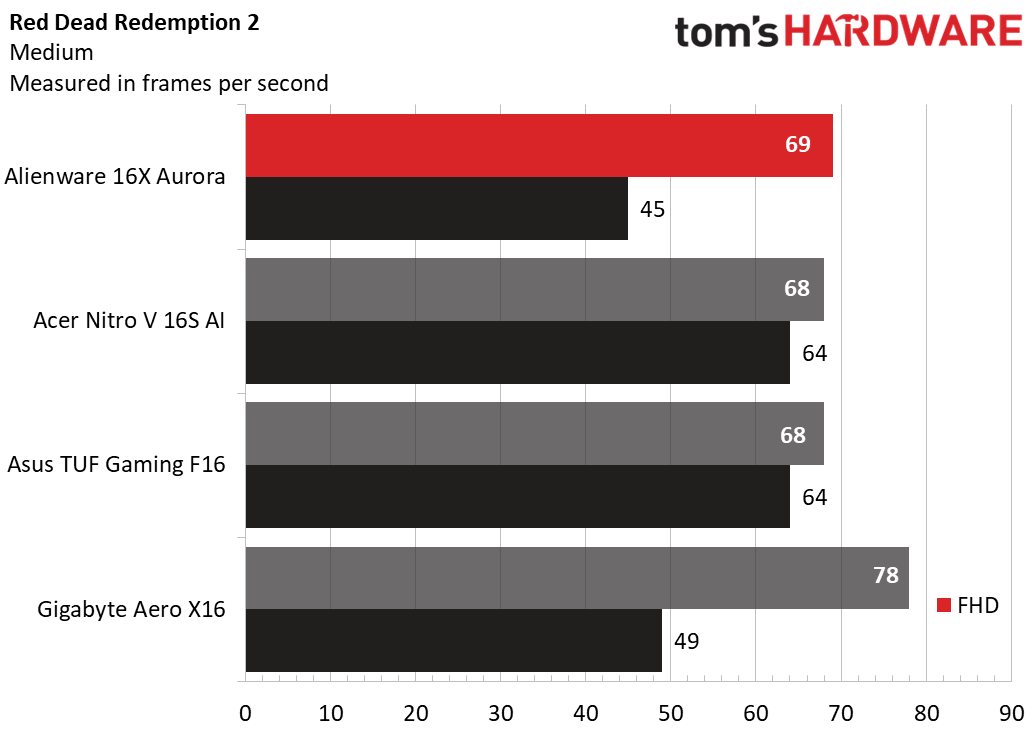
The Aurora 16X is competitive but doesn't stand out in this group. In Shadow of the Tomb Raider, Far Cry 6, and Borderlands 3, it performed 20 to 25% better than the RTX 5060-powered Acer and RTX 5050-powered Asus, but those two surprisingly did better in Cyberpunk 2077 and matched the Aurora in Red Dead Redemption 2.
The Aurora produced varied results against the RTX 5070-powered Gigabyte; While the Aurora took a sizable lead in Far Cry 6 and matched it in Shadow of the Tomb Raider and Borderlands 3, it fell behind in Cyberpunk 2077 and Borderlands 3.
At its 2560 x 1600 native resolution, the Aurora took a drastic performance hit of around 50% from 1080p – from 111 to 64 fps in Shadow of the Tomb Raider, 101 to 72 fps in Far Cry 6, 99 to 64 fps in Borderlands 3, 28 to 15 fps in Cyberpunk 2077, and 69 to 45 fps in Red Dead Redemption 2 – but, excepting Cyberpunk 2077, its performance remained playable.
To stress-test gaming laptops, we run 15 loops of the Metro Exodus benchmark at RTX settings, simulating about half an hour of gaming. The Aurora averaged 76 fps across all runs with no more than a fraction of one frame between runs. During the test, the Core Ultra 7 270HX Plus ran at 3.1 GHz on its P-cores and 2.5 GHz on its E-cores while the RTX 5060 ran at 2.48 GHz.
Productivity Performance on the Alienware 16X Aurora
Our Aurora 16X arrives with a Core Ultra 7 270HX Plus, 16GB of RAM, and 1TB PCIe 4.0 SSD.
Image 1 of 3
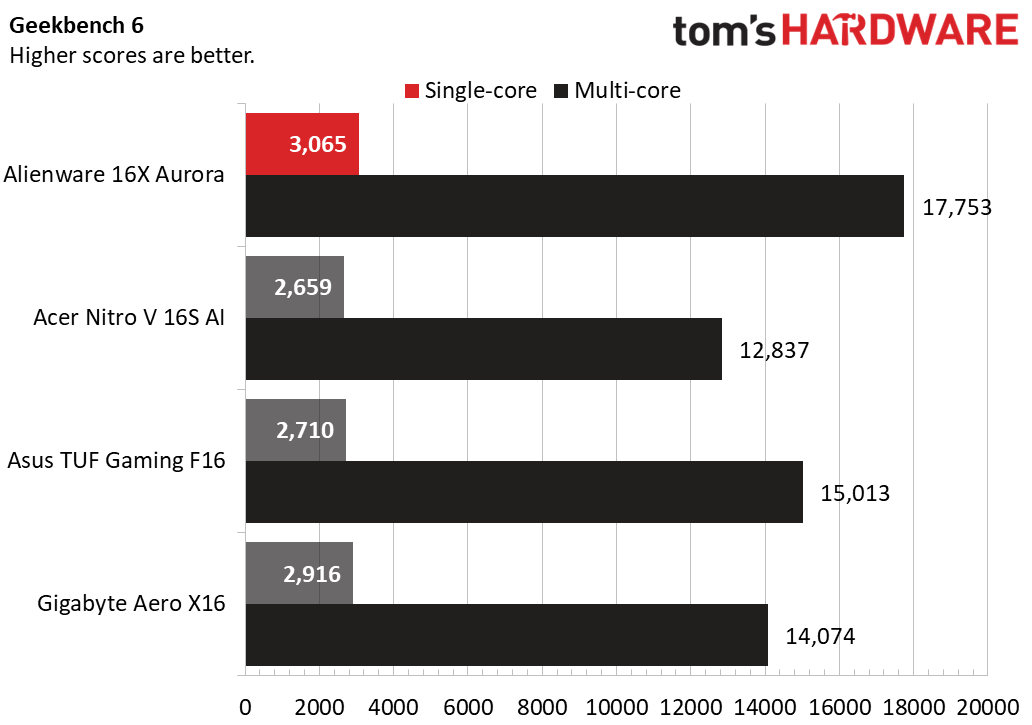
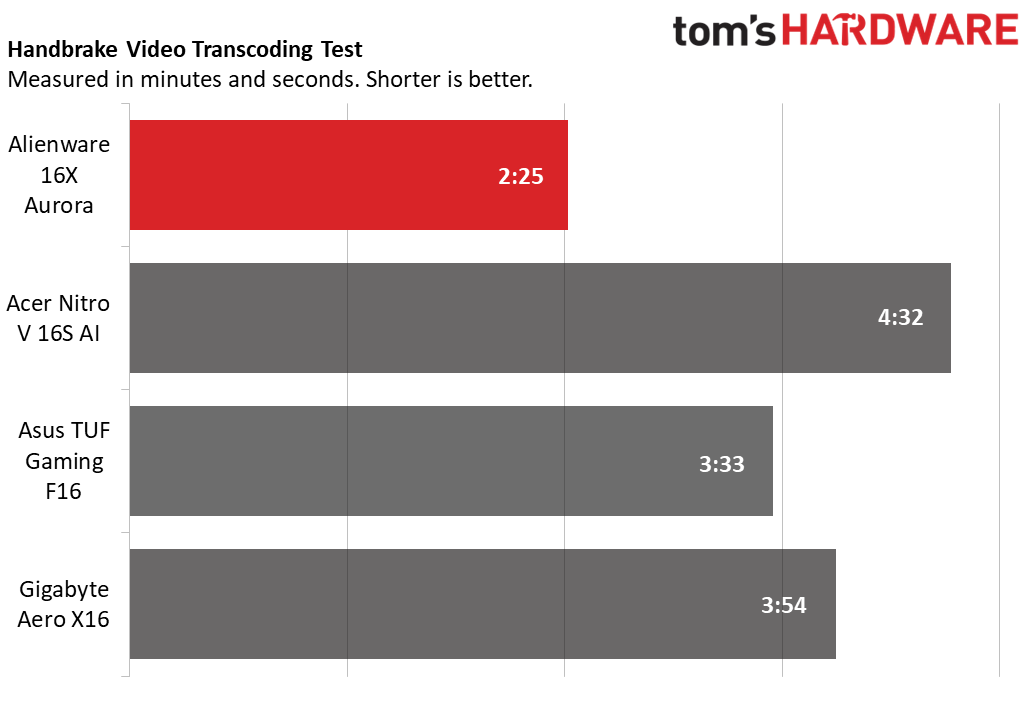
Powered by the Core Ultra 7 270HX Plus, the Aurora predictably outclassed these competitors, which all use previous-generation processors and/or lower-tier chips. In Geekbench 6, it took the top single-core (3,065) and multi-core (17,753) scores, distantly trailed by the Core i7-14650HX-powered Asus (2,710 and 15,013) and Ryzen AI 7 350-powered Gigabyte (2,916 and 14,074). It also clinched the leading time of 2 minutes and 25 seconds in our 4K-to-1080p Handbrake transcoding test, easily outdoing the Asus (3:33), Gigabyte (3:54), and Acer (4:32).
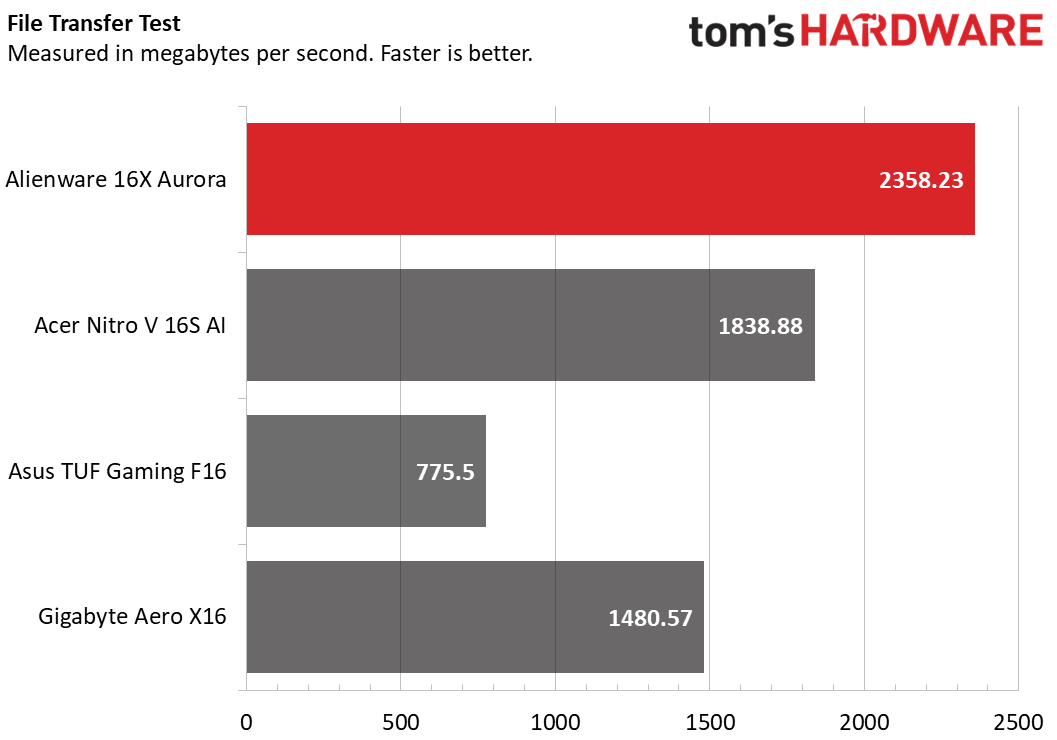
The Aurora also took top honors in our 25GB file transfer test, averaging 2,358.23 MBps. Acer’s Nitro V 16S AI (1,838.88 MBps), the next fastest unit, wasn’t even close.
Display on the Alienware 16X Aurora
All Aurora configurations include the same 16-inch OLED panel with a 2560 x 1600 resolution, 240 Hz refresh rate, and Nvidia G-Sync support. It’s the laptop’s standout feature, pairing the inky contrast expected from OLED with vivid color and unusually strong brightness for this panel type.
In 007 First Light, OLED added a level of depth that a lesser display wouldn’t match, giving shadow-heavy night scenes a richer, moodier look while keeping Malta’s sunlit desert environments bright and crisp. The panel’s sharpness and color also stood out while watching Avengers: Endgame, where fine details such as the nano-texture pattern on Iron Man’s suit were easy to pick out. There’s little to criticize here: the Aurora’s display is excellent.
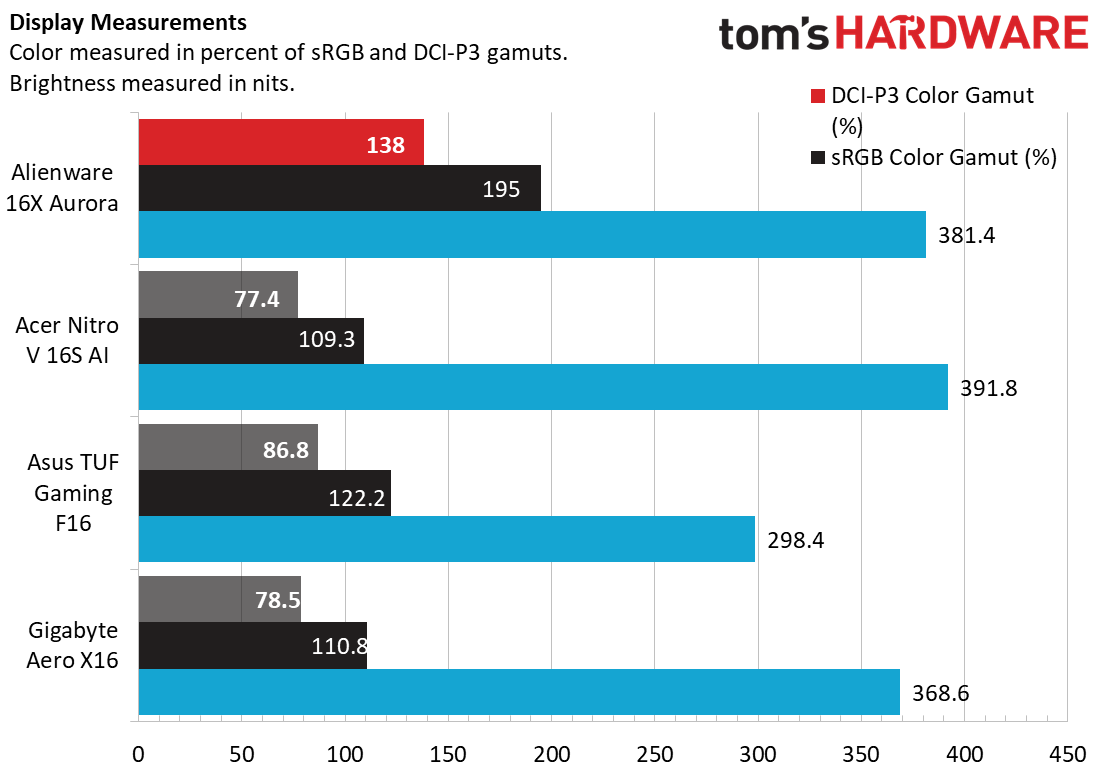
Our lab results back that up. The Aurora peaked at 381.4 nits, which is bright for OLED and nearly tied the IPS-equipped Acer Nitro V 16S AI at 391.8 nits while nudging past the Gigabyte Aero X16’s 368.6 nits. Color coverage was also impressive, reaching 138% of DCI-P3 and topping both the Asus TUF Gaming F16 at 122.2% and the Gigabyte at 110.8%.
Keyboard and Touchpad on the Alienware 16X Aurora
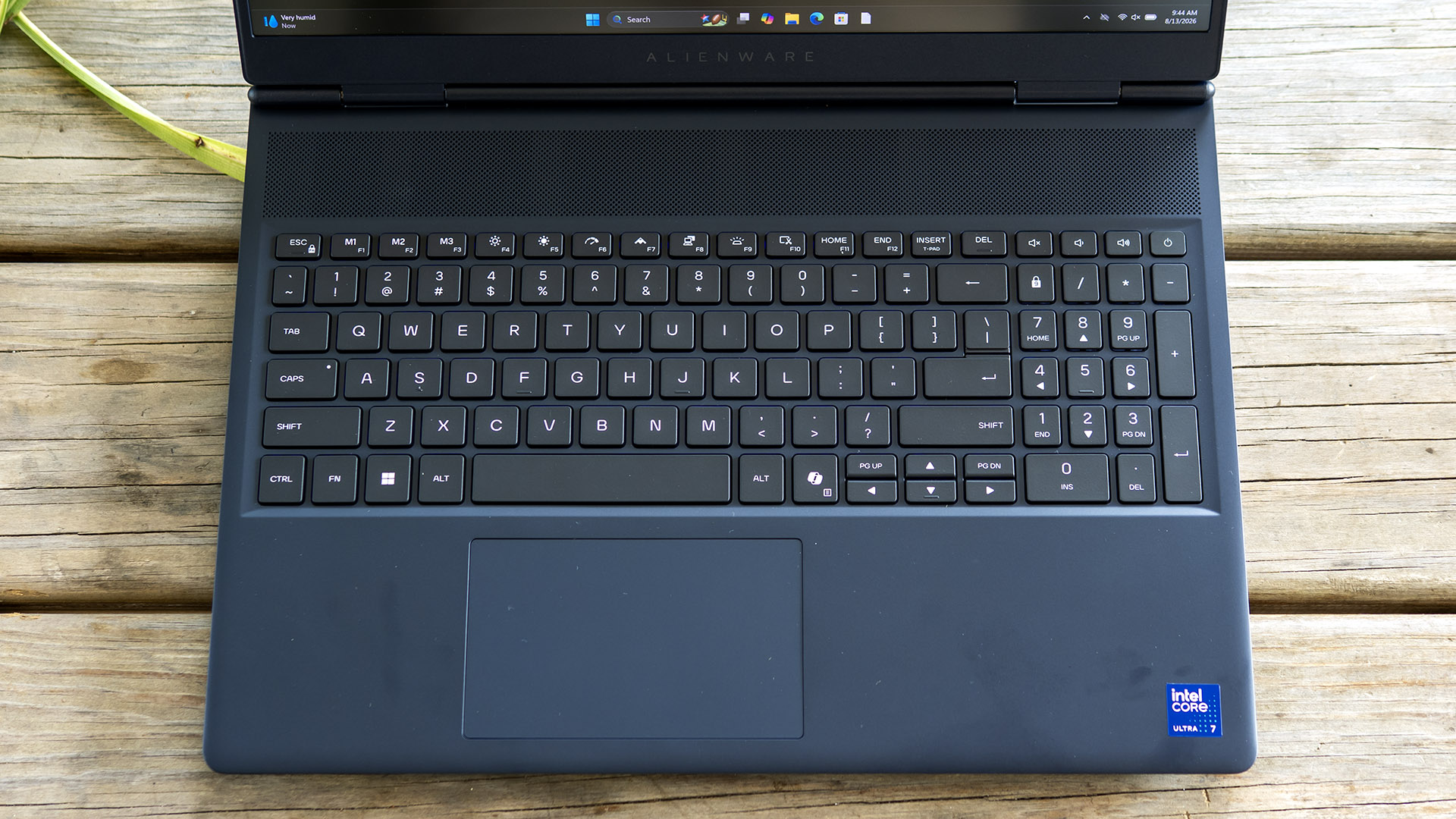
I nearly matched my personal best typing speed on the 16X Aurora, hitting 123 words per minute with 99% accuracy in the MonkeyType typing test. The keys have enough travel and a precise feel, but the overall typing experience is competent rather than memorable. The RGB backlighting only has one zone, and while Alienware Command Center offers effects such as breathing, morph, pulse, spectrum, and rainbow wave, the excitement is undermined by the lighting being too dim to stand out in a well-lit room.
The touchpad is similarly ordinary. It’s average-sized, with a smooth tracking surface and predictable top-hinged mechanical clicks, though those clicks are louder than I prefer.
Audio on the Alienware 16X Aurora
The Aurora’s speakers are serviceable but unremarkable. Their placement on the sides of the palm rest creates a decent stereo effect, and output is clean enough, with no obvious tinniness and adequate volume for personal listening. In Phil Collins’ “Don’t Lose My Number,” however, drum hits lacked low-end impact, even though vocals came through clearly and instrument separation was strong.
Movies and games fare better with the Dolby app’s Movie and Gaming modes since they boost the sense of surround sound and help the sound feel fuller, but the weak bass still holds back the overall experience.
Upgradeability of the Alienware 16X Aurora
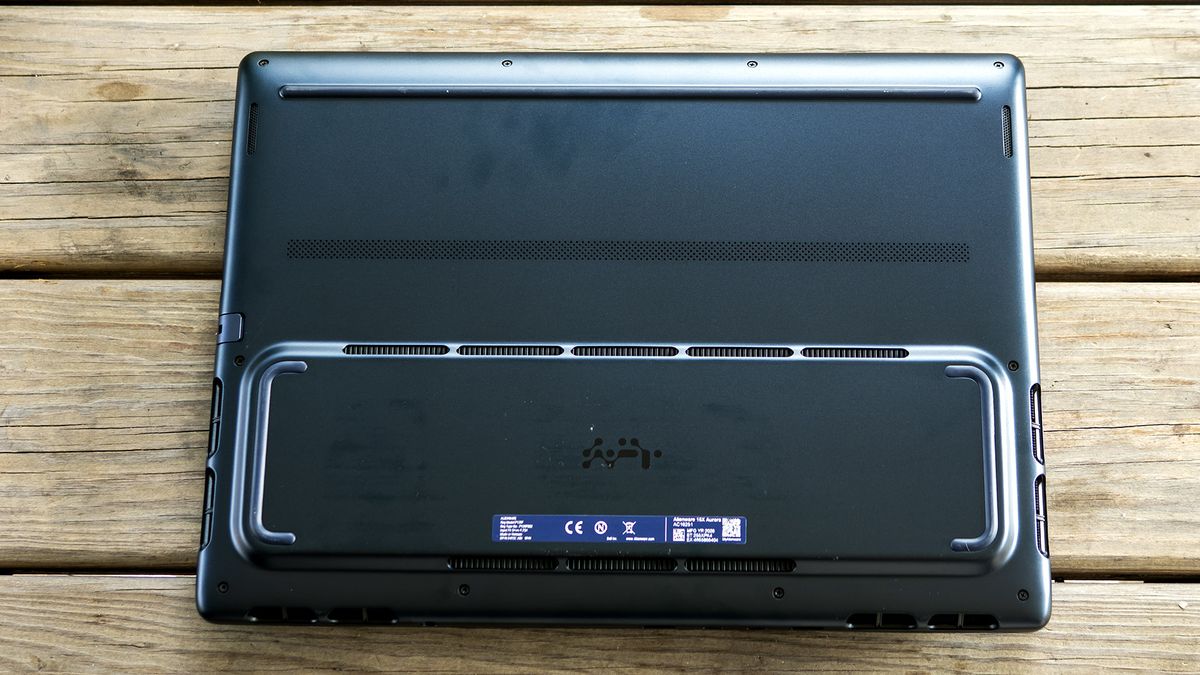
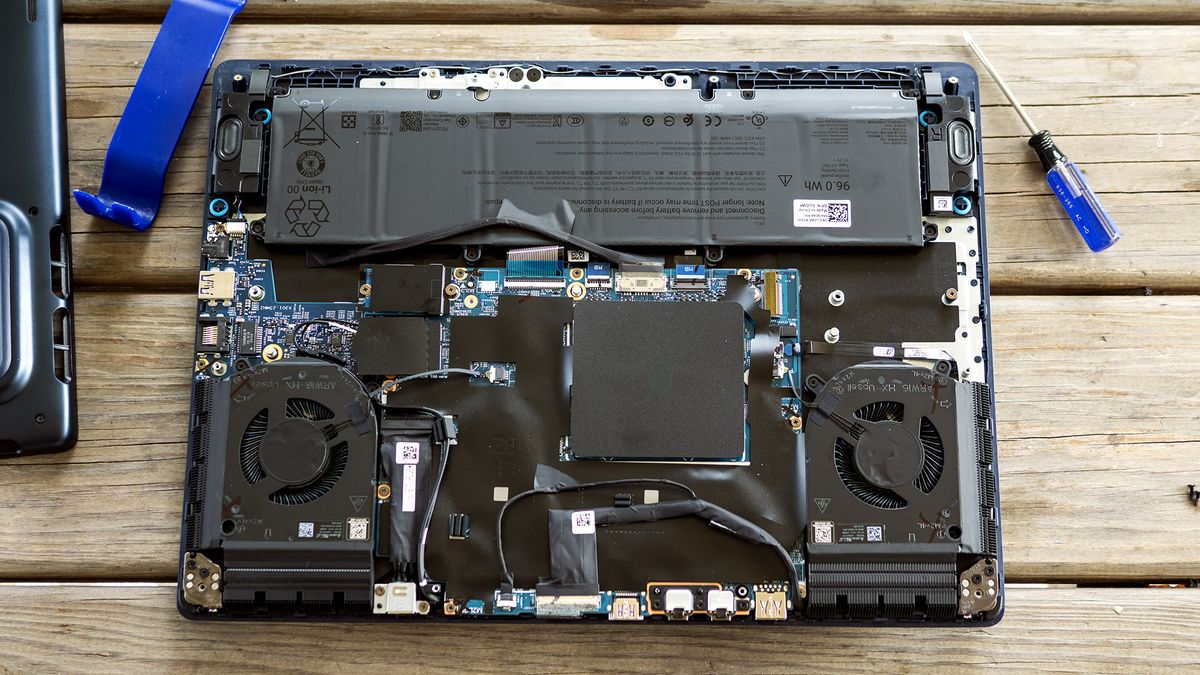
The Aurora is about as upgradeable as laptops get. Opening it up is mostly straightforward - undo the Philips-head screws in the bottom cover, then use a plastic pry tool to pop the clips around the edges. Not all the screws are the same size, and the rear corners are captive and don’t come out.
Upgrades include two DDR5 SO-DIMM slots under the square black shield between the cooling fans, two M.2 2280 drive slots, an M.2 2230 wireless card, and the 96 Whr battery.
Image 1 of 2
Battery Life on the Alienware 16X Aurora
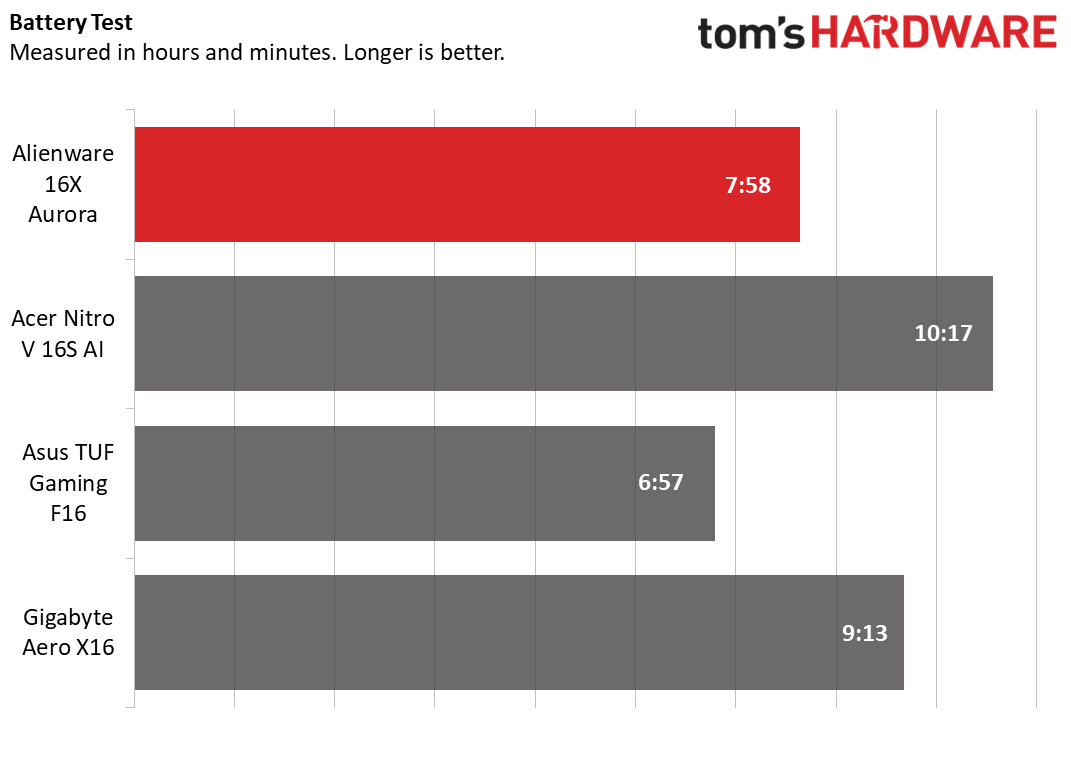
Our battery testing consists of web browsing, running OpenGL tests, and streaming videos with the screen at 150 nits while connected to Wi-Fi. The Aurora’s time of 7 hours and 58 minutes is middling, outlasting only the Asus (6:57). The Gigabyte (9:13) and the Acer (10:17) both lasted several hours longer.
Heat on the Alienware 16X Aurora
During our 15-loop Metro Exodus stress test, surface temperatures on the Aurora were 101 degrees Fahrenheit (F) between the G and H keys, 83 F on the touchpad, and 101 F on the underside around the exhaust vents.
Internally, the Core Ultra 7 270HX plus averaged 67 Celsius (C) while the RTX 5060 ran at 73 C.
Webcam on the Alienware 16X Aurora
Alienware’s 1080p webcam shows slight grain and the image looks slightly over-sharpened, but the picture is well-exposed, colorful, and doesn’t blow out highlights. It’s missing a privacy shutter, but that’s not unusual for a gaming laptop. It does, however, include an IR sensor for facial recognition logins via Windows Hello.
Software and Warranty on the Alienware 16X Aurora
The Aurora’s main app is Alienware Command Center, which brings system monitoring, power profiles, keyboard lighting, and game library management into one place. Its power presets cover battery, quiet, balanced, and performance modes, while AlienFX handles the single-zone RGB keyboard effects. The app also links out to Dolby for audio tuning. Dell SupportAssist is also included for support access and system updates.
The laptop is backed by a one-year warranty.
Alienware 16X Aurora Configurations
We tested the 16X Aurora in a mildly upgraded configuration, which pairs a Core Ultra 7 270HX processor with an RTX 5060 GPU, 16GB of RAM, and a 1TB SSD. It retails for $2,279.99 from Dell, though I saw it as low as $1,679.99 during our review period. The base model drops to a 512GB SSD and retails for $1,529.99.
Available upgrades include a Core Ultra 9 290HX CPU and RTX 5070 or RTX 5070 Ti graphics. Adding both the Ultra 9 and the 5070 Ti pushes the price to $3,029.99. The memory tops out at 64GB (two 32GB modules) and storage drives are available up to 4TB (two 2TB drives in RAID 0).
Standard features across all models include the 16-inch 2560 x 1600 OLED display, 96 Whr battery, single-zone keyboard backlighting, and Wi-Fi 7.
Dell’s pricing seems to align with the market – I found various other gaming laptops featuring a Core HX-class CPU, a premium screen, and an RTX 5060 or RTX 5070 for within about $100 of what the Aurora commanded.
Bottom Line
The Alienware 16X Aurora is a highly competent gaming laptop with a clear highlight: its superb 16-inch OLED display. It pairs solid gaming performance with reassuring build quality, practical connectivity, and strong upgradeability, while avoiding any major pitfalls. Portability is the main tradeoff, as its weight, size, and middling battery life make it feel more like a desktop replacement than an everyday carry than something like the Razer Blade 16. But if you want a sturdy, capable 16-inch gaming system with a gorgeous screen and few real compromises, the Aurora is easy to recommend.

Charles Jefferies is a freelance reviewer for Tom’s Hardware US. He covers laptop and desktop PCs, especially gaming models.
What's Your Reaction?
 Like
0
Like
0
 Dislike
0
Dislike
0
 Love
0
Love
0
 Funny
0
Funny
0
 Wow
0
Wow
0
 Sad
0
Sad
0
 Angry
0
Angry
0










Comments (0)