

App Mimics the Analog Rangefinder Experience So Well, It Charges You ‘Per Roll’
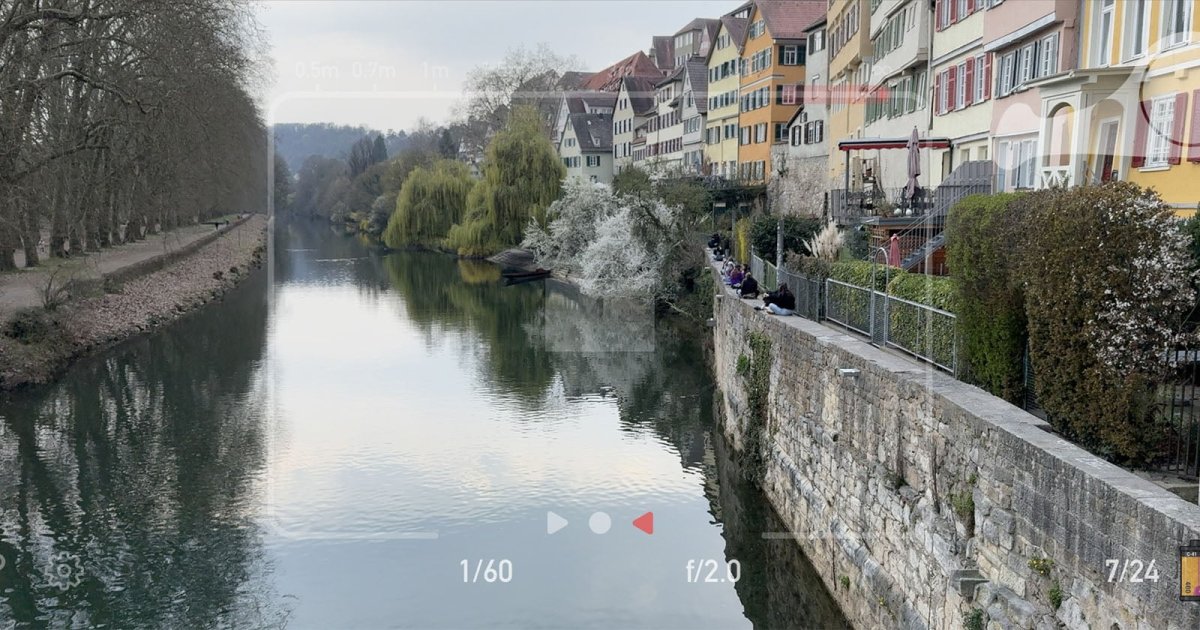
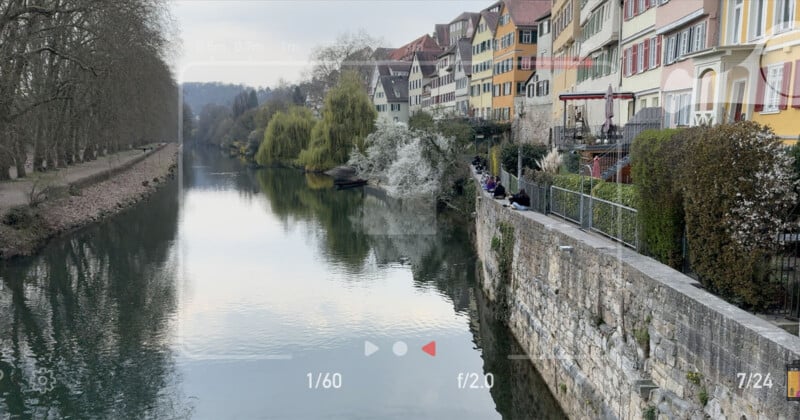
A new iPhone camera app, M-Kamera, attempts to bring the rangefinder camera experience to mobile, including rangefinder-style focusing and a virtual film winder.
As initially reported by Leica Rumors, the M-Kamera app leverages Apple’s Metal and CoreML technology to virtually simulate the look of a classic 50mm lens on a 35mm film rangefinder.
M-Kamera uses iPhone LiDAR to deliver what the developer calls the “first true rangefinder focusing on mobile.” There is also autofocus and a scale focus option if users prefer that, but the app’s primary appeal is its ability to mimic a rangefinder.
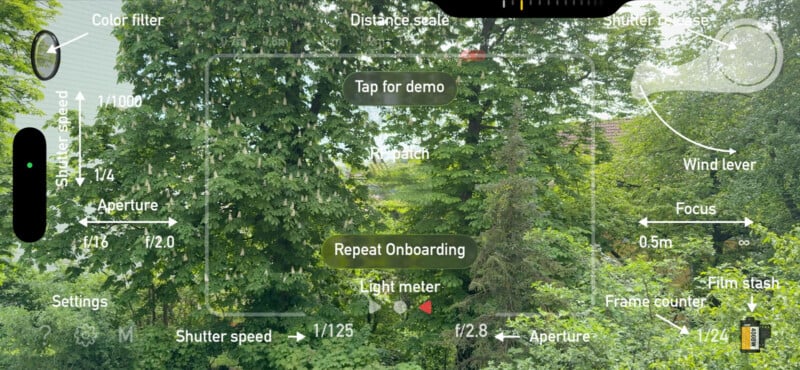
When using rangefinder focusing, mobile photographers swipe up and down on the right side of the screen to scroll through the focus distance. When the focus is just right, the patch in the middle of the screen shows two images overlap, just like with a rangefinder.
The app also includes a virtual film lever, which uses haptic feedback on the iPhone to approximate the experience of a classic film rangefinder.
M-Kamera offers full manual and automatic exposure, including aperture and shutter speed control. There’s also a “hardcore mode,” which the maker, Victor Doroshenko, says was added due to popular demand. This mode completely removes all aids from the user interface, including the light meter, so photographers have to dial in settings without assistance.
The app “develops” photos from a simulated 24- or 36-shot “roll” of film. M-Kamera promises physically accurate simulated bokeh and vignette, film grain, and color rendering based on ISO 400 black and white film, ISO 400 C-41 process color negative film, and E100 color reversal film. There are color filters for use with the black-and-white film as well, including a red filter for landscapes and a yellow filter for portraits.



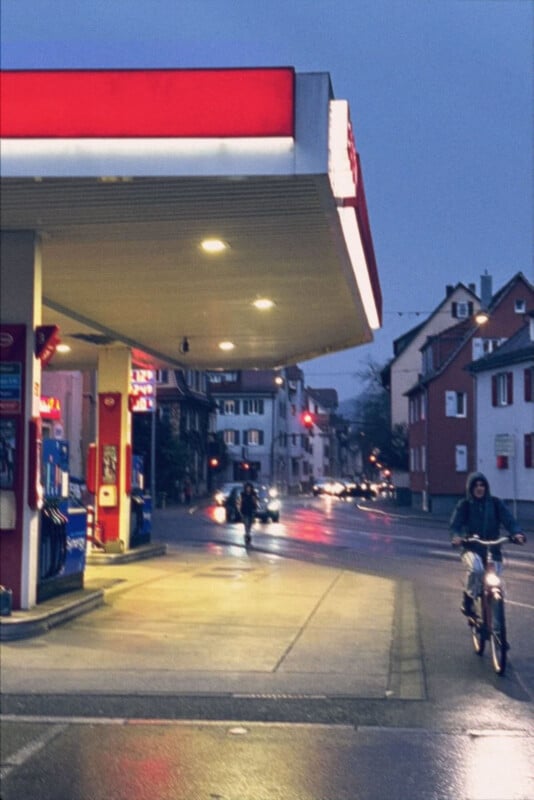

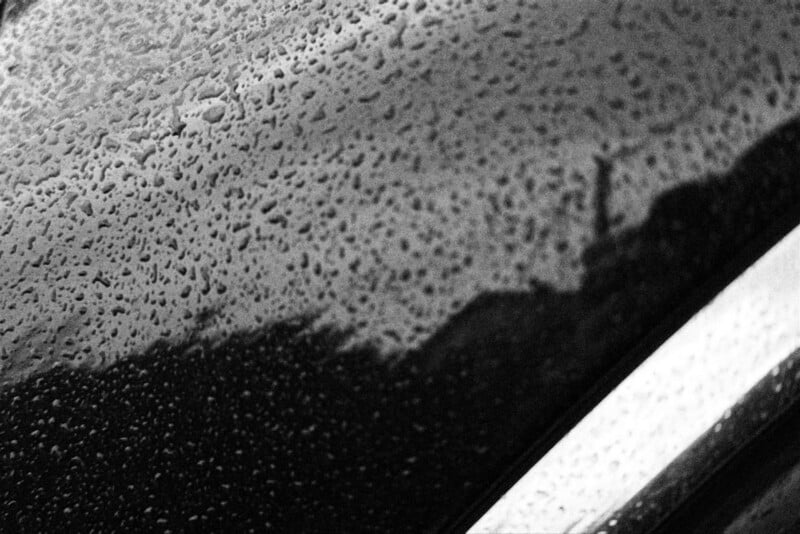
“Film has fixed ISO, and aperture only opens/closes that far. It’s not possible to get that bokeh in the Sun, because Sunny f16 does not let you. Shoot wide open at f/1.8s and your hands will shake — because they should,” Doroshenko explains. “Realistic haptic and acoustic feedback make every frame deliberate. Analog photography is limiting and that’s one of the reasons we love it. M-Kamera is designed to give you the same experience and simulate limits iposed by a mechanical classical rangefinder.”
As part of that limitation, photographers cannot even view their photos until they have fully depleted a “roll” of chosen film. The app is free, but these rolls of digital film are not. A 24-shot roll is $0.90 with an in-app purchase, while a 36-shot roll is $1.29. Alternatively, there is an “infinity fridge” option for $4.99 per month, with the first month free. With this mode, photographers can keep six rolls of film in their in-app refrigerator and shoot to their heart’s content, although they will still need to wait for the film to develop after they use up a roll.

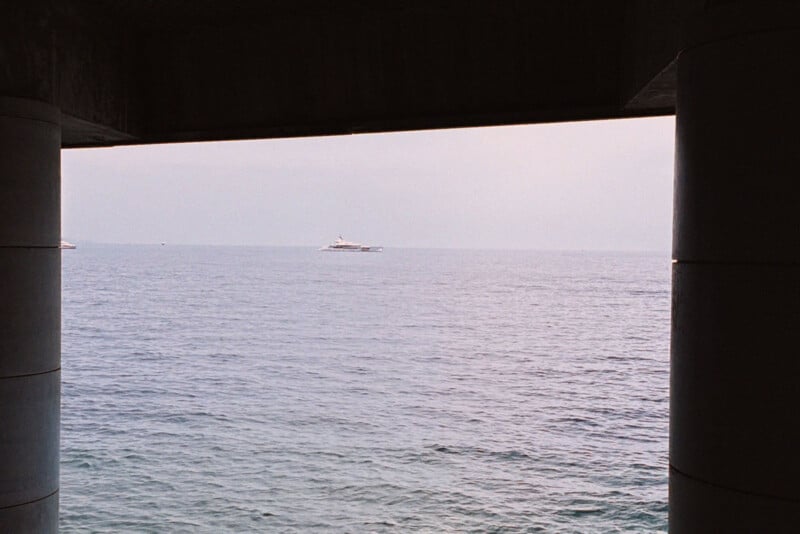
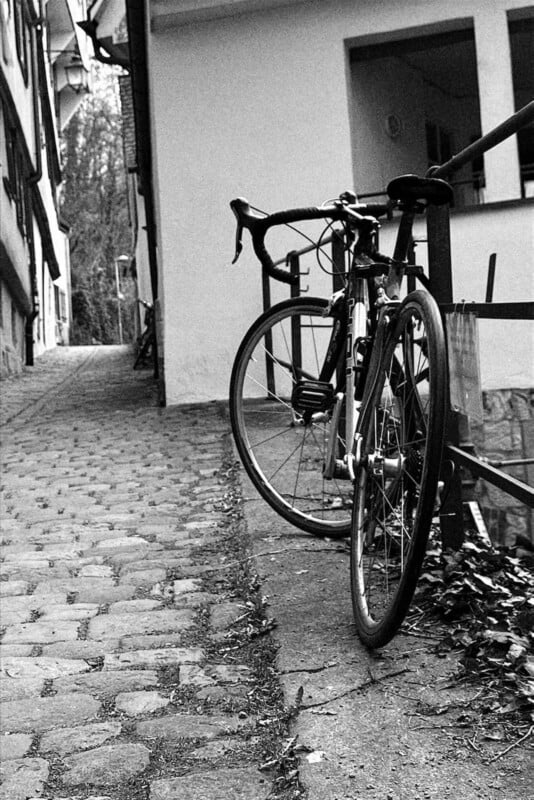

“A roll is 36 frames at most, make each count as if it costs real money,” the developer says. And in reality, it does cost real money, especially for those who opt for a roll-by-roll purchase. Paid iPhone camera apps are very common, but this may be the first to charge based on virtual film rolls. That said, PetaPixel has seen real digital cameras that take a similar approach.
M-Kamera is available exclusively for iPhone right now. As noted, it is free to download and try, but digital rolls cost money.
Image credits: M-Kamera
What's Your Reaction?
 Like
0
Like
0
 Dislike
0
Dislike
0
 Love
0
Love
0
 Funny
0
Funny
0
 Wow
0
Wow
0
 Sad
0
Sad
0
 Angry
0
Angry
0









Comments (0)