

Bessent Forecasts Crude Oil Could Drop to $40 Post-Iran Conflict Resolution
Key Takeaways
- Scott Bessent, US Treasury Secretary, forecasts oil prices dropping to $40 per barrel following resolution of Iran tensions
- Current Brent crude trading exceeds $95 per barrel on Friday, approaching July’s peak levels
- US 10-year bond yields reached 2023 highs earlier this week
- According to Bessent, correlation between oil prices and interest rates has reached unprecedented levels
- Norway’s government pension fund evaluates potential $75 billion reduction in US Treasury positions
US Treasury Secretary Scott Bessent forecasts oil prices could plummet to $40 per barrel following the conclusion of military operations involving Iran. His remarks came during a Friday interview with Steve Bannon.
“Once we move past this Iran conflict, I anticipate oil prices declining,” Bessent stated. He suggested markets might witness crude trading at $50 or potentially $40 due to significant new production capacity entering global markets.
The Treasury Secretary provided no specific timeframe regarding conflict resolution. A Republican member of the House Armed Services Committee characterized the current military situation as “stalled” earlier this week.
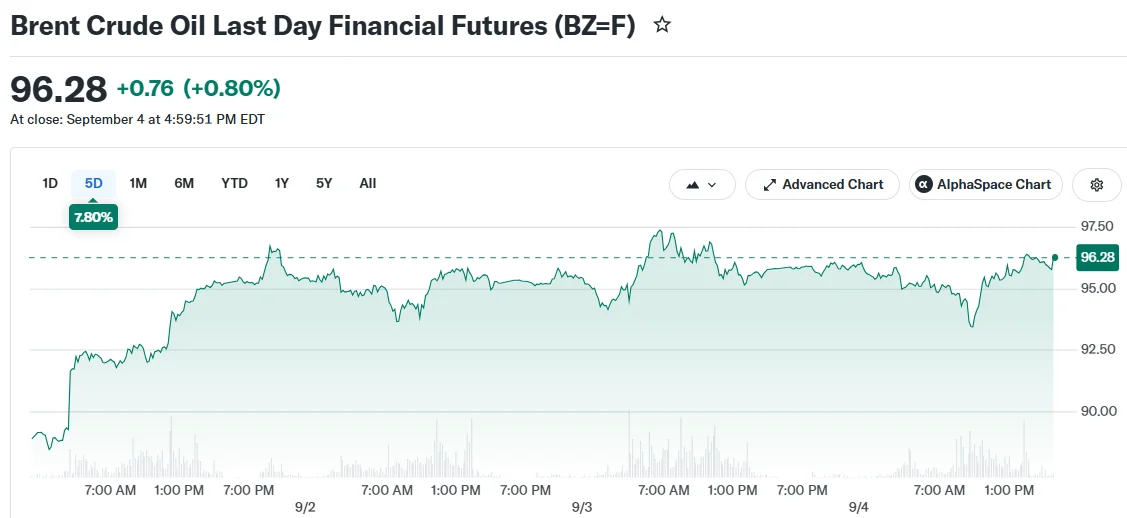
Current oil market conditions remain elevated. Brent crude exceeded $95 per barrel during Friday trading, approaching levels not seen since July. West Texas Intermediate hovered near $91.
Brent Crude Oil Last Day Financial Futures (BZ=F)Energy prices surged following this week’s military exchanges between the United States and Iran. Rising energy expenditures have intensified inflation concerns throughout international financial markets.
Treasury Yields Reach Multi-Year Peaks
Elevated oil prices have amplified inflation anxieties, driving bond yields higher. This week witnessed 10-year US Treasury yields climbing to their highest levels since 2023.
Bessent emphasized the relationship between crude prices and interest rates has reached historic proportions. “When you examine the data, interest rates currently show their strongest correlation ever to oil pricing,” he explained.
His expectation is that Iran conflict resolution and subsequent oil price declines will moderate inflation and bring yields down accordingly. “When the Iran conflict concludes, interest rates and the headline inflation spike will decline,” he projected.
With federal debt recently surpassing $40 trillion, questions persist regarding investor demand for US government securities.
Norwegian Wealth Fund Evaluates Treasury Reallocation
Norway’s Government Pension Fund Global, among the world’s largest sovereign wealth funds, is evaluating a reduction in US Treasury exposure. Bloomberg analysis indicates this adjustment could decrease holdings by approximately $75 billion.
Bessent minimized concerns surrounding this potential shift. He explained Norway’s fund is pursuing enhanced returns through alternative US instruments like Fannie Mae and Freddie Mac securities, which traditionally provide yield premiums compared to Treasuries.
Fannie Mae and Freddie Mac represent government-sponsored enterprises focused on mortgage lending. Ginnie Mae serves as an associated federal housing finance entity.
Bessent expressed support for Norway’s strategic adjustment. “I am the biggest advocate for that,” he affirmed.
The Norwegian fund’s deliberations emerged during a particularly delicate period, with US government borrowing at historic highs and market participants scrutinizing potential indicators of diminishing appetite for American debt instruments.
The post Bessent Forecasts Crude Oil Could Drop to $40 Post-Iran Conflict Resolution appeared first on Blockonomi.
What's Your Reaction?
 Like
0
Like
0
 Dislike
0
Dislike
0
 Love
0
Love
0
 Funny
0
Funny
0
 Wow
0
Wow
0
 Sad
0
Sad
0
 Angry
0
Angry
0











Comments (0)