

Boffins bet on quantum computers, AI supers to solve fusion fuel dilemma
Science
Department of Energy, Cleveland Clinic, and IBM simulate a soup of molten salts and techno babble in pursuit of tritium
Fusion energy has presented a tantalizing alternative to fossil fuels for the better part of a century, but creating the equivalent of a human-made sun is easier said than done.
However, new research from the boffins at Oak Ridge National Laboratory (ORNL), the Cleveland Clinic, and IBM in support of the Department of Energy’s (DoE) Genesis Mission suggests quantum computers and perhaps a sprinkle of AI could be what the world needs to get fusion power running at scale.
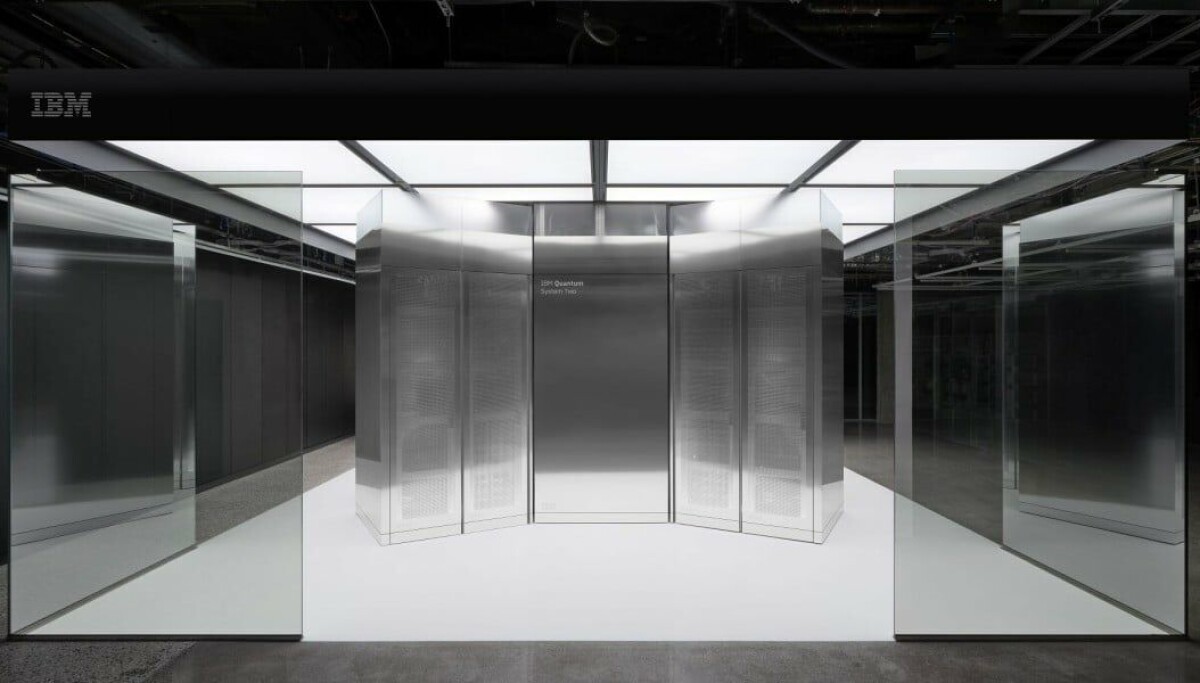
Specifically, researchers are looking to quantum processing units (QPUs), like those built by IBM, to find optimal materials to extract the tritium fuel required by some of the most promising reactor designs.
On Earth, tritium, a radioactive hydrogen isotope with one proton and two neutrons, is fleetingly rare. Before we can harness fusion to produce energy at scale, we need to figure out a way to mass produce the stuff.
According to researchers, molten salts containing a mixture of fluorine, lithium, and beryllium (FLiBe), are one of the more promising candidates for extracting tritium for use in fusion reactors.
The idea is that these molten salts, which have historically been used in experimental fission reactors as a coolant, function as a breeder environment for tritium. The trick, as you might expect, is predicting the electronic ground-state energies of FLiBe molecular clusters to better understand how they bind tritium. This is no easy task.
These calculations are extremely computationally expensive and prone to error. But as it happens, one of the applications quantum computers have shown the most promise with is optimization and computational chemistry problems.
Developing the quantum algorithms necessary to do this isn't easy, but researchers won't stop trying to solve it. As it turns out, the same techniques used by the Cleveland Clinic to simulate 12,635-atom proteins can be applied to FLiBe sims.
The process involves using QPUs as an accelerator, similar to how GPUs are used in supercomputers and AI clusters today to perform calculations not easily performed on conventional hardware.
In a blog post, IBM explains that parts of the problem are broken down into quantum circuits which can be solved by the QPU. “This allowed the team to more precisely determine the electronic structure of the material and how its atoms behave, particularly how strongly they bind tritium at the fundamental molecular level.”
By combining CPUs, GPUs, and QPUs, the researchers say they were able to identify nine potential cluster configurations for producing the tritium fuel needed by fusion reactor designs.
“These results add to mounting evidence that quantum-centric supercomputing is now a practical scientific tool for problems that have long challenged chemists, engineers, and materials scientists,” Jerry Chow, CTO of quantum-centric supercomputing at IBM, said in a statement.
While quantum computing may show promise, this isn’t a silver bullet to realizing the potential of fusion power. Despite the progress made in recent years toward the development of a self-sustaining fusion reactor, it seems we’ve still got a ways to go. ®
What's Your Reaction?
 Like
0
Like
0
 Dislike
0
Dislike
0
 Love
0
Love
0
 Funny
0
Funny
0
 Wow
0
Wow
0
 Sad
0
Sad
0
 Angry
0
Angry
0












Comments (0)