

CXMT close to matching Micron's memory capacity in 2026, research claims — would put China on track to become world's second-largest DRAM producer
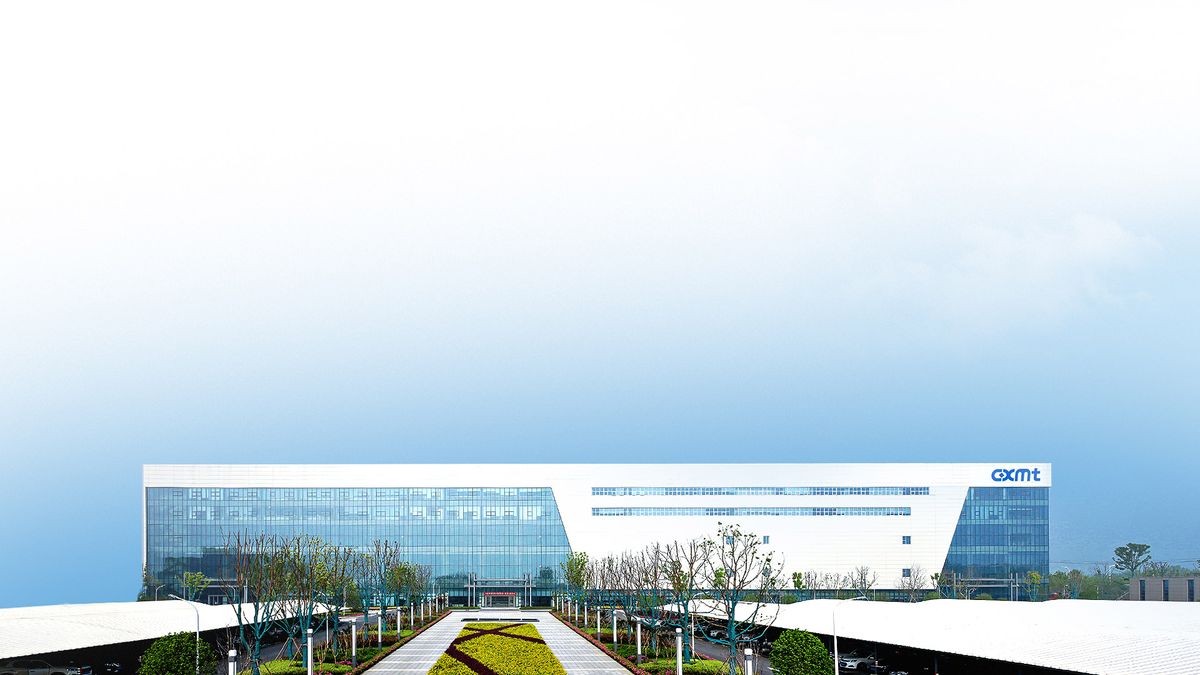
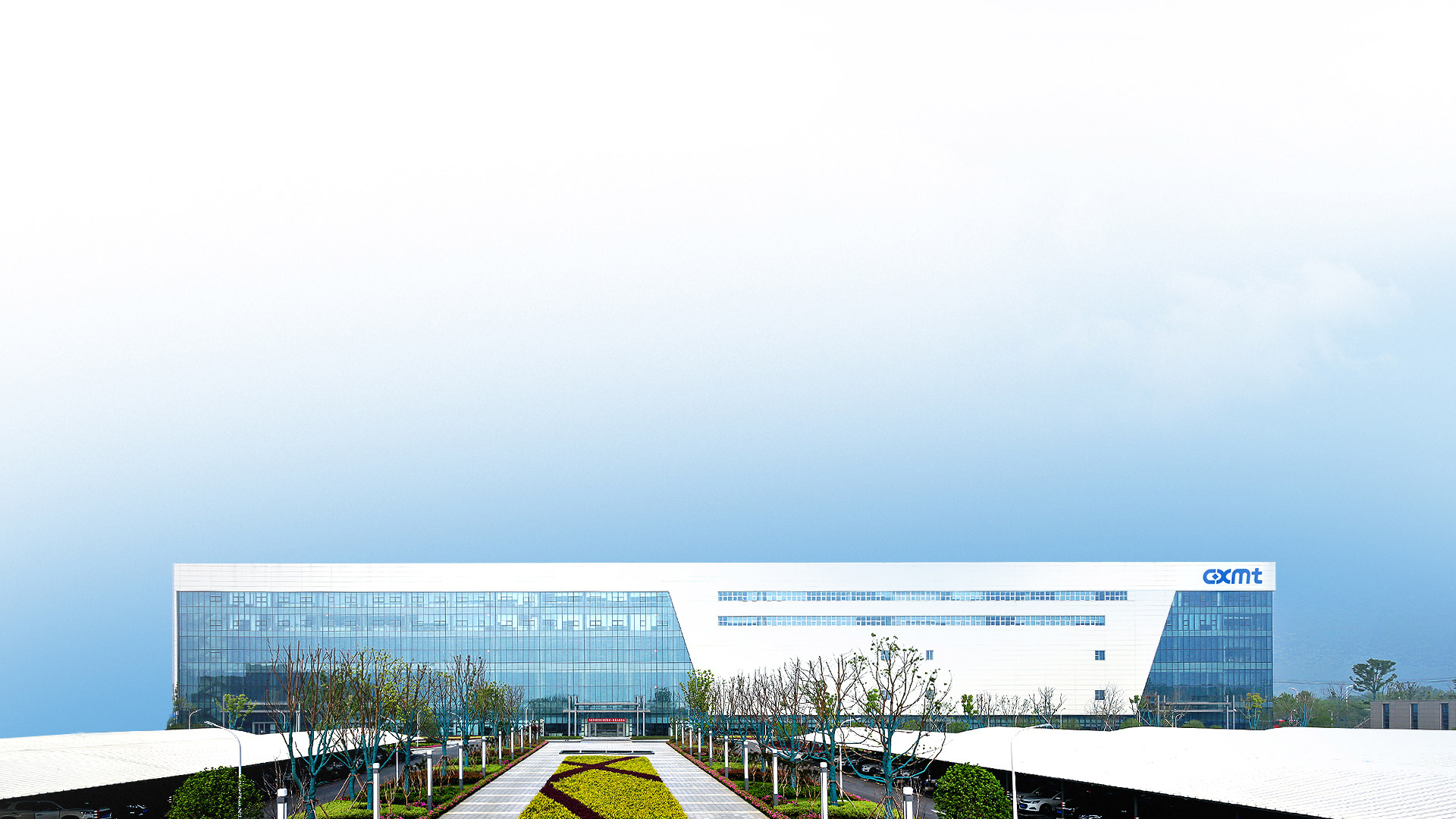 (Image credit: CXMT)
ChangXin Memory Technologies (CXMT), China's largest DRAM maker, is on track to match Micron's production capacity in 2026, if Citrini Research's forecasting models are correct. If this happens, China will become the world's second-largest DRAM production base in the coming years.
Go deeper with TH Premium: Memory
The bottom-up model estimates that CXMT will finish 2026 with approximately 350,000 wafer starts per month (WSPM) of DRAM capacity, which is just 25,000 WPM less than Micron. According to the analysis, the federal government is pushing CXMT to share its DRAM technology with JHICC, Swaysure, and YMTC's subsidiary XMC to ease domestic shortages. All three companies have either built DRAM capacity already, or will do so in the short-term future, the report claims.
Swaysure has completed construction of a 140,000-WSPM fab in Shenzhen, while JHICC's Jinjiang complex contains enough cleanroom space for 120,000 WSPM, and the initial 60,000-WSPM phase is expected to receive equipment by the end of 2026. YMTC is also projected to operate about 50,000 WSPM of DRAM production at Wuhan Fab 3. If all these facilities initiate operations in the coming years, then China will have a total DRAM capacity of 600,000 WSPM (not counting Samsung's and SK hynix's fabs in China), which is dramatically lower compared to South Korea, but ahead of Japan, Taiwan, and the U.S. combined.
But China is not going to stop developing its DRAM industry, and by 2030, its total capacity will increase to around 1.41 million WSPM, according to Citrini. CXMT alone is projected to build new production capacities in Beijing, Hefei, and Shanghai, to expand its production capability to 950,000 WSPM in 2030, assuming everything goes as planned.
The supply model assumes that about 400,000 WSPM of CXMT output will remain on D1a, another 400,000 WSPM will migrate to D1b, and roughly 150,000 WPM will produce D1c devices.
Swipe to scroll horizontally
| Row 0 - Cell 0 | 2026E | 2027E - 2029E | 2030E |
CXMT | 350 | ? | 950 |
JHICC | - | 60 | 120 |
Micron | 375 | ? | ? |
Samsung | 720 | ? | 1,140 - 1,450 |
SK hynix | 590 | ? | 1,180 |
Swaysure | - | ? | 140 |
YMTC/XMC | 50 | 50 | 200 |
Citrini admits that producing China's outlook is considerably more difficult than predicting the development of established DRAM makers. On the one hand, there is rapidly expanding fabrication infrastructure in China, abundant state-backed financing, and government-directed technology transfers. On the other hand, among the key near-term limitations remains lithography equipment availability, particularly if the proposed MATCH Act restricts sales of advanced immersion DUV tools to select Chinese companies.
However, the author expects SMEE's domestic immersion DUV scanners to enter volume production around late 2026 or early 2027 following beta testing, as well as SiCarrier/Yuliangsheng introduce its own production-ready DUV platform in 2028. Perhaps a bit optimistically, the analysts predict that availability of lithography tools is not expected to constrain Chinese production beyond 2028, at least for mature logic and DRAM nodes. Yet, for obvious reasons, if the MATCH Act works as planned and disrupts supply of advanced immersion DUV tools to DRAM makers, production capacity expansions will not occur in the next couple of years, the report suggests.
Get Tom's Hardware's best news and in-depth reviews, straight to your inbox.
Still, both SMEE and SiCarrier will need time to ramp up production of their lithography systems, whereas DRAM makers must learn how to use them efficiently, so we would not be as optimistic as the authors and would not expect Chinese tools to produce meaningful DRAM volumes before the early 2030s. Still, the key takeaway here is that China is on track to become a major DRAM maker rather sooner than later.
Unprecedented demand
Citrini Research projects total DRAM demand to reach 157.5 exabytes (EB) per year by 2030, including 75 EB of commodity DRAM for agentic AI CPUs, 25 EB of commodity DRAM for conventional cloud servers, 20 EB of commodity DRAM for client devices, and 37.5 EB of HBM4E as well as HBM5 for AI accelerators (15 EB and 22.5 EB, respectively).
Meanwhile, Citrini expects the whole industry to only produce around 37.5 EB of HBM4E/HBM4 memory (mostly by Micron, Samsung, and SK hynix) as well as 91.3 EB of commodity DRAM (including output in China) in 2030, leaving a deficit of 28.7 EB, or roughly 25%.
That said, the rapid expansion of DRAM production in China could be the industry's best hope to maintain relatively low prices of memory, something that will be particularly beneficial for the market of consumer devices that are sensitive to memory prices, analysts from Citrini believe. Yet, the author argues that most of this new capacity would satisfy China's own demand rather than eliminate the global shortage. Furthermore, even if companies like CXMT can expand their fabs faster, that additional capacity will mostly be consumed by domestic needs, according to Citrini.
It should be noted that to make more memory, DRAM makers need more fab tools, primarily 193nm immersion scanners. Yet, companies like ASML, Canon, and Nikon cannot increase output of immersion DUV systems quickly as these are extremely complex machines containing tens of thousands of parts. While Chinese memory companies certainly pin their hopes on local producers like SMEE and SiCarrier, neither has delivered a single commercial immersion system, and after they do, it will take them years to ramp up production of such tools.

Follow Tom's Hardware on Google News, or add us as a preferred source, to get our latest news, analysis, & reviews in your feeds.
Anton Shilov is a contributing writer at Tom’s Hardware. Over the past couple of decades, he has covered everything from CPUs and GPUs to supercomputers and from modern process technologies and latest fab tools to high-tech industry trends.
What's Your Reaction?
 Like
0
Like
0
 Dislike
0
Dislike
0
 Love
0
Love
0
 Funny
0
Funny
0
 Wow
0
Wow
0
 Sad
0
Sad
0
 Angry
0
Angry
0








Comments (0)