

D&D’s World of Warcraft Book Fixes the RPG’s Biggest Endgame Issue
It’s no secret that, in Dungeons & Dragons, the job of a Dungeon Master gets increasingly harder as the player characters rise in level. Building challenging encounters for a high-level party can be daunting. In the past, I wrote about how high challenge rating (CR) monsters often feel inadequate to perform the task of “end-game bosses,” unless a DM puts measures in place (such as the use of minions) that, however, can have a negative impact on the game.
Let’s imagine that the big bad of a D&D campaign is a powerful devil, such as a Pit Fiend. The monster has a CR of 20, but that doesn’t mean it will prove a good challenge for a level-20 party — quite the opposite: the poor devil doesn’t stand a chance. A good DM can make the encounter harder by adding more creatures to act as backup, but that means having to run a dozen monsters instead of one, which can slow down combat significantly. Also, grinding through endless cannon fodder may not be fun for players who have waited months (or years) to kick the villain’s butt.
Complex problems like these require creative solutions. That’s where the latest D&D book, World of Warcraft, comes in. The new book presents several high-CR monsters that can provide a solid challenge on their own for high-level parties. The solution is deceptively simple: Just hit them all at once.
The issues with D&D monsters
 Image: Wizards of the Coast
The discrepancy between player characters and monsters in D&D’s 5th edition (and in its 5.5e expansion) can be summed up in three main issues: numbers, scaling, and resources.
By their most common cultural understanding, monsters are solitary creatures. It’s part of the mystique of the “monster” concept: an aberrant entity that doesn’t fit within the laws of society or nature. Of course, D&D players are all familiar with goblin armies or swarms of carrion crawlers (yuck!), but these monsters are usually low-level: strength in numbers and all that. Once you move up the ladder, monsters often keep to themselves.
D&D, however, is not a solo game. Adventuring parties are usually composed of a minimum of four characters, and that number can go up, depending on how deranged the DM is (personally, anything more than five would quickly lead me to a nervous breakdown). For a fight between adventurers and a monster to be “fair,” the latter should be at least four times as powerful as a single player character. But that’s never the case.
The problem with the challenge rating system (and the encounter-building guidelines provided in the Dungeon Master’s Guide) is that player characters do not scale up in power in a linear way, but monsters do. A CR 6 monster will usually be twice as “strong” as a CR 3 one, whereas a level 6 character is many times more powerful than a level 3 one. This is because characters acquire increasingly complex abilities, spells, and magic items. Their progress is not linear, and almost exponential.
Finally, the whole 5th edition of D&D is designed not to be fair to monsters because of its grindy nature. Character classes are built on resource management. A D&D party is expected to have two or three combat encounters in each adventuring day, before needing a long rest to refresh their resources. This means that, if the only encounter a level 5 party faces in a day is a CR 5 or 6 monster, the poor critter will quickly get annihilated. Instead, the DM is supposed to feed the party a couple of lower-level encounters beforehand. But what if that doesn’t fit the story, or the party is just good at avoiding unnecessary combat?
World of Warcraft brings MMORPG mechanics to D&D monsters
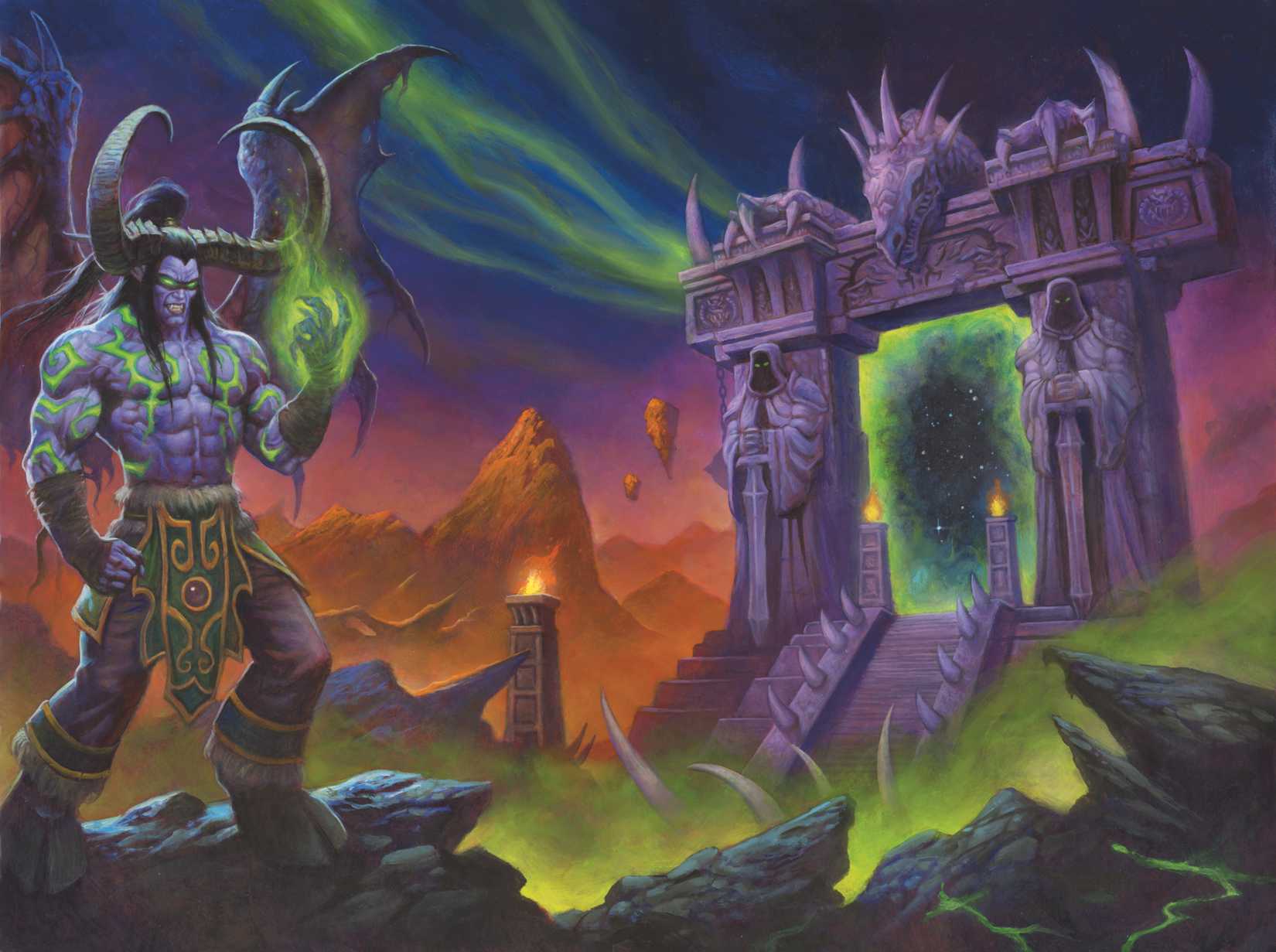 Illidan Stormrage, from Dungeons & Dragons: World of WarcraftSource: Wizards of the Coast
The World of Warcraft book has 15 monsters of CR 20 or higher, only six fewer than the entire Monster Manual. In the MMORPG, there are many powerful “raid bosses” that require a great deal of teamwork to defeat, and the book succeeds in translating that mechanic to D&D. High-level monsters in World of Warcraft are designed to face multiple players, which immediately fixes the first issue with D&D monsters: numbers.
World of Warcraft monsters are all designed with area attacks or other crowd-control options. This means they can hit multiple player characters at once, or separate and isolate party members effectively, thus reducing the need to add extra bodies to a fight just to keep some players busy.
You can look at any high-level monster in the World of Warcraft book, and it will invariably have at least one AoE (area of effect) attack. But two comparisons are particularly meaningful, because they involve WoW monsters that have almost exact duplicates in the Monster Manual.
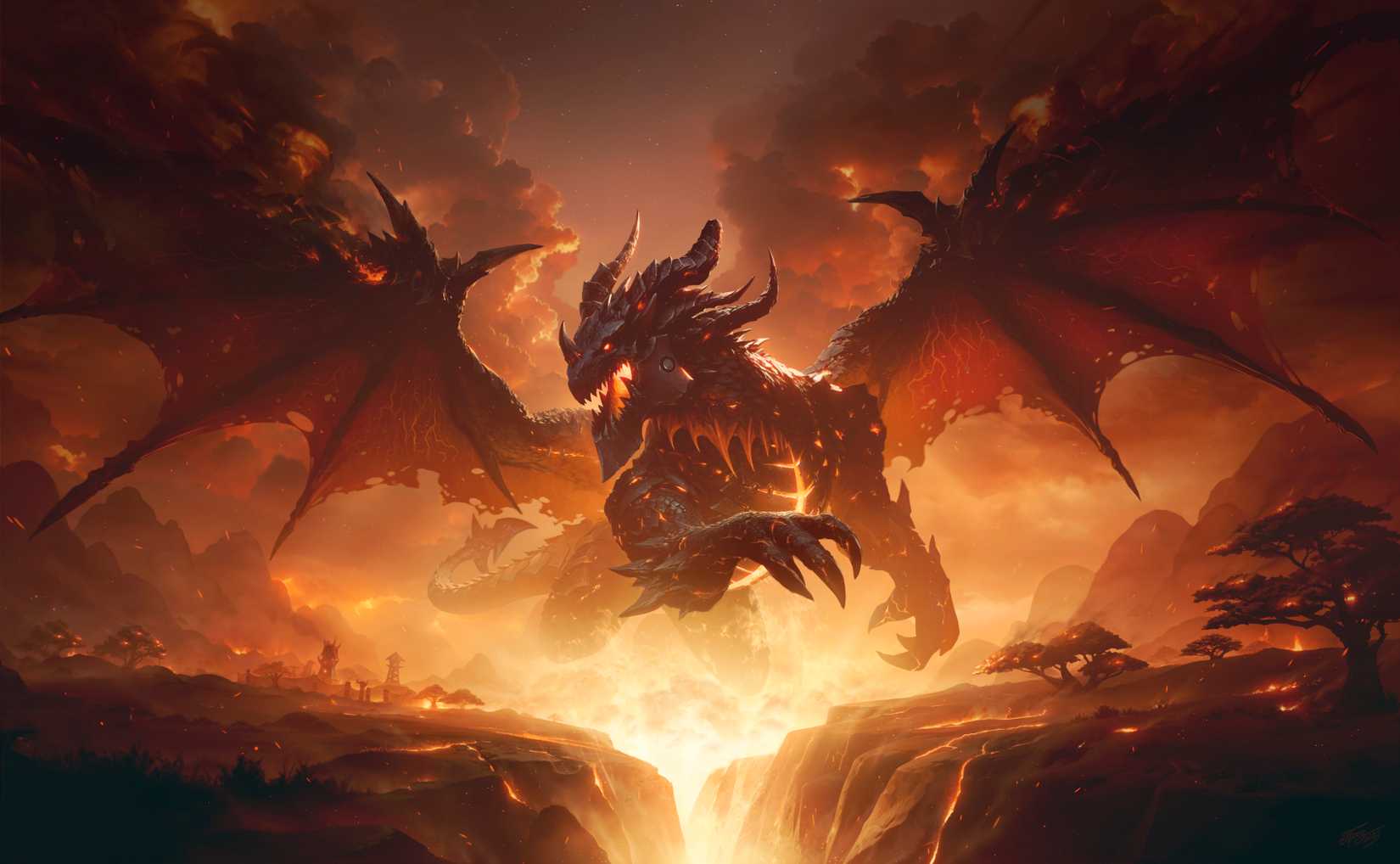 Image: Blizzard Entertainment
The Red Dragonflight Dragon is, unsurprisingly, World of Warcraft’s version of an Ancient Red Dragon. While the Dragonflight has a slightly lower CR of 21 compared to the Ancient’s 24 (and, accordingly, fewer hit points), the WoW version does a much better job at keeping a whole party occupied.
Both dragons have a breath attack and a one-use-per-day AoE spell (Fireball for the Ancient and Flame Strike for the Dragonflight). Both can cast Command at level 2 at will. The Ancient also has a level 3 Scorching Ray available at will, but it substitutes one of its Rend attacks. The Dragonflight, instead, has a legendary action called Bellowing Roar, which hits every creature in a 30-foot cube, dealing thunder damage and pushing the targets away. It can only be used once per turn, but it truly makes the difference, giving the dragon a free AoE attack that also moves its enemies around, as a great alternative to the breath attack (which recharges on a 5-6 for both dragons).
The other example is World of Warcraft’s Pit Lord, a demon that is almost an exact copy of the Pit Fiend from the Monster Manual. They have the same CR of 20 and most of the same traits and abilities, including the excellent Fear Aura. However, the Pit Lord gets another AoE option in the form of the Rain of Felfire action, which hits every creature in a 30-foot radius with both fire and psychic damage. It also gets Trampling Charge as a bonus action, which lets the Pit Lord move up to its speed, hitting every creature in its path for bludgeoning damage and a chance to knock them prone.
The Pit Fiend, on the other hand, only gets a Hellfire Spellcasting action, which lets it cast Fireball twice, or one Fireball plus a Hold Monster or Wall of Fire. It’s very powerful, but it recharges on a roll of 4-6, so on average it only works once every two turns. It’s also weak against characters who have resistance to fire damage (which can be expected if the party is prepared to face a devil).
D&D monsters show design flaws
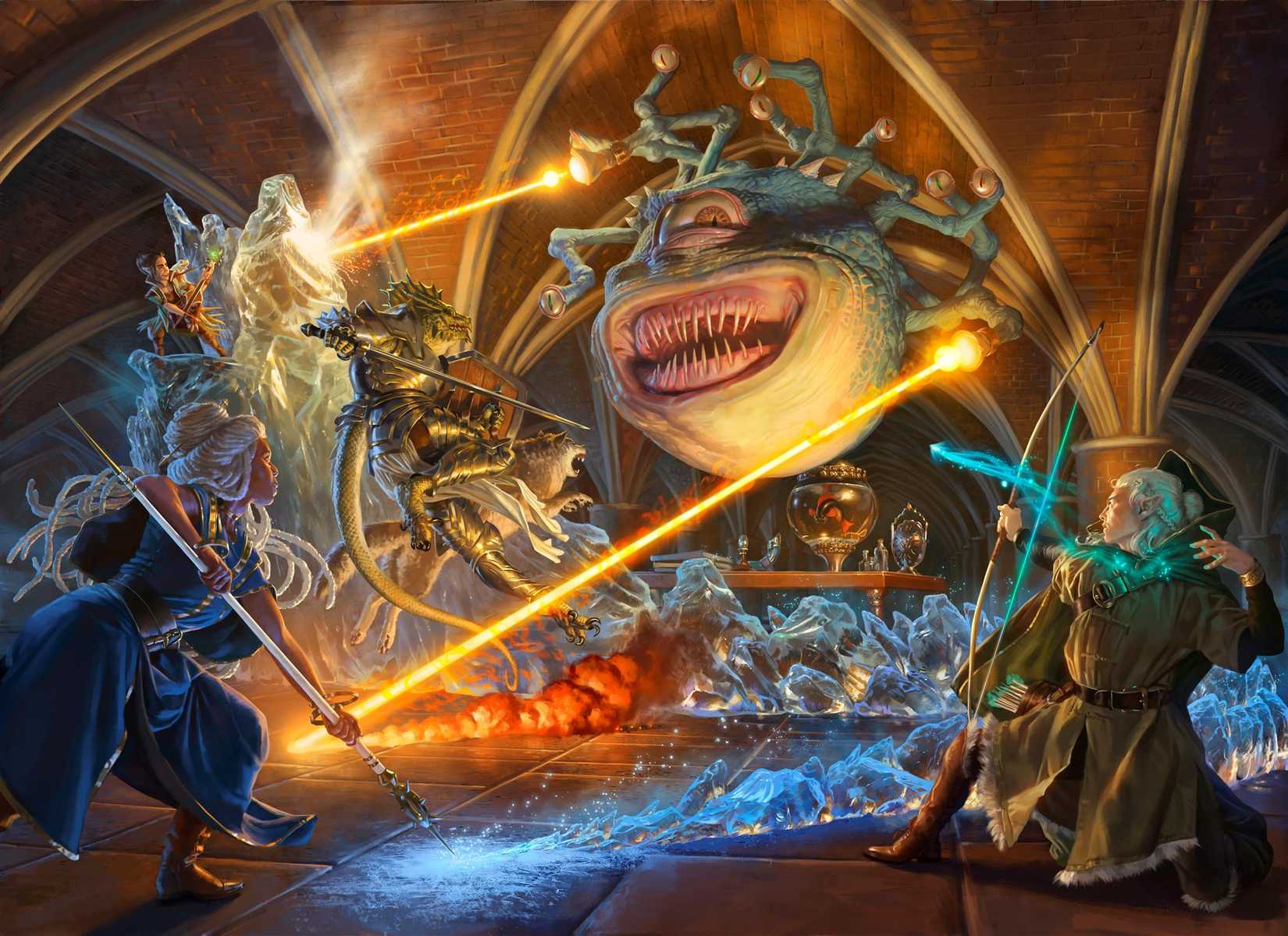 Key art from the first Magic: The Gathering crossover with Dungeons & Dragons.Image: Wizards of the Coast
Overall, it’s clear how these World of Warcraft monsters are built with Area of Effect and crowd control effects in mind, which makes them better endgame bosses for a party of high-level characters. This exposes some big design flaws in D&D 5th edition, at least when it comes to monsters. Nowhere is this clearer than when you look at some of the most powerful monsters that appeared in the core D&D books.
The second-highest CR monster in the Monster Manual is the CR 25 Colossus (beaten only by the Tarrasque). The Colossus has exactly one area attack: its Divine Beam action, which is massive, but it recharges on a 5-6 and replaces its other actions. This looks particularly ridiculous because this is a gargantuan size construct that towers over buildings, and yet its Stomp attack only hits one creature.
If we look at Monsters of the Multiverse instead (a book that introduced many of the 5.5e updates early), we can find one of the most iconic endgame monsters in D&D: Demogorgon, Prince of Demons, the Sibilant Beast, and a massive wimp. Despite its CR of 26, Demogorgon is not the deadly challenge that player characters of that level would expect. It has only two attacks, which can be a combination of Tentacle and Gaze. The latter is powerful and can mess up a party with confusion, charm, and stun effects, but it still has a single target. Demogorgon’s only AoE attack is its 3-per-day use of the spell Fear – which replaces its other attacks.
As a side note, Demogorgon also has less HP than Lich King Arthas.
How to apply D&D’s WoW monsters lessons to your games
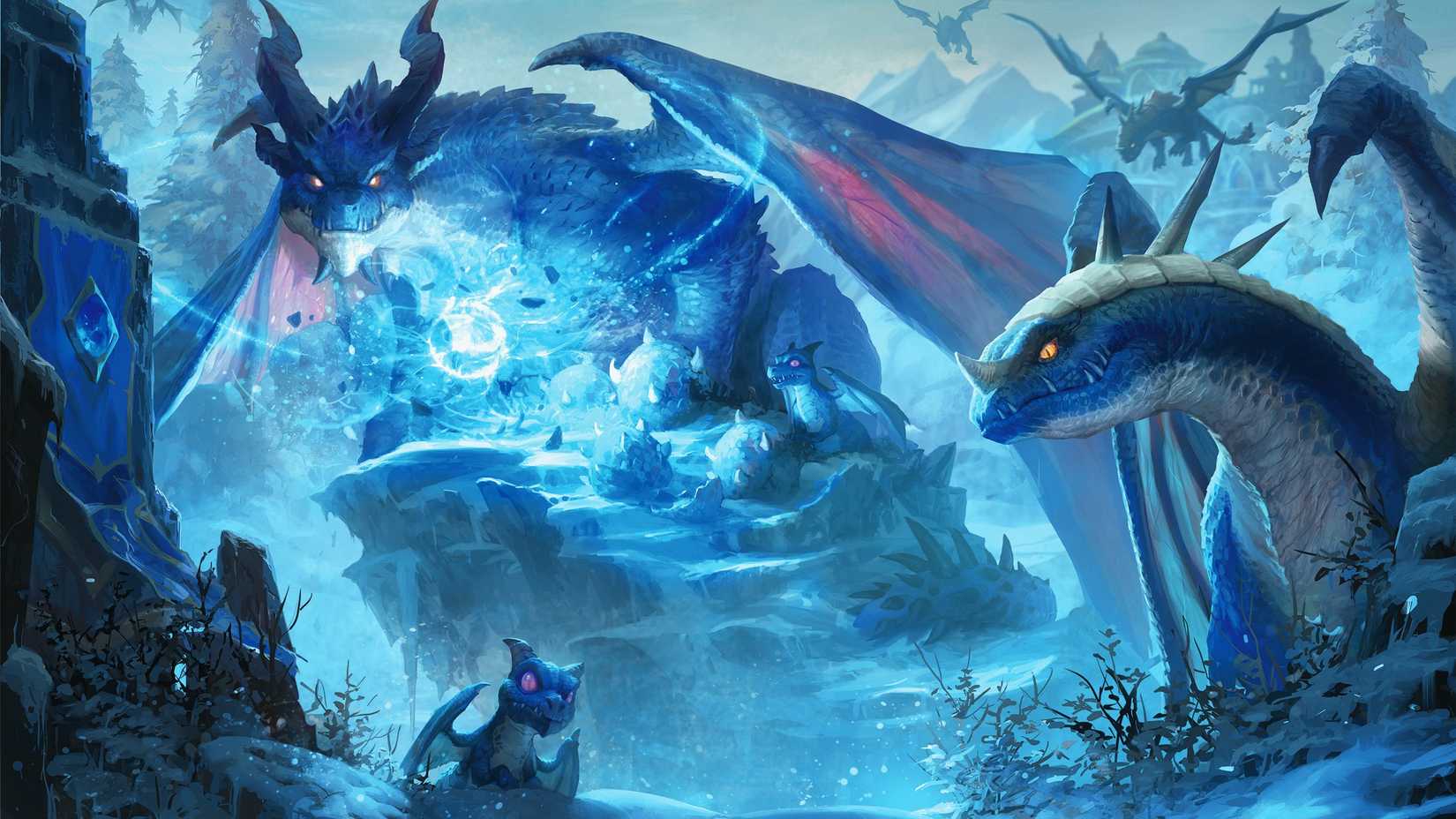 Image: Wizards of the Coast
This doesn’t mean that you should try to jam WoW characters and creatures into all your high-level D&D campaigns. But there are important lessons that can be learned from the World of Warcraft book.
High-level monsters should have multiple AoE attacks and crowd control effects. This balances the numbers game, which is usually in favor of the adventurers, without needing to add mobs to the encounter (and thus making the DM’s job easier!). If the party attacks a monster four or five times in a combat round, then it’s only fair for the monster to hit multiple party members in the same round.
It’s not hard to design an AoE attack for your homebrewed monsters, or add one to the creatures presented in the Monster Manual. Reskinning and customizing monsters may look complicated, but it’s a great skill for a DM to have. Adding or subtracting traits and actions or tinkering with a monster’s damage, attacks, and HP can turn a boring encounter into a challenging one on the fly.
If you’re looking for guidance on how to improve combat encounters, I suggest checking out Keith Ammann’s books, Mike Shea’s Lazy Dungeon Master series, or checking the Sly Flourish website for free resources.
What's Your Reaction?
 Like
0
 Dislike
0
 Love
0
 Funny
0
 Wow
0
 Sad
0
 Angry
0







Comments (0)