

Dyson Supersonic Travel vs Supersonic Nural: I tested the two premium hair dryers to see what you get — and don't get — for the substantial price difference
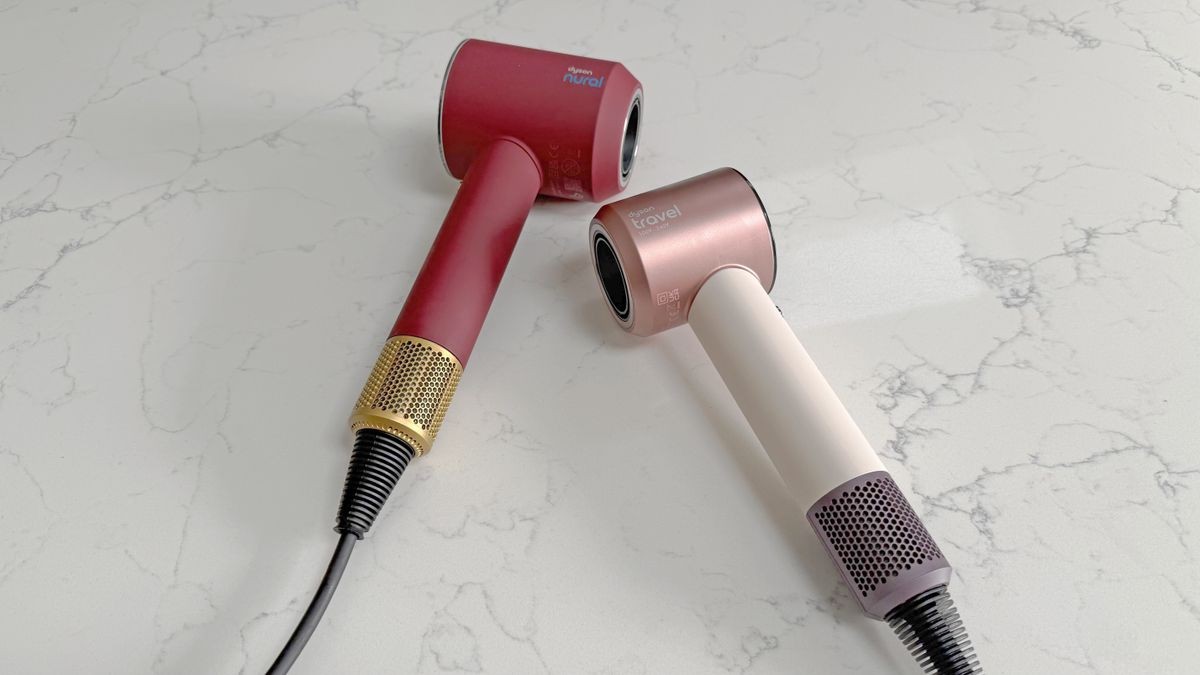
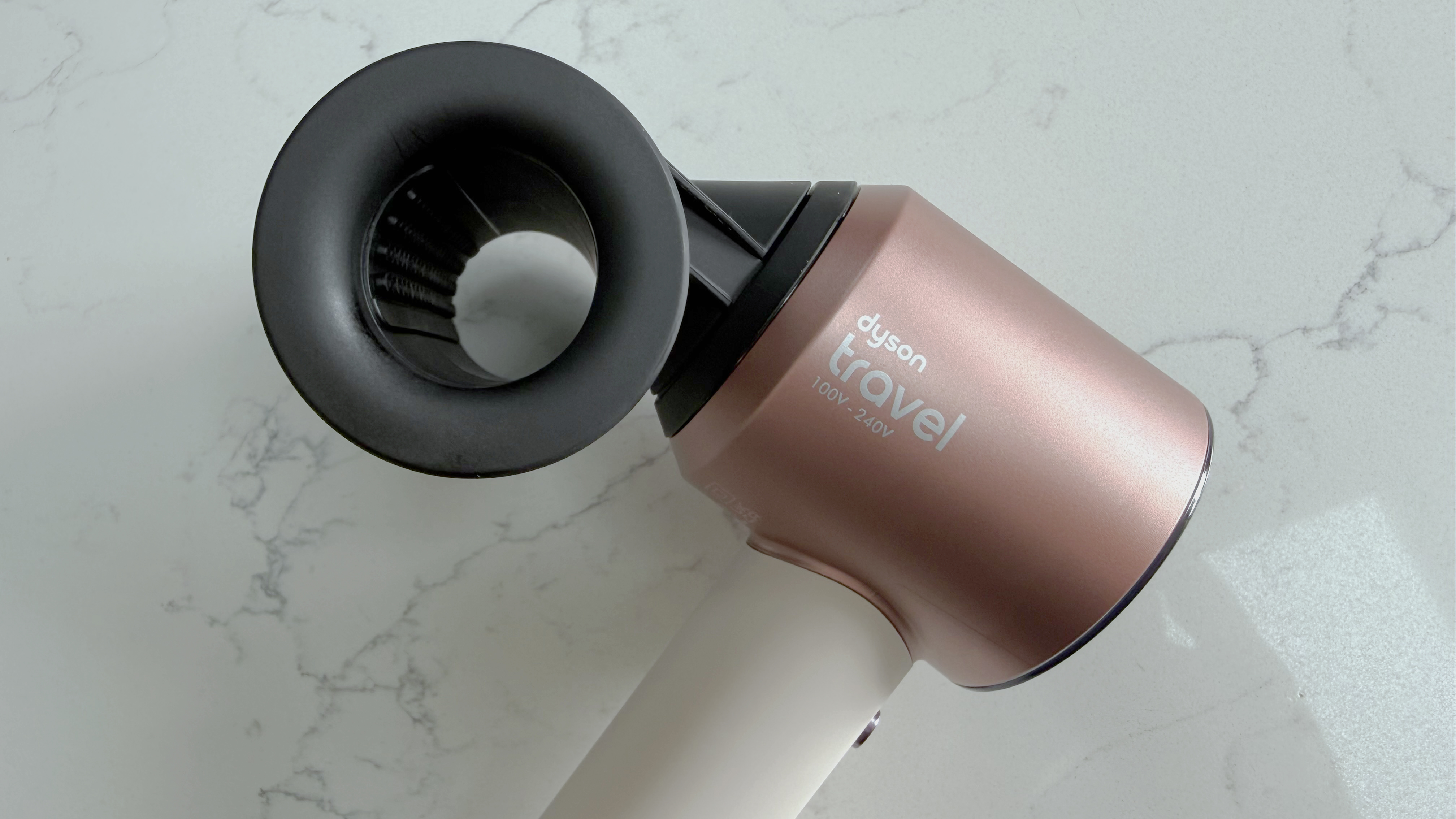
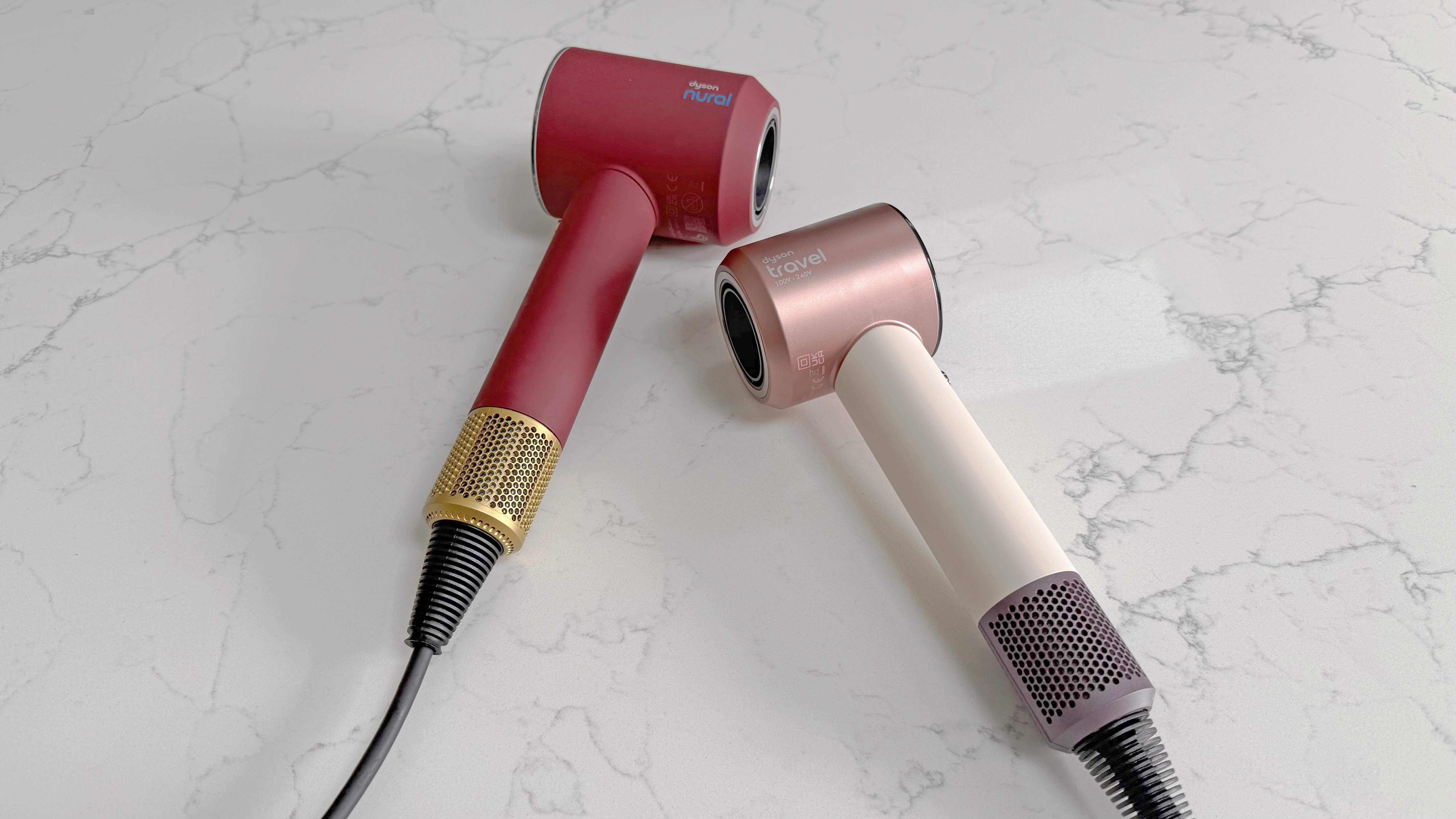 Side by side, the Dyson Nural (left) is noticeably larger than the compact Supersonic Travel (right)
(Image credit: Future)
Side by side, the Dyson Nural (left) is noticeably larger than the compact Supersonic Travel (right)
(Image credit: Future)
Following the launch of Dyson's first ever compact hair dryer, the Supersonic Travel, I spent four weeks putting it through its paces, including during a trip to San Francisco — you can read about this in depth in my Dyson Supersonic Travel review.
What I kept coming back to was how similar it seemed to Dyson's Supersonic Nural, despite there being a $150 / £150 / AU$300 gap between the two. Both use the same motor and the same intelligent heat control technology. Both use the same magnetic attachment system, meaning any nozzle or diffuser from either machine works on both. And both deliver the same smooth, frizz-free finish that Dyson has become known for.
I've tested many of the best hair dryers on the market, and Dyson consistently sits near the top. So if the technology is this similar, what exactly are you paying the extra cash for — and is the Nural worth it? I tested the two side by side. Here's what you need to know.
Dyson Supersonic Travel vs Supersonic Nural dryer: efficiency
On sheer drying power, the Nural wins. It's a full-size dryer with full airflow, and on my fine, mid-length hair it dried in around two and a half minutes on high heat. The Travel took around four minutes in the same conditions.
Four minutes is fast for a travel dryer — faster than every hotel dryer I've used and faster than some standard home dryers too. The finish was smooth and shiny every time, which is the more important result. But the gap is significant, and if you have thick or long hair that already takes 15 or 20 minutes at home, you'll feel it a lot more than I did.
Both have a 110,000 RPM motor, and both use a built-in thermistor sensor that continuously monitors air temperature to prevent heat damage and protect your hair's shine.
Interestingly, the cheaper Travel measures temperature more frequently than the pricier Nural — over 100 times per second versus 40. However, where the Travel uses it as a protective measure, the Nural uses it in more advanced ways for its Scalp Protect Mode. This mode uses a network of Nural sensors and an infrared beam to measure the distance between the dryer and your scalp in real time, automatically reducing heat and airflow as it gets closer to maintain a consistent 131 F / 55 C at the roots.
Sign up for breaking news, reviews, opinion, top tech deals, and more.
Winner: Dyson Supersonic Nural
Dyson Supersonic Travel vs Supersonic Nural dryer: design & comfort
Both the Nural and Travel look unmistakably like Dyson products. They have the same cylindrical head, narrow handle, and magnetic barrel as the entire Supersonic range. I tested the Travel in Ceramic Pink/Rose Gold and the Nural in Red Velvet/Gold, and both have a stylish soft matte finish.
The biggest and most obvious design difference is in size.
The Nural weighs 1.5lbs / 684g and measures 3.8 x 3 x 11.3 inches / 9.8 x 7.7 x 28 cm. The Travel is 32% smaller — at 2.7 x 2.8 x 8.7 inches / 6.8 x 7.1 x 22.2 cm — and almost half the weight. This makes it small and light enough to drop into a handbag without rearranging everything around it and I carried the Travel to San Francisco in a tote bag alongside my laptop and it barely registered.
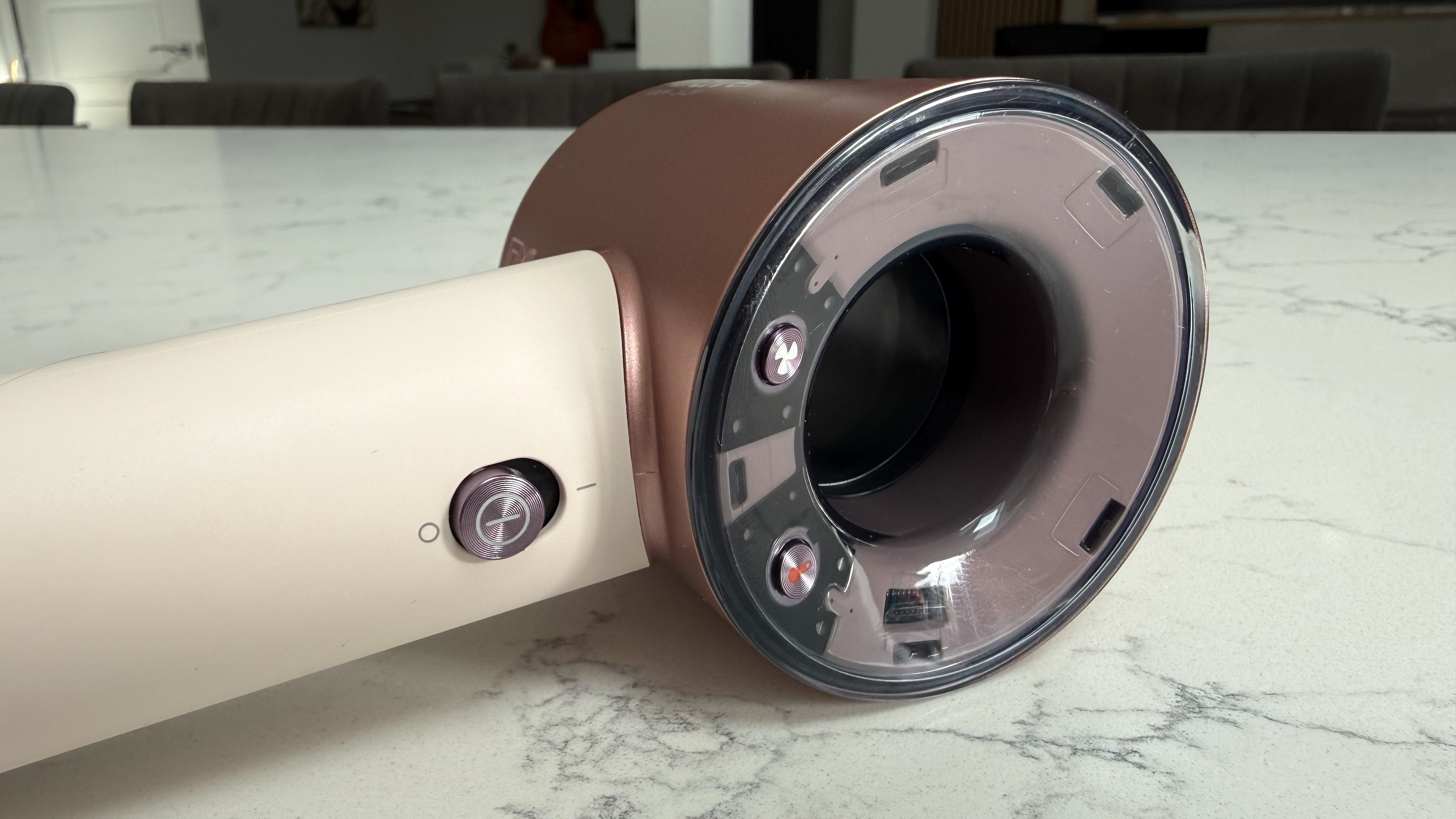
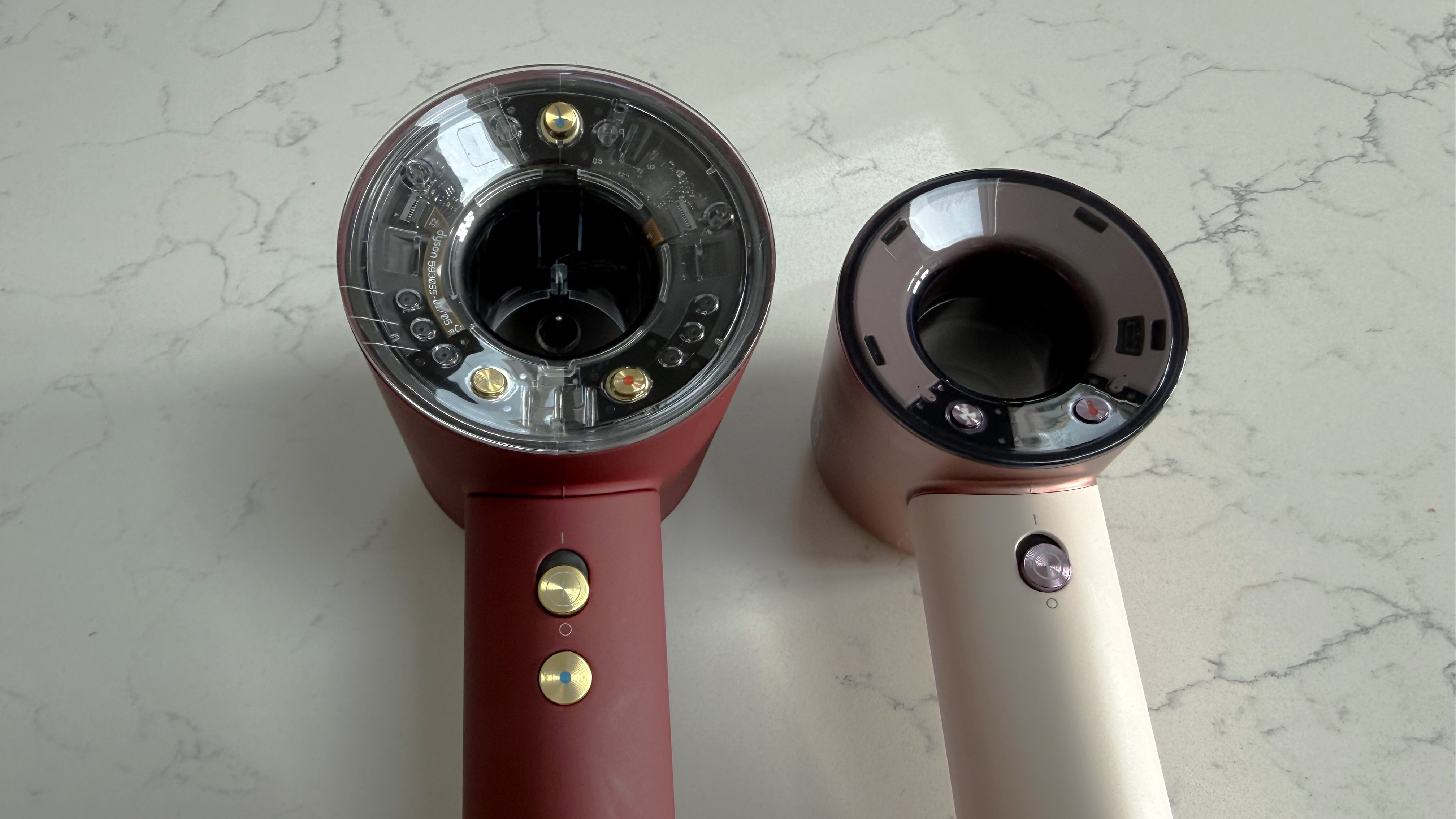
Both put airflow and temperature buttons on the rear of the barrel, with LEDs above each button showing your current setting. On the Nural, these LEDs change color as you cycle through settings to make it easier to see, at a glance, what setting you're on. The Travel's stay white, making it harder.
Beyond this, the Nural offers four heat settings plus three airflow speeds. The Travel has three heat settings and two airflow speeds. On the Travel, its cool shot requires sliding the power button upward past its 'on' position. This will be familiar if you own a Dyson Airwrap i.d but if you don't, this feature won't feel obvious the first time you use the Travel.
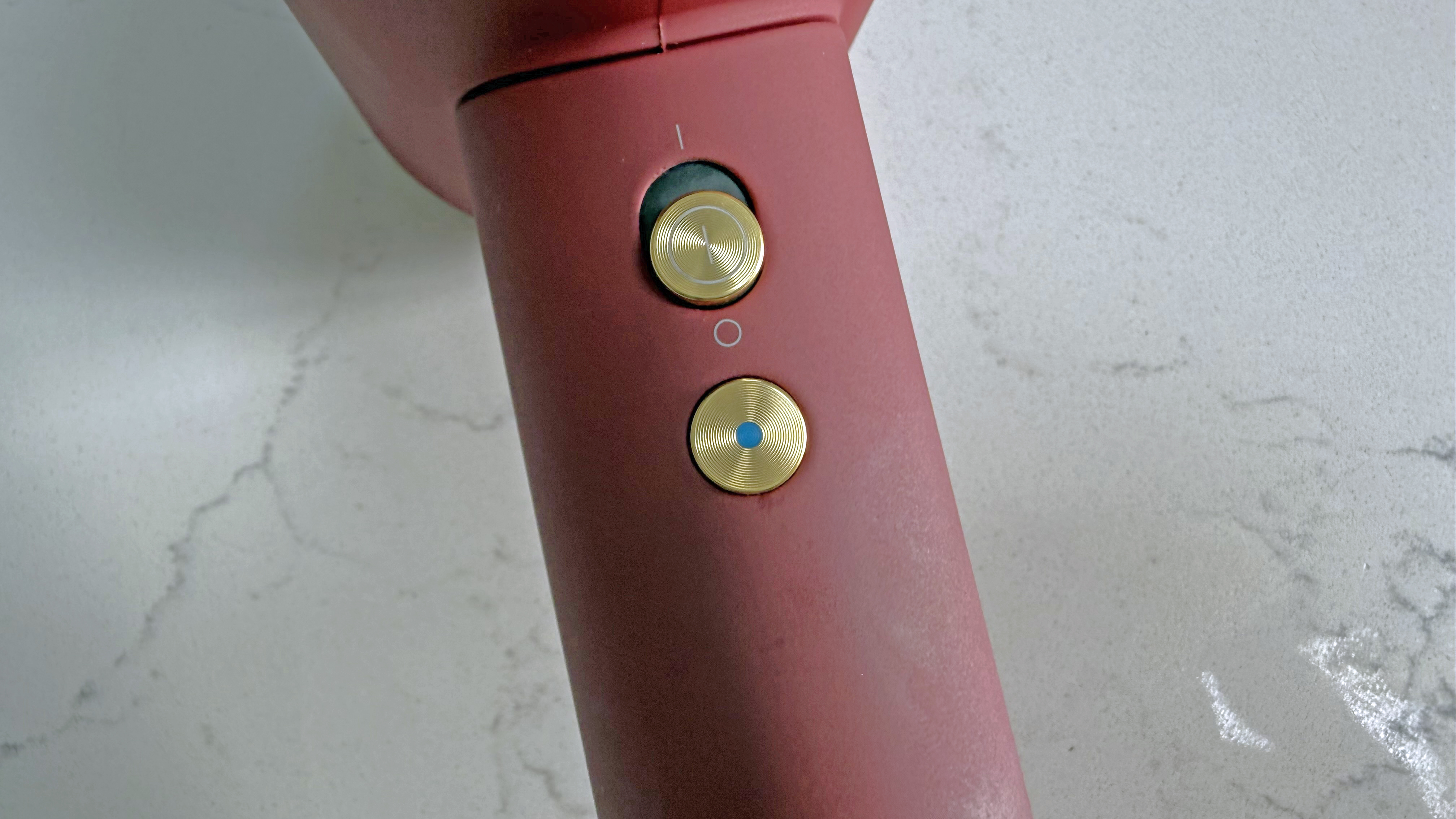
The Nural gives you meaningfully more control over both heat and airflow, which matters if you have multiple hair types or needs in your household, or if you regularly switch between drying and styling with different attachments.
Cord length is 9.2ft / 2.8m on the Nural and 6.6ft / 2m on the Travel, and neither folds. The Travel's cord is longer than I'd like for a machine sold primarily on portability but this longer length does make it easier to use in a hotel room when the plug socket aren't always in the most useful places.
Winner: Draw – even though the Nural has some standout design benefits compared to the Travel, they fit different needs: the Nural is better designed for home, while the Travel is better for everywhere else.
Dyson Supersonic Travel vs Supersonic Nural dryer: special features
The Travel's standout feature is auto-voltage. It adapts automatically to any supply between 100V and 240V without the need for a converter or a switch. I used it in San Francisco with a standard plug adapter and there was no drop in power, change in noise or overheating.
The Nural counters with Scalp Protect Mode, which uses proprietary sensors to detect proximity to your scalp and automatically drops the air temperature. When you pull the dryer away, it returns to your selected setting. This setting works in the background, and over months of daily use I haven't once scorched my roots on a high heat setting. For anyone with a sensitive scalp, fine hair, or hair growth concerns, it's a functional benefit rather than a convenience feature.
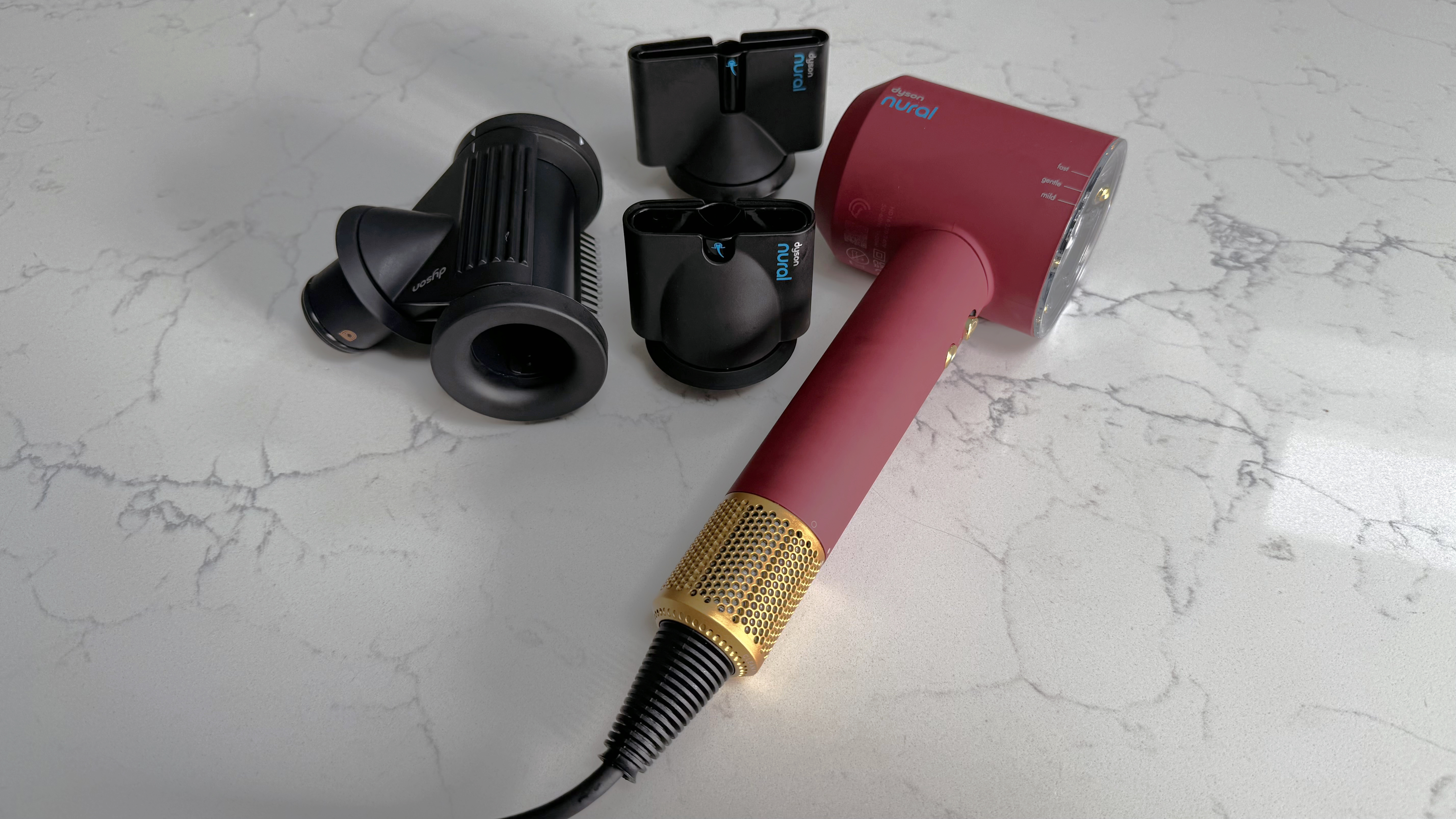
The Nural also has Attachment Learning, which recognises which nozzle is fitted via RFID chips and remembers your preferred settings.
For example, if you swap to the diffuser, the Nural will automatically drop to your usual diffuser heat and speed. The Pause Detect feature then cuts the airflow when the dryer is put down and resumes when you pick it back up.
The Travel has neither of those features but it is compatible with the entire Supersonic and Supersonic Nural attachment range. If you already own the Nural, you can pack your existing nozzles and diffuser and use them on the Travel.
Winner: Dyson Nural – the Travel's auto-voltage is the most widely practical feature across the two dryers but the Nural is a much more advanced choice.
Dyson Supersonic Travel vs Supersonic Nural dryer: specs
Swipe to scroll horizontally
Wattage: |
1,000–1,220W |
1,600W |
Weight (without cord, appox): |
0.7lbs / 330g |
1.5lbs / 684g |
Size (H x W x L, approx): |
2.7 x 2.8 x 8.7 inches / 6.8 x 7.1 x 22.2cm |
3.0 x 3.8 x 11.3 inches / 7.7 x 9.8 x 28.8cm |
Airflow settings: |
2 |
3 |
Temperature settings: |
3 |
4 |
Extra modes: |
Cool shot |
Cool shot, Scalp Protect Mode, Pause Detect, Attachment Learning |
Cord length: |
6.6ft / 2m |
8.6ft / 2.6m |
Should I buy the Dyson Supersonic Travel or Supersonic Nural dryer?
Buy the Dyson Supersonic Travel if...
✅ You travel frequently and your hair matters to you: Hotel dryers are a lottery. The Travel gives you consistent Dyson-quality results wherever you are.
✅ You already own a Dyson Supersonic or Nural: The attachment compatibility means you're not buying a second set of nozzles – just a travel body for your existing routine.
✅ You have fine or mid-length hair: The reduced airflow won't be an issue for finer hair types. Four minutes is still fast, and the intelligent heat control means the finish is just as good as you'd get from a full-size dryer.
Buy the Dyson Supersonic Nural if...
✅ You want the best Dyson for home use: Full airflow, smarter controls, color-coded LEDs and five attachments make this the more complete package for everyday drying.
✅ You have a sensitive scalp or fine hair at the roots: Scalp Protect Mode works in the background and over months of daily use, the difference in root and hair health is noticeable.
✅ You dry your hair every day: The Nural's Attachment Learning and Pause Detect are small features that add up to an easier daily routine.
Follow TechRadar on Google News and add us as a preferred source to get our expert news, reviews, and opinion in your feeds. Make sure to click the Follow button!
And of course, you can also follow TechRadar on YouTube and TikTok for news, reviews, unboxings in video form, and get regular updates from us on WhatsApp too.
Victoria Woollaston is a freelance science and technology journalist with more than a decade’s experience writing for Wired UK, Alphr, Expert Reviews, TechRadar, Shortlist and the Sunday Times. She has a keen interest in next-generation technology and its potential to revolutionise how we live and work.
What's Your Reaction?
 Like
0
Like
0
 Dislike
0
Dislike
0
 Love
0
Love
0
 Funny
0
Funny
0
 Wow
0
Wow
0
 Sad
0
Sad
0
 Angry
0
Angry
0









Comments (0)