

Electric or gas? BMW goes both ways with new 2027 X5 and iX5.
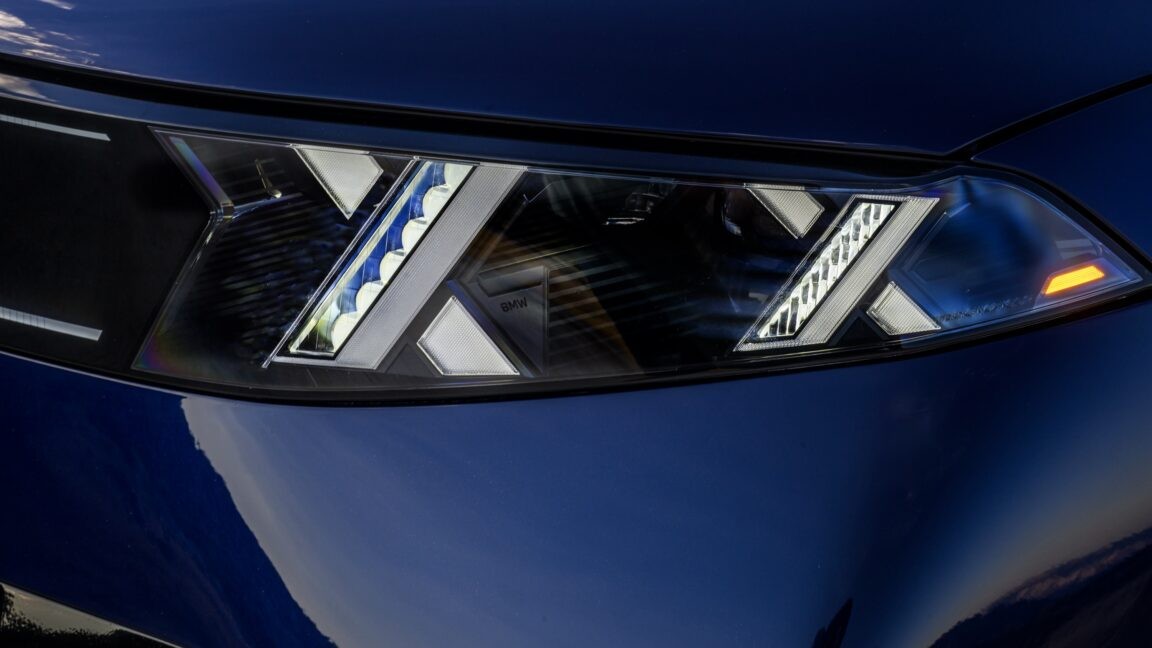
460 kW charging and 450 miles of range are among the reasons the EV is the one to get.
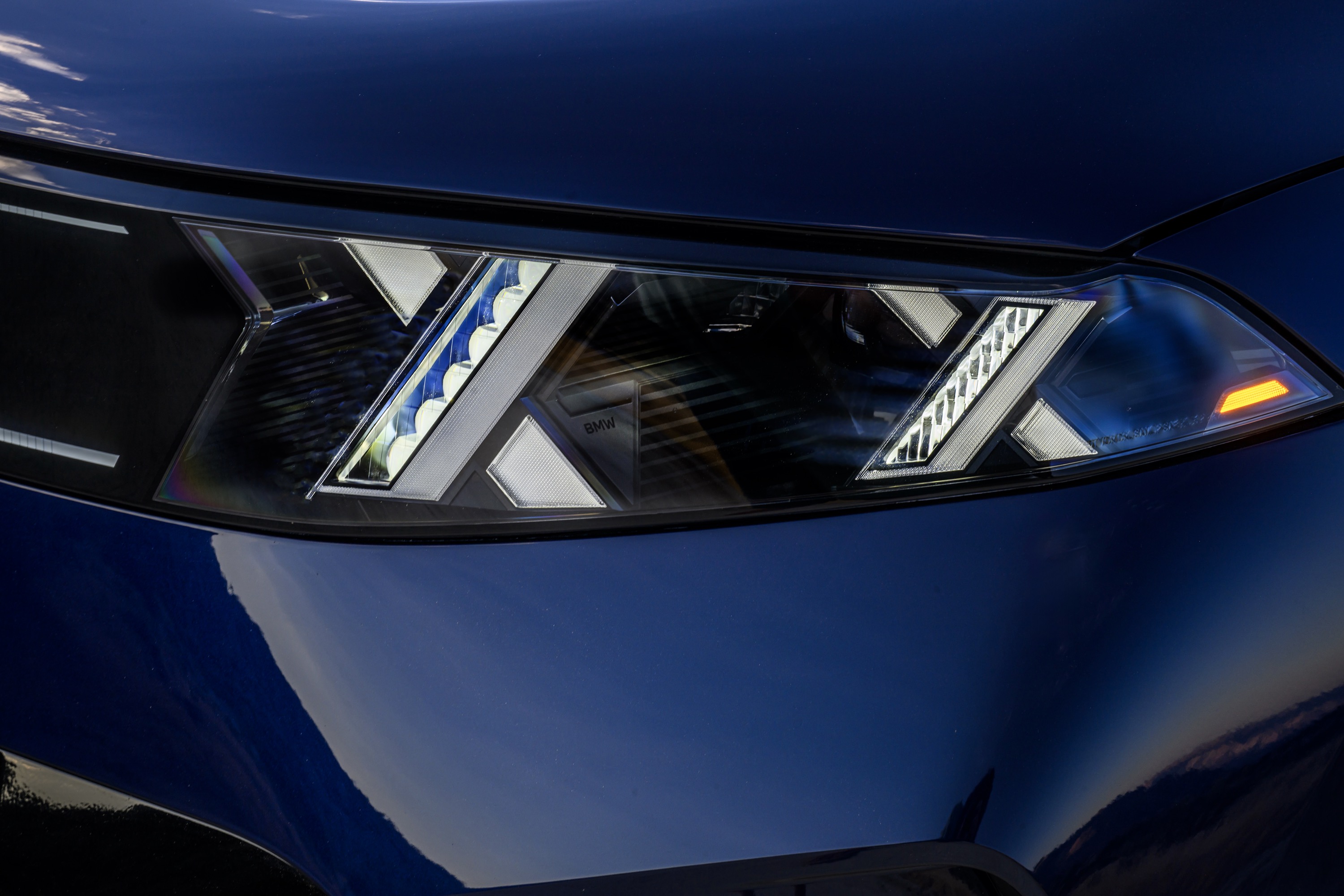
There's a new generation of BMW X5, and it wants you to know it. Credit: BMW
There's a new generation of BMW X5, and it wants you to know it. Credit: BMW
When we first drove BMW’s first Neue Klasse model, the iX3, it quickly revealed that BMW knows how to make a good electric vehicle. A clean-sheet design, it featured the automaker’s sixth-generation electric powertrain, a completely reimagined dashboard, and powerful computers to run the whole show. Now, much of that technology is being ported over to the larger X5 line.
But BMW knows not all its customers are ready to go electric, especially in the US, so it’s sticking with its powertrain-agnostic CLAR platform, as used in cars as diverse as the large 7 Series and the new gasoline 3 Series. Which means in addition to the all-electric iX5, there are also mild hybrid and plug-in hybrid X5s available, and in time, even a hydrogen-powered option. For now, as I’ll explain, I think the EV is the pick of the bunch.
Pick your power
The most conventional option is the X5 40 xDrive, powered by a 3.0 L turbocharged inline six-cylinder engine that generates 394 hp (294 kW) and 428 lb-ft (580 Nm). The 48 V mild hybrid system can contribute a decent slug of torque (148 lb-ft/200 Nm) if necessary, and the engine operates under the Miller cycle for better efficiency, as well as featuring the usual BMW engine technology, like variable valve timing. Expect around 26 mpg (9 L/100 km) from this powertrain and a full-to-empty range of 569 miles (915 km).
In time, a 400 V plug-in hybrid X5 50e xDrive will join the mix on the production line at Spartanburg, South Carolina, with a 26.5 kWh battery pack and about 44 miles (71 km) of electric range. And eventually, BMW’s hydrogen fuel cell tech will find its way under the hood of the new-generation X5 too. But those wanting something more efficient than the X5 40 can consider the iX5.
BMW is sticking with its strategy of an asynchronous motor for the front axle and an electrically excited synchronous motor for the rear drive unit, thanks to the lower losses of these motor types compared to motors that use permanent magnets. There is a combined output of 570 hp (425 kW) and 593 lb-ft (804 Nm): The front motor generates 245 hp (183 kW) and 225 lb-ft (305 Nm); the rear produces up to 325 hp (242 kW) and 369 lb-ft (500 Nm).
BMW arguably helped popularize the SUV with its first X5. BMW
Between the axles at the heart of the iX5 is a rather massive 144 kWh (usable) battery pack, made up of BMW’s new 120 mm cylindrical cells. These are taller than the 95 mm cells in the iX3, which increases energy density by 30 percent over the smaller SUV’s pack. So even if it’s not quite as long-legged as the gas X5, it should still get 450 miles (724 km) on the EPA test cycle, BMW told us. The car’s route planning is designed to take charging into account and uses onboard AI to “consider expected charging capacity, reliability, and precise station location data when selecting stops.” It will even automatically open the charging port flap when you arrive.
Like the smaller Neue Klasse EVs, the pack operates at 800 V, but it is even more capable when it comes to DC fast charging. At a demo during the first drive in California, we watched as an iX5 plugged in at 10 percent state of charge. Within a little over nine minutes, the EV had reached 50 percent SoC, peaking at 465 kW and averaging 375 kW throughout the session, which delivered 61.5 kWh. (The IONNA station had been specially upgraded to charge above the usual 400 kW.) While that kind of power level is now old hat for some Chinese automakers, it’s a big step forward for a European OEM.
A 10–80 percent fast charge takes as little as 22 minutes—provided you have access to a 460 kW charger—via the NACS port. That same port will accept up to 15.4 kW of AC power via BMW’s home charger, or you can use the provided 11 kW onboard AC charger. There are adapters for both V2H and V2L, as the X5 is capable of bidirectional charging.
No more dials
The Panoramic Vision display at the base of the windshield is imported from the Neue Klasse, and that’s no bad thing, as it works just as effectively here. BMW
For decades, BMW’s orange-lit cluster of instrument dials was instantly recognizable. But the move to digital cockpit displays put an end to that. Now, the new HMI paradigm from Munich is the Panoramic Vision display, which blends into the windscreen’s frit (the black border that’s painted on). The display is clear and quite minimalist but very legible, appearing a few inches further down the hood and thus closer to where your eyes focus on the road than if you had to look down at a conventional dash. It first showed up in the iX3 and now arrives in the bigger X5. While it looks unfamiliar at first—and people sure seem to hate the unfamiliar these days—together with the full-color heads-up display, you rarely need to look down into the cockpit while driving.
That goes for interacting with the infotainment system, too. The trapezoidal touchscreen and BMW’s current iDrive OS user interface are easy to use, but the onboard personal assistant works much better than the Alexa-based system did last year in the early iX3 we drove. I recognize that I’m an outlier using voice commands to interact with the car, but when they work, I’m going to use them. Particularly in the absence of physical controls—“Hey BMW, turn on the driver’s seat massager” is easier for me to do behind the wheel than tapping the car icon to access vehicle settings and then scrolling down to seats and then selecting the tab for massage and then turning it on.
There’s also a passenger screen, although, helpfully, BMW made this its own option rather than including it in a package. The screen only allows the front seat passenger to watch streaming videos, play games, or browse the web—they cannot interact with native infotainment functions like navigation or the climate settings from that screen, just the one to its left.
The iX5 stops for red lights
Less well-equipped back seats are also available. BMW
Another difference between the gasoline X5 and the iX5 is that the latter features BMW’s new “Heart of Joy.” This is one of the powerful domain controller computers that replaces the jumble of black boxes and single-function ECUs, in this case the one that manages vehicle dynamics. As we found with the iX3, this clever electronic brain enables solid chassis and powertrain control, including the ability to come to an incredibly smooth stop while one-pedal driving.
But the iX5 has another party trick that I didn’t notice in the smaller, cheaper EV: It will automatically detect red lights and stop signs, alerting you and braking the car if necessary (i.e., you were about to run the light or sign). The feature works whether you’ve engaged active drive assist or not. It’s always there like a safety net along with the car’s other advanced driver assistance systems. (I am sure you can disable this feature like the others, although I didn’t check, and I’m sure people will post comments with their particular edge case. Given driving standards these days, I’d be happier if everyone left it running.)
The new assist suite is called BMW Symbiotic Drive, and it’s of the very latest generation of ADAS that allows the driver to apply brake inputs without canceling out of active driving mode—only a heavy stomp on the brake will shut off cruise control.
The EV drives better
Neither X5 nor iX5 are unpleasant to drive. The X5’s engine is quiet, and neither car suffers from much wind noise. Unlike the iX, which had something of a “skyhook” magic carpet ride, both iX5 and X5 are more firmly sprung, but not bone-rattlingly so. But I give the edge to the heavier iX5—although the battery adds to a hefty 6,200 lb (2,813 kg) curb weight, the extra mass helps dampen the short-duration shocks that make it past the X5’s (optional) adaptive air suspension. Longer-duration bumps are smoothed out by either car.
If you have passengers in the iX5, you might find Sport mode has too violent an initial throttle tip-in; in the other throttle settings (eco, comfort), this is not an issue. The iX5 also offers five levels of lift-off regenerative braking, from none at all (it coasts very well) to 0.6 G of regen. And it has true one-pedal driving that will bring you to a complete stop.
The 2027 X5 40 xDrive starts at $72,100, plus a $1,450 delivery and handling charge, and you can already find them in BMW showrooms. There is still a premium for the electric version—144 kWh of lithium-ion isn’t cheap, after all. Thus, the iX5 60 xDrive starts at $79,800 plus delivery and arrives in Q1 2027.

Jonathan is the Automotive Editor at Ars Technica. He has a BSc and PhD in Pharmacology. In 2014 he decided to indulge his lifelong passion for the car by leaving the National Human Genome Research Institute and launching Ars Technica's automotive coverage. He lives in Washington, DC.
What's Your Reaction?
 Like
0
 Dislike
0
 Love
0
 Funny
0
 Wow
0
 Sad
0
 Angry
0








Comments (0)