

7 Upcoming Sci-Fi Series, Ranked By Hype (2026 and Early 2027)

Why do sci-fi shows generate such massive hype? A select few, like Fallout or Cyberpunk: Edgerunners, bank on pre-existing fanbases, but most genre titles are highly anticipated purely due to their exciting premise. Stories about technological collapse or corporate overreach feel urgent and relevant, while dystopian cautionary tales are a fun way to explore speculative scenarios. Sci-fi also promises intricate world-building, be it through grounded space settings like The Expanse or alternative timeline tales like For All Mankind.
Sci-fi is also as versatile as it gets. Shows like Paradise blend action-thriller elements with a puzzle-box narrative that sparks enthusiastic theorycrafting and discussion. There’s also hype surrounding talented showrunners like Vince Gilligan (Pluribus) or Jonathan Nolan (Westworld), who never fail to push the limits of the genre in intriguing ways. With that in mind, here are seven upcoming sci-fi shows that are highly anticipated for a plethora of reasons, ranked by hype.
7 Blade Runner 2099
 Image: Amazon MGM Studios
Ridley Scott’s Blade Runner paved the way for commercially viable cyberpunk media, becoming one of the most influential sci-fi movies of all time. Its sequel, Blade Runner 2049, etched a flawed legacy with an interesting continuation of its complex themes. Prime Video’s upcoming series, Blade Runner 2099, presents a unique scenario: What would the world look like when the replicants take over?
This premise completely flips the status quo of previous entries. Humans are now second-class citizens and replicant blade runners are at the top of society. Apart from boasting a star-studded cast, Blade Runner 2099 has secured Scott’s involvement as executive producer, with production designer Paul Inglis (Game of Thrones) creating the tactile world of the show. These are great reasons to look forward to a show that seems to be subverting franchise expectations by daring to do something unexpected.
6 Alien: Earth, Season 2
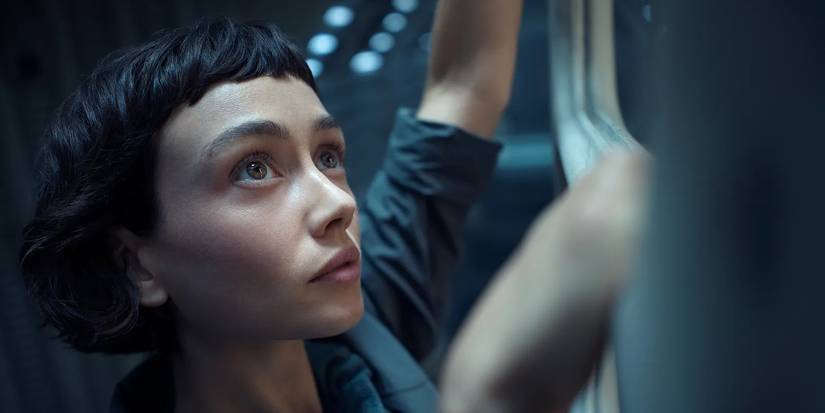 Image: FX
Another Ridley Scott film offshoot, Noah Hawley’s Alien: Earth was a pleasant surprise for several reasons. The show was the first to streamline sprawling franchise lore into the television format, and did so by radically evolving the existing storyline. Season 1 opens in the year 2120, two years before Scott’s Alien, when a research vessel with extraterrestrial specimens — including a Xenomorph — crash-lands into a major metropolitan area.
Hawley introduces a completely fresh setting that allows new characters to assume the stage. There’s also more room to explore unethical corporate motivations, like the consciousness of terminally ill children being used as fighter units inside synthetic bodies. Alien: Earth also questions who the real “monster” is. Although a gnarly creature feature that isn’t afraid to indulge in all-out action and body horror, the show ultimately lingers on the inhumane nature of hyper-capitalism and corporate greed. Season 1 ends on an exciting cliffhanger, making the anticipation for the next season feel earned and well-founded.
5 Ahsoka, Season 2
 Image: Lucasfilm Ltd.
No matter how flawed a Star Wars show may be, it ends up generating enough hype for both long-time fans and casual viewers to tune in. The case for Ahsoka is unique, as its hype rests on existing animated entries like The Clone Wars and Star Wars: Rebels, with Ahsoka Tano (Rosario Dawson) being a beloved character. Season 1 of Ahsoka feels like a live-action Rebels at certain points, especially with the presence of legacy characters like Anakin Skywalker (Hayden Christensen) and Ezra Bridger (Eman Esfandi).
Season 2’s major draw is Grand Admiral Thrawn (Lars Mikkelsen), an iconic villain who poses a grave threat as a remnant of the Galactic Empire. This is pretty high-stakes from a lore perspective, as the show has the opportunity to expand franchise mythology like never before. Ahsoka’s identity as a Jedi also carries great nuance, just like the complexity granted to her ex-padawan, Sabine Wren (Natasha Liu Bordizzo). Excitement over major space battles and lightsaber duels is a given, along with meaningful character growth that will potentially enhance what we already know.
4 3 Body Problem, Season 2
 Image: Netflix
Liu Cixin’s Remembrance of Earth’s Past book trilogy has been adapted into 3 Body Problem, which is set to return with a high-budget second season and enhanced stakes. Game of Thrones showrunners David Benioff and D. B. Weiss managed to streamline the sprawling novels into a memorable first season so far, although opinions remain divided on pacing and characterization. Even so, 3 Body Problem accomplishes the challenging task of conveying the high-concept ideas that drive the books, creating a compelling puzzle-box narrative that has kept audiences hooked.
Season 1 establishes astrophysicist Ye Wenjie (Rosalind Chao) and her motivations to invite an alien race known as the San-Ti to invade Earth. A group of friends known as the Oxford Five get involved in the mystery, unraveling more about the San-Ti through a mysterious virtual reality game. Season 2 is set to revolve around the Dark Forest hypothesis, potentially leaning into hard sci-fi concepts such as the three-body problem and quantum entanglement. As Cixin’s trilogy is sweeping in scope and tone, it is natural to expect the same from 3 Body Problem.
3 Silo, Season 4
 Image: Apple TV
Dystopian sci-fi shows are dime a dozen, but Silo has managed to set itself apart over the course of three seasons. Its fourth and final season is the most anticipated, set to pay off an elaborate narrative setup at the end of the third season. Silo is about the titular underground silo with 144 levels, whose current inhabitants believe that the structure has been built to protect them from the toxic environment outside. After the death of the silo’s sheriff, engineer Juliette Nichols (Rebecca Ferguson) embarks on a long and arduous journey to uncover the truth.
Silo has always been a slow-burn affair. The fourth season is expected to answer burning questions that have been posed since the first season, such as the true purpose of the silo project. As the show is based on Hugh Howey’s book trilogy, there’s hope for a meaningful, structured ending that reflects the consistent quality of the show. It is also fair to assume that Silo will close out on an emotional note, as the extreme nature of the conflict is bound to rack up casualties or put our favorite characters in danger.
2 Foundation, Season 4
 Image: Apple TV
Isaac Asimov’s Foundation has been adapted into an excellent Apple TV show by David S. Goyer and Josh Friedman. A tyrannical Empire rules most of the known galaxy, thanks to a triumvirate of leaders who are clones of a long-deceased Emperor. The premise hinges on Professor Hari Seldon (Jared Harris), who devises a mathematical technique called psychohistory that allows him to predict the future. After discovering the Empire’s inevitable downfall and the eventual birth of a new era, he sets out to shorten the upcoming dark ages.
Season 4 will veer into fresh directions, as new showrunners Ian Goldberg and David Kob will take over while still sticking to the core blueprint for the evolving story. The previous season also ended with a massive bait-and-switch, completely subverting expectations and our understanding of how psychohistory works. The fourth season will also draw from Asimov’s Second Foundation, which widens the story and heralds the return of certain fan-favorite characters.
1 Neuromancer
 Image: Apple TV
William Gibson’s Neuromancer is a cornerstone cyberpunk novel, and its long-awaited Apple TV adaptation looks promising so far. Gibson’s prose is notoriously difficult to translate to the screen, which makes Neuromancer all the more exciting for attempting to do the impossible. The story opens with super hacker Case (Callum Turner), a down-on-his-luck man with a damaged spinal cord that blocks him from accessing this world's version of the internet, known as "the Matrix." Desperate to survive, Case agrees to carry out a risky heist for a shady individual known as Armitage (Mark Strong), who is hiding a world of secrets in a story built on deception.
Cyberpunk owes a lot to Neuromancer, as everything from "cyberspace" to the act of “jacking in” to the net was introduced in Gibson’s novel. These concepts are not novel anymore, but the show has the unique opportunity to showcase why this particular story is worth telling. This is a story about tech anxieties, corporate surveillance, and rogue artificial intelligence — themes that are more relevant today than ever before. That unprecedented timeliness, combined with the show’s potential to introduce something unprecedented to the cyberpunk genre, makes Neuromancer the most hyped sci-fi show in the near future.
What's Your Reaction?
 Like
0
 Dislike
0
 Love
0
 Funny
0
 Wow
0
 Sad
0
 Angry
0








Comments (0)