

Cheap vs. Expensive Camera Gear: Where Paying More Actually Pays Off
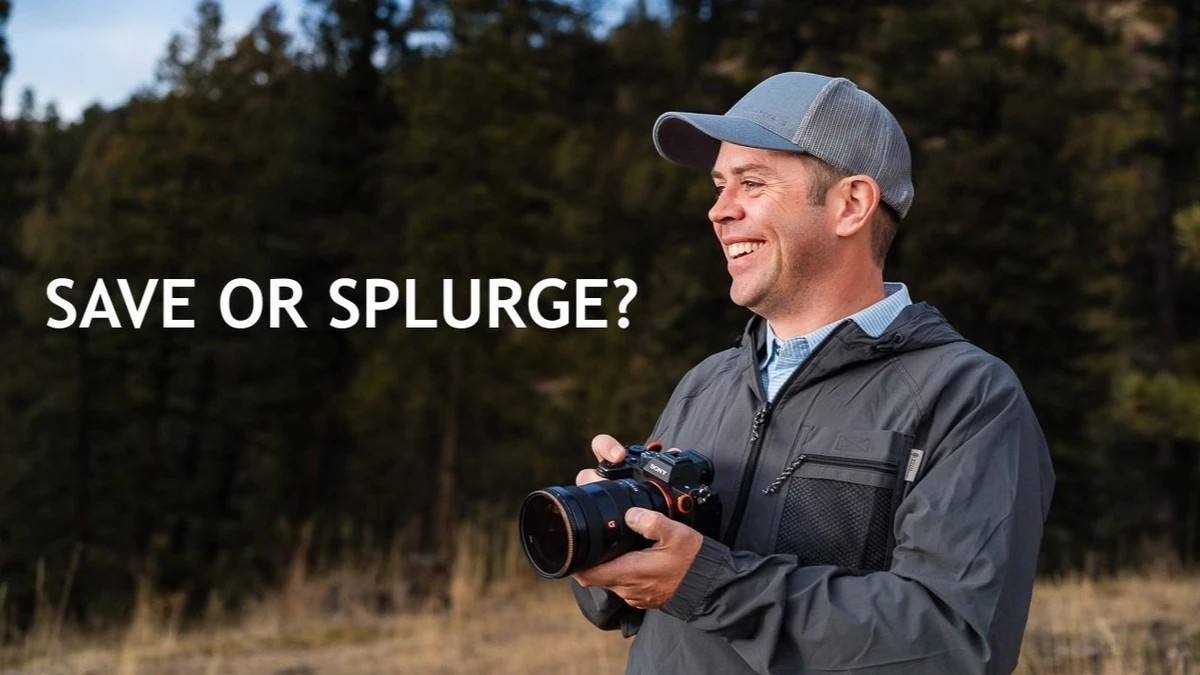
Most gear budgets get shaped by an urge to buy the best version of everything, and that urge rarely lines up with what improves your pictures. Knowing which purchases change your results and which only change your bank balance can free up hundreds or even thousands of dollars for the items that protect your work.
Mark Bergreen of The Bergreens puts every purchase through a three-part test: "Does spending more change the photograph I can create? Does it make that photograph easier to capture? And what happens when the cheaper product fails?" He starts with camera bodies, setting a $1,000 camera beside a $6,000 one and pointing out that most people can't tell the resulting images apart. Premium bodies do earn their price in specific situations. You get faster shooting, deeper buffers, stronger autofocus, better video features, more physical controls, and safeguards like dual card slots, which the Bergreens considered mandatory back when they photographed weddings. For sports and wildlife, the newest AI-powered autofocus can be the difference between a sharp frame and a missed one. If you photograph landscapes, portraits, travel, or family life, though, a flagship probably won't transform your work, and its complexity can even get in your way. Before upgrading, he suggests naming the limitation you're trying to get past, whether that's missed focus, too little resolution for large prints or heavy crops, or video features your work requires, or admitting that you mostly just want something new. Pick the body that solves a real limitation and go no further, because last year's model was hyped just as hard as this year's.
Lenses get different treatment, because a new focal length or a wider aperture can change what your photographs look like. A new focal length can open up a new perspective or working distance, and a faster aperture lets you work in low light and separate your subject from the background. Bergreen still doesn't default to the priciest version. When he's curious about a focal length or lens type, he rents or buys something affordable, often from Viltrox, which offers some pro features at low prices. The lens has to earn a permanent spot in his bag before he considers a premium replacement. His 16-35mm is the example of a lens he uses so constantly that faster autofocus, better weather-sealing, a wider aperture, or flare-resistant coatings would show up in the photos he delivers to clients. He's careful to separate a lens that looks better on paper from one that produces visible benefits in his own pictures.
Camera bodies also age more slowly than they used to, partly because manufacturers keep improving them after release. Nikon added a dedicated bird-detection mode to the Z8 through a free firmware update, and Fujifilm has a long record of pushing new features to bodies that are already on shelves. A camera you buy today may get better over the next year or two without costing you anything more. That shifts the math on previous-generation and used bodies, which Bergreen calls some of the best values available, especially during holiday sales. Rental houses fit the same mindset on the lens side. A weekend rental of a lens you're unsure about costs a fraction of its purchase price, and it answers the question of whether you'll keep reaching for it. If you shoot occasionally or are still figuring out your style, renting and buying used let you test ideas cheaply. That keeps more money in reserve for the moment a real limitation shows up.
Reliability is where Bergreen stops trying to save. He almost always recommends the camera manufacturer's batteries over third-party options, even though they cost more. Memory cards get the same caution, since a failed card can wipe out images you can't recreate. He doesn't chase the fastest cards, which he considers overkill unless you shoot high frame rates or video. Instead, he buys a trusted mid-tier option and has used SanDisk SD cards for years without a problem. They come in speed tiers to match your camera, and his pick in the video's description is the SanDisk Extreme PRO UHS-II. For storage, he would rather own two mid-tier drives from a name brand than one expensive drive, so the redundancy does the protective work. He relies on Samsung T7 SSDs, which aren't the fastest available but have been solid for him, even if backups take a little longer.
Tripods follow a similar logic. Cheap ones flex and drift as you compose, and putting an expensive camera on one is a risk he'd avoid, especially over rocks, cliffs, or moving water. Most people never need top-of-the-line carbon fiber, though, and if you work near your car and only set up a tripod now and then, a sturdy aluminum model from the middle of the market may be all you need. The Bergreens carry a Peak Design Travel Tripod into the mountains, where weight, size, and stability in Colorado wind all matter, and he says paying a little more bought dependable locks and replaceable parts. His rule is to buy the cheapest tripod that holds your gear steady and that you'll enjoy using enough to bring along.
Camera bags don't touch image quality, but they decide whether your camera comes with you, so he spends for comfort, fit, and function rather than branding. Think about how a bag feels fully loaded, how quickly you can reach your gear, and whether it suits the way you shoot, since street, wedding, and outdoor photographers need very different bags. For hiking, a real hiking pack with a camera insert can work, though he prefers a dedicated camera pack built for the trail, such as the Shimoda Action X40 V2. Buy for the gear you take on a normal shoot rather than a bag for every piece you own, and if an inexpensive bag fits your gear and keeps it safe, keep the money. When discomfort starts making you leave gear at home, it's time to upgrade.
That leads to what he calls the holiday sale trap. He wouldn't buy flagship gear because the marketing looks compelling, a premium lens before knowing whether he enjoys that focal length, an extremely cheap tripod for an expensive camera, or unknown brands of batteries, storage, or memory cards. Above all, he wouldn't upgrade just because something is on sale. Discounted gear that fixes nothing you struggle with isn't a saving, and it will go on sale again. Instead of asking how much you're saving, ask whether the purchase will change how you create photographs.
Bergreen ends the video by asking viewers to name a premium purchase that has paid off for them, a fair question to put to yourself before you check out.
What's Your Reaction?
 Like
0
 Dislike
0
 Love
0
 Funny
0
 Wow
0
 Sad
0
 Angry
0









Comments (0)