

Your Heavy Tripod Shouldn't Go on Vacation: The Case for a Lightweight Backup
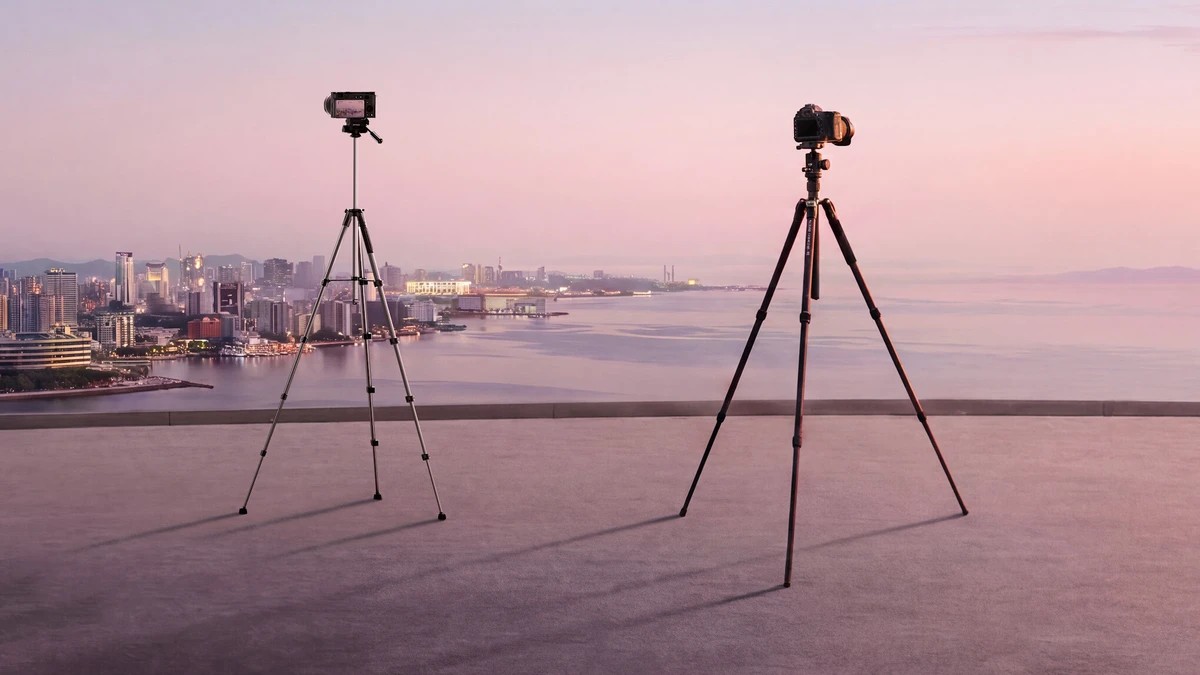
If you've shot professionally for years, you probably own a heavy tripod you trust completely, and it's the last thing you want to drag on vacation or to smaller productions. Here, I use the new K&F CONCEPT TA02 as an example of why a lightweight second tripod is worth owning.
This is a sponsored post from K&F CONCEPT, and the first thing you might notice when comparing the TA02 to your sturdier "professional" tripod is how basic it looks. Its five-section aluminum legs, lever locks, and center column are pretty traditional, since so many tripods are designed exactly like this. Where it stands apart is size and weight, and that raises an interesting question about when it makes sense to own a smaller, lighter tripod when you already own something substantially larger and heavier.
The Problem With Traveling With a Pro Tripod
A typical professional setup in the $400 to $600 range, with a video head or a pan head, is built for stability first and travel second. For example, Manfrotto's MT055XPRO3 legs with the 502AH fluid head cost $399.95 at B&H as of November 2026. The company lists that kit at 4.19 kg (9.24 pounds), with a closed length of 74.5 cm (29.3 inches). Benro's A673LL Lightning Lock kit with the BV6H PLUS head sells for $549.95. Its legs alone weigh about 4 kg (8.9 pounds) and close to 71 cm (28 inches) before you add the video head. Both are great tools, but taking either one on vacation or throwing it in your bag for those "just in case" situations often brings a handful of problems.
It's Big and Bulky
A kit that closes to almost 30 inches, like the Manfrotto, won't fit inside a typical carry-on, and it can be awkward even in a checked suitcase. You often have to lay it diagonally across your luggage, which means everything else gets squeezed around it. Larger tripods also usually ride strapped to the outside of a backpack, where they snag on doorways, crowds, and car trunks.
It's Heavy
Carrying an extra nine pounds or more feels fine for a short walk from the car to a location. Over a full day of sightseeing with kids, it becomes the thing you leave at the hotel, which defeats the point of bringing it. The same headache shows up on bigger professional shoots, where your main tripod is busy on the production you were hired for and you still want a second one for behind-the-scenes photos or video.
It's Expensive to Leave Behind
I love having a tripod stowed in my car at all times for the spontaneous photo shoots that come up when I'm least expecting them. However, a $400 to $600 tripod isn't something most people want living in their car permanently. You probably don't want it sitting in a hotel room or a vacation rental either, or anywhere unfamiliar where a stranger could carry it off.
It Marks You as a Target
Walking around a tourist area with a pro tripod and a big camera tells everyone nearby that you're carrying money and expensive gear. On a family trip, that kind of attention is the last thing you want, especially if photography is taking a back seat on your list of plans.
Travel Is Rough on Gear
Beaches, saltwater, and sand are hard on fluid heads and leg locks. Luggage handlers toss bags around, and anything crammed into an airplane or train's overhead compartment rarely comes out the way it went in. When you're traveling, your attention belongs on the adventure and your family, and babysitting a perfect-looking tripod shouldn't be part of the job.
Weight Limits Add Up
Airlines cap how heavy a checked bag can be, and a pro tripod can eat a huge chunk of that allowance before you've packed a single shirt. Going over usually means paying an overweight fee or leaving something else at home.
Why a Lightweight Second Tripod Makes Sense
The answer for a lot of photographers is a second, much lighter tripod that handles everything a trip asks of it. Just as important, it should be small enough that you'll actually bring it and simple enough that you won't spend the trip babysitting it. To be clear, the TA02 isn't meant to replace your main tripod, and K&F CONCEPT positions it as the basic model in its travel lineup, built for long trips where portability matters most. It's a tripod you can stop worrying about, so it can live in your car all year. That makes it handy for spontaneous landscape shots, social media video content, or those times you're called on to play family photographer at Christmas or a family reunion. It can also spend a day at the beach without putting your main tripod at risk.
Keep in mind that there's no free lunch when it comes to the perfect tripod. A heavier set of legs with a wider stance really is steadier, and you pay for that steadiness every time you carry or pack it. Nobody makes a single model that is both the top professional choice and a great travel companion, so most working photographers wind up owning one of each.
How the TA02 Compares
K&F CONCEPT rates the TA02 at 1,360 grams, or 3.0 pounds, which is roughly a third of the Manfrotto kit. It folds to 50 cm, just under 20 inches, which the company says is short enough for a 20-inch carry-on or a travel backpack. The brand lists a maximum height of 186 cm (73.2 inches) with the center column raised and 151 cm (59.4 inches) with it down. That means you can still shoot at eye level without the extra wobble of a raised column.
The aluminum legs carry a 4 kg (8.8-pound) rating, which K&F CONCEPT says covers mainstream full frame mirrorless cameras and DSLRs. That is well below the 10 kg Manfrotto rates its kit for and the 6 kg Benro lists for its head, which is exactly the tradeoff described above. The TA02 also comes with a universal phone holder and a Bluetooth remote that pairs with your phone for easy selfies and solo vlogging. That means the same legs can hold your camera one minute and your phone the next, and the remote lets you fire off a family shot while standing in the frame yourself.
A Monopod Made From a Full Leg
Even though the TA02 is a fairly standard design, its innovative monopod integration is worth pointing out, and it's the feature K&F CONCEPT highlights most. One leg comes off entirely and works on its own as a monopod, and the company says the switch takes no tools. Its product listing describes the process as pressing the leg collar, twisting the leg free, and remounting the head on it.
K&F CONCEPT TA02 with one leg removed and mounted as a monopod. Image by K&F CONCEPT | kfconcept.com
Many tripods in this size class build the monopod from the center column instead, which typically tops out at 24 to 36 inches. A full leg should reach farther than that. The extra length helps in a crowded city square, on a packed viewing platform, or at the back of a wedding ceremony, where three legs take up too much room. A single leg is also a lot quicker to set up when a moment is happening right in front of you.
A Step Toward Pro: The TS10
If you like the idea of a light travel tripod but want a bit more support, K&F CONCEPT also makes the TS10, which it calls the Pro model for long trips. The company lists it at 1.49 kg (3.3 pounds) with an 8 kg (17.6-pound) load rating, which is double what the TA02 carries. It also adds an Arca-compatible ball head and keeps the same detachable monopod leg. It folds to 43 cm (17 inches) and extends to 76 inches.
I'd think of it as an entry point into the professional side of things rather than a substitute for the Manfrotto or Benro kits above. Those use heavier legs and dedicated fluid heads for serious video work, and they sit in another league altogether. For a photographer who wants one step up from a basic travel model without adding much weight, though, it's worth a look.
Where a Lighter Tripod Falls Short
Of course, a lighter tripod comes with real tradeoffs, and the TA02 is no exception. Its 4 kg rating means it isn't the right support for a big telephoto lens or a fully built video rig, and its smaller footprint won't match a heavy pro setup in strong wind. K&F CONCEPT describes the top as offering 360 degrees of pan plus multi-angle tilt, which suits most travel shooting, but anyone doing architecture or product work will still want a precise geared head. I also couldn't find a published monopod length, so that's worth checking before you buy if reach matters to you.
Final Thoughts
Buying a heavy, professional tripod first means you'll have the right support for serious shoots down the road, but it also means you might not want to carry it anywhere else because it's so big and bulky. That's the real tradeoff. A lighter tripod can ride in your bag or your car all the time, so it's ready when an unplanned night shot or a long exposure to blur the water in a landscape comes along. In those moments, it's better to have a small set of legs with you than no tripod at all because the heavy one stayed home. The downside is that a lighter model may not be sturdy enough for your biggest lenses and camera bodies, and it won't hold up as well in high winds or rough weather.
After nearly 20 years as a photographer, I keep coming back to the old saying that the best gear is the gear you have with you. In my opinion, it's smart to own both kinds, and my studio is now filled with about seven different tripods for seven different situations. Whether you're looking at a Manfrotto or Benro kit that can cost hundreds, if not over $1,000, or something like the TA02 that you can keep in your car or pack in a carry-on, I think both belong in your arsenal. The TA02 is available from K&F CONCEPT and on Amazon. Do you travel with your main tripod, or do you keep a lighter one just for trips? Let me know in the comments below.
Images used with permission of K&F CONCEPT.
What's Your Reaction?
 Like
0
 Dislike
0
 Love
0
 Funny
0
 Wow
0
 Sad
0
 Angry
0






Comments (0)