

Turning a 25-Day Shot List Into 11 Production Days: Inside a Tempur-Pedic Studio Production
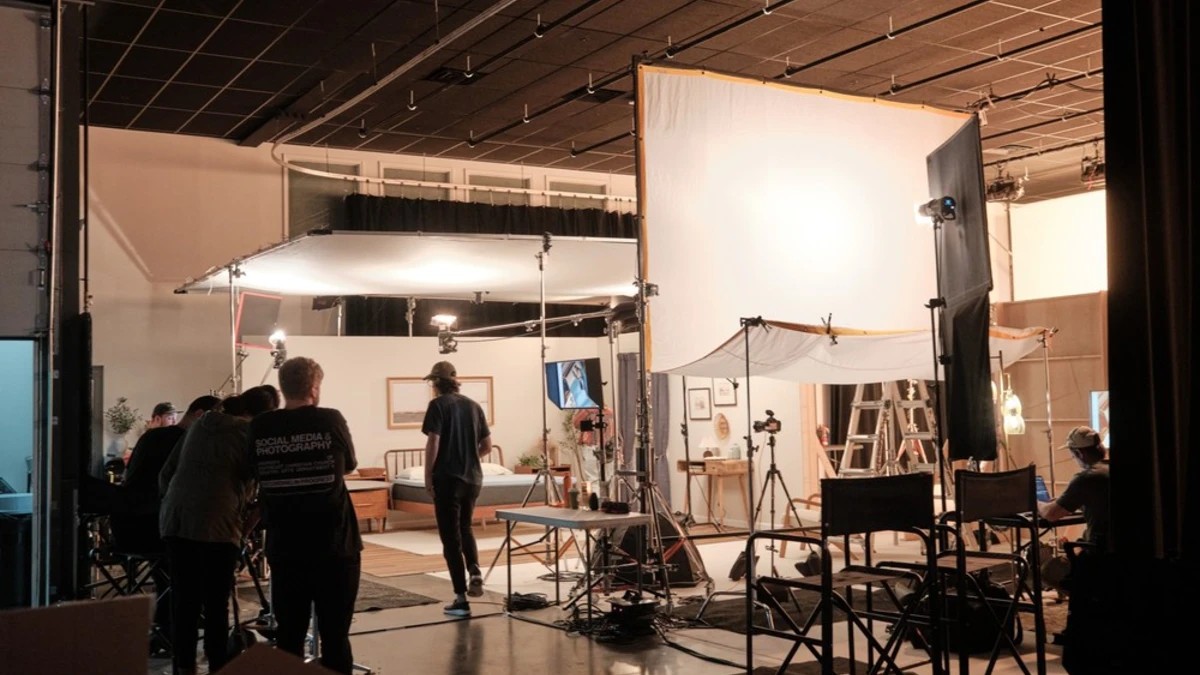
From estimate to final retouch: how we planned, lit, and photographed 25 Tempur-Pedic and Tempur Sealy products for Walmart and Wayfair in 11 production days.
I've photographed in some difficult places over the years, including Cambodia, Iraq, and Mount Kilimanjaro in Tanzania. Those jobs come with obstacles you can see coming, so I figured a studio production at home in Louisville, Kentucky, would be the easier one. Instead, it became the biggest studio production I've ever run and one of the most technical. It took two full bedroom sets, a crew of more than a dozen people, and a lot of planning. Below is how it came together, from the schedule math to the lighting and the workflow that kept post moving.
The Problem: Too Many Images, Not Enough Days
The brief from Tempur-Pedic arrived as a product list, not a polished treatment. Twenty-five products across two retail lines: Sealy Essentials for Walmart and Sealy To Go for Wayfair, covering pillows, mattress toppers, and bed-in-a-box mattresses. A few weeks later, Tempur-Pedic's own line came through the very same set.
Each product type came with its own formula. Every pillow needed 16 setups, six styled bedroom frames with nobody in them and ten with talent. Every topper and mattress needed 12, four without talent (three-quarter, straight-on close-up, straight-on wide, and overhead) and eight with talent. On top of that came silo images on white, and everything had to hold up for additional retailers like Amazon, Costco, and Home Depot.
My producer, Bryan, and I sat down with that list and started asking the obvious questions. How many days need talent? How big is the crew? How fast can we flip from one product to the next? Where does motion fit in? And how do 300 selects get retouched before the deadline? We counted it out with one camera covering every angle, and the number came back at roughly 25 production days. That's a budget no client signs. Asking a crew to go faster for longer wasn't a real plan either. The room itself had to work differently.
The Fix: Let the Cameras Design the Room
The answer was hiding in those repeating angles. If every product needs the same straight-on, three-quarter, profile, and overhead views, why keep carrying one camera to each spot over and over? Give every angle its own camera, lock it down, and leave it alone all day.
That's exactly what we did. Four Canon 5D Mark IV bodies, each with a Canon 24-105mm, each locked on a sandbagged tripod, except the overhead camera, which hung from a C-stand arm above the bed. A fifth 5D Mark IV sat on the digital tech cart as a floater, ready for anything the locked cameras couldn't see.
Locking the cameras down came with a trade-off. Something tucked neatly out of the straight-on frame might sit dead center in the profile frame. A combo stand, a sandbag, a stray cable, somebody's elbow. Every call about furniture, lighting, grip, and even where the crew stood had to satisfy four frames at once. I stopped thinking in terms of setups and started treating the room like one machine. That shift is what turned roughly 25 days into 11 production days and a single pre-light day.
Nadus Films handled the production around us, and our production designer built two 14-by-14-foot bedrooms side by side, a Walmart room and a Wayfair room. While we finished the Walmart days, the crew was already setting cameras and lights in the Wayfair room, so switching retailers didn't cost us a day.
Pricing It
Once the plan existed, it needed a price. We built the estimate line by line: 11 production days, the pre-light day, two bedroom sets, stills and motion, gear, studio, post, and retouching. Tempur-Pedic came back with their working number, and we went back and forth, trimming where we could while protecting the things that would hurt us on set if they disappeared. Your first estimate is an opening offer, not a final exam. It ended up as a six-figure production budget and the largest studio production of my career, and we put ink on the agreement on December 23.
Lighting a Room for Four Cameras
Every strobe on the lifestyle sets was a Profoto D2 500 Ws, nearly all of them running bare bulb. Rather than lighting one hero angle, I wanted the whole bedroom to glow like a real room on a slow morning, so it would hold up from all four locked cameras and the floater. Think stage lighting, not portrait lighting. Here's every light, starting with the two that did most of the work.
- The Window Kick: Outside the camera-right window flat, a D2 with 1/2 CTO fired through a sheet of diffusion hung behind the window, so it read as warm morning sun instead of a strobe. Two black floppies above it kept the light from crawling up the wall.
- Second Kick: Working alongside the window, another D2 pushed light onto the talent and product themselves. The window took care of the back wall, and this one made sure the bed and the people in it carried the same sunlit direction. Between them, the window and the second kick did most of the work.
- Overhead Bounce: A 20-by-20-foot UltraBounce flown flat over the set, with bare-bulb D2s on booms and stands firing up into it through 1/4 CTO, so the whole thing worked as one big ceiling bounce. That broad top source kept shadow density under the pillows and along the mattress edges low and consistent from every camera, with a long, gradual falloff instead of a hard shadow edge.
- Front Fill: A 12-by-12-foot silk stood at the foot of the bed, just behind the straight-on camera, with a bare-bulb D2 and 1/4 CTO firing through it to open up the shadows facing the lenses. A black solid along one edge controlled the spill.
- Camera-Right Fill: A bare-bulb D2 with 1/4 CTO bounced inside the room.
- Camera-Left Fill: A second bare-bulb D2 bounced to lift the shadows on that side, there mostly for when we photographed the room from the profile position.
- Talent: Once people got into bed, an Elinchrom Rotalux 39-inch Deep Octa came in on a boom from camera right to put a little kiss of light on the face.
Pre-Light and Documentation
We spent the whole pre-light day solving camera, lighting, and set problems before anyone from Tempur-Pedic set foot in the studio. Because we'd be rebuilding identical light and angles in a second room, my second assistant, Ryan, and I logged everything: the lighting ratio for each camera, a color of spike tape for each tripod position, and the height and distance of every camera. Camera A, for instance, sat at exactly 48 inches off the floor and 13 feet back from the bed, and every other position got logged the same way. It all went into a beat-up pocket notebook. A full set flip took close to three hours. Without those notes, it would have taken longer and looked different.
Tethering Four Cameras at Once
All four locked bodies ran into one MacBook Pro through Tether Tools TetherPro cables and a four-port USB hub, with every cable and camera color-coded so we knew instantly which one dropped.
Our digital tech, Adam, named each file by retailer, product, angle, and image number, exported from Capture One, and uploaded straight to a proofing gallery. The client picked selects in real time while we kept going, and those selects went right to our retoucher, Jordan, who we kept on video calls throughout. With roughly 300 finals due at the end of March and our last production day on March 14, post couldn't wait in line behind production. It had to happen alongside it.
When the Plan Meets Production
I walked in on day one feeling ready, and the plan started moving almost immediately. Some products were shipping from overseas with uncertain arrival dates, a few Wayfair pieces showed up late, and shots got added and cut along the way. Our line producer and 1st AD, Kelsey, kept the schedule flexible, grouped similar setups together, and got departments working side by side whenever we fell behind. She also learned to read the client's quick, conversational notes and turn them into instructions the crew could act on, which kept me behind the camera instead of in meetings.
I'm a big believer that commercial photography is a service business as much as a creative one. Great images matter, but so does how the client feels after twelve days in a room with you. Since the strobes kept the studio dark most of the day, we set up a little living room for the client and crew with rugs, lamps, armchairs, candles, and essential oils. It sounds like a small thing. On day nine, it isn't.
Why This Still Takes People
Our industry is in the middle of a big conversation about artificial intelligence right now. AI can already produce a believable bedroom, someone stretched out on a mattress, or a pillow with perfect loft, and those tools are only going to improve. What it can't reproduce is how this body of work actually got made. Every product had to be shown exactly as it is. Two sets had to be physically built. Talent had to be directed. And a room full of people had to make calls, react to problems, and work them out together.
That human side of commercial photography still matters a great deal to me. The job has never been just the final frame. It's collaboration, problem-solving, customer service, trust, and building something together that honestly represents a real product and a real brand. AI is already changing how images get made, and I've started using Claude as a tool in my own process. But it can't put a client, a photographer, producers, an art department, talent, and a crew in one room, working through real problems and reacting to each other in the moment.
Twelve days, thousands of frames, and more small decisions than I could ever count later, the lesson was simple: don't sleep on the details. They keep the production standing, they shape what the client experiences, and, in the end, they're what make the photographs possible. As this industry keeps shifting, I'd argue the people behind those details matter more than they ever have.
See the full Tempur-Pedic project and more of my commercial work at claycookphoto.com, and read the original behind-the-scenes story on my blog.
Final Images
Credits
- Client: Tempur Sealy International (Liz Layne, Rachel Dame)
- Photography: Clay Cook
- Production: Nadus Films
- Producers: Ryan Galanaugh, Mark Minnery
- Line Producer / 1st AD: Kelsey Forren
- Production Assistant: Blake Peterson
- Digital Tech / DIT: Adam Mescan
- First Photo Assistant: Luke Franke
- Second Photo Assistant: Ryan Grant
- Set Construction: John Travisano
- Production Design + Art: Jo Hall
- Art Assistants: Jacob Weaver, Emma Anderson
- Hair, Makeup & Wardrobe: Lauren Sutton
- Wardrobe: Kate Roach
- Casting: Helen Wells Agency
What's Your Reaction?
 Like
0
 Dislike
0
 Love
0
 Funny
0
 Wow
0
 Sad
0
 Angry
0








Comments (0)