

Living With the Mania MFZ, a Handmade Pinhole Camera With No Viewfinder
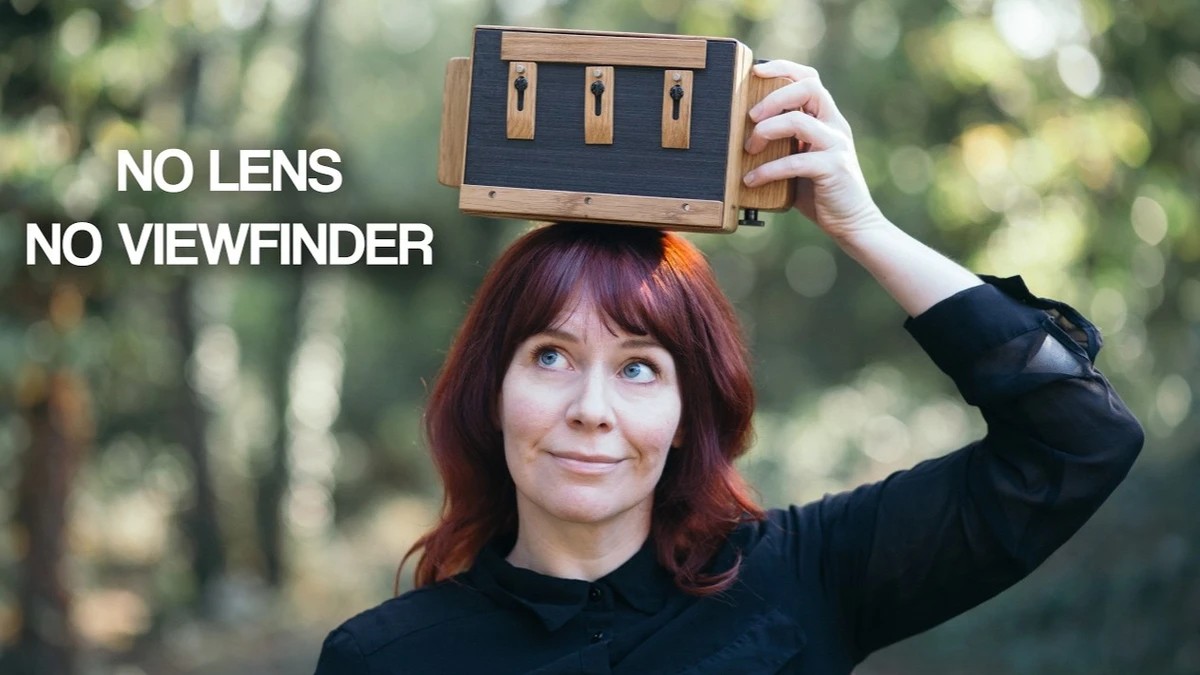
The Mania MFZ is a pinhole camera built from solid oak and magnets, with no lens, no viewfinder, and no shutter button, yet it shoots 120 film in several formats and at more than one focal length. A camera like this removes the automatic aids you lean on every day, which makes it a direct test of how well you can see a picture before it exists.
You start an exposure by sliding a wooden cover away from the pinhole and end it by sliding the cover back. Els Vanopstal spent several months working this way with the Mania MFZ along the French coast. Ralph Mann builds the camera by hand in Germany, and he sent her this one free, though she says he had no say over what went into the video. Light has to squeeze through a tiny hole, so almost every frame is a long exposure, ranging from a couple of seconds in sun to well over a minute in fog. Small wooden inserts change the frame size on the roll, from a square 6x6 out to long panoramic strips. Vanopstal came to the camera for the square format and ended up drawn to the wide frames, first trying them on a replica of Christopher Columbus' ship that had docked on the seaside. If you've only ever composed on a screen, the biggest adjustment is how much of the image has to live in your head.
Without a viewfinder, framing happens with a flat stick the maker calls the speculation wood. You line it up with dots marked on the camera body, sight along the line between two dots, and see roughly where each edge of the frame will fall. The same stick handles metering. Handheld light meters don't reach an aperture as small as a pinhole, so you take a reading at f/11 and use the stick to convert it to a pinhole exposure time. In one case, an f/11 reading turned into 6 seconds. Add-on modules extend the camera from roughly a 35mm equivalent to 55mm and 75mm, and the box also carries a filter holder, a wooden piece that keeps the cover from sliding open in a bag, three tripod sockets, and a pair of built-in levels. You can work methodically with everything you need on the camera itself, which is rare for pinhole gear.
Film stops responding in a straight line once exposures run past about a second, a behavior called reciprocity failure, and pinhole work lives almost entirely in that zone. Ilford publishes a simple formula for its black-and-white stocks: raise the metered time in seconds to a fixed power, which is 1.26 for FP4 Plus and 1.31 for HP5 Plus. A metered 10 seconds on FP4 Plus becomes about 18, and a metered minute stretches to nearly three. Kodak and other makers publish their own tables, and a free phone app can do the math in the field. Pinhole images also have nearly unlimited depth of field, so focus never decides whether a frame works. Exposure and composition carry the whole picture. That makes this kind of camera a natural fit if you already shoot landscapes on a tripod, or if you've been looking at slower ways of working as film has gained ground with younger shooters again. A notebook with each frame's metered reading and the time you actually used will teach you faster than any chart.
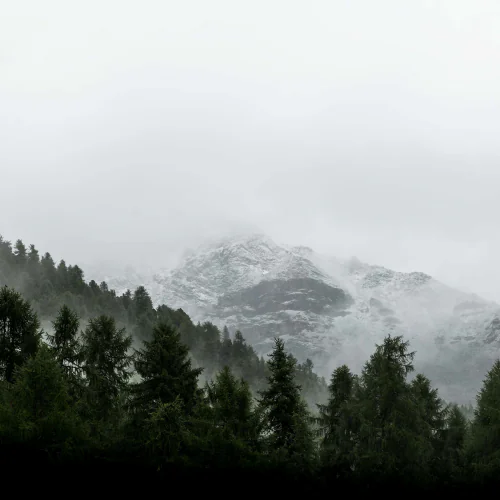
Portraits brought their own problems. Subjects had to hold still for six seconds while Vanopstal stood beside a box she couldn't see through, and she noticed herself composing more cautiously because she couldn't be sure how a frame would turn out. A sudden misty morning raised a different issue. The only film on hand was Ilford FP4 Plus, a 125-speed stock, so she rated it far faster than box speed to bring a four-minute calculation down to 1 minute 35 seconds while the fog was still hanging around. In her rush, she forgot to wind far enough between 6x12 frames, and the first two exposures overlapped. She sees that accident as a possible creative tool if you plan for it. The camera also has three pinholes instead of one, and the two outer holes let you make two separate exposures that join into a single wide panorama.
Because the camera can rewind film at any point, she rewound mid-roll, removed one of the focal-length plates to go from 55mm back to 35mm, and wound forward again to the next unused frame. Not every idea worked. For a self-portrait with a passing train, a red filter standing in for an ND stretched the exposure to 15 seconds, and the train, in the frame for only about 3 seconds, never registered. She still plans to keep at it until she gets the picture she has in mind. The camera pushed her out of her comfort zone, she says, but it also got her trying things without knowing how they would turn out, and she counts that element of surprise as a big part of shooting with it.
The handmade details she praises, from the framing dots to the notes on the back, are easiest to appreciate in the video, where she handles the camera up close.
What's Your Reaction?
 Like
0
 Dislike
0
 Love
0
 Funny
0
 Wow
0
 Sad
0
 Angry
0







Comments (0)