

Finland deploys new system to detect threats to undersea cables — distributed acoustic sensors measure vibrations from the seabed and informs the authorities and operators of suspicious activities
 (Image credit: Getty / Imaginima)
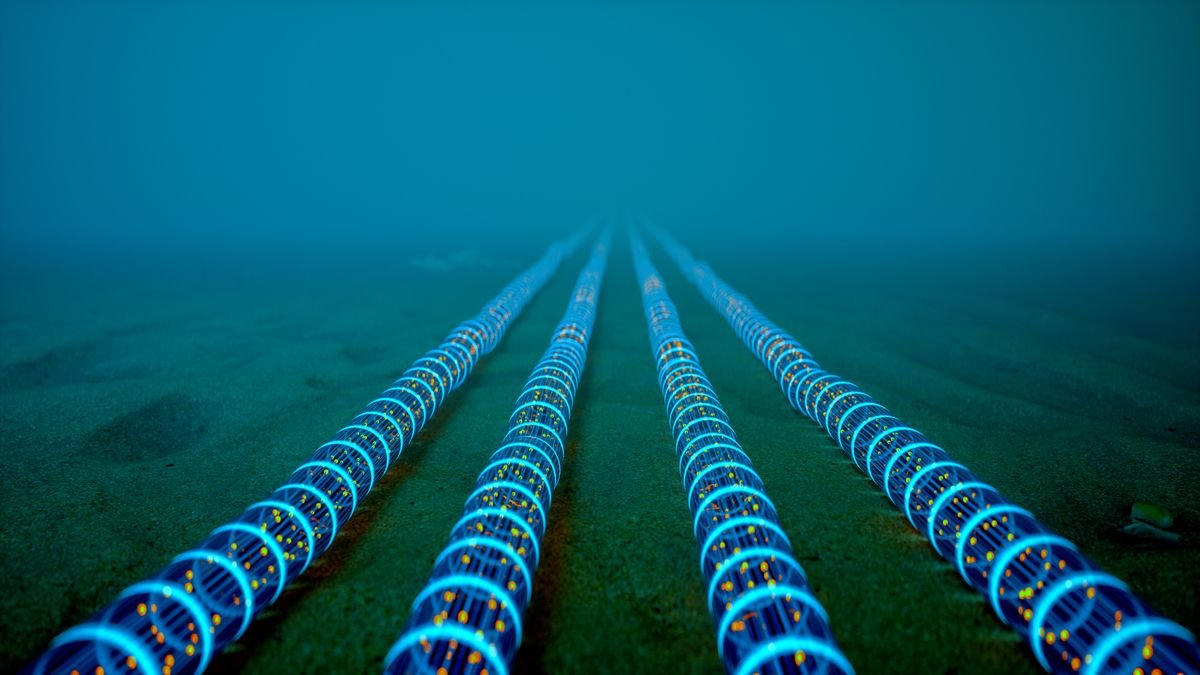
Elisa, a Finnish telecommunications company, has installed detection equipment on its undersea cables to monitor the critical infrastructure. According to the company’s announcement, the system is based on Distributed Acoustic Sensing (DAS), which turns the undersea cable into a long sensor that registers vibrations coming from the sea floor. The system has since been successfully tested, and it’s now being developed to automatically inform the Finnish Border Guard and the Finnish Navy, as well as the owner of the cable, of any irregularities.
"The protection of undersea infrastructure is a nationally important task. The recent cable breaks in mind, we have built a solution that provides an early warning of an approaching threat. We are very pleased with the tests that have now been carried out and the good cooperation with the Finnish Border Guard and the Finnish Navy,” Elisa New Business Director Jouni Petrow said. “Our quick response to the incident at the turn of the year prevented damage to other cables. Our goal is to use the early warning system to alert the authorities even before the first damage occurs."
Undersea cables carry about 99% of global internet traffic, with transactions worth billions of dollars going over them daily. However, this infrastructure is often left unguarded because of how sprawling the global submarine internet cable is. They’re often marked on nautical maps to ensure the seafarers are aware of their location and avoid damaging them, but it is now being weaponized by “shadow fleets,” which allegedly purposefully drag their anchors to damage these cables.
There have been multiple instances of incidents like this in recent years, mostly happening near geopolitical hotspots like the Baltic Sea near Russia, the Red Sea in the Middle East, and Taiwan in East Asia. More concerningly, Russian ships and submarines have been spotted multiple times near transatlantic data cables and are suspected of mapping the sea floor near them for future operations.
Because of this, countries are now investing in technologies to help defend these cables. The Australia, UK, and U.S. trilateral security agreement (AUKUS) is putting in an effort to develop an undersea drone designed to respond to threats to undersea cables. The Pentagon has even announced a call for proposals for small and cheap autonomous subs that can be developed and built rather quickly, while a startup just unveiled an AI-powered drone that operates at depths of up to 1,640 feet.
In fact, the DAS system that Finland is in the process of deploying on its undersea cables is similar to the one developed last year by German tech company AP Sensing. This tech is cost-efficient and easy to install because it can be retrofitted on existing cables, with the only major investment being the installation of a signal-listening device every 62 miles or every 100km.
It’s unclear if Finland’s undersea detection system used AP Sensing’s technologies or patents. It seems that it was a national effort, though, with Elisa acknowledging the involvement of Fingrid, the Finnish electrical transmission system operator, Gasgrid Finland, which owns gas pipelines, the Geological Survey of Finland, the Naval Academy, and the University of Helsinki’s Institute of Seismology.
Get Tom's Hardware's best news and in-depth reviews, straight to your inbox.

Follow Tom's Hardware on Google News, or add us as a preferred source, to get our latest news, analysis, & reviews in your feeds.
Jowi Morales is a tech enthusiast with years of experience working in the industry. He’s been writing with several tech publications since 2021, where he’s been interested in tech hardware and consumer electronics.
What's Your Reaction?
 Like
0
Like
0
 Dislike
0
Dislike
0
 Love
0
Love
0
 Funny
0
Funny
0
 Wow
0
Wow
0
 Sad
0
Sad
0
 Angry
0
Angry
0







Comments (0)