

Focus and Sharpness in Landscape Photography: What Actually Works in the Field
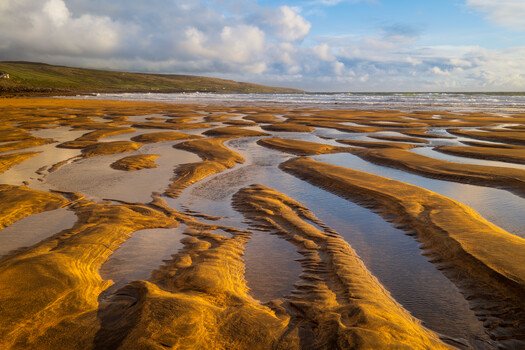
Sharpness is one of the first things many photographers judge in a landscape image, but it is also one of the areas that caused me the most frustration when I was starting out. I used to come home convinced that I had captured strong images, only to load them onto a larger screen and realize the foreground was soft or the distant detail was not as sharp as I thought it would be. At the time, I blamed gear more than technique. I assumed my camera or lens was holding me back, when in reality the biggest issue was my process in the field.
That was one of the hardest lessons to learn because when you are standing in front of a good scene with good conditions, it is easy to rush. You are focused on the light, the composition, and trying to react before the moment changes. Sharpness often becomes something you assume is handled rather than something you actively work through.
Over time I realized that sharpness is rarely about one single setting. It is the result of a series of decisions that all work together. Focus placement, aperture choice, shutter speed, stability, lens quality, and reviewing the image properly all contribute to the final result. Ignore one of them and the entire image can suffer.
Even now, I still make mistakes with focus from time to time, particularly in difficult conditions or more complex compositions. The difference now is that I understand why it happens and can usually correct it before leaving the location. That understanding only came from repeatedly getting it wrong in the field and slowly building a workflow that made more sense.
One of the first changes I made was learning when to trust autofocus and when not to.
Autofocus vs. Manual Focus
Modern autofocus systems are very capable, especially compared to older cameras I used years ago. In good daylight with clear contrast, autofocus is usually fast and reliable. I still use autofocus regularly when conditions suit it because there is no point overcomplicating things if the camera can handle the job accurately.
The mistake I made early on was allowing the camera to decide what should be in focus. I would leave autofocus areas too broad and assume the camera understood the scene the same way I did. Often it would lock onto the nearest object with contrast rather than the area that actually balanced sharpness across the frame.
These days, if I am using autofocus in landscape photography, I tend to use a single focus point and place it deliberately myself. Usually that ends up somewhere in the midground depending on the composition. That alone improved my results massively because I stopped relying on guesswork from the camera.
Where autofocus becomes less reliable is in flat light or low-contrast conditions. Sunrise before the light properly develops, misty mornings, fog, heavy rain, or blue hour scenes can all cause autofocus to hunt back and forth. I have stood on coastlines in Donegal before sunrise hearing my lens continuously searching for focus while the light changed in front of me. In those situations, autofocus can actually slow you down.
That is where manual focus started becoming more important in my workflow.
Using live view and zooming into the scene gave me far more control. Instead of hoping the camera had locked onto the correct area, I could check it myself. Focus peaking also became useful once I learned how to use it properly, especially in darker conditions where detail is harder to judge.
I do not think autofocus or manual focus is better across the board. Both have their place. The important thing is understanding which method suits the conditions you are working in rather than sticking rigidly to one approach.
Understanding Depth of Field Properly
Depth of field was another area that confused me for quite a while because there is a lot of oversimplified advice around it. I used to believe that simply using the smallest aperture possible would make everything sharp. Like many photographers starting out, I spent a long time shooting landscapes at f/16 or f/22 thinking more depth of field automatically meant a better image.
What I did not understand at the time was diffraction.
Once I began reviewing files more critically, I noticed that images taken at very small apertures often lacked overall detail. The depth of field increased, but the image itself became softer. Learning about diffraction completely changed how I approached aperture selection.
Most of the time now I work somewhere between f/8 and f/11 because it gives a much better balance between sharpness and usable depth of field. There are exceptions of course, but that range has become my starting point in most situations.
Focal length also plays a huge role in depth of field, and this becomes obvious very quickly when switching between wide angle and telephoto lenses. Wide lenses naturally make it easier to keep more of the frame sharp, which is one of the reasons they are so commonly used in landscape photography.
The difficulty increases when foreground subjects are very close to the lens. I learned this repeatedly while photographing rocks, flowers, or leading lines close to the camera along the Irish coastline. You can have a perfectly sharp background but still lose detail in the foreground if focus placement is slightly off.
That is where understanding hyperfocal distance started making a practical difference for me.
Learning Hyperfocal Distance in Real Conditions
When I first heard photographers discussing hyperfocal distance, it sounded far more complicated than it actually is. In practice, it is simply about finding the focus point that maximizes usable sharpness throughout the frame.
I initially relied heavily on apps to calculate hyperfocal distance precisely, but over time I found myself estimating it more naturally in the field. After enough repetition, you begin to develop a feel for where focus needs to sit depending on the focal length and composition.
A wide lens at 16mm behaves very differently from a tighter composition at 50mm, and understanding that only really came from experience rather than memorizing charts. If you want a structured way to build that instinct, Elia Locardi's Photographing the World: Landscape Photography and Post-Processing walks through field decisions like this in real shooting conditions.
One thing I realized quickly is that the common advice of focusing one-third into the scene is not always accurate, but it is often a useful starting point. Sometimes the foreground still ends up soft and focus needs to move closer. Other times the background lacks detail and focus has to shift further away.
This is why reviewing images properly on location matters so much.
I now spend far more time checking files in the field than I used to. Years ago I would take the shot, glance quickly at the LCD, and move on. The problem is that almost every image looks sharp on a small screen until you zoom in properly.
These days I zoom into multiple areas of the image before leaving a composition. I check the foreground, the midground, and the distant detail separately. It slows the process down slightly, but it has saved countless images that otherwise would have failed once viewed at home.
When Focus Stacking Became Necessary
There are situations where even careful focus placement is not enough. I noticed this most when working with extremely close foregrounds using ultra-wide lenses.
I remember photographing seaweed-covered rocks along the coast one morning where the foreground was only inches from the front of the lens. No matter how carefully I focused, I could not maintain complete sharpness throughout the frame with a single exposure without pushing the aperture too far and losing image quality.
That was when I properly started using focus stacking.
At first, it felt overly technical and time-consuming, but once I practiced it a few times it became far more manageable. Capturing separate focus points for the foreground, midground, and background gave me far cleaner results than trying to force everything into one exposure at f/22.
Focus stacking is not something I use constantly, but in certain scenes it becomes the best option available. It does require patience and a stable tripod setup, particularly if conditions are windy or waves are moving through the scene, but it allows for a level of sharpness that is difficult to achieve otherwise.
Stability Matters More Than Most People Think
Sharp focus is not only about where focus is placed. Camera movement plays a huge role as well.
Tripods remain one of the most important pieces of gear in my landscape photography because they remove a huge amount of uncertainty. Even slight movement can reduce detail, especially with modern high-resolution cameras.
That said, I do still shoot handheld fairly often, particularly when scouting locations or reacting quickly to changing conditions. When shooting handheld, shutter speed becomes far more important than many people realize.
A basic guideline I follow is using a shutter speed at least twice the focal length being used. If I am shooting at 50mm, I generally want at least 1/100th of a second or faster. Sometimes image stabilization helps, but I still prefer giving myself more margin where possible.
One thing I learned over time is that images can appear sharp on social media or smaller screens while still lacking proper detail when viewed larger or printed. Slight camera shake becomes far more obvious once you start printing work or viewing files at full resolution.
Lens Quality and Long-Term Investment
I spent years believing I needed newer camera bodies to improve my images, but in reality lenses made a bigger difference to my work than camera upgrades ever did.
That does not mean expensive gear automatically creates better photographs, because it does not. Composition, light, and timing still matter far more. However, better lenses generally provide more consistent sharpness, particularly edge-to-edge sharpness across the frame.
Even now, I still regularly use older EF lenses that many people would consider outdated. They continue to perform extremely well because good glass tends to last much longer than camera bodies.
That was an important shift in mindset for me. I stopped chasing every new camera release and focused more on understanding the equipment I already owned properly.
Putting It All Together in the Field
My process now is much more deliberate than it used to be.
I try to use a tripod whenever conditions allow. I usually work between f/8 and f/11. I carefully choose where focus is placed rather than relying entirely on autofocus. If conditions are difficult, I switch to manual focus and use magnified live view to confirm detail.
If the foreground is extremely close, I consider whether focus stacking is necessary instead of forcing a tiny aperture. I keep ISO low where possible and use a timer or remote shutter release to reduce movement.
Most importantly, I review images carefully before leaving the scene.
That final step probably improved my sharpness more than anything else because it removed assumptions from the process. Instead of hoping the image worked, I began confirming it while I still had the chance to correct mistakes.
Finally
Sharpness in landscape photography is not controlled by one magic setting or one piece of gear. It comes from understanding how multiple factors work together and building a process that becomes repeatable in the field.
For me, the biggest improvement came from slowing down and becoming more intentional with each decision rather than rushing through compositions.
I still miss focus sometimes. Every landscape photographer does. Conditions change quickly, compositions become complicated, and mistakes happen. The important part is recognizing why those mistakes happen and learning how to reduce them over time.
Once I stopped treating sharpness as luck and started treating it as a process, my consistency improved massively. That consistency is what ultimately matters most when you are standing in front of conditions that may never happen again.
What are your thoughts? Let's continue the conversation in the comments below.
What's Your Reaction?
 Like
0
Like
0
 Dislike
0
Dislike
0
 Love
0
Love
0
 Funny
0
Funny
0
 Wow
0
Wow
0
 Sad
0
Sad
0
 Angry
0
Angry
0










Comments (0)