

George R.R. Martin’s 7 Best Non-Game of Thrones Books, Ranked

Published Nov 21, 2026, 5:00 AM EST
Essential George R.R. Martin reads beyond the shores of Westeros
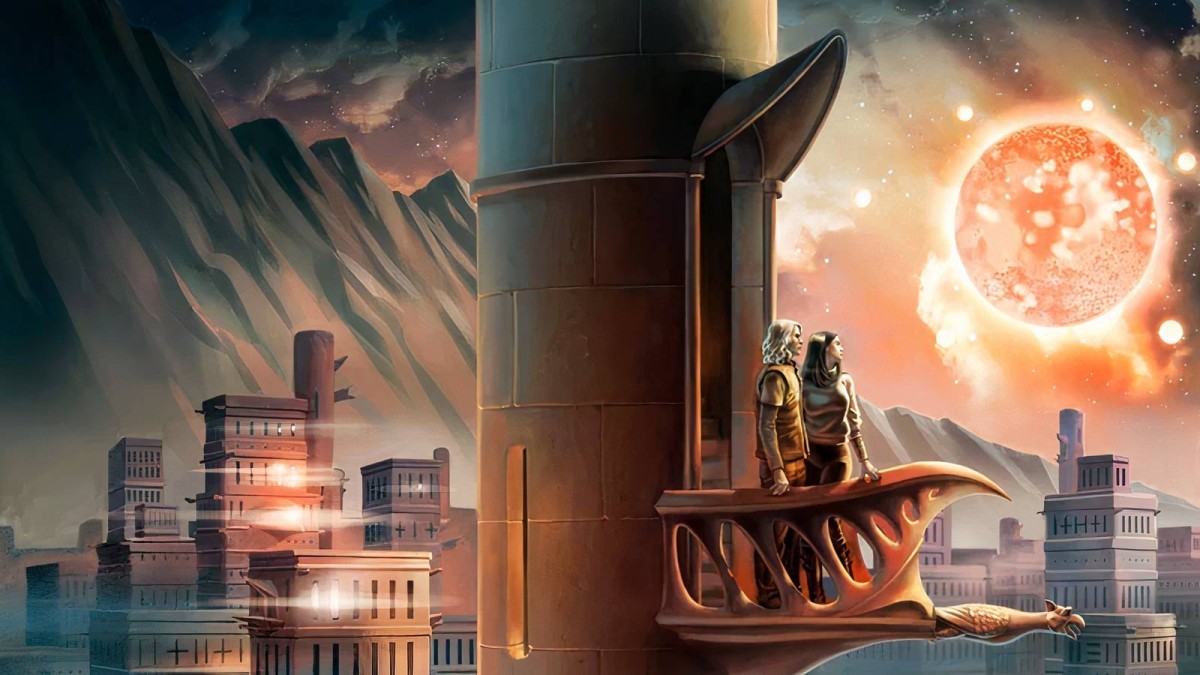
 Image: Juan Miguel Aguilera
George R.R. Martin will forever be associated with his book series, A Song of Ice and Fire, and HBO’s adaptation, Game of Thrones, but there's considerably more to his bibliography than scheming Lannisters, fire-breathing dragons, and the unending wait for The Winds of Winter. Long before Westeros became a cultural phenomenon, Martin was building a reputation as one of science fiction and fantasy's most imaginative voices, writing everything from supernatural mysteries and vampiric thrillers to sprawling space operas and intimate character dramas.
Some of his best work actually exists outside the world of Game of Thrones — just look at Elden Ring for proof, which Martin helped write. Whether you're drawn to Gothic horror, ambitious science fiction, or wonderfully strange fantasy, the author has plenty to offer throughout his extensive library. The following seven books prove to be some of his best non-Game of Thrones work.
7 Hunter’s Run (2007)
 Image: Polygon
Martin is no stranger to writing about people in impossible situations, but Hunter’s Run takes that fascination in a particularly thrilling direction. Set on the human colony planet of São Paulo, the story tracks a down-on-his-luck prospector named Ramón Espejo after fleeing into the wilderness following a violent encounter in a bar. Little does Espejo know, the wilderness he just escaped into is home to something far more dangerous than he anticipated.
Ramón quickly gets captured by technologically superior aliens that give him the impossible task of hunting down another human fugitive. Although not exactly a full Martin production, as it was co-written with Gardner Dozois and Daniel Abraham, Hunter’s Run is still a solid entry in his library, offering a propulsive science fiction thriller that explores humanity's capacity for survival when the odds are stacked against it.
6 The Skin Trade (1988)
 Image: Polygon
Martin's fascination with terrifying monsters extends well beyond dragons and ice zombies. His 1988 novella The Skin Trade follows private investigator Randi Wade in her investigation of a series of grisly murders in her unnamed Rust Belt hometown. What makes the case personal is how the killings bear an unsettling resemblance to the death of her father decades prior, drawing Wade into a supernatural underworld that has been hiding in plain sight.
Winner of the 1989 World Fantasy Award for best novella, The Skin Trade remains a fascinating detour into hardboiled detective fiction with a suitable blend of the supernatural. Replete with seedy reprobates, a mysterious family with deep roots in the town, gruesome werewolf violence, and a disturbing mystery that turns the traditional monster story on its head, it's a solid reminder of Martin's talent for worldbuilding, even when the story isn't set in some sprawling fantasy land.
5 Windhaven (1981)
 Image: Polygon
Science fiction rarely delivers a premise as immediately enchanting as the one at the heart of Martin’s Windhaven. Set on a stormy world covered in vast oceans and scattered islands, the novel imagines a civilization whose isolated communities stay connected through an elite guild of flyers. Using enormous wings fashioned from silver cloth, these daring travelers soar across treacherous stretches of open water to carry messages and news between islands. The story mainly follows Maris, a fisherman's daughter determined to challenge the rigid hereditary system that dictates who gets to wear such wings.
Co-written with Lisa Tuttle, Windhaven is an absorbing adventure about ambition, tradition, and the complicated nature of progress. It stands out as one of Martin's most optimistic works, even as it digs into the messy politics of reshaping an established society.
4 The Armageddon Rag (1983)
 Image: Polygon
The Armageddon Rag is perhaps the strangest book in Martin's bibliography, which is really saying something for an author who has written about telepathic aliens, dragons, and armies of the undead. Blending supernatural horror, murder mystery, and rock-and-roll mythology, the novel follows washed-up journalist Sandy Blair as he investigates the ritualistic murder of a music promoter. His investigation leads him back to the counterculture of the 1960s and the legendary rock band Nazgûl, whose music may have been hiding something much darker than anyone realized.
Ironically, The Armageddon Rag was a commercial disappointment upon release, nearly derailing Martin's entire career as a novelist. At the time, publishers didn't know how to market a book caught between rock-and-roll nostalgia, counterculture grief, and occult horror, pushing Martin toward a decade-long detour in television before he eventually circled back to prose for A Song of Ice and Fire around 1991. Decades later, that very genre-blending is what makes it shine, earning praise from writers like Stephen King and winning over modern readers who view it as Martin's most intimate work.
3 Dying of the Light (1977)
 Image: Polygon
Long before Westeros became synonymous with political intrigue and doomed dynasties, Martin explored similar ideas in his debut novel Dying of the Light. The story unfolds on a rogue planet drifting away from its sun and slowly descending into permanent darkness. Once home to a spectacular interstellar festival, Worlorn is now little more than a collection of abandoned cities and fading outposts, where the few remaining holdouts cling to old customs as the world freezes around them.
Into this dying world comes Dirk t'Larien, who hopes to reconnect with an old lover, only to discover that she has become entangled in a rigid, honor-bound culture. Dying of the Light is a beautiful but melancholic science fiction story filled with doomed traditions, complicated relationships, and the sort of morally gray characters that would eventually define Martin's later fantasy writing. While it has yet to receive a screen adaptation on par with the likes of Game of Thrones, the novel immediately put Martin on the map as a long-form author, earning nominations for both the Hugo Award and the British Fantasy Award.
2 Tuf Voyaging (1986)
 Image: Polygon
If you've ever wondered what Martin would write if he traded medieval politics for ecological engineering and a very large collection of cats, Tuf Voyaging is the answer. The book follows Haviland Tuf, an eccentric trader who comes into possession of an ancient spaceship capable of manipulating entire planetary ecosystems. Armed with technology that can resurrect extinct species, manufacture terrifying creatures, and unleash devastating plagues, Tuf finds himself in a position of extraordinary power.
Told through seven interconnected stories, the novel begins as a dry science fiction comedy before gradually evolving into something much more provocative. What sells the story is Tuf, an unconventional hero whose reckoning with the ethical implications of his newfound abilities makes Tuf Voyaging one of Martin's most entertaining creations.
1 Fevre Dream (1982)
 Image: Polygon
Often cited as one of Martin’s best stories outside of Westeros, the Gothic horror novel Fevre Dream reimagines vampires as a separate nocturnal predator species ruled by an agonizing biological addiction called the "red thirst." The story is set along the Mississippi River during the antebellum era, featuring steamboat captain Abner Marsh, who enters an unusual business arrangement with the mysterious Joshua York. Together, they set out to build the finest steamboat on the river, but York harbors a secret that threatens to turn their partnership into something considerably more dangerous.
Martin takes familiar vampire mythos and gives it a distinctly unsettling biological and historical dimension, while grounding the story in the brutal realities of slavery and the American South. Set along the 1857 Mississippi River, the story pairs steamboat history with an unsettling moral parallel to chattel slavery, as predatory elders exploit a Southern hierarchy that already treats human beings as livestock. Atmospheric and genuinely frightening, the novel showcases Martin at his absolute best, packing the emotional depth and ambition of his fantasy writing into a much tighter story.
What's Your Reaction?
 Like
0
 Dislike
0
 Love
0
 Funny
0
 Wow
0
 Sad
0
 Angry
0









Comments (0)