

Ridley Scott’s 40-Episode Philip K. Dick Sci-Fi Series Nails Alternate History

Published Nov 21, 2026, 4:06 AM EST
Dhruv is a Lead Writer in Screen Rant's New TV division. He has been consistently contributing to the website for over two years and has written thousands of articles covering streaming trends, movie/TV analysis, and pop culture breakdowns.
Before Screen Rant, he was a Senior Writer for The Cinemaholic, covering everything from anime to television, from reality TV to movies.
After high school, he was on his way to become a Civil Engineer. However, he soon realized that writing was his true calling. As a result, he took a leap and never looked back.
Even the tiniest alternate events in history could have rippled into a radically different present. An acclaimed Philip K. Dick adaptation on Prime Video takes this idea to extremes and delivers a compelling alternate history drama.
A conversation about alternate history is always incomplete without a reference to the "Hitler The Artist" speculation. It is a highly discussed alternate history event where Adolf Hitler would have become a professional artist instead of a genocidal dictator if he had been accepted into the Vienna Academy of fine arts. Prime Video's The Man in the High Castle has little to do with this specific event.
However, the series does harken back to World War II to explore how dystopian the world would have been if the Axis powers had never lost. Based on Philip K. Dick's book of the same name, the Prime Video series is a very loose adaptation. Still, in its 40-episode run, it does an incredible job of delivering an immersive and hard-hitting alternate history drama.
The Man In The High Castle Turns History Into Something Bizarre & Disturbing
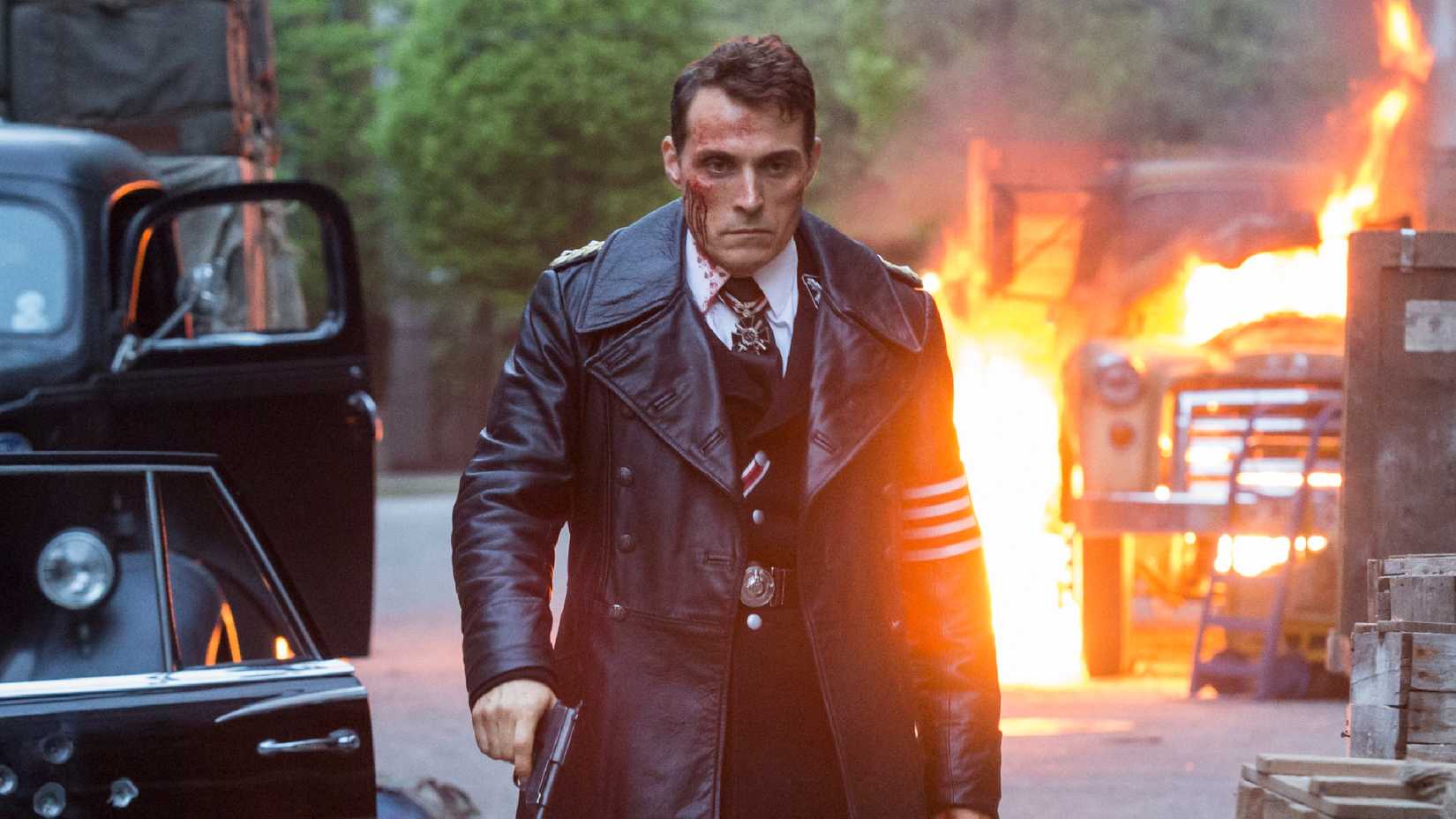 Image via MovieStillsDB
With Frank Spotnitz as its creator and Ridley Scott as one of its executive producers, The Man in the High Castle presents a nightmarish alternate history scenario. It unfolds in a world where the Axis powers win World War II and totalitarianism absorbs everyday life. One of the most haunting things about the show is how brilliantly it corrupts nostalgia with subtle displays of oppression.
The 1950s and '60s Americana is exactly how one remembers it to be. There is everything from dreamy suburbs to nuclear families. However, these comforting nostalgic visuals are corrupted by overlays of Nazi symbolism, revealing how the shadow of fascism looms over everything.
In one disturbing arc, The Man in the High Castle walks through the Reich’s Jahr Null ("Year Zero") initiative. Through the initiative, history is not merely erased or censored. Instead, American monuments, including the Liberty Bell and the Statue of Liberty, are completely destroyed while all pre-war art is banned.
Similar to most Philip K. Dick stories, The Man in the High Castle also does not shy away from taking a bizarre metaphysical pivot almost midway through its run. After grounding itself in historical realism, it introduces parallel timelines to portray how the Nazis' desire to colonize transcends their own reality.
With this, the Prime Video sci-fi show paints a disturbing "What if?" where the comfort of history in itself is completely shattered.
The Man In The High Castle Is A Great Philip K. Dick Adaptation

Many Philip K. Dick adaptations have hit the big and small screens in the past. Among them, perhaps the most popular one is Ridley Scott's Blade Runner, which drew from Philip K. Dick's Do Androids Dream of Electric Sheep? Similar to the Philip K. Dick movie, Prime Video's The Man in the High Castle does not strive to be a direct book-to-screen translation.
Given how deeply philosophical and abstract Philip K. Dick's prose can be, directly translating his work is also a near-impossible feat.
Owing to this, The Man in the High Castle cleverly borrows its central themes and concepts before making them more "cinematic" for the screen. For instance, the original story features a banned book, titled The Grasshopper Lies Heavy, which depicts an alternate history where the Allies won.
Since characters reading a book would not have been visually compelling in a TV series, the show turns the book into contraband 16mm newsreels. The show also retains pre-war American antiques that would instill nostalgia in viewers as much as they do in its fictional Japanese elites.
Like a typical Philip K. Dick sci-fi story, Prime Video's The Man in the High Castle also refuses to tie all loose ends. While its finale is considered divisive, it intentionally keeps things cryptic and abrupt. For this reason, the series may not be for everyone. However, it undoubtedly succeeds as an alternate history drama and a Philip K. Dick adaptation.
What's Your Reaction?
 Like
0
 Dislike
0
 Love
0
 Funny
0
 Wow
0
 Sad
0
 Angry
0








Comments (0)